

Image of 1958 Fiat 600, Note: These illustrations use artistic license and may differ from actual historical models.
Performance Metrics
Fundamental Metrics
Emotional Appeal
MMP Rating
| Engine Specifications | |
|---|---|
| Engine: | Inline 4 |
| Displacement: | 633 cc |
| Horsepower: | 21.5 hp at 4600 rpm |
| Torque: | 30 Nm at 2500 rpm |
| Compression Ratio: | 6.8:1 |
| Ignition System: | Coil ignition |
| Cooling System: | Water-cooled |
| Performance Specifications | |
| 0-60 Time: | 37 seconds |
| 1/4 Mile Time: | Not available |
| Top Speed: | 59 mph |
| Transmission and Drive | |
| Drive Type: | Rear-wheel drive |
| Transmission Type: | 4-speed manual |
| Fuel and Efficiency | |
| Fuel System Type: | Carburetor |
| MPG: | 40 mpg |
| Dimensions and Brakes | |
| Brakes: | Drum brakes (front and rear) |
| Wheelbase: | 78.7 inches |
| Weight: | 1,212 lbs |
Note: Specifications for classic cars are given to the best of our ability, considering the limited and variant data available.
1958 Fiat 600: Italy’s Little Giant
The 1958 Fiat 600 turned a tiny footprint into a big step toward mass motoring, giving postwar Italian families an affordable way to travel together. Built by Turin-based automaker Fiat and designed under engineer Dante Giacosa, the 600 was a compact, rear-engined four-seater with a surprisingly useful cabin and an unmistakable shape.
Launched in 1955, it arrived as Italy was entering a period of rapid economic growth. Its modest price, practical layout, and easy-to-place dimensions made it a familiar sight on narrow city streets and country roads alike. One especially memorable offshoot was the 600 Multipla, introduced in 1956: a boxy, six-seat people carrier that anticipated the modern minivan decades before the name became common.
Rounded Styling and Clever Packaging
The Fiat 600’s rounded body looks almost toy-like, but its proportions were carefully arranged for everyday use. A short nose, curved roof, upright rear, and small wheels kept the car compact, while the rear-mounted engine freed up space for passengers. The original model’s rear-hinged doors, often called “suicide doors,” opened wide for access to the front and rear seats. They are one of the car’s most recognizable details, though later versions adopted conventional front-hinged doors.
Inside, the cabin was simple rather than luxurious. Painted metal, basic trim, a slim steering wheel, and straightforward instruments reflected the 600’s economy-car mission. The rear bench could accommodate two adults for shorter trips, while the luggage compartment was limited. Owners often made use of the small front luggage space and whatever room could be found around the rear engine bay.
Fiat offered the 600 in a range of market- and year-dependent colors. Period shades included restrained creams and grays alongside pale blues, greens, and brighter colors such as red. Light pastel tones suit the car’s cheerful character and are popular with collectors, although original factory color records should be checked for any particular car.
The most familiar body style is the two-door saloon, the classic rounded Fiat 600. The Multipla was the standout alternative, with a taller, more upright body and seating configurations that could carry up to six people. It was designed for taxi and family use, and its space-efficient layout made it one of the earliest mass-produced cars to resemble a modern people carrier.
Engineering Ahead of Its Size
The 600 used unitary construction, meaning its body and chassis formed a single structure rather than relying on a separate frame. Its water-cooled, four-cylinder engine sat at the rear and drove the rear wheels through a four-speed manual gearbox. For a small economy car of the 1950s, that combination delivered compact packaging and useful interior room without resorting to a large, heavy body.
Suspension was independent at all four wheels, using a transverse leaf spring arrangement at the front and coil springs at the rear. That was a notable level of sophistication for an inexpensive car. The result was not sports-car precision, but it helped the 600 cope with uneven roads while keeping the design compact.
The Fiat 600 helped establish a practical template for small cars: a compact body, space-conscious layout, and low-cost mechanical package. It differed from front-engined rivals by putting the engine behind the passenger compartment, and it showed how a small car could serve as genuine family transport rather than simply a basic runabout. Its influence is especially visible in the Multipla’s people-moving concept and in the generations of licensed versions that followed.
Performance and Road Manners
A typical 1958 Fiat 600 used a 633 cc water-cooled inline-four producing about 21 horsepower, with exact output varying slightly by specification and market. Period figures put top speed at roughly 59 mph, or about 95 km/h. A 0-to-60 mph run takes around 35 to 40 seconds in many estimates, though condition, gearing, load, and test method make precise comparisons difficult. This is a car built for steady progress, not quick acceleration.
On smooth urban streets, the 600 feels nimble and easy to thread through traffic. Its short wheelbase makes tight turns simple, and the rear engine gives the front end a light feel. On rough roads, the suspension offers a degree of compliance, but the small wheels and compact cabin make larger bumps obvious. On winding roads, drivers can enjoy its lively, low-speed character, while remembering that the rear-engine layout and period tires call for measured inputs, especially in wet conditions.
The driving experience is hands-on. The little four-cylinder has a busy, distinctive note from behind the seats, and the short gearing means the engine works hard when climbing hills or keeping pace with faster traffic. Steering and controls feel direct by modern standards, but the car lacks modern sound insulation, braking assistance, and safety equipment. The charm lies in being involved with every part of the drive, not in effortless speed or refinement.
Living With a Fiat 600
Today, most 1958 Fiat 600s are used as weekend classics, show cars, or cheerful participants in historic motoring events. Some owners still drive them regularly, especially in places where parts and specialist knowledge are easy to find. Their small size suits relaxed local trips, but modern high-speed roads can be tiring and intimidating.
The mechanical layout is relatively straightforward, and many routine jobs are accessible to an experienced home mechanic. The engine, gearbox, and suspension are compact, and parts are available through specialist suppliers, particularly in Europe and countries with a strong Fiat 600 community. Buyers should still check the condition and availability of market-specific components before starting a restoration.
Rust is a major concern. Inspect the sills, floor pans, wheel arches, door bottoms, and structural areas carefully, and look for old repairs hidden beneath fresh paint. The cooling system also deserves close attention: a neglected radiator, blocked passages, worn hoses, or a faulty fan can lead to overheating. As with any decades-old car, good maintenance matters more than the badge. A sound, well-sorted example can be enjoyable; a rusty or overheating project can quickly become expensive.
Fiat 600 Facts and Criticisms
The Fiat 600 became a global car through licensed production and local derivatives. Spain’s SEAT 600 and Yugoslavia’s Zastava 750 were among the best-known relatives, while Argentina also built its own versions. Fiat produced approximately 2.7 million examples of the 600 in Italy between 1955 and 1969. Counting licensed production and related versions, the wider family reached several million more, though totals depend on which derivatives are included.
The 600 also spawned performance-minded specials. Abarth developed tuned versions, including small-displacement competition cars based on the Fiat platform. These should not be confused with an ordinary 1958 Fiat 600: an Abarth conversion or special is a distinct and potentially much more valuable proposition, so documentation and identification are essential.
Its limitations are part of the story. The 600 is slow by modern standards, offers little luggage room, and provides far less crash protection than a contemporary car. Rear-engine cooling needs diligent upkeep, and the original rear-hinged doors are a charming feature that can be less convenient in tight parking spaces. Those drawbacks did not prevent it from becoming a practical family car in its own era, but they are worth considering before buying one today.
Collector Values and Availability
As of 2026, a usable, presentable Fiat 600 saloon might sell for roughly $8,000 to $18,000 in the United States, with prices varying substantially by country, condition, originality, and paperwork. A high-quality restoration can bring around $20,000 to $35,000 or more. These are broad estimates rather than a formal valuation: local European prices, import costs, and the state of the car can shift the result considerably.
The Multipla is rarer and more sought after. Well-presented examples can command approximately $35,000 to $80,000 or more, with exceptional restorations and particularly desirable cars exceeding that range. A complete, rust-free car with a documented history is generally a safer purchase than a cheaper project, since body restoration can outweigh the cost of routine mechanical work.
Ordinary saloons remain findable in Italy and other countries where the 600 was popular, but clean, original examples are increasingly difficult to locate. Values have generally strengthened as interest in small postwar cars and Italian classics has grown, especially for Multipla models and documented Abarth-related cars. Condition and authenticity now have a greater effect on price than simply being an older Fiat.
Why the 1958 Fiat 600 Still Matters
The 1958 Fiat 600 combined a modest engine, compact dimensions, and clever packaging to make family motoring accessible to a new generation. Its rear-engine layout, unitary body, and independent suspension gave an inexpensive car genuine engineering interest, while the Multipla demonstrated just how much utility could be drawn from a tiny footprint.
It is not fast, quiet, or spacious by modern standards. Its lasting appeal comes from something more enduring: the 600 made practical mobility feel joyful, and its friendly shape still tells that story at a glance.
1958 Fiat 600 Catalog of Parts
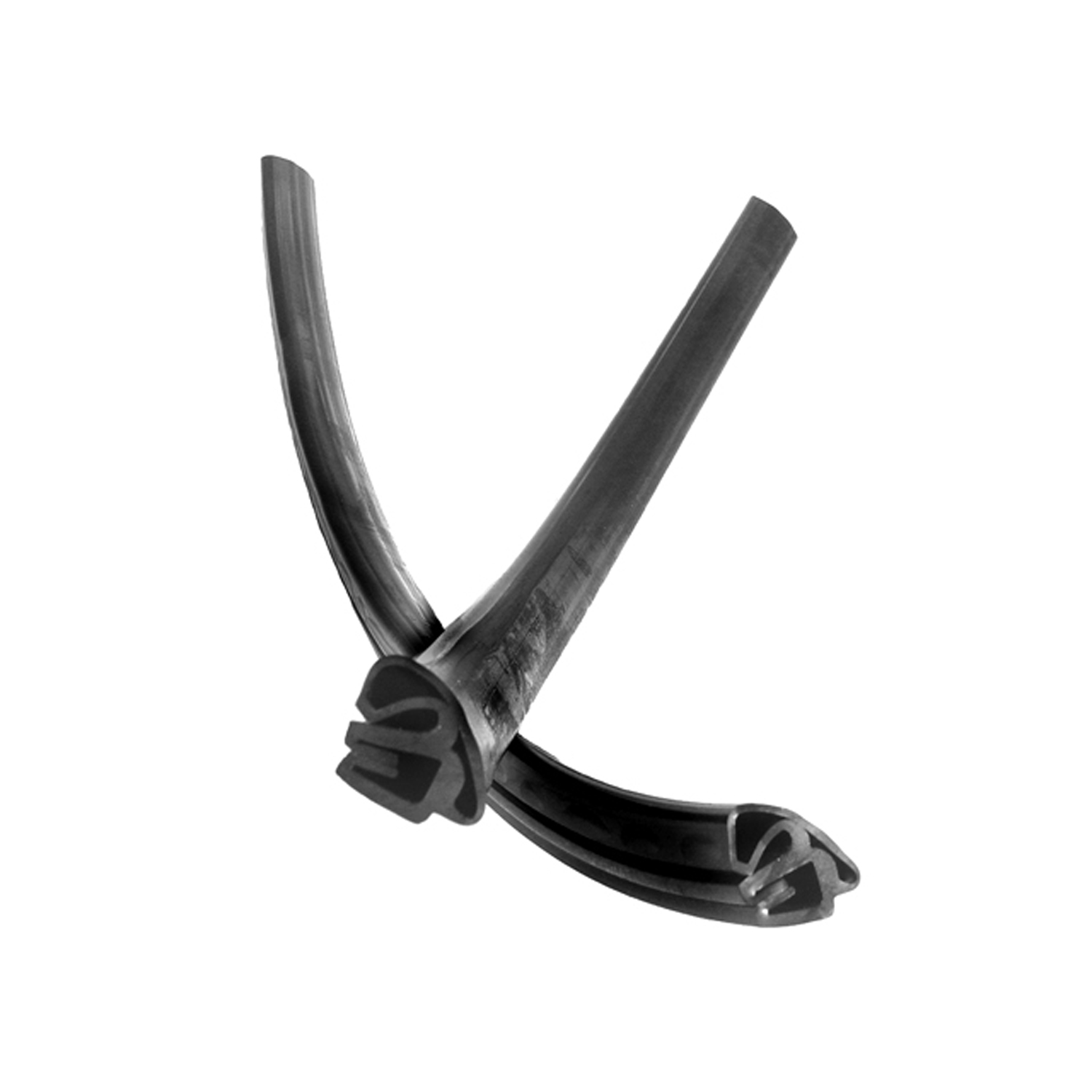 1958 Fiat 600 Vertical Seals. Pair-VS 20Vertical Seals. Pair
Why Choose Metro?
For over 100 years, Metro Moulded Parts has been the pinnacle of quality in classic car restoration parts. Our commitment to precision and authenticity in every component ensures a perfect fit and an OEM-level appearance.
- Expert Craftsmanship & Quality: Each part is a testament to our dedication to reliability and perfection, crafted from original designs and thoroughly tested.
- Advanced Technology: We use cutting-edge techniques to create flawless, long-lasting parts that surpass others in performance.
- SuperSoft Sponge – The Ultimate Door Seal: Not only are our door seals 30% softer than competitors', but they're also guaranteed to never leak. They effectively reduce wind and road noise, enhancing your classic car's comfort and driving experience.
- Proudly American: Our parts are a product of American craftsmanship, made in the USA with a spirit of excellence and heritage.
- Unrivaled Warranty: We back our products with a 30-year industry-leading warranty, a testament to our confidence in their quality.
Join us in preserving the legacy of classic cars with parts that are crafted for perfection, not just made.