

Image of 1959 Fiat 1100, Note: These illustrations use artistic license and may differ from actual historical models.
Performance Metrics
Fundamental Metrics
Emotional Appeal
MMP Rating
| Engine Specifications | |
|---|---|
| Engine: | Inline-4 |
| Displacement: | 1,089 cc |
| Horsepower: | Estimated 36-50 hp |
| Torque: | 60 lb-ft |
| Compression Ratio: | Estimated 7.5:1 |
| Ignition System: | Distributor and coil |
| Cooling System: | Water-cooled |
| Performance Specifications | |
| 0-60 Time: | Estimated 30 seconds |
| 1/4 Mile Time: | Not available |
| Top Speed: | 78 mph |
| Transmission and Drive | |
| Drive Type: | Rear-wheel drive |
| Transmission Type: | 4-speed manual |
| Fuel and Efficiency | |
| Fuel System Type: | Carburetor |
| MPG: | Estimated 30-35 mpg |
| Dimensions and Brakes | |
| Brakes: | Drum brakes |
| Wheelbase: | 92.1 inches |
| Weight: | 2,094 lbs |
Note: Specifications for classic cars are given to the best of our ability, considering the limited and variant data available.
1959 Fiat 1100: Italy’s Everyday Classic
The 1959 Fiat 1100 was a small family car with a surprisingly big role in Italy’s postwar transformation. Built by Turin-based Fiat, it combined practical four-door accommodation with modern-for-its-day engineering, helping put personal transport within reach of a growing middle class. Its appeal was not speed or luxury. It was the way a compact, capable sedan could handle work, family duties, and long journeys without demanding much space or money.
The car belonged to Fiat’s 1100-103 family, introduced in 1953 as a thoroughly modern successor to earlier 1100 models. By 1959, the range had evolved through several updates, and the exact trim and specification depended on the market. One detail that makes the model particularly interesting is its connection to a much wider automotive story: the 1100 name continued in India on the Premier Padmini, a familiar sight on Indian roads for decades.
Italian Styling and Practical Design
The 1959 sedan has the friendly, upright proportions typical of a European family car of the period. Its rounded front end, bright grille trim, circular headlamps, gently curved roof, and modest tail fins give it just enough flourish without sacrificing useful interior space. Chrome bumpers and brightwork add a dressier touch, while the relatively compact body makes the Fiat look nimble beside larger American cars of the same era.
Inside, the 1100 favors function over ornament. The cabin is airy for a small sedan, with upright seating, broad windows, and a simple dashboard designed around clear instruments and easy-to-reach controls. Depending on trim and market, buyers could find cloth upholstery, vinyl trim, painted metal surfaces, and additional brightwork. The materials were sensible rather than luxurious, but the layout was straightforward and durable. A column-mounted gear lever also helped keep the front seating area less cluttered.
Fiat offered the 1100 in several body styles across the wider 103 range. The four-door sedan was the most familiar and practical choice. The Familiare station wagon added useful cargo capacity, while special Turismo Veloce models and coachbuilt coupé or convertible versions brought extra performance or style. These rarer variants are now especially interesting to collectors, though the standard sedan remains the version most people associate with the 1959 Fiat 1100.
Paint choices varied by country, year, and trim. Period colors included subdued solids as well as brighter shades, and some special versions were available with contrasting or two-tone finishes. Light colors and tasteful two-tone combinations suit the car’s rounded styling particularly well, but original paint codes and combinations are worth checking against the individual car’s paperwork.
Engineering Ahead of Its Size
The 1100-103 stood out because it was a modern, self-supporting car rather than a traditional body mounted on a separate chassis. Its unitary construction helped keep weight and overall dimensions down. It also used independent front suspension, hydraulic brakes, and rear-wheel drive, a combination that gave it a more composed and contemporary feel than many older designs it replaced.
Power came from a front-mounted 1,089 cc inline-four with overhead valves. Output varied with version and specification, but a typical standard 1100 of this period produced around 50 horsepower. A four-speed manual transmission was standard, commonly operated by a steering-column gear lever. These features were not individually revolutionary, but together they made the Fiat a capable, well-packaged family car for its time.
The 1100’s influence was less about introducing a single breakthrough than about making modern construction and suspension accessible in a compact, mass-market car. Its combination of useful passenger space, modest running costs, and a relatively advanced chassis helped establish the template for a practical European sedan. It also gave Fiat a versatile platform that could be adapted for wagons and sporting or coachbuilt derivatives.
Performance and Road Manners
A healthy standard 1959 Fiat 1100 could reach roughly 75 to 80 mph, depending on specification, condition, and test conditions. A 0-to-60 mph time in the neighborhood of 20 to 25 seconds is a reasonable estimate for a standard sedan. Those figures make clear that the Fiat was built for steady progress, not drag-strip excitement. Period performance varied, and modern estimates should be treated as a guide rather than a guarantee for every surviving car.
The car’s relatively light weight and compact footprint help it feel manageable on narrow streets and winding roads. Independent front suspension gives the front end useful control over ordinary bumps, while the live rear axle can feel busy on rough surfaces, especially by modern standards. On a twisting country road, the 1100 is more enjoyable when driven smoothly and with momentum rather than hurried through corners.
Behind the wheel, the experience is mechanical and direct. The small four-cylinder engine makes a busy, purposeful sound as it revs, and the long-throw gear change asks for a deliberate hand. Steering effort and response depend on speed and condition, and there is no modern power assistance to mask the road. A well-maintained example feels lively in town and relaxed at a sensible cruising pace, though it is not quiet or quick by contemporary standards.
Living With a 1959 Fiat 1100
Owners today use the 1100 as a weekend classic, a show car, a touring car for shorter trips, or a hands-on restoration project. A well-sorted sedan can still be driven on ordinary roads, but most examples are now too old and valuable to treat like an unrestricted modern daily driver. Regular use is possible when the cooling system, brakes, tires, electrical connections, and fuel system are kept in good order.
Routine mechanical work is generally approachable for an experienced home mechanic. The engine and basic systems are conventional, and many repairs do not require specialist diagnostic equipment. The bigger challenges are often age-related: rust in the body and floor structure, worn suspension components, tired wiring, and the difficulty of locating trim or model-specific parts. Before buying, inspect the sills, floor, wheel arches, lower doors, and structural areas carefully. Body restoration can quickly cost more than mechanical recommissioning.
Parts availability varies by country and by version. Common service items are usually easier to source than rare trim pieces or components for special-body models. A complete, running car with sound metalwork is often a better starting point than a cheap project with extensive corrosion.
Curiosities, Competition, and Criticisms
The Fiat 1100 was not just a family runabout. Special and modified versions took part in period rallies and road competitions, where the car’s compact size, sturdy basic engineering, and accessible mechanicals made it a useful platform. The Turismo Veloce and coachbuilt derivatives added a sporting dimension to a name otherwise associated with everyday transport.
There is no single dependable production total for the exact 1959 model year that covers every body style and market. The broader Fiat 1100-103 family was built in very large numbers, with production commonly estimated at well over a million cars across its variants and years. That mass-market success is one reason the standard sedan is more attainable today than a rare coupé or convertible.
The car’s most frequent criticisms are familiar: modest acceleration, limited modern safety equipment, a cabin that can feel noisy at speed, and vulnerability to corrosion. Some drivers also find the column shift less precise than a floor-mounted lever. These are part of the ownership reality, but they are also reminders that the 1100 was engineered for a different era and a different set of expectations.
Collector Values and Availability
Values depend heavily on body style, originality, rust, restoration quality, and location. As a broad guide for the international market, a project or rough standard sedan might sell for around US$3,000 to $7,000. A usable, presentable example may fall around US$8,000 to $18,000, while an excellent, well-restored sedan can reach roughly US$20,000 to $30,000 or more. Rare coachbuilt or sporting versions can command substantially higher prices, sometimes several tens of thousands of dollars, with the very best examples exceeding that range.
The standard sedan is not exceptionally rare in the context of postwar classics, but finding a sound, complete, correctly identified example is another matter. Specialist body styles and original parts are considerably harder to locate. Values for good cars have generally strengthened as interest in approachable European classics has grown, although the market is selective: quality cars are more likely to appreciate, while rusty projects and poorly executed restorations can be difficult to sell. These figures are estimates, not a substitute for checking recent local sales.
Why the Fiat 1100 Still Matters
The 1959 Fiat 1100 brought together compact dimensions, family-friendly space, unitary construction, independent front suspension, and an economical four-cylinder engine in a car designed for ordinary life. It was neither an exotic sports car nor a luxury flagship, and that is precisely what makes it such a useful window into postwar motoring.
Today, the Fiat rewards owners who value character, simplicity, and an honest connection to the road. It may not hurry, but it tells a compelling story about how practical engineering helped reshape everyday transport. For a small sedan, the 1959 Fiat 1100 left an impressively large mark.
1959 Fiat 1100 Catalog of Parts
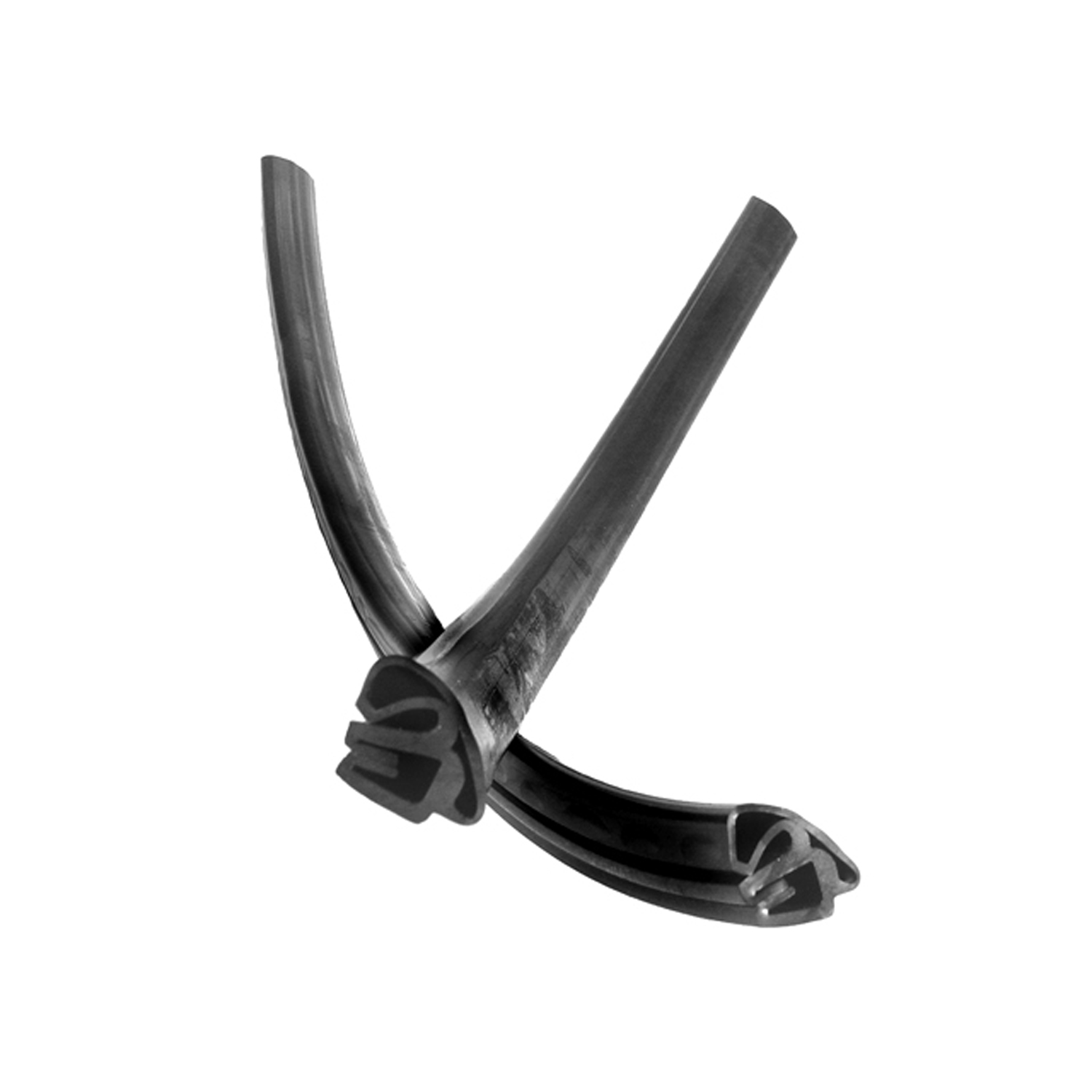 1959 Fiat 1100 Vertical Seals. Pair-VS 20Vertical Seals. Pair
Why Choose Metro?
For over 100 years, Metro Moulded Parts has been the pinnacle of quality in classic car restoration parts. Our commitment to precision and authenticity in every component ensures a perfect fit and an OEM-level appearance.
- Expert Craftsmanship & Quality: Each part is a testament to our dedication to reliability and perfection, crafted from original designs and thoroughly tested.
- Advanced Technology: We use cutting-edge techniques to create flawless, long-lasting parts that surpass others in performance.
- SuperSoft Sponge – The Ultimate Door Seal: Not only are our door seals 30% softer than competitors', but they're also guaranteed to never leak. They effectively reduce wind and road noise, enhancing your classic car's comfort and driving experience.
- Proudly American: Our parts are a product of American craftsmanship, made in the USA with a spirit of excellence and heritage.
- Unrivaled Warranty: We back our products with a 30-year industry-leading warranty, a testament to our confidence in their quality.
Join us in preserving the legacy of classic cars with parts that are crafted for perfection, not just made.