

Image of 1959 Fiat 600, Note: These illustrations use artistic license and may differ from actual historical models.
Performance Metrics
Fundamental Metrics
Emotional Appeal
MMP Rating
| Engine Specifications | |
|---|---|
| Engine: | Inline 4 |
| Displacement: | 633 cc |
| Horsepower: | 21.5 hp at 4600 rpm |
| Torque: | 30 Nm at 2500 rpm |
| Compression Ratio: | 6.8:1 |
| Ignition System: | Coil ignition |
| Cooling System: | Water-cooled |
| Performance Specifications | |
| 0-60 Time: | 37 seconds |
| 1/4 Mile Time: | Not available |
| Top Speed: | 59 mph |
| Transmission and Drive | |
| Drive Type: | Rear-wheel drive |
| Transmission Type: | 4-speed manual |
| Fuel and Efficiency | |
| Fuel System Type: | Carburetor |
| MPG: | 40 mpg |
| Dimensions and Brakes | |
| Brakes: | Drum brakes |
| Wheelbase: | 78.7 inches |
| Weight: | 1,212 lbs |
Note: Specifications for classic cars are given to the best of our ability, considering the limited and variant data available.
1959 Fiat 600: Italy’s Little People’s Car
The 1959 Fiat 600 turned postwar practicality into something charming: a tiny, four-seat car with its engine tucked behind the passenger compartment and just enough room for a young family and its luggage. Built by Italy’s Fiat, it was designed by engineer Dante Giacosa as an affordable step up from the two-seat Fiat 500 Topolino. Its compact dimensions, clever packaging and approachable price helped put motor transport within reach of ordinary households during Italy’s postwar economic boom.
The 600 had already become an international success by 1959. Fiat licensed its design abroad, where it was built under different names, including the SEAT 600 in Spain and the Zastava 750 in Yugoslavia. One especially intriguing offshoot was the Fiat 600 Multipla, introduced in 1956. It packed as many as six seats into a vehicle barely longer than the standard sedan, making it an early ancestor of today’s compact people-movers.
Compact Styling and Clever Packaging
The Fiat 600’s shape is all rounded corners and useful simplicity. Its short nose, domed roof and upright rear end keep the car’s footprint small, while the prominent headlights and delicate chrome details give it a friendly expression. Early cars, including the 1959 model, have rear-hinged “suicide” doors. They open wide for access to the front seats, though occupants need to take care when entering or exiting near traffic.
Inside, the cabin is straightforward rather than luxurious. The dashboard is simple, the instruments are easy to read, and painted metal surfaces sit alongside basic fabric or vinyl upholstery, depending on market and specification. The front seats and rear bench make room for four in a pinch, but shoulder room and luggage capacity are modest. A small luggage compartment sits at the front, with additional space sometimes made by folding the rear seat.
Fiat offered the 600 in a range of period colors that varied by country and production year. Cream and ivory, pale blue, light gray, red and green are among the shades associated with these cars. Restored examples in pastel colors are particularly popular because they suit the 600’s cheerful proportions, although factory paint records are the best guide to whether a specific color is correct for a particular car.
The two-door sedan is the best-known body style, but it was far from the only one. The Multipla was the most distinctive variant, with a forward-set driving position and flexible seating. Commercial van and utility versions also appeared in some markets. The sedan remains the iconic choice for most collectors, while the Multipla is generally the rarest and most sought-after standard Fiat-bodied version.
Engineering That Changed Small Cars
The 600’s most important innovation was not a single gadget. It was the way Fiat combined a compact, self-supporting body with a rear-mounted, water-cooled engine and independent suspension at all four wheels. Moving the engine to the rear left the front of the car available for passengers and gave the 600 a notably roomy cabin for its size. The layout also reduced the need for a long driveshaft running beneath the floor.
That packaging helped make the 600 a practical mass-market car rather than a bare-bones curiosity. It could carry a family, handle everyday roads and be built in large numbers. Fiat’s design proved adaptable, too: it became the basis for the Multipla, sporty Abarth conversions and licensed production across Europe. In Spain, the SEAT 600 became an important part of the country’s growing car culture, just as the Fiat did in Italy.
Performance and Driving Feel
A typical 1959 Fiat 600 uses a rear-mounted, water-cooled 633 cc four-cylinder engine producing about 21 horsepower. Power goes to the rear wheels through a four-speed manual gearbox. Exact specifications can vary by market and individual car, but a healthy standard example was capable of roughly 59 mph, or 95 km/h, under favorable conditions.
A conventional 0-to-60-mph time is not especially useful for the 1959 model: its factory-rated top speed is below 60 mph. Acceleration is leisurely, and the 600 feels happiest at moderate speeds rather than trying to keep pace with modern traffic on a fast road. Its four-speed gearbox rewards smooth, deliberate shifts, and the engine’s busy, high-revving note becomes part of the experience. There is little sound insulation, so the mechanical soundtrack is always close by.
On bumpy streets, the independent suspension gives the car a more composed ride than its tiny dimensions might suggest, although short wheelbase and narrow tires mean sharp impacts are noticeable. On winding roads, low weight and modest speed make the 600 entertaining in a relaxed way. Its rear-engine layout gives it a different balance from a front-engine car, and period swing-axle rear suspension can influence handling over uneven surfaces or in abrupt maneuvers. A well-maintained car with correct tires and suspension components should feel predictable, but it is no substitute for a modern vehicle’s stability systems or braking performance.
Ownership, Maintenance and Reliability
Today, the Fiat 600 is most often used as a weekend classic, a show car or a participant in vintage tours. Some owners do drive them regularly, especially in towns and on quieter roads, but the modest performance and limited safety equipment call for sensible route planning. A 600 is most enjoyable when it can travel at its own pace.
Mechanical repairs are relatively approachable for an experienced home mechanic. The engine is compact and uncomplicated, and the car’s straightforward construction makes many routine jobs easier than on a modern vehicle. Parts support is generally strongest in Italy, Spain and other European markets. North American owners can still find specialist suppliers and enthusiast networks, but some parts may take longer to source.
Cooling-system condition deserves close attention. Check the radiator, hoses, water pump and airflow arrangements, and never assume an old temperature gauge tells the whole story. Rust is another major concern, especially in the floorpan, sills, wheel arches and structural areas. Inspect the rear suspension and drivetrain carefully as well. A tidy paint job can hide corrosion, so a thorough inspection by someone familiar with the 600 is money well spent.
Fiat 600 Facts and Criticisms
The 600’s international family is one of its most remarkable claims to fame. Fiat built the original in Italy, while licensed versions gave the design an extended life in Spain and Yugoslavia. The Fiat 600 also inspired performance-minded builders: Carlo Abarth and other tuners transformed small Fiat platforms into competition cars, including 600-based Abarth models with larger engines and substantial modifications. Those specialist cars are distinct from an ordinary 1959 Fiat 600 and should be identified carefully when buying.
The Multipla is often remembered as a pioneering compact people-car because it offered unusually flexible seating in a remarkably small package. The standard 600, meanwhile, became a familiar sight during the postwar expansion of car ownership. Its biggest criticisms are easy to understand: it is slow by modern standards, cramped for adults, and offers little protection compared with contemporary cars. Rear-engine cooling and swing-axle behavior also demand proper maintenance and considerate driving. These limitations are part of the car’s character, but they should not be ignored.
Collector Values and Availability
Fiat produced about 2.7 million 600s in Italy between 1955 and 1969. Licensed versions and related production abroad add substantially to the total. As a broad estimate, the wider 600 family may account for roughly 4 million or more vehicles, depending on which licensed models and derivatives are included. That makes the 600 historically important but not exceptionally rare in the way a limited-production sports car is.
For a standard sedan, a rough 2026 collector-market estimate is about US$8,000 to $20,000 for a usable or well-presented example, with excellent restorations sometimes reaching US$20,000 to $35,000 or more. Condition, originality, documentation and location make a substantial difference. Multipla models can command considerably more, often tens of thousands of dollars and potentially above US$60,000 for outstanding examples. Abarth-built or properly documented Abarth-converted cars belong in a separate category and can be much more valuable.
Values have generally strengthened for attractive, correctly restored examples as interest in small European classics has grown. The market is still condition-sensitive: a rusty project can cost more to restore than it will be worth, while an excellent car may attract international buyers. Prices also vary significantly between European and North American markets, so local sales and specialist appraisals are more useful than a single global estimate.
Why the 1959 Fiat 600 Still Matters
The 1959 Fiat 600 combined a genuinely useful cabin, ingenious rear-engine packaging and approachable running costs in a car small enough for crowded streets. It helped define postwar Italian motoring, inspired practical derivatives such as the Multipla and spread far beyond its home country through licensed production. It may be slow, modest and occasionally demanding, but its influence is anything but small. The Fiat 600 is a reminder that a clever little car can change how a whole generation gets around.
1959 Fiat 600 Catalog of Parts
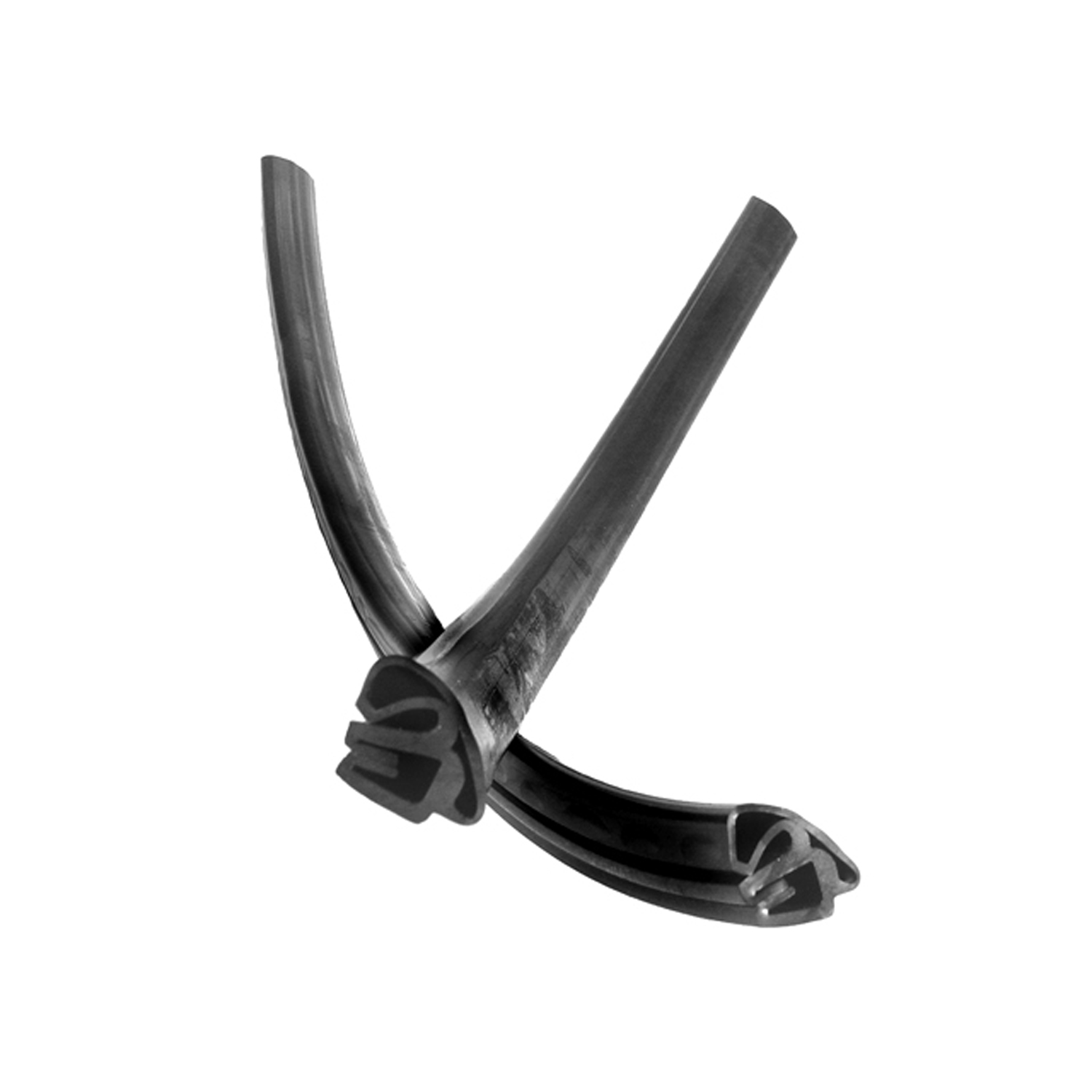 1959 Fiat 600 Vertical Seals. Pair-VS 20Vertical Seals. Pair
Why Choose Metro?
For over 100 years, Metro Moulded Parts has been the pinnacle of quality in classic car restoration parts. Our commitment to precision and authenticity in every component ensures a perfect fit and an OEM-level appearance.
- Expert Craftsmanship & Quality: Each part is a testament to our dedication to reliability and perfection, crafted from original designs and thoroughly tested.
- Advanced Technology: We use cutting-edge techniques to create flawless, long-lasting parts that surpass others in performance.
- SuperSoft Sponge – The Ultimate Door Seal: Not only are our door seals 30% softer than competitors', but they're also guaranteed to never leak. They effectively reduce wind and road noise, enhancing your classic car's comfort and driving experience.
- Proudly American: Our parts are a product of American craftsmanship, made in the USA with a spirit of excellence and heritage.
- Unrivaled Warranty: We back our products with a 30-year industry-leading warranty, a testament to our confidence in their quality.
Join us in preserving the legacy of classic cars with parts that are crafted for perfection, not just made.