
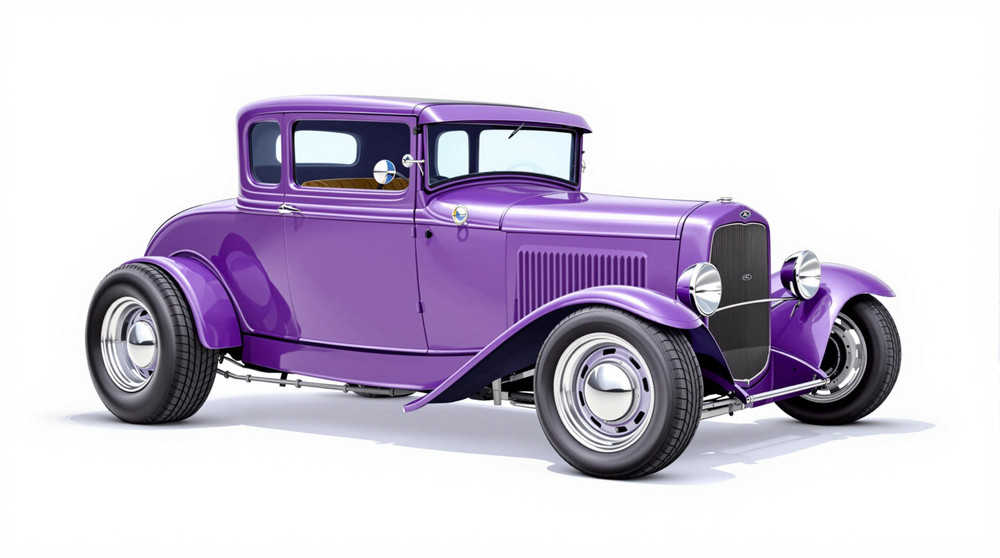
Image of 1929 Ford Model A, Note: These illustrations use artistic license and may differ from actual historical models.
Performance Metrics
Fundamental Metrics
Emotional Appeal
MMP Rating
| Engine Specifications | |
|---|---|
| Engine: | Inline 4 |
| Displacement: | 201 cu in (3.3 L) |
| Horsepower: | 40 HP |
| Torque: | Estimated 128 lb-ft |
| Compression Ratio: | 4.22:1 |
| Ignition System: | Distributor and coil |
| Cooling System: | Thermosiphon |
| Performance Specifications | |
| 0-60 Time: | Estimated 28 seconds |
| 1/4 Mile Time: | Not available |
| Top Speed: | 65 mph |
| Transmission and Drive | |
| Drive Type: | Rear-wheel drive |
| Transmission Type: | 3-speed manual |
| Fuel and Efficiency | |
| Fuel System Type: | Carburetor |
| MPG: | Estimated 20-25 MPG |
| Dimensions and Brakes | |
| Brakes: | Mechanical drum brakes |
| Wheelbase: | 103.5 in |
| Weight: | 2,265 lbs |
Note: Specifications for classic cars are given to the best of our ability, considering the limited and variant data available.
1929 Ford Model A: The Car That Replaced the Model T
The 1929 Ford Model A brought color, comfort, and more conventional driving controls to a company ready to move beyond the Model T. Built by the Ford Motor Company in the United States, it was part of the Model A line introduced in December 1927 as a 1928 model. By 1929, the new Ford had become a familiar sight on American roads and helped Ford reclaim ground in a rapidly changing car market.
The Model A arrived during a period of rising competition. Buyers were looking for cars with stronger performance, better brakes, and more modern features than the aging Model T offered. Henry Ford’s new car delivered a substantial update while keeping Ford’s emphasis on sturdy construction and mass production. One telling sign of the change: unlike the Model T’s planetary transmission and unusual driver controls, the Model A used a conventional clutch, brake, accelerator, and three-speed gearshift.
There is a remarkable scale to the Model A story. Ford built about 4.3 million Model A cars and trucks between 1927 and 1931, including roughly 1.5 million in 1929 alone. That huge output made the car more than a successful model. It helped put a modern, reasonably priced automobile within reach of millions of people.
1929 Model A Styling and Cabin
The Model A has the upright, purposeful look now associated with the classic early Ford. A tall radiator shell and prominent round headlamps frame the front end, while sweeping fenders follow the wheels down toward long running boards. The hood’s neat rows of louvers, curved windshield, and narrow tires give the car a distinctly late-1920s profile. It looks formal beside a modern car, but its proportions still feel lively, especially in open-bodied versions.
Inside, the Model A is straightforward rather than luxurious. The cabin centers on a large, thin-rimmed steering wheel, clearly arranged instruments, and a floor-mounted gearshift. Upholstery materials varied by body style and trim level, with cloth used in many closed cars and more upgraded finishes available on certain models. The body construction also reflects its era: steel panels were fitted over a structure that incorporated wood, so restoration work may involve more than polishing the visible metal.
Ford offered the Model A in a range of colors, a welcome contrast to the Model T’s long association with black paint. Exact colors and combinations varied with body style and production date. Dark blues, greens, maroons, grays, and other period shades were among the choices, while black remained a practical and popular option. Today, restorers often favor historically correct colors, but buyers also encounter cars repainted in attractive combinations that may not match the factory specification for that particular body.
Body Styles and 1929 Model A Options
The 1929 Model A range included a broad selection of passenger cars and commercial vehicles. Buyers could choose closed models such as the Tudor Sedan, Fordor Sedan, and coupes, or open cars such as the Roadster and Phaeton. Ford also offered specialty and utility styles, including the Cabriolet, station wagon, pickup, and Model AA heavy-duty truck. Availability and details could vary during the production run.
The Tudor Sedan was one of the best-known and most popular choices. Its two-door layout gave families a weather-protected cabin without the price of a more elaborate sedan. The Roadster and Phaeton have a different appeal: with their open tops and exposed passenger space, they bring the car’s prewar character to the forefront. For collectors, body style matters greatly. A common sedan can be easier to find, while unusual or especially well-preserved versions may attract a premium.
Engineering That Made the Model A Stand Out
Ford’s Model A was not a high-tech machine by modern standards, but it represented a major step forward from the Model T. Its 200.5-cubic-inch, side-valve inline-four produced about 40 horsepower. Power went through a conventional three-speed manual transmission to the rear wheels. The change to familiar driver controls made the car easier for many motorists to learn and operate.
Four-wheel mechanical brakes were another important feature. They required more adjustment and physical effort than modern hydraulic brakes, but they gave the Model A braking at all four wheels, a meaningful improvement over the Model T’s earlier system. The chassis used solid axles and transverse leaf springs, a durable arrangement suited to the roads of the day. Safety glass could be specified for the windshield, though it was not universal equipment on every car.
What set the Model A apart was the combination: useful performance, four-wheel brakes, contemporary styling, multiple body choices, and production on a massive scale. It did not invent every feature it carried. Its significance lies in bringing a more modern package to a broad buying public and helping establish expectations for what a practical American car should be.
1929 Ford Model A Performance and Driving Feel
A well-tuned Model A can reach roughly 55 to 60 mph, depending on gearing, condition, tires, and road conditions. Period cars were not usually evaluated by today’s 0-to-60 standards, and reliable factory acceleration figures are difficult to pin down. As a modern estimate, reaching 60 mph can take around 30 seconds or longer, and some cars may struggle to do so comfortably. The Model A is happiest at moderate speeds rather than being driven like a modern highway car.
Behind the wheel, the engine’s steady mechanical chatter and the gearshift’s direct, deliberate action are part of the experience. The driver works the clutch and gear lever, watches the road closely, and allows plenty of time for braking. Steering is unassisted, so it can feel heavy at low speeds, and the mechanical brakes demand anticipation. On rough roads, the leaf-spring suspension has a firm, sometimes bouncy character. On a winding route, the upright seating and narrow tires make the car feel lively, but its high center of gravity and vintage brakes call for a measured pace.
Driving a Model A is less about speed than participation. You hear the engine, feel the road, and manage each shift. That close connection is a major part of its appeal, but it also means the car requires more attention than a modern daily driver.
Owning and Maintaining a Model A
Many Model As now serve as weekend drivers, parade cars, touring vehicles, and show entries. Some owners take them on organized club tours, where moderate speeds and support from other enthusiasts suit the car well. A carefully maintained example can still be used regularly, but its age, limited crash protection, modest cruising speed, and mechanical brakes make it a poor match for fast, dense modern traffic.
Routine maintenance is relatively approachable for an owner with basic mechanical skills. The engine bay is accessible, the mechanical systems are straightforward, and parts support remains strong thanks to the enormous number of cars produced and an active community of suppliers and clubs. Regular attention to ignition, fuel delivery, lubrication, cooling, brake adjustment, and the electrical system helps keep a car dependable. Parts availability does not make every repair simple, however. Wood framing, worn steering components, incorrect past repairs, and poorly rebuilt engines can turn a seemingly inexpensive project into a substantial restoration.
Reliability depends heavily on condition and setup. A sound, properly maintained Model A can be a rewarding tour car, while a neglected example may need extensive work before it is safe and dependable. A pre-purchase inspection by someone familiar with Model As is especially valuable.
Model A Trivia and Common Criticisms
The Model A name had appeared before: Ford’s first production car, introduced in 1903, was also called the Model A. The 1927-to-1931 car was therefore a new chapter under a familiar name. Its success also helped Ford compete in the late 1920s, when rivals were offering increasingly capable cars and the Model T could no longer meet customer expectations.
The 1929 car is notable as part of the Model A’s peak production years, but it did not hold a headline-grabbing speed record. Its achievement was practical and industrial: Ford produced the model in vast numbers and offered it in a remarkable variety of forms. Model A-based trucks and commercial vehicles extended its presence well beyond family motoring.
Common criticisms are easy to understand from a modern perspective. The car is slow by current standards, its brakes need frequent attention, its ride can be choppy, and its cabin lacks modern safety equipment. It is also vulnerable in a collision compared with a contemporary vehicle. Those drawbacks are part of the ownership calculation, not details to overlook. The Model A is best enjoyed on suitable roads, at sensible speeds, and with its limitations respected.
1929 Ford Model A Collector Value and Availability
With millions produced, the Model A is not rare in the broadest sense. Good examples remain available, and parts support is unusually strong for a car nearly a century old. Rarity depends on body style, originality, condition, and provenance. A common sedan is generally easier to locate than an unusual body or a well-documented, highly original example.
As a broad U.S. market estimate, a Model A that runs but needs work might sell for about $8,000 to $18,000. A sound, usable driver or older restoration often falls around $15,000 to $30,000, while a high-quality restoration can bring roughly $30,000 to $50,000 or more. Exceptional, rare-bodied, or especially original cars may exceed that range. These are general guide figures, not appraisals: local demand, mechanical condition, restoration quality, and body style can shift a price considerably.
Model A values are usually more condition-sensitive than scarcity-driven. Over time, the market has tended to reward well-maintained cars and quality restorations, while ordinary examples have often shown steadier or softer prices after inflation is considered. Buyers should compare recent sales of the same body style and inspect the car carefully rather than assuming that age alone makes it valuable.
Why the 1929 Ford Model A Still Matters
The 1929 Ford Model A combined approachable engineering, unmistakable styling, and a wide choice of body styles at a moment when American motorists wanted more than the Model T could offer. Its four-cylinder engine, conventional controls, four-wheel mechanical brakes, and mass-market reach made it an important bridge between early motoring and the more familiar automobile age.
Nearly a century later, the Model A remains popular because it is both historically significant and genuinely usable in the right setting. It is not fast, quiet, or effortless, and that is precisely why driving one feels memorable. The Model A does more than recall the past: it lets you take part in it, one deliberate shift at a time.
1929 Ford Model A Catalog of Parts
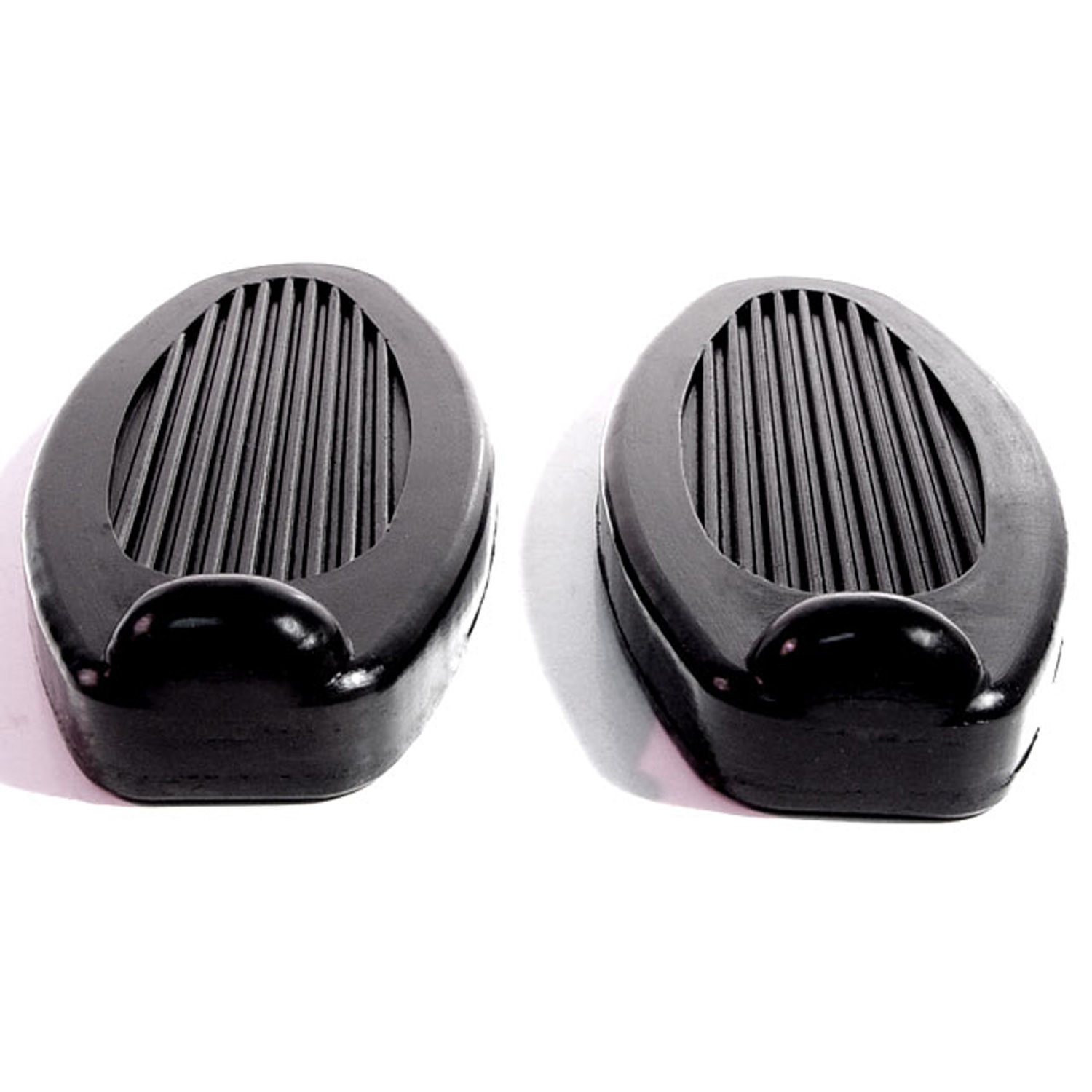 1929 Ford Model A Clutch and Brake Pedal Pads. Perfect reproduction-CB 53Clutch and Brake Pedal Pads. Perfect reproduction. 1-7/8" wide X 4-3/8" long. Pair
 1929 Ford Model A Tail-light Pads. 4" wide X 3-1/4" long. Pair-MP 681Tail-light Pads. 4" wide X 3-1/4" long. Pair
 1929 Ford Model A Arm Spacer Pad. For Landau. 1-7/8" wide X 3" long. Each-MP 682Arm Spacer Pad. For Landau. 1-7/8" wide X 3" long. Each
 1929 Ford Model A Cowl Light Pad. 1-1/8" O.D. Each-MP 701-BCowl Light Pad. 1-1/8" O.D. Each
 1929 Ford Model A Headlight Bar Pads. 1-3/4" wide X 3-3/8" long. Pair-MP 705Headlight Bar Pads. 1-3/4" wide X 3-3/8" long. Pair
 1929 Ford Model A Electrical Windshield Wiper Mounting Bar Grommet-RP 6-BElectrical Windshield Wiper Mounting Bar Grommet. Fits all models with closed body. Open end. 1-1/16" X 11/16" X 13/16". Each
Why Choose Metro?
For over 100 years, Metro Moulded Parts has been the pinnacle of quality in classic car restoration parts. Our commitment to precision and authenticity in every component ensures a perfect fit and an OEM-level appearance.
- Expert Craftsmanship & Quality: Each part is a testament to our dedication to reliability and perfection, crafted from original designs and thoroughly tested.
- Advanced Technology: We use cutting-edge techniques to create flawless, long-lasting parts that surpass others in performance.
- SuperSoft Sponge – The Ultimate Door Seal: Not only are our door seals 30% softer than competitors', but they're also guaranteed to never leak. They effectively reduce wind and road noise, enhancing your classic car's comfort and driving experience.
- Proudly American: Our parts are a product of American craftsmanship, made in the USA with a spirit of excellence and heritage.
- Unrivaled Warranty: We back our products with a 30-year industry-leading warranty, a testament to our confidence in their quality.
Join us in preserving the legacy of classic cars with parts that are crafted for perfection, not just made.