

Image of 1930 Ford Model A, Note: These illustrations use artistic license and may differ from actual historical models.
Performance Metrics
Fundamental Metrics
Emotional Appeal
MMP Rating
| Engine Specifications | |
|---|---|
| Engine: | Inline 4 |
| Displacement: | 201 cu in (3.3 L) |
| Horsepower: | 40 HP |
| Torque: | 128 lb-ft |
| Compression Ratio: | 4.22:1 |
| Ignition System: | Distributor and coil |
| Cooling System: | Thermosiphon |
| Performance Specifications | |
| 0-60 Time: | 28 seconds |
| 1/4 Mile Time: | Not available |
| Top Speed: | 65 mph |
| Transmission and Drive | |
| Drive Type: | Rear-wheel drive |
| Transmission Type: | 3-speed manual |
| Fuel and Efficiency | |
| Fuel System Type: | Updraft carburetor |
| MPG: | 20-25 MPG |
| Dimensions and Brakes | |
| Brakes: | Mechanical drum |
| Wheelbase: | 103.5 in |
| Weight: | 2,265 lbs |
Note: Specifications for classic cars are given to the best of our ability, considering the limited and variant data available.
1930 Ford Model A: The Car That Replaced a Legend
The 1930 Ford Model A brought modern conveniences within reach of ordinary Americans just as the country was heading into the Great Depression. Built by the Ford Motor Company in Dearborn, Michigan, it was the successor to the Model T, the car that had helped put America on wheels. The Model A was more than a fresh body on an old formula: it brought drivers a conventional clutch, brake, and accelerator layout, a three-speed transmission, and four-wheel brakes.
Ford introduced the Model A in December 1927, and it quickly became a landmark success. By 1930, the car had received a more refined appearance, including updated exterior details. A memorable milestone came in July 1931, when Ford produced its five-millionth Model A. The model’s run was brief compared with the Model T’s, but its mix of modern controls, dependable engineering, and broad body-style range made it one of the most influential cars of its era.
1930 Model A Design and Details
The 1930 Model A has a confident, upright profile. Its tall radiator shell, separate fenders, running boards, and exposed headlamps give it the unmistakable look of a prewar automobile. Compared with the Model T, the A feels more substantial and better finished. The front end is especially recognizable, with its vertical grille and rounded fenders framing the narrow engine bay.
Inside, the cabin is straightforward and practical. A large steering wheel, a simple instrument panel, and clearly arranged pedals make the car feel familiar to a modern driver, even if its controls require a little practice. Materials varied with body style and trim, but painted metal, durable upholstery, and straightforward fittings were typical. These were working cars, not luxury cabins, yet the Model A offered a more polished environment than many owners had known in their Model Ts.
Ford offered the 1930 Model A in a range of colors, with exact combinations depending on body style and production period. Buyers could choose from colors that included blues, greens, grays, and warm earth tones. Black was available, but the idea that every Ford of this period was black is a Model T-era misconception. Colorful paint helped the Model A look smart and contemporary on the road.
The body lineup included Tudor and Fordor sedans, coupes, roadsters, phaetons, and other open and closed configurations. The two-door Tudor Sedan was a particularly popular choice, offering weather protection and seating for a family at an accessible price. The roadster and phaeton, with their open cabins and folding tops, remain among the most instantly recognizable Model A shapes.
Why the Model A Mattered
The Model A marked a major change in Ford’s approach. The Model T had made simple, low-cost transportation famous, but by the 1920s buyers expected more comfort, better performance, and easier operation. Ford answered with a car that was still affordable and mass-produced, but considerably more modern in its controls and equipment.
Its four-wheel mechanical brakes were a major practical improvement over the Model T’s braking arrangement. The conventional three-speed transmission also made the Model A easier for new drivers to understand. Ford’s mass-production system kept prices competitive, while the broad range of body styles let one basic chassis serve commuters, families, businesses, and leisure drivers.
The Model A did not invent the automobile’s core technologies, but it helped normalize features that drivers increasingly expected. It also demonstrated that a mass-market car could combine low cost with a more refined driving experience. Its influence is visible in the transition from the very basic early automobile to the more comfortable, familiar cars of the 1930s.
Model A Engine and Road Manners
Power comes from a 201-cubic-inch, side-valve four-cylinder engine producing about 40 horsepower. It drives the rear wheels through a three-speed manual gearbox and a single-plate clutch. A Model A is not quick by modern standards, but period road tests and owner experience suggest a top speed in the neighborhood of 55 to 60 mph when the car is in good condition. Reaching 60 mph takes time, with estimates often around 30 seconds or more depending on gearing, condition, load, and road conditions.
Behind the wheel, the engine delivers a steady, purposeful putter rather than a high-revving roar. The driver shifts using a floor-mounted lever and works a clutch that rewards smooth coordination. Steering is unassisted, and the car’s solid axles and transverse leaf springs can make it feel firm over bumps. On winding roads, its narrow tires, relatively tall body, and period steering geometry call for measured inputs rather than quick, modern-style cornering.
The mechanical brakes act on all four wheels, but they need more anticipation and adjustment than modern hydraulic systems. Strong crosswinds, rough pavement, and steep descents also demand attention. The Model A is happiest at a relaxed pace, where its steady engine note and old-fashioned road feel become part of the appeal rather than shortcomings to overcome.
Owning and Maintaining a Ford Model A
Today, most Model As are used for club touring, local shows, parades, and occasional pleasure drives. Some owners keep them as carefully restored display cars, while others prefer a well-maintained driver that can be taken out regularly. Their popularity among hobbyists means that parts, manuals, and technical advice are unusually easy to find for a car nearly a century old.
The engine and chassis are mechanically accessible, and many routine repairs can be handled by an owner with basic tools and patience. That does not mean maintenance is optional. The car needs regular lubrication, brake adjustment, ignition attention, and careful monitoring of its cooling and electrical systems. Its six-volt electrical setup and gravity-fed fuel system are simple, but they differ from what most modern drivers are used to. Good parts support makes repairs manageable, while correct setup is essential for dependable running.
Common ownership complaints include the lack of modern safety equipment, the need to double-clutch or shift carefully, and limited braking performance by current standards. Cold starting and keeping an older ignition system in tune can also test a driver’s patience. These are part of the Model A’s character, but they are important considerations for anyone planning to use one on busy modern roads.
Model A Trivia and Common Myths
The Model A name was a deliberate return to Ford’s beginning: before the Model T, Ford had built an earlier Model A. The 1927 car was therefore not simply called “the next Ford.” It was a fresh start with a familiar name. Ford ultimately built about 4.3 million Model As between 1927 and 1931, making the car a mass-market success even as the Great Depression began.
There is no single universally accepted production figure for 1930 alone because model years and calendar years did not line up neatly. A reasonable estimate is roughly 1.5 million cars for the 1930 production period, within the much larger total for the full Model A run. As for celebrity connections, the Model A is often confused with the Ford V-8 made famous by Bonnie and Clyde. Their notorious car was a later V-8 Ford, not a Model A.
Another persistent myth is that the Model A had hydraulic brakes. It did not: its four-wheel brakes were mechanically operated. That system was an important advance over the Model T, but it still requires proper adjustment and does not provide the feel or stopping performance of a modern car.
1930 Ford Model A Collector Values
The Model A is generally available compared with many prewar classics, thanks to its large production run and strong enthusiast community. A complete but rough project might sell for about $5,000 to $12,000. A usable driver in fair to good condition commonly falls around $15,000 to $30,000, while a high-quality restoration may bring approximately $30,000 to $60,000 or more. Rare body styles, exceptional provenance, and especially fine restorations can exceed those ranges, sometimes substantially.
These are broad U.S. market estimates, not guaranteed sale prices. Body style, originality, mechanical condition, restoration quality, and documentation all matter. A common sedan may be easier to find than a desirable open car or specialized body, but the Model A’s overall availability and extensive parts supply make it one of the more approachable prewar classics to buy and maintain.
Values have generally been supported by the car’s historical importance and enduring fan base. Well-presented examples can hold their appeal, but restoration costs often exceed the eventual market value, so buying a sound car is usually more sensible than assuming a full rebuild will be profitable. As with other classics, excellent condition and careful documentation tend to matter more than simply having spent a large amount on restoration.
A Prewar Ford with Lasting Appeal
The 1930 Ford Model A combined practical engineering, a wide choice of body styles, and a more modern driving layout in a package that ordinary buyers could afford. Its 40-horsepower engine, mechanical four-wheel brakes, and conventional three-speed transmission made it a major step forward from the Model T, while its distinctive styling keeps it recognizable today.
It is not fast, quiet, or effortless by modern standards. That is precisely why driving one feels so involving. The 1930 Model A is a reminder of how quickly motoring changed, and of how one well-designed mass-market car helped carry that change into American homes.
1930 Ford Model A Catalog of Parts
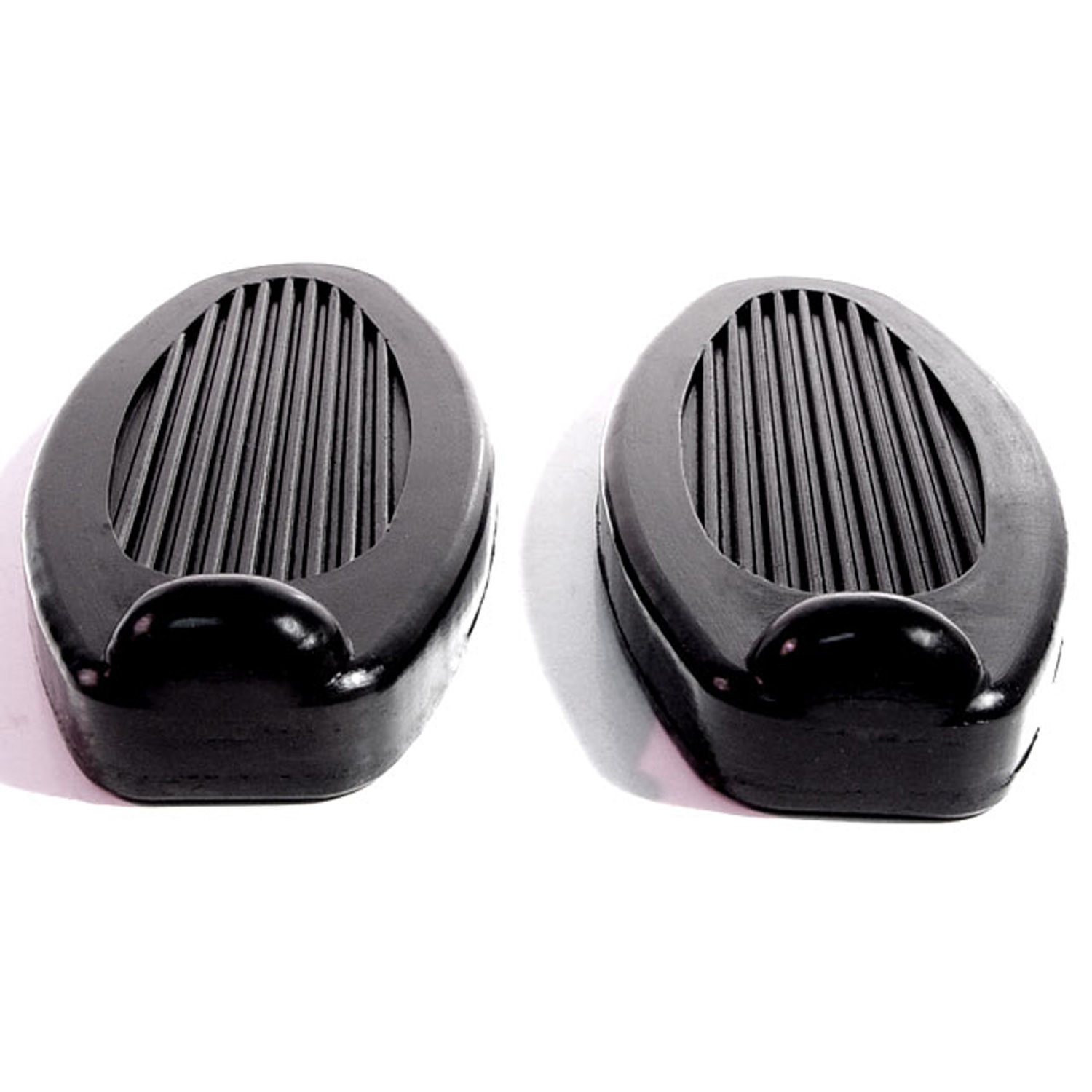 1930 Ford Model A Clutch and Brake Pedal Pads. Perfect reproduction-CB 53Clutch and Brake Pedal Pads. Perfect reproduction. 1-7/8" wide X 4-3/8" long. Pair
 1930 Ford Model A Tail-light Pads. 4" wide X 3-1/4" long. Pair-MP 681Tail-light Pads. 4" wide X 3-1/4" long. Pair
 1930 Ford Model A Arm Spacer Pad. For Landau. 1-7/8" wide X 3" long. Each-MP 682Arm Spacer Pad. For Landau. 1-7/8" wide X 3" long. Each
 1930 Ford Model A Cowl Light Pad. 1-1/8" O.D. Each-MP 701-BCowl Light Pad. 1-1/8" O.D. Each
 1930 Ford Model A Headlight Bar Pads. 1-3/4" wide X 3-3/8" long. Pair-MP 705Headlight Bar Pads. 1-3/4" wide X 3-3/8" long. Pair
 1930 Ford Model A Electrical Windshield Wiper Mounting Bar Grommet-RP 6-BElectrical Windshield Wiper Mounting Bar Grommet. Fits all models with closed body. Open end. 1-1/16" X 11/16" X 13/16". Each
Why Choose Metro?
For over 100 years, Metro Moulded Parts has been the pinnacle of quality in classic car restoration parts. Our commitment to precision and authenticity in every component ensures a perfect fit and an OEM-level appearance.
- Expert Craftsmanship & Quality: Each part is a testament to our dedication to reliability and perfection, crafted from original designs and thoroughly tested.
- Advanced Technology: We use cutting-edge techniques to create flawless, long-lasting parts that surpass others in performance.
- SuperSoft Sponge – The Ultimate Door Seal: Not only are our door seals 30% softer than competitors', but they're also guaranteed to never leak. They effectively reduce wind and road noise, enhancing your classic car's comfort and driving experience.
- Proudly American: Our parts are a product of American craftsmanship, made in the USA with a spirit of excellence and heritage.
- Unrivaled Warranty: We back our products with a 30-year industry-leading warranty, a testament to our confidence in their quality.
Join us in preserving the legacy of classic cars with parts that are crafted for perfection, not just made.