

Image of 1931 Ford Model A, Note: These illustrations use artistic license and may differ from actual historical models.
Performance Metrics
Fundamental Metrics
Emotional Appeal
MMP Rating
| Engine Specifications | |
|---|---|
| Engine Options: | Inline 4 |
| Displacement Range: | 201 cu in (3.3 L) |
| Horsepower Range: | 40 HP |
| Torque: | 128 lb-ft |
| Compression Ratio: | 4.22:1 |
| Ignition System: | Distributor and coil |
| Cooling System: | Thermosiphon |
| Performance Specifications | |
| 0-60 Time: | 28 seconds |
| 1/4 Mile Time: | Not available |
| Top Speed: | 65 mph |
| Transmission and Drive | |
| Drive Type: | Rear-wheel drive |
| Transmission Type: | 3-speed manual |
| Fuel and Efficiency | |
| Fuel System Type: | Carburetor |
| MPG: | 20 MPG |
| Dimensions and Brakes | |
| Brakes: | Mechanical drum brakes |
| Wheelbase: | 103.5 in |
| Weight: | 2,265 lbs |
Note: Specifications for classic cars are given to the best of our ability, considering the limited and variant data available.
1931 Ford Model A: The Car That Made Ford Modern
The 1931 Ford Model A brought dependable motoring to millions in a package that looked smarter, drove more confidently, and felt more up to date than the Model T it replaced. Built by the Ford Motor Company in the final year of Model A production, it represents the point when Ford moved from the simplicity of the Tin Lizzie toward the more conventional cars that would define the next generation.
The Model A first went on sale in late 1927 as a 1928 model. It was the second Ford to carry the Model A name: the company’s first production car, introduced in 1903, had also been called the Model A. By 1931, the newer Model A had become a familiar sight across the United States and in overseas markets. It was also nearing the end of its run. Ford replaced it with the V8-powered Model 18 for 1932.
One remarkable measure of the Model A’s success is its production total. Ford built roughly 4.3 million Model A cars across the full run from 1927 to 1931. The 1931 cars were among the last and most developed examples, combining the original formula with refinements made during the model’s production life.
1931 Model A Styling and Body Choices
The 1931 Model A had a recognizably upright, substantial look. Its tall radiator grille, separate rounded fenders, running boards, and exposed headlights gave it the classic profile many people picture when they think of an early-1930s Ford. Compared with the Model T, the Model A looked lower, wider, and more carefully finished. Its styling also reflected the era’s move toward enclosed passenger cars and more streamlined body shapes.
Ford offered the Model A in a wide range of body styles, including Tudor and Fordor sedans, coupes, roadsters, phaetons, convertibles, pickup trucks, and commercial bodies. The two-door Tudor sedan was a popular choice for families seeking an enclosed car at an accessible price. Open models such as the roadster and phaeton have since become especially recognizable among collectors, while the coupe offers a distinctive mix of closed-car practicality and period charm.
Color choices varied by body style and production details. Buyers could find subdued shades such as black, blue, green, and tan, along with richer colors offered for particular combinations. Black remains strongly associated with Ford’s early cars, but Model A production was not limited to black. Two-tone paint schemes and contrasting upholstery could give a car a more personalized appearance.
Inside, the Model A was simple but purposeful. The upright dashboard placed the essential controls within reach, and the cabin used practical fabrics and trim appropriate to the body style and price. Closed cars typically had upholstered seats and trim in cloth or similar materials, while open models used finishes suited to their more exposed interiors. It was not a luxury-car cabin, but compared with the Model T’s basic accommodations, it felt like a meaningful step forward.
Ford Model A Technology for Its Time
The Model A introduced a more familiar driving layout than the Model T. Its three-speed sliding-gear manual transmission, conventional clutch, and foot-operated accelerator made it easier for drivers accustomed to other cars to get comfortable. A mechanical handbrake operated the rear brakes, while a separate pedal controlled the service brakes.
Power came from a 201-cubic-inch, side-valve four-cylinder engine producing about 40 horsepower. The car used a six-volt electrical system, an electric starter, and four-wheel mechanical drum brakes. A safety-glass windshield was another important feature associated with the Model A’s equipment, reflecting growing attention to occupant protection. As with any old car, exact equipment and details can vary by body style, production date, and later restoration work.
Not every convenience worked like a modern equivalent. The windshield wiper was vacuum operated, so its speed could change with engine load. The fuel system relied on gravity rather than an electric fuel pump. These choices were straightforward for the period, but they are good reminders that the Model A was a mechanical machine, not a small modern car.
Why the Model A Changed Ford
The Model A mattered because it helped Ford remain competitive after the Model T’s long success. By the mid-1920s, buyers were looking for greater comfort, more features, and a car that felt less dated. The Model A answered with improved performance, a more conventional control layout, four-wheel brakes, and a broad range of body styles.
It also showed how a major automaker could build a car for a mass audience without offering only one basic configuration. Customers could choose a family sedan, an open touring car, a coupe, or a working truck, all based on the same general platform. That flexibility helped make the Model A useful in cities, on farms, and in small businesses.
The Model A did not introduce every feature associated with the era, and it was soon surpassed by more powerful and comfortable cars. Its lasting influence comes from how effectively it brought modern-for-the-time motoring within reach. It helped establish the expectations that cars should be easier to operate, more capable on the road, and available in body styles suited to different needs.
1931 Ford Model A Performance and Handling
A healthy Model A can reach roughly 55 to 65 mph, depending on its condition, gearing, body style, tires, and road surface. Acceleration is leisurely by modern standards. Published figures vary, but a typical car may take around 25 to 30 seconds to reach 60 mph, and some examples may not reach that speed comfortably at all. The car is happiest at moderate cruising speeds rather than being pushed hard in fast traffic.
On a smooth road, the Model A feels steady and mechanical, with a firm connection between the driver and the car. Its leaf-spring suspension can cope with ordinary road imperfections, but sharp bumps and broken pavement make themselves known. The high seating position, narrow tires, and relatively light body also mean that gusty crosswinds and uneven roads demand attention.
Steering is manual, and the driver has to work harder at low speeds than in a modern car. The brakes require more planning too. Four-wheel mechanical brakes were a major improvement over the Model T’s braking arrangement, but they do not offer the power or consistency of modern hydraulic systems. Owners should leave generous stopping distances and keep the brake system carefully adjusted.
From behind the wheel, the four-cylinder engine has a steady, distinctive putter, accompanied by the sounds of gears, tires, and wind. The controls reward deliberate inputs. Starting, shifting, steering, and braking all require more participation than they do in a modern vehicle, which is part of the Model A’s appeal for enthusiasts.
Owning and Maintaining a Model A
Today, most 1931 Model As are used for weekend drives, parades, club tours, historic displays, and car shows. Some are carefully maintained drivers, while others are restored to show standards or modified for touring. They are not ideal everyday transportation in contemporary traffic, where higher speeds, modern braking distances, and limited safety equipment can make driving stressful.
Mechanical simplicity is one of the Model A’s ownership advantages. Many routine jobs can be handled by a mechanically minded owner with standard tools and access to a good service manual. Parts support is strong because so many Model As were built and because the car has a large, active enthusiast community. Reproduction parts are widely available for many systems.
That does not mean every repair is effortless. Correctly adjusting mechanical brakes, diagnosing electrical problems, and setting up the carburetor or ignition can take patience. A car that has sat for years may need work on its fuel system, cooling system, wiring, tires, and lubrication points before it is safe to drive. The best ownership experience starts with a careful inspection and a clear understanding of the car’s maintenance history.
Model A Facts, Myths, and Criticisms
The Model A’s production scale is one of its most impressive facts: Ford built about 4.3 million across all model years. That figure is for the entire Model A run, not for 1931 alone. The model’s broad production and long parts-support network explain why it remains one of the more accessible prewar classics to find and maintain.
The Model A also belongs to a period of rapid change in American life. Cars like it helped connect rural communities with towns and cities, while offering families and businesses greater freedom of movement. Its period is often recalled in books, films, and historic displays, though famous Ford stories are sometimes misattributed. For example, the Ford V8 associated with outlaws Bonnie and Clyde was not a 1931 Model A.
Common criticisms are fair: the car is slow, noisy, and physically demanding by modern standards. Its brakes, lighting, and crash protection cannot match those of a current vehicle. Its strengths are different: straightforward mechanics, accessible parts, historic character, and a driving experience that makes every trip feel like an event.
1931 Ford Model A Values and Availability
Model A values depend heavily on body style, originality, condition, restoration quality, and the quality of the mechanical work. As a broad current-market estimate, a project car might sell for roughly $5,000 to $12,000. A usable driver often falls around $15,000 to $30,000, while a well-restored example may bring about $25,000 to $45,000 or more. Exceptional restorations, desirable body styles, or especially well-documented cars can exceed that range.
These are general estimates, not guaranteed sale prices. A clean, correctly restored sedan may be worth less than a rare or particularly desirable open model, while a rough car with hidden corrosion can be expensive even if its asking price looks attractive. Buyers should inspect the frame, body structure, brakes, engine, transmission, and restoration records before making an offer.
Model As are not scarce in the way many prewar cars are. Their large production numbers and strong enthusiast following mean that examples regularly appear on the market. Values have generally remained supported by their recognition, usability within the classic-car world, and parts availability, though individual prices can rise or fall with condition and market demand. Restoration costs can also exceed the value of an ordinary finished car, so buying the best example within budget is often the sensible approach.
Why the 1931 Ford Model A Still Matters
The 1931 Ford Model A is more than a handsome antique. It was a practical, mass-produced car that helped Ford answer changing customer expectations with better performance, more conventional controls, four-wheel brakes, and a broad choice of body styles. Its mechanical character makes it approachable for many hobbyists, while its age and limitations keep it firmly rooted in its own era.
For collectors, it offers an unusually accessible way to experience early American motoring. For everyone else, it is a reminder of how quickly cars evolved once the Model T’s time had passed. The Model A’s enduring charm is simple: it turns a drive into a connection with the people, roads, and ambitions of another age.
1931 Ford Model A Catalog of Parts
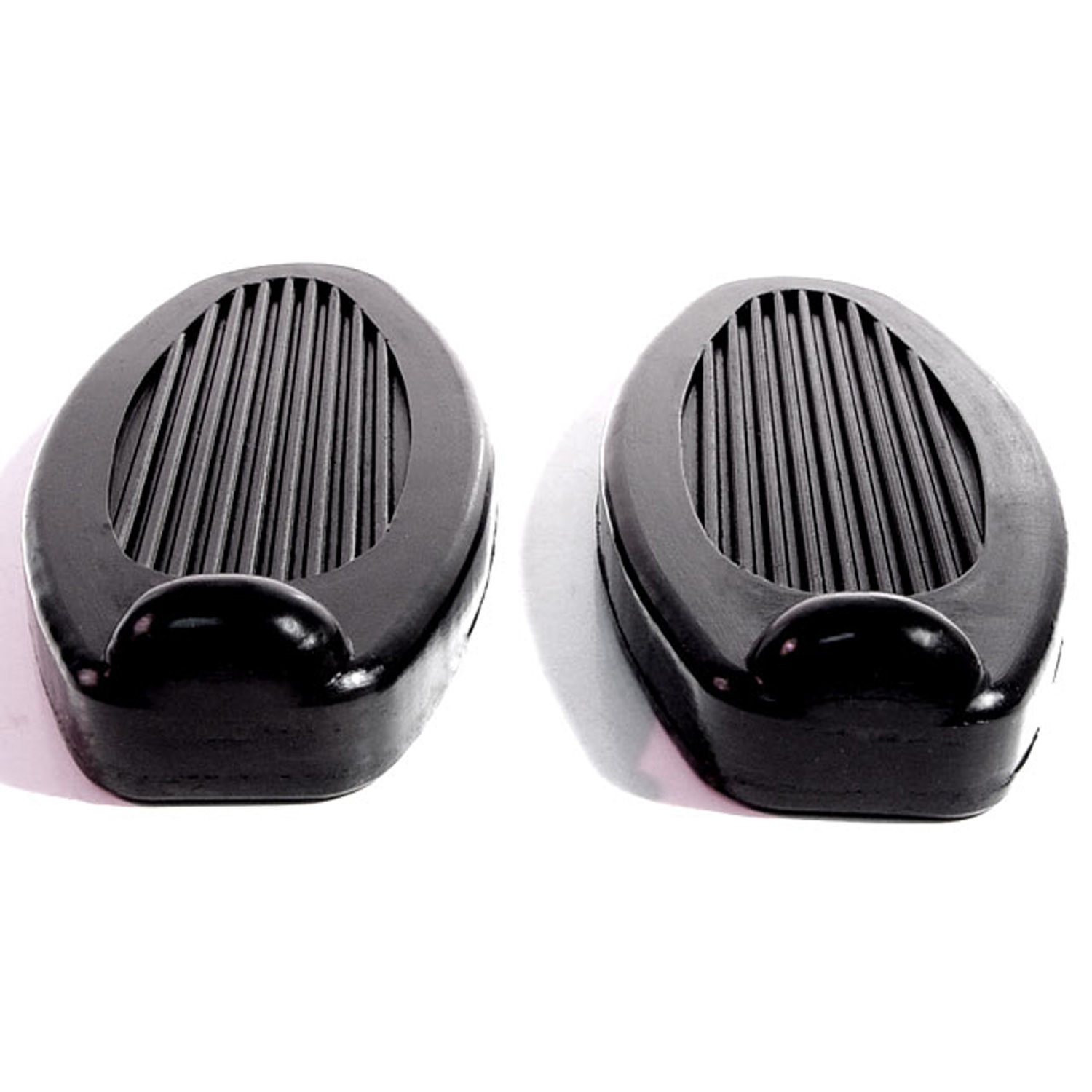 1931 Ford Model A Clutch and Brake Pedal Pads. Perfect reproduction-CB 53Clutch and Brake Pedal Pads. Perfect reproduction. 1-7/8" wide X 4-3/8" long. Pair
 1931 Ford Model A Tail-light Pads. 4" wide X 3-1/4" long. Pair-MP 681Tail-light Pads. 4" wide X 3-1/4" long. Pair
 1931 Ford Model A Arm Spacer Pad. For Landau. 1-7/8" wide X 3" long. Each-MP 682Arm Spacer Pad. For Landau. 1-7/8" wide X 3" long. Each
 1931 Ford Model A Cowl Light Pad. 1-1/8" O.D. Each-MP 701-BCowl Light Pad. 1-1/8" O.D. Each
 1931 Ford Model A Headlight Bar Pads. 1-3/4" wide X 3-3/8" long. Pair-MP 705Headlight Bar Pads. 1-3/4" wide X 3-3/8" long. Pair
Why Choose Metro?
For over 100 years, Metro Moulded Parts has been the pinnacle of quality in classic car restoration parts. Our commitment to precision and authenticity in every component ensures a perfect fit and an OEM-level appearance.
- Expert Craftsmanship & Quality: Each part is a testament to our dedication to reliability and perfection, crafted from original designs and thoroughly tested.
- Advanced Technology: We use cutting-edge techniques to create flawless, long-lasting parts that surpass others in performance.
- SuperSoft Sponge – The Ultimate Door Seal: Not only are our door seals 30% softer than competitors', but they're also guaranteed to never leak. They effectively reduce wind and road noise, enhancing your classic car's comfort and driving experience.
- Proudly American: Our parts are a product of American craftsmanship, made in the USA with a spirit of excellence and heritage.
- Unrivaled Warranty: We back our products with a 30-year industry-leading warranty, a testament to our confidence in their quality.
Join us in preserving the legacy of classic cars with parts that are crafted for perfection, not just made.