

Image of 1932 Ford Model 18, Note: These illustrations use artistic license and may differ from actual historical models.
Performance Metrics
Fundamental Metrics
Emotional Appeal
MMP Rating
| Engine Specifications | |
|---|---|
| Engine: | Flathead V8 |
| Displacement: | 221 cubic inches (3.6 liters) |
| Horsepower: | 65 hp |
| Torque: | 130 lb-ft |
| Compression Ratio: | 6.3:1 |
| Ignition System: | Distributor and coil |
| Cooling System: | Water pump |
| Performance Specifications | |
| 0-60 Time: | Estimated at around 20 seconds |
| 1/4 Mile Time: | Not available |
| Top Speed: | 78 mph |
| Transmission and Drive | |
| Drive Type: | Rear-wheel drive |
| Transmission Type: | 3-speed manual |
| Fuel and Efficiency | |
| Fuel System Type: | Carburetor |
| MPG: | Estimated at around 14-17 mpg |
| Dimensions and Brakes | |
| Brakes: | Mechanical drum brakes |
| Wheelbase: | 106 inches |
| Weight: | 2,570 lbs |
Note: Specifications for classic cars are given to the best of our ability, considering the limited and variant data available.
1932 Ford Model 18: The V8 That Changed the Road
The 1932 Ford Model 18 made eight-cylinder power attainable for ordinary American motorists, and it did so in a car with the looks and attitude that would later make it a hot rod legend. Built by the Ford Motor Company, the Model 18 was the V8 version of Ford’s 1932 lineup, introduced during the Great Depression. Its combination of relatively low price, practical engineering, and a new flathead V8 gave it a place in automotive history far beyond its original role as family transportation.
One detail still fascinates enthusiasts: Ford packed a V8 into a car that cost less than $500 in some body styles. Before the Model 18, V8 power was usually associated with expensive luxury cars. Ford’s achievement was not inventing the V8, but making one available to a much wider public.
How to Identify a Model 18
Ford offered two engine choices for 1932. The Model 18 received the new 221-cubic-inch V8, while the four-cylinder Model B used a 200.5-cubic-inch engine. The V8 produced a rated 65 horsepower, a substantial selling point at the time. Buyers could get the Model 18 in a broad selection of passenger-car and commercial bodies.
The 1932 Ford is often called the “Deuce,” a nickname drawn from the final digit of its model year. The term is especially common among hot rod enthusiasts, who prize the car’s styling, relatively light body, and roomy engine compartment. Original Model 18 cars should not be confused with later Ford V8 models, even though the flathead engine would continue to evolve through the 1930s and beyond.
Streamlined Style, Built for the 1930s
The 1932 Ford looked modern beside the upright cars of the previous decade. Its low hood, sloping windshield, rounded fenders, and gently tapered body gave it a more flowing profile. At the front, a narrow vertical grille stood between large round headlamps, while the hood’s side panels carried rows of louvers that helped with ventilation and added visual detail. The fenders swept over the wheels in broad curves, giving the car a planted, purposeful stance.
Ford offered an impressive range of body styles, including roadster, phaeton, Tudor and Fordor sedans, coupes, cabriolets, and station wagons, along with commercial bodies and pickups. The five-window coupe has become one of the most recognizable versions, thanks to its compact proportions and popularity as a hot rod. Three-window coupes, open roadsters, and certain upscale or less common bodies are especially sought after by collectors.
Inside, the Model 18 was functional rather than luxurious. The cabin typically featured cloth upholstery in closed cars, with different trim treatments available depending on the model and specification. Open cars could have more weather-resistant materials. The dashboard placed the instruments within easy view, and the simple layout reflected Ford’s emphasis on affordability and straightforward operation. The materials were appropriate for a mass-market car of the Depression era, but they were not intended to imitate the hand-finished interiors of a luxury automobile.
Factory paint choices included black as well as shades of blue, green, and maroon, though combinations varied by body style and trim. A dark, understated color suited the formal sedan bodies, while brighter hues could bring out the curves of an open roadster or coupe. As with many surviving classics, today’s paint may not match the car’s original specification, so a factory color chart or verified production record is useful when authenticity matters.
Flathead V8 Innovation
The Model 18’s defining feature was its 221-cubic-inch, L-head, or “flathead,” V8. Its valves sat in the block beside the cylinders rather than in the cylinder head, producing a compact and comparatively simple engine. The design was less efficient than later overhead-valve layouts, but it was sturdy, straightforward to manufacture, and well suited to Ford’s mass-production methods.
Ford paired the engine with a three-speed manual transmission and a conventional rear-wheel-drive layout. The chassis used transverse leaf springs at the front and rear, a design that helped keep the car simple and economical. Four-wheel mechanical brakes were standard technology for the period, though they require more effort and careful adjustment than modern hydraulic systems. The electrical system was six-volt, and the car had none of the convenience or safety equipment drivers now take for granted.
The Model 18’s significance lay in making a V8 available at a popular-car price. Ford’s compact engine packaging and large-scale manufacturing helped put eight-cylinder performance within reach of buyers who could not afford a luxury make. It also gave Ford a strong response to competitors offering six-cylinder engines. The V8 became central to the company’s identity, and the flathead engine went on to power generations of cars, trucks, and hot rods.
Performance and the Feel from Behind the Wheel
With 65 horsepower, the Model 18 was lively for its day, but its performance figures need to be understood in context. Depending on body style, gearing, mechanical condition, and testing method, a stock 1932 Ford V8 is generally credited with a top speed in the neighborhood of 70 to 80 mph. A zero-to-60-mph time is not a single dependable factory figure, but modern estimates commonly put it around 18 to 25 seconds. A heavy sedan would usually be slower than a lighter roadster or coupe.
The flathead produces a distinctive, mellow burble at idle and a deeper growl as the revs rise. Acceleration feels steady rather than explosive by modern standards. The driver works a manual gearbox, listens to the engine, and plans overtaking well ahead. There is no power steering, so parking and low-speed turns require muscle. The steering can feel loose by contemporary standards, especially if the linkage or suspension is worn.
On a smooth road, a well-maintained Model 18 can feel surprisingly composed. Its tall tires, flexible chassis, and period suspension absorb some bumps, but rough pavement can unsettle the body and send sharp impacts through the cabin. On winding roads, the driver must account for narrow tires, a relatively high center of gravity, and brakes that demand more distance and effort than modern systems. Crosswinds and road grooves can also call for active steering corrections. It is a car to drive attentively, not one to treat like a modern sports sedan.
Living with a 1932 Ford
Today, most Model 18s are cherished as show cars, weekend cruisers, restoration projects, or hot rods. A stock car attracts enthusiasts who value originality and period-correct details. A modified Deuce may have a later flathead, a modern V8, upgraded brakes, or contemporary suspension components. The right choice depends on whether the owner wants historical authenticity, easier touring, or more performance.
Basic mechanical work is within reach for an experienced home mechanic. The engine bay is accessible, the systems are comparatively uncomplicated, and many replacement parts remain available through specialist suppliers. Still, a nearly century-old car needs regular attention. Cooling-system condition is particularly important, along with ignition, fuel delivery, lubrication, steering, and brake adjustment. Original mechanical brakes can be maintained, but they must be kept in excellent order and driven with suitable following distances.
Reliability depends heavily on the quality of the restoration and the car’s maintenance history. An old Ford can be a usable touring car, but it is not a modern daily driver. Parts availability is generally good for common components, while correct trim pieces, rare body parts, and authentic accessories can take more time and money to find.
Deuce Coupe Legends and Other Trivia
The 1932 Ford’s strongest cultural legacy is its connection to hot rodding. Enthusiasts found that its compact body and V8 power made it an appealing foundation for home-built performance cars. The five-window coupe became an icon, and the “Deuce Coupe” entered popular culture through music, film, and generations of custom-car art. The yellow 1932 Ford coupe driven by John Milner in American Graffiti is one of the best-known screen appearances.
There is no single stock-car speed record that defines the Model 18. Modified 1932 Fords have competed in dry lakes racing, drag racing, and land-speed events, but those achievements belong to individual hot rods rather than the factory car. This distinction matters: the Model 18 helped inspire performance culture, but many of the fastest “1932 Fords” share little with an untouched production car beyond their basic body or frame.
Common criticisms are part of the ownership story. The original brakes, steering, and ride can feel dated, and early flathead V8s demand careful attention to cooling and general condition. The car also lacks modern crash protection and creature comforts. Those limitations do not erase its appeal, but they make a pre-purchase inspection and realistic expectations essential.
Collector Values and Availability
Ford built roughly 178,000 V8 Model 18s in 1932, according to commonly cited production estimates. Figures can vary depending on how production is counted, and the number of surviving cars is not known with precision. Many were modified, used hard, or converted into hot rods, so a genuinely original, well-documented example is much less common than the production total might suggest.
As a broad U.S. market guide in 2026, a project car may sell for roughly $10,000 to $25,000, depending on completeness and body style. A usable driver or older restoration might fall around $30,000 to $60,000. A high-quality restoration can reach approximately $60,000 to $100,000 or more, while rare body styles and exceptional, highly original cars can exceed that range. Hot rods vary even more widely: build quality, components, workmanship, and the reputation of the builder can matter more than factory originality.
Values have generally held up well compared with many ordinary prewar cars, supported by the Model 18’s strong recognition and enduring hot rod following. However, prices are highly condition-dependent. The market often rewards complete, well-documented cars, while a modified car’s value depends on the quality and appeal of its build. Buyers should compare similar body styles and carefully inspect frame condition, rust repairs, engine work, and documentation rather than relying on a single broad price estimate.
Why the Model 18 Still Matters
The 1932 Ford Model 18 joined accessible V8 power with streamlined styling and practical mass-production engineering. Its original driving experience is slow and physical by modern standards, yet its character is unmistakable: a low, handsome body, a distinctive flathead soundtrack, and a direct connection between driver and machine.
Whether preserved as a period-correct sedan, restored as a roadster, or transformed into a hot rod, the Model 18 remains one of the most influential American cars ever built. It did more than introduce affordable V8 motoring. It gave generations of drivers and builders a car they could make their own.
1932 Ford Model 18 Catalog of Parts
 1932 Ford Model 18 Windshield Post Pads. 3-1/4" wide X 4-1/2" long. Pair R&L-MP 683Windshield Post Pads. 3-1/4" wide X 4-1/2" long. Pair R&L
 1932 Ford Model 18 Door Handle Pads. 1-1/2" wide X 2-1/4" long. Pair-MP 690-ADoor Handle Pads. 1-1/2" wide X 2-1/4" long. Pair
 1932 Ford Model 18 Cowl Light Pad. 1-1/4" wide X 1-7/8" long. Each-MP 701Cowl Light Pad. 1-1/4" wide X 1-7/8" long. Each
 1932 Ford Model 18 Headlight Bar Pads. 2-1/8" wide X 3-3/4" long. Pair-MP 712-AHeadlight Bar Pads. 2-1/8" wide X 3-3/4" long. Pair
 1932 Ford Model 18 Side Window Anti-Rattle Pad. 1/4" wide X 1" long. Each-SB 73-ASide Window Anti-Rattle Pad. 1/4" wide X 1" long. Each
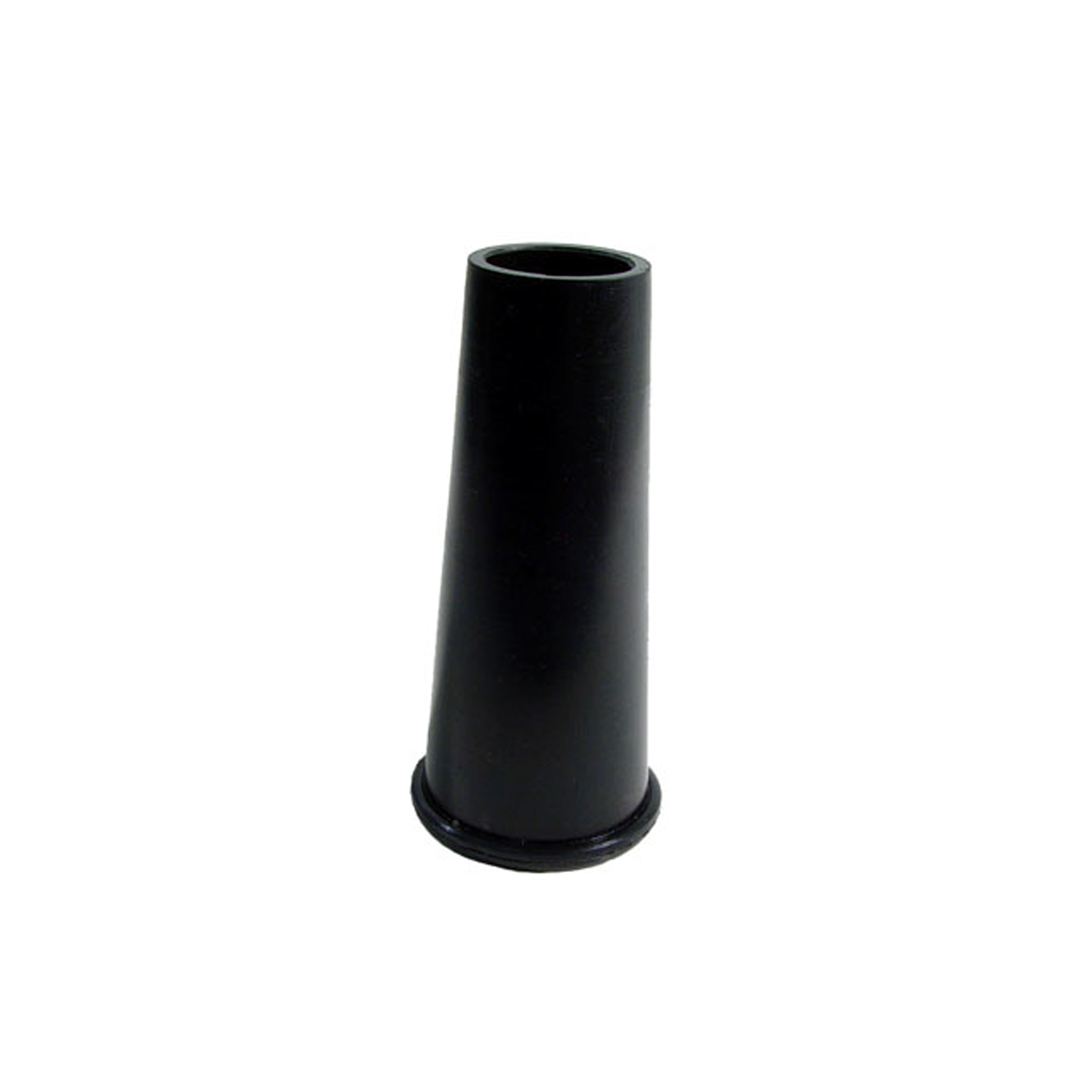 1932 Ford Model 18 Distributor Ignition Boot. 3-1/8", 1-1/4" O.D., 3/4" I.D-SM 65-DDistributor Ignition Boot. 3-1/8", 1-1/4" O.D., 3/4" I.D. Each
Why Choose Metro?
For over 100 years, Metro Moulded Parts has been the pinnacle of quality in classic car restoration parts. Our commitment to precision and authenticity in every component ensures a perfect fit and an OEM-level appearance.
- Expert Craftsmanship & Quality: Each part is a testament to our dedication to reliability and perfection, crafted from original designs and thoroughly tested.
- Advanced Technology: We use cutting-edge techniques to create flawless, long-lasting parts that surpass others in performance.
- SuperSoft Sponge – The Ultimate Door Seal: Not only are our door seals 30% softer than competitors', but they're also guaranteed to never leak. They effectively reduce wind and road noise, enhancing your classic car's comfort and driving experience.
- Proudly American: Our parts are a product of American craftsmanship, made in the USA with a spirit of excellence and heritage.
- Unrivaled Warranty: We back our products with a 30-year industry-leading warranty, a testament to our confidence in their quality.
Join us in preserving the legacy of classic cars with parts that are crafted for perfection, not just made.