
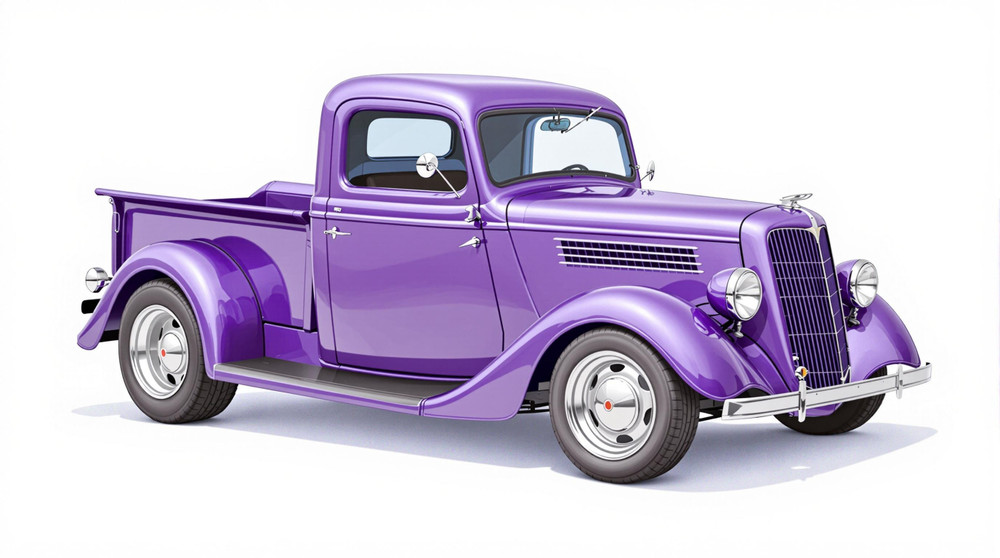
Image of 1935 Ford Model 50, Note: These illustrations use artistic license and may differ from actual historical models.
Performance Metrics
Fundamental Metrics
Emotional Appeal
MMP Rating
| Engine Specifications | |
|---|---|
| Engine: | Ford Flathead V8 |
| Displacement: | 221 cubic inches (3.6 liters) |
| Horsepower: | Estimated 85 hp |
| Torque: | 144 lb-ft |
| Compression Ratio: | Estimated 6.3:1 |
| Ignition System: | Distributor and coil |
| Cooling System: | Water-cooled |
| Performance Specifications | |
| 0-60 Time: | Information not available |
| 1/4 Mile Time: | Information not available |
| Top Speed: | 65-70 mph |
| Transmission and Drive | |
| Drive Type: | Rear-wheel drive |
| Transmission Type: | 3-speed manual |
| Fuel and Efficiency | |
| Fuel System Type: | Carburetor |
| MPG: | Information not available |
| Dimensions and Brakes | |
| Brakes: | Mechanical drum brakes |
| Wheelbase: | 112 inches |
| Weight: | 2,570 lbs |
Note: Specifications for classic cars are given to the best of our ability, considering the limited and variant data available.
1935 Ford Model 50: A Flathead V8 Workhorse
The 1935 Ford Model 50 brought the sound of a V8 to the working day, pairing a practical pickup-truck layout with the smooth, unmistakable beat of Ford’s flathead engine. Built by the Ford Motor Company in the United States, it belonged to a generation of trucks that helped move Ford beyond basic utility and into a more modern, streamlined era of commercial vehicles.
Model 50 commonly refers to Ford’s light-duty pickup, though period model names and specifications can vary across body styles and surviving records. Its appeal today rests on a memorable combination: recognizable 1930s styling, sturdy mechanicals, and a V8 that made the truck feel lively for its time. One detail that still surprises people is that this vintage pickup used mechanical brakes, not the hydraulic system many drivers now take for granted.
1935 Ford Truck Styling and Cab
The Model 50 has the unmistakable profile of a mid-1930s Ford. A tall, upright grille anchors the front end, while flowing front fenders sweep back alongside the engine compartment. The headlights sit prominently at the fenders, and the hood’s long, tapered shape gives the truck a more streamlined look than earlier, boxier work vehicles. Its generous running boards and separate fenders also make the design unmistakably prewar.
The cab was designed for function, with a broad windshield, simple doors, and a straightforward driving position. Inside, the dashboard was mostly painted metal, with clear, practical gauges rather than elaborate trim. The bench seat was typically covered in durable upholstery suited to commercial use. Materials and finishes could differ by equipment and body supplier, but comfort and ornament were secondary to easy cleaning and long service.
Ford offered the Model 50 in pickup form, and the truck platform could also be supplied in commercial configurations such as a chassis cab for specialized bodies. Depending on the seller and period terminology, related Ford commercial vehicles included delivery and utility bodies. The pickup is the most recognizable version today, especially when fitted with its original-style steel bed and tailgate.
Paint choices depended on body type, production details, and whether a vehicle was ordered for private or fleet use. Black is strongly associated with early Ford vehicles, but period Fords were also available in other colors, including shades of blue, green, and maroon. A restored truck’s color should be checked against its specific production and body records rather than assumed from a general model-year list.
Flathead V8 Technology and Historical Impact
The Model 50’s defining feature was its 221-cubic-inch (3.6-liter) flathead V8, commonly rated at about 85 horsepower in this period. The flathead placed its valves in the block beside the cylinders, making the engine relatively compact and straightforward to manufacture. It was not cutting-edge by modern standards, but it gave a working truck a useful blend of power, smoothness, and accessible mechanical design.
Ford’s V8 strategy distinguished its trucks from many contemporary light-duty rivals, which often relied on four- or six-cylinder engines. The V8 helped make the Model 50 attractive to owners who wanted a truck capable of carrying a load without feeling painfully slow on open roads. It also cemented the flathead’s reputation as a practical, tunable engine that would remain popular with hot-rodders and restorers long after its original working life.
The truck was not a technological revolution in every respect. Its brakes were mechanically operated, and its suspension and cab remained firmly rooted in the engineering of the era. Its significance lies instead in bringing a relatively powerful V8, updated styling, and mass-production know-how together in a useful commercial vehicle.
1935 Ford Model 50 Performance and Road Manners
With roughly 85 horsepower, a three-speed manual transmission, and rear-wheel drive, the Model 50 offered respectable performance for a 1935 light truck. Period gearing, tire condition, load, and mechanical state all affect how one drives today. A healthy, lightly loaded example may reach an estimated top speed in the neighborhood of 60 to 70 mph, but sustained high-speed cruising is not what the truck was designed for.
A modern 0-to-60-mph figure is difficult to pin down because reliable factory acceleration testing is scarce, and individual trucks vary widely. As a practical estimate, expect a leisurely run that can take roughly 25 seconds or more, especially with a load or tall gearing. It is best to think of acceleration as steady rather than quick.
Behind the wheel, the flathead’s low, even rumble is a major part of the experience. The driver shifts through a floor-mounted manual gearbox, works with relatively heavy steering, and plans braking well ahead. The solid-axle suspension can feel firm over broken pavement, while ruts and sharp bumps make the truck’s age apparent. On winding roads, its narrow tires, tall stance, and period steering call for measured inputs rather than modern-car confidence.
The mechanical brakes deserve particular respect. They can work well when properly adjusted and maintained, but they do not provide the same feel or stopping performance as a modern hydraulic system. A careful owner gives extra room, moderates speed, and treats the truck as a classic vehicle rather than a contemporary daily driver.
Living With a 1935 Ford Pickup
Today, most Model 50s are enjoyed as show trucks, weekend cruisers, parade vehicles, or carefully maintained hobby vehicles. Some remain in light farm or utility service, but regular commuting is less common because of their age, braking limitations, modest speed, and lack of modern safety equipment.
Maintenance is relatively approachable for an owner comfortable with vintage machinery. The flathead V8 is well understood, and a strong supply of reproduction parts, specialist services, and enthusiast knowledge helps keep many trucks on the road. Routine attention includes ignition tune-ups, cooling-system checks, lubrication, brake adjustment, and monitoring the engine for leaks or overheating.
Reliability depends heavily on the quality of a restoration and the condition of the cooling, electrical, fuel, and braking systems. A truck that has sat for years may need far more than a quick tune-up. Before buying, inspect the frame, cab corners, floor, bed, and fenders for rust or repairs, and have the engine and brakes evaluated by someone familiar with flathead Fords.
1935 Ford Model 50 Facts and Common Criticisms
The Model 50 is part of the larger flathead-Ford story. The same basic V8 architecture became a favorite among hot-rodders, who valued its compact dimensions and widespread parts support. That popularity means a restored truck may have a replacement engine, transmission, or other non-original components, so buyers seeking a factory-correct example should verify its details carefully.
There is no widely accepted, model-specific production total for every 1935 Model 50 body and configuration in readily available public records. A cautious estimate for North American light-duty Model 50 pickups is in the tens of thousands, perhaps roughly 20,000 to 40,000, but that is an informed approximation, not a confirmed factory count. Surviving examples are far fewer, and original, unmodified trucks are harder to find than restored or customized ones.
Common criticisms are rooted in its age: slow acceleration by modern standards, a busy and noisy cabin, limited weather sealing, heavy controls, and mechanical brakes. It also lacks modern crash protection. Those drawbacks are part of the ownership calculation, not defects to overlook. A well-kept Model 50 is rewarding when driven at an appropriate pace, but it is not a substitute for a modern pickup.
1935 Ford Model 50 Collector Values
Values vary with originality, body style, rust, restoration quality, and whether the truck retains its correct engine and components. As a broad current-market guide, a project or incomplete example might bring around $10,000 to $20,000. A sound driver or decent older restoration may fall around $25,000 to $45,000, while a high-quality, carefully restored truck can reach roughly $50,000 to $75,000 or more. Exceptional examples and professionally built customs may exceed those ranges, though custom work does not always add value for buyers seeking originality.
Classic Ford pickups remain popular, and well-presented Model 50s have generally held collector interest. Values can rise for excellent, documented examples, but the market is selective: a rough truck with hidden rust or an incomplete restoration can be expensive to put right. Prices also depend on location, auction timing, and the quality of the work, so recent comparable sales matter more than asking prices alone.
Why the 1935 Ford Model 50 Still Matters
The 1935 Ford Model 50 is more than a handsome old pickup. Its streamlined fenders and upright grille capture the look of the prewar years, while its flathead V8 connects it to one of the most influential chapters in American automotive history. Straightforward construction and strong enthusiast support have helped the model remain usable and recognizable decades after its working days.
It asks its driver to slow down, listen to the engine, and leave room for the road ahead. For collectors and classic-truck fans, that is precisely the point: the Model 50 turns a simple drive into a vivid encounter with the era when Ford’s V8 power became part of the everyday working world.
1935 Ford Model 50 Catalog of Parts
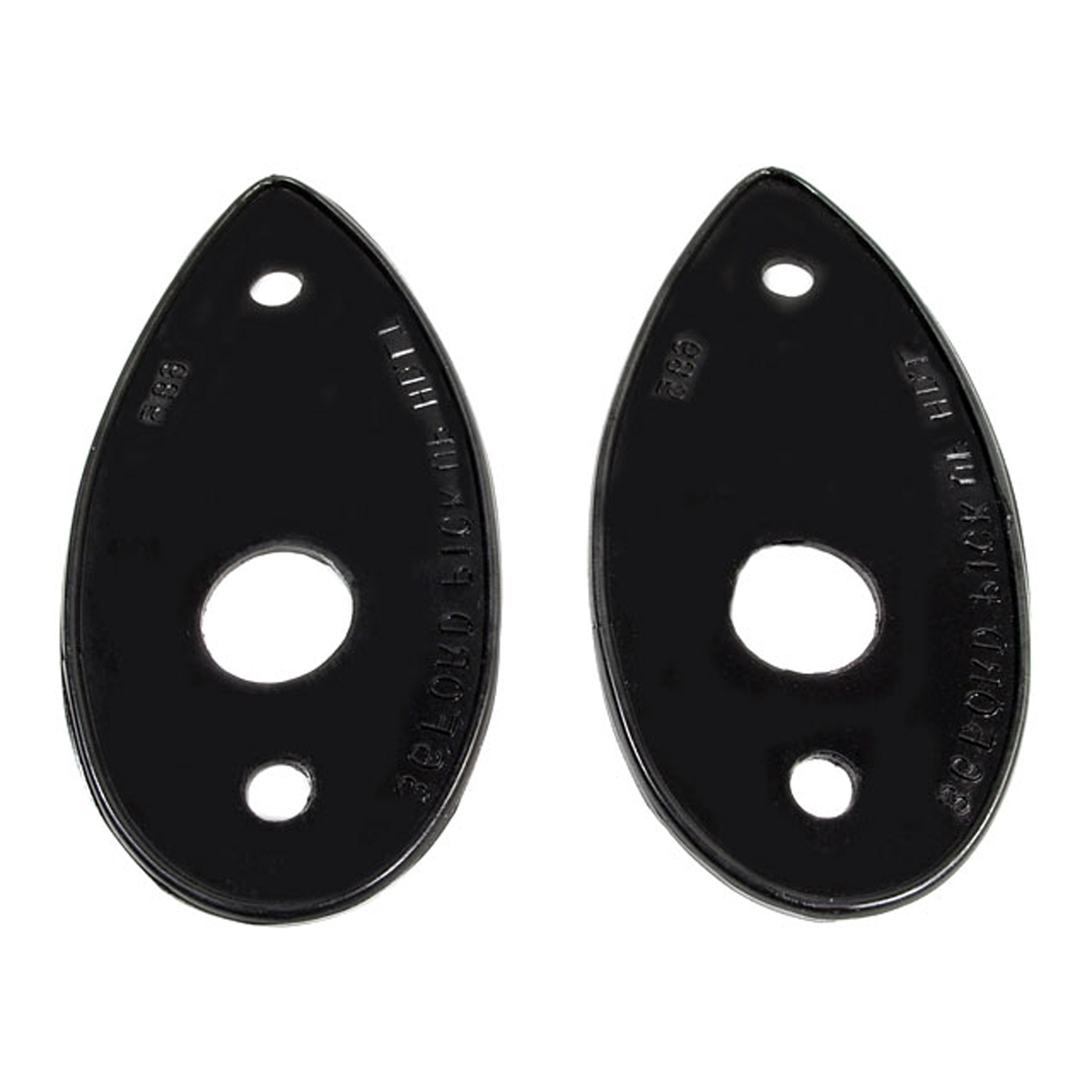 1935 Ford Model 50 Headlight Pads. 3" wide X 6-3/8" long. Pair-MP 685Headlight Pads. 3" wide X 6-3/8" long. Pair
 1935 Ford Model 50 Headlight Pads. 3-1/2" wide X 5-3/8" long. Pair-MP 703Headlight Pads. 3-1/2" wide X 5-3/8" long. Pair
Why Choose Metro?
For over 100 years, Metro Moulded Parts has been the pinnacle of quality in classic car restoration parts. Our commitment to precision and authenticity in every component ensures a perfect fit and an OEM-level appearance.
- Expert Craftsmanship & Quality: Each part is a testament to our dedication to reliability and perfection, crafted from original designs and thoroughly tested.
- Advanced Technology: We use cutting-edge techniques to create flawless, long-lasting parts that surpass others in performance.
- SuperSoft Sponge – The Ultimate Door Seal: Not only are our door seals 30% softer than competitors', but they're also guaranteed to never leak. They effectively reduce wind and road noise, enhancing your classic car's comfort and driving experience.
- Proudly American: Our parts are a product of American craftsmanship, made in the USA with a spirit of excellence and heritage.
- Unrivaled Warranty: We back our products with a 30-year industry-leading warranty, a testament to our confidence in their quality.
Join us in preserving the legacy of classic cars with parts that are crafted for perfection, not just made.