
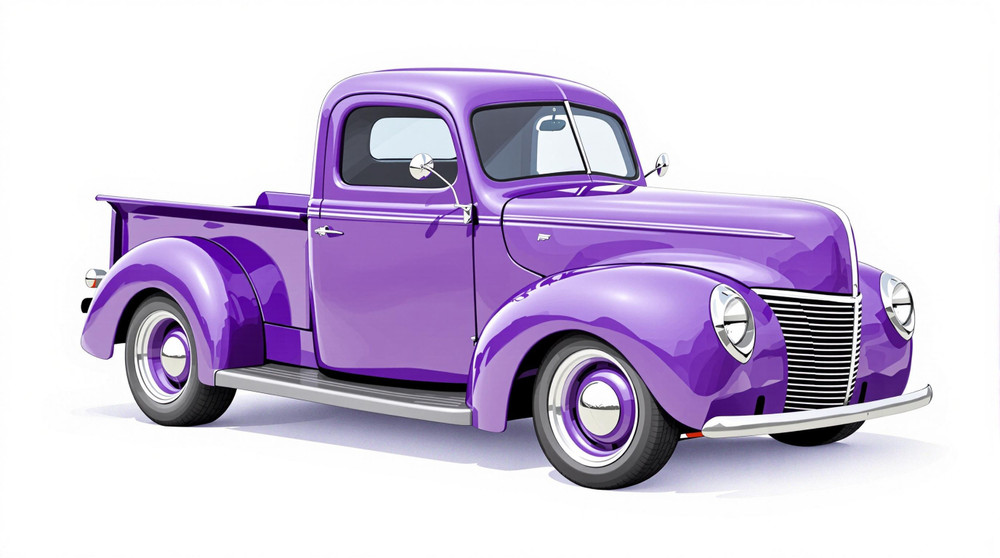
Image of 1940 Ford Pickup, Note: These illustrations use artistic license and may differ from actual historical models.
Performance Metrics
Fundamental Metrics
Emotional Appeal
MMP Rating
| Engine Specifications | |
|---|---|
| Engine: | Flathead V8 |
| Displacement: | 221 cubic inches |
| Horsepower: | Estimated 85 horsepower |
| Torque: | 155 lb-ft |
| Compression Ratio: | Estimated 6.15:1 |
| Ignition System: | Distributor and coil |
| Cooling System: | Water-cooled |
| Performance Specifications | |
| 0-60 Time: | Information not available due to the age of the vehicle |
| 1/4 Mile Time: | Information not available due to the age of the vehicle |
| Top Speed: | 75 mph |
| Transmission and Drive | |
| Drive Type: | Rear-wheel drive |
| Transmission Type: | 3-speed manual |
| Fuel and Efficiency | |
| Fuel System Type: | Carburetor |
| MPG: | Estimated 15-20 mpg |
| Dimensions and Brakes | |
| Brakes: | Hydraulic drum brakes |
| Wheelbase: | 112 inches |
| Weight: | Estimated 3,000 lbs |
Note: Specifications for classic cars are given to the best of our ability, considering the limited and variant data available.
1940 Ford Pickup: The Flathead-Era Workhorse
The 1940 Ford Pickup brought the style of a streamlined Ford passenger car to the working world, pairing rounded prewar design with the famous Ford flathead V8. Built by the Ford Motor Company in the United States, it was a practical truck for farms, shops, and small businesses at a time when dependable road transport was becoming essential to everyday commerce.
Its timing gives the truck a special place in Ford history. The 1940 model belongs to the final years of the classic prewar Ford design era, just before wartime restrictions redirected American factories toward military production. One detail that still captures enthusiasts’ attention is the contrast between its modest, utilitarian cab and the V8 power under the hood. A working truck could have the same basic engine lineage that helped make Ford’s flathead famous.
Rounded Fenders and a Purposeful Cab
The 1940 Ford Pickup has a distinctly late-1930s look: a broad, rounded hood, flowing front fenders, and a tall grille with closely spaced vertical bars. The headlights sit neatly into the front-fender design, while the cab’s gently curved roof and simple running boards give the truck a cohesive, almost elegant profile. Its proportions are compact by modern standards, but the upright stance and substantial fenders make it look ready for serious work.
Inside, the cabin is straightforward and durable rather than luxurious. The painted-metal dashboard keeps controls within easy reach, and the broad bench seat is designed for practical use. Upholstery materials and trim could vary by specification and market, but the emphasis was on hard-wearing cloth or leatherette-style finishes, not plush appointments. The driver faced simple gauges and switches, with little of the sound insulation or convenience equipment expected in a modern pickup.
Ford’s technology was equally direct. The truck used a conventional manual transmission, hydraulic drum brakes, and a solid-axle, leaf-spring suspension suited to hauling. The flathead V8 was the headline feature: its compact, side-valve layout helped deliver smooth, usable power in a package that had already earned a strong reputation among Ford drivers.
Ford offered the truck in a range of factory colors, with choices varying by body type, trim, and market. Black and subdued period colors are often associated with working Fords of the era. Today, restorations also appear in brighter shades, but a correct color depends on the particular truck’s original specification and paint history.
Pickup, Panel, and Commercial Variations
The half-ton pickup is the best-known 1940 Ford truck and the version most often pictured by collectors. Its open cargo bed made it useful for everything from farm supplies to hardware deliveries. Ford’s broader commercial lineup also included heavier-duty chassis and cabs that could be fitted with bodies such as stake beds, platforms, and delivery bodies. Panel and sedan delivery models served businesses that needed enclosed cargo space.
These configurations mattered because Ford was selling more than a single pickup design. Buyers could choose a truck to suit a particular job, then adapt it with a body built by Ford or a specialist coachbuilder. The pickup remains the most iconic today, thanks to its recognizable styling and the number of surviving examples restored for road use and display.
Why the 1940 Ford Pickup Matters
The 1940 pickup reflects a period when truck design was beginning to borrow more heavily from passenger-car styling. Its rounded sheet metal and integrated-looking front end gave it a more finished appearance than the purely functional commercial vehicles that came before it. At the same time, Ford kept the underlying formula simple: a sturdy chassis, leaf springs, straightforward controls, and a readily serviceable engine.
Its flathead V8 also helped distinguish Ford from many rivals. The engine’s appeal was not just its power; it was the smooth, accessible character of a V8 in an affordable vehicle. Ford had introduced its V8 in 1932, and by 1940 the design had become an important part of the company’s identity. The pickup carried that reputation into the commercial market, where dependable power could make a real difference to a business or farm.
The truck’s influence is visible in the lasting popularity of the prewar Ford pickup among restorers and hot-rodders. Its simple construction invites repair and modification, while its distinctive bodywork gives it an unmistakable vintage look. The 1940 model is not a technological revolution on its own, but it represents a successful blend of practical engineering and increasingly polished styling.
Flathead Power and Road Manners
A commonly encountered 1940 Ford truck engine is the 221-cubic-inch flathead V8, rated at about 85 horsepower in typical specifications. It works through a three-speed manual transmission. Exact equipment can differ by truck and market, so engine and drivetrain details should be checked against the vehicle’s identification and parts documentation.
Period trucks were not built for quick acceleration. A rough modern estimate for a stock example is around 25 to 30 seconds from 0 to 60 mph, while a top speed in the neighborhood of 60 to 70 mph may be possible under favorable conditions. Those figures are estimates, not dependable factory performance claims. Tire condition, gearing, engine health, load, and restoration choices all affect the result. The truck is happiest at more moderate cruising speeds.
On the road, the driving experience is mechanical and engaging. The flathead produces a steady, distinctive V8 burble, and the driver feels closely connected to the machinery through the manual controls and relatively light cabin insulation. The ride is firm, especially over broken pavement or when the bed is empty. Its solid axles and leaf springs were designed for load-carrying strength, not modern comfort.
On winding roads, the upright cab, vintage steering, and narrow tires call for measured inputs. Crosswinds and road imperfections are more noticeable than they would be in a contemporary pickup. Properly maintained brakes and suspension make a major difference, but this is still a 1940 vehicle, so drivers should leave extra room, avoid modern traffic expectations, and treat the truck’s handling accordingly.
Living With a 1940 Ford
Today, owners use these pickups as weekend drivers, show vehicles, parade trucks, and occasional light-duty haulers. Some are kept close to original specification, while others receive updated brakes, electrical systems, or drivetrains for easier touring. Modified examples can be enjoyable, but changes may affect authenticity and collector value.
Routine maintenance is approachable for an owner with basic mechanical skills. The engine bay is relatively accessible, and the truck’s mechanical systems are less electronically complex than those of a modern vehicle. Parts support is generally good through specialist suppliers and the classic Ford community. Still, age brings its own challenges: brake components, wiring, fuel systems, cooling passages, and decades-old repairs all deserve careful inspection.
Reliability depends heavily on condition and workmanship. A well-restored truck can be dependable for local outings, but it should not be assumed to have modern-car reliability or safety. Before regular use, check the brakes, steering, tires, wheel bearings, cooling system, and fuel lines. A professional inspection is particularly worthwhile when buying a truck with an unknown restoration history.
Flathead Trivia and Common Criticisms
The 1940 Ford Pickup is part of the larger flathead V8 story that helped popularize V8 power in more affordable American vehicles. Its engine later became a favorite foundation for hot rods, and the truck’s accessible layout makes it a natural candidate for restoration and customization. There is no widely recognized production speed or endurance record specific to the 1940 pickup; its appeal rests more on its design, engine heritage, and role as a practical prewar commercial vehicle.
Its biggest criticisms are the same ones that come with many prewar trucks. The cabin is basic, the ride can be stiff, and acceleration and braking are modest by modern standards. Original electrical and cooling systems may also require thoughtful upkeep. These are not hidden flaws so much as reminders of the truck’s age and purpose: it was built to work, not to offer contemporary comfort or safety equipment.
Collector Values and Availability
There is no single definitive production figure for every 1940 Ford truck body style, and totals can be difficult to separate by configuration. A reasonable working estimate is that production of the most familiar half-ton pickup was in the tens of thousands, perhaps around 40,000 to 60,000 examples. That is an estimate rather than a verified count, and surviving, well-documented trucks are much less common than the original production suggests.
As a broad 2026 collector-market guide, a project truck may sell for roughly $5,000 to $15,000, depending on completeness and rust. A solid driver or older restoration might fall around $15,000 to $30,000. A high-quality, correctly restored pickup can bring about $30,000 to $50,000 or more, with exceptional examples and desirable configurations potentially exceeding that range. Condition, originality, documentation, and regional demand make a substantial difference.
Values have generally benefited from steady interest in prewar Fords, flathead-powered vehicles, and vintage pickups. The market is not immune to wider collector-car cycles, and heavily modified or poorly restored trucks may not follow the same price pattern as original, well-presented examples. Over time, well-documented trucks in sound condition are likely to remain the most sought after.
A Prewar Ford With Lasting Appeal
The 1940 Ford Pickup combines graceful prewar styling, a practical work-truck layout, and the character of Ford’s flathead V8. It is not fast or comfortable by modern standards, but it offers a direct, hands-on driving experience and a clear connection to the era when American trucks were becoming both more capable and more stylish.
For collectors, restorers, and vintage-truck enthusiasts, the 1940 Ford is more than a handsome old pickup. It is a working piece of Ford history, built for the road and workday of its time, and still distinctive enough to turn an ordinary drive into an occasion.
1940 Ford Pickup Catalog of Parts
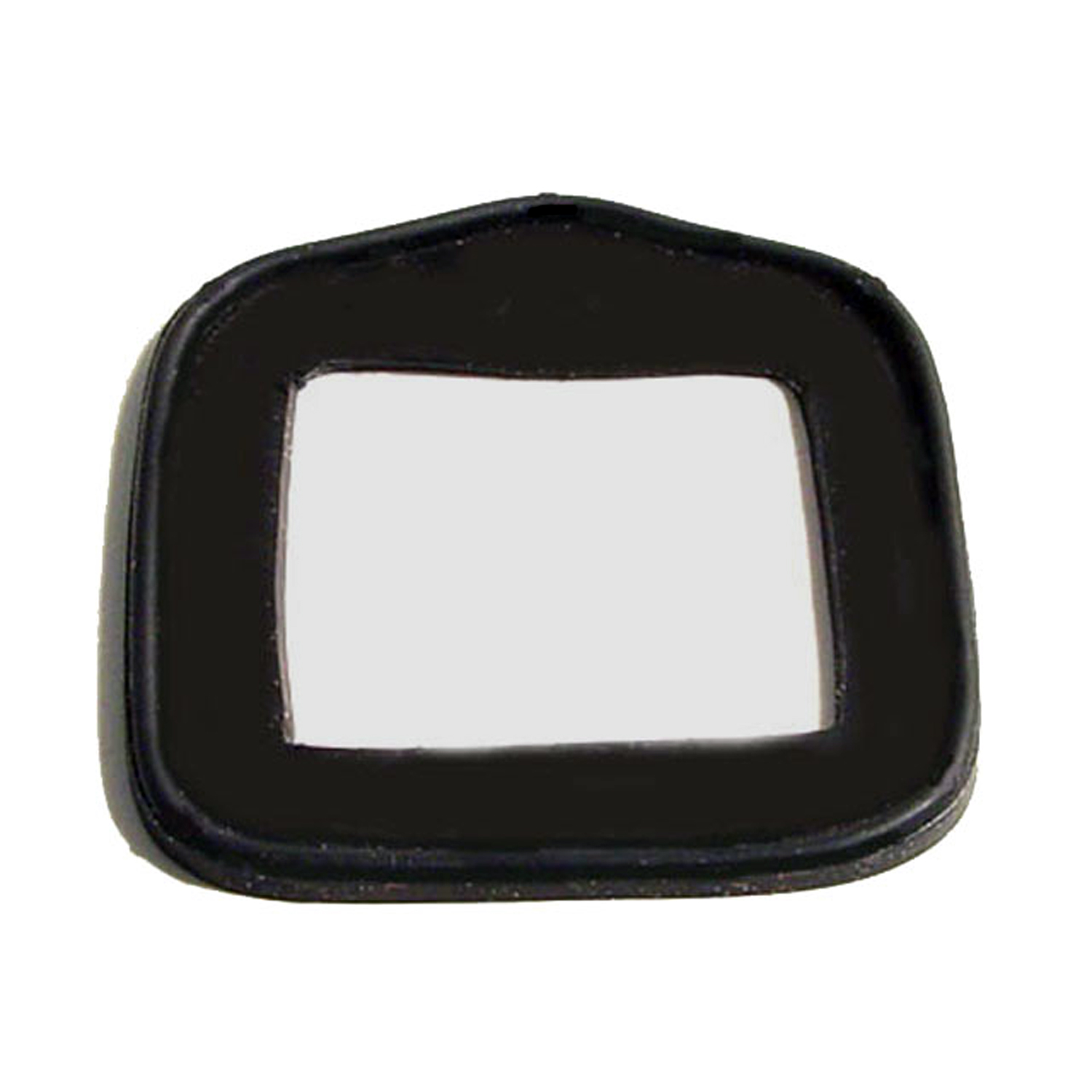 1940 Ford Pickup Windshield Wiper Transmission Pad. 2" wide X 2" long-MP 688Windshield Wiper Transmission Pad. 2" wide X 2" long. Each
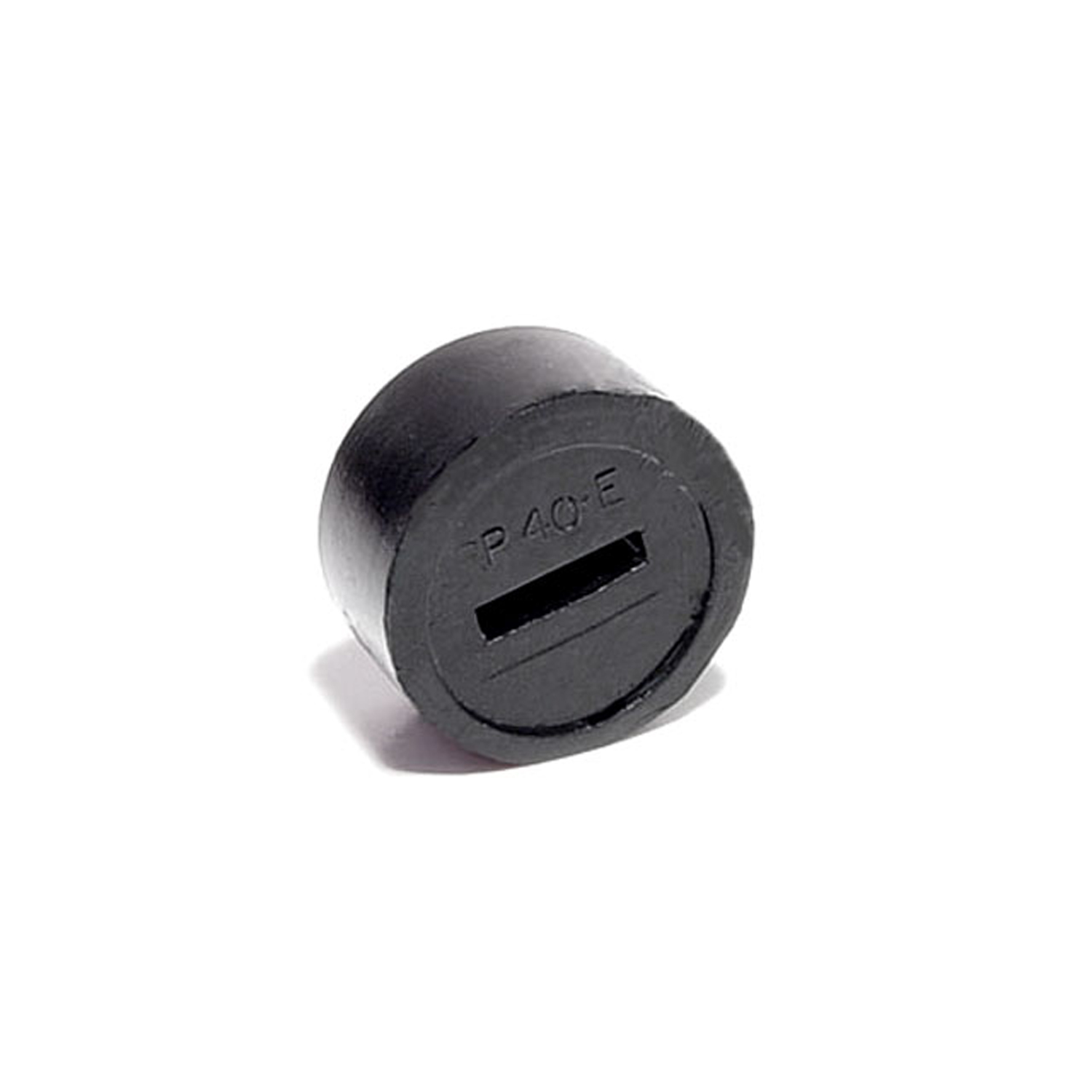 1940 Ford Pickup Door Check Rubber Cushion. 1-1/16" O.D., 1/2" Slot. Each-RP 40-EDoor Check Rubber Cushion. 1-1/16" O.D., 1/2" Slot. Each
Why Choose Metro?
For over 100 years, Metro Moulded Parts has been the pinnacle of quality in classic car restoration parts. Our commitment to precision and authenticity in every component ensures a perfect fit and an OEM-level appearance.
- Expert Craftsmanship & Quality: Each part is a testament to our dedication to reliability and perfection, crafted from original designs and thoroughly tested.
- Advanced Technology: We use cutting-edge techniques to create flawless, long-lasting parts that surpass others in performance.
- SuperSoft Sponge – The Ultimate Door Seal: Not only are our door seals 30% softer than competitors', but they're also guaranteed to never leak. They effectively reduce wind and road noise, enhancing your classic car's comfort and driving experience.
- Proudly American: Our parts are a product of American craftsmanship, made in the USA with a spirit of excellence and heritage.
- Unrivaled Warranty: We back our products with a 30-year industry-leading warranty, a testament to our confidence in their quality.
Join us in preserving the legacy of classic cars with parts that are crafted for perfection, not just made.