

Image of 1942 Ford 3/4 Ton Pickup, Note: These illustrations use artistic license and may differ from actual historical models.
Performance Metrics
Fundamental Metrics
Emotional Appeal
MMP Rating
| Engine Specifications | |
|---|---|
| Engine: | Ford Flathead V8 |
| Displacement: | 221 cubic inches |
| Horsepower: | Estimated 85-90 HP |
| Torque: | 155 lb-ft |
| Compression Ratio: | Estimated 6.15:1 |
| Ignition System: | Distributor and coil |
| Cooling System: | Water-cooled |
| Performance Specifications | |
| 0-60 Time: | Information not available due to the age of the vehicle |
| 1/4 Mile Time: | Information not available due to the age of the vehicle |
| Top Speed: | 70-75 mph |
| Transmission and Drive | |
| Drive Type: | Rear-wheel drive |
| Transmission Type: | 3-speed manual |
| Fuel and Efficiency | |
| Fuel System Type: | Carburetor |
| MPG: | Estimated 10-15 MPG |
| Dimensions and Brakes | |
| Brakes: | Drum brakes |
| Wheelbase: | 134 inches |
| Weight: | Estimated 3,200 lbs |
Note: Specifications for classic cars are given to the best of our ability, considering the limited and variant data available.
1942 Ford 3/4-Ton Pickup: A Civilian Truck Caught in Wartime
The 1942 Ford 3/4-ton Pickup is a work truck from a year when ordinary American production was abruptly overtaken by global events. Built by the Ford Motor Company, it belongs to the familiar generation of Ford pickups that combined rounded prewar styling with the practical, ladder-frame construction expected of a commercial vehicle. Its rarity today comes partly from that timing: civilian truck production was curtailed in 1942 as American factories shifted toward wartime manufacturing.
Ford’s truck range served farms, businesses, tradespeople, and local delivery routes. The 3/4-ton model occupied useful middle ground between a lighter half-ton pickup and heavier commercial trucks, offering greater carrying capacity without giving up the familiar pickup layout. A particularly intriguing detail is that a truck wearing 1942 model-year identification may have had a short civilian production life. Model year alone does not tell the whole story, since factory changes and wartime shutdowns affected when vehicles were actually built.
Rounded Fenders, Practical Cab
The truck’s exterior is unmistakably early-1940s Ford. Its rounded front fenders flow into a broad hood, while the upright cab and separate cargo bed keep the proportions straightforward and purposeful. A bold grille gives the nose its distinctive face, and the running boards visually connect the front and rear fenders. The overall effect is softer and more sculpted than a modern pickup, but still clearly designed for work.
Inside, the cab is simple and durable rather than luxurious. Expect a broad bench seat, a large steering wheel, plainly arranged gauges, and metal surfaces built to tolerate hard use. Upholstery and trim varied with specification and condition, and many surviving trucks have been reupholstered or modified over the decades. Original examples may show practical materials rather than the polished finishes associated with passenger cars of the same era.
Technology was straightforward by modern standards. The truck used conventional mechanical controls, a manual transmission, and a solid-axle, leaf-spring layout. There were no power steering systems, electronic driver aids, or modern safety equipment. That simplicity is part of its appeal: the driver can understand the machine’s basic systems, and many repairs can be handled with ordinary tools and mechanical knowledge.
Factory paint and trim choices could vary by year, body, and order, so a single definitive palette is difficult to give without checking the truck’s build information. Period Ford trucks appeared in practical colors as well as more eye-catching shades. Black, dark green, and muted blues or reds are popular restoration choices, but surviving paint, factory records, and authenticity matter more than assuming one color was universal. The best-known body style is the conventional-cab pickup with an open bed. Ford also sold commercial truck configurations across its range, though the exact body choices depended on chassis and order.
Wartime Timing and Ford’s Truck Legacy
The 1942 Ford 3/4-ton Pickup’s historical significance is closely tied to the transition from civilian production to wartime manufacturing. As the United States entered World War II, automakers redirected labor and factory capacity toward military needs. Civilian vehicle production was sharply restricted, making 1942 a break between the prewar market and the postwar boom in new cars and trucks.
Ford pickups were valued for their sturdy construction and adaptability. Their chassis could support a range of working bodies, while familiar mechanical components made them serviceable in towns and rural communities. The 3/4-ton capacity also made the truck useful to operators who needed more payload than a light pickup could provide but did not require a large commercial vehicle.
It was not a revolutionary design in the sense of introducing a wholly new vehicle architecture. Its importance lies in how effectively it carried forward established truck engineering at a historic turning point. The basic recipe of a durable frame, straightforward controls, a useful cargo bed, and widely understood mechanical systems remains central to pickup design today.
Flathead Character and Road Manners
Engine and equipment details can vary by truck specification, so buyers should verify the installed engine rather than rely on a generic description. Period Ford trucks could be equipped with flathead V8 power, and six-cylinder options were also part of Ford’s commercial offerings around this era. These engines used simple, period-appropriate technology and were paired with a manual transmission, typically a three-speed unit.
There is no dependable modern-style performance figure for every 1942 3/4-ton configuration. As a broad road-going estimate, a healthy, lightly loaded truck might reach roughly 55 to 65 mph, though gearing, tires, engine condition, and load can change that substantially. A 0-to-60-mph run is slow by today’s standards and may take around 25 to 35 seconds or longer. That is an estimate, not a factory-certified figure, and a heavily loaded work truck is not a vehicle to test for acceleration.
Behind the wheel, the truck feels substantial and direct. The engine’s low, pulsing exhaust note, manual gear changes, and large steering wheel make every drive a physical experience. The suspension is designed to carry cargo, so an unloaded truck can feel firm and choppy over rough pavement. With weight in the bed, it may settle into a more composed ride, though bumps and ruts still make themselves known.
On winding roads, the tall body, solid axles, and vintage tires call for smooth inputs and moderate speeds. Crosswinds can move the truck around, especially when it is unloaded, and braking distances are far longer than those of a modern pickup. This is a vehicle to drive with anticipation, not one to hustle through corners.
Living With a 1942 Ford Pickup
Today, most examples are used as weekend drivers, restored show vehicles, farm or property trucks, and rolling pieces of local history. Some owners keep them close to original, while others add upgrades such as more modern brakes, electrical components, or engine parts. Modifications can make a truck easier to use, but they may reduce its appeal to collectors seeking originality.
Routine maintenance is approachable for an owner comfortable with older vehicles. The mechanical systems are comparatively uncomplicated, and many common service tasks do not require specialized diagnostic equipment. The challenge is finding the right parts and sorting out decades of repairs. Electrical wiring, cooling systems, brake components, and fuel delivery deserve careful inspection, particularly on trucks that have been stored for years or restored on a budget.
Reliability depends heavily on condition and maintenance. A sound, correctly restored truck can be enjoyable for local trips, but it should not be expected to behave like a modern daily driver. Before regular use, check the brakes, tires, steering, wheel bearings, cooling system, and charging system. A professional inspection is wise if the truck will carry loads or travel at highway speeds.
Little-Known Details and Common Complaints
The most compelling fact about the 1942 model is its historical timing. Civilian production was curtailed as the United States entered wartime manufacturing, leaving surviving trucks as reminders of the sudden change in American industry. Some period vehicles were also used in military or government service, but a civilian 3/4-ton pickup should not be described as a military vehicle without documentation proving its history.
There is no widely recognized speed, sales, or endurance record associated specifically with the 1942 Ford 3/4-ton Pickup. Its appeal is more grounded: it represents a useful Ford work truck from a scarce and consequential model year. Nor is there a reliable single production total for this exact pickup configuration readily applicable to every surviving body and chassis variation. Ford produced trucks in large numbers, but the 1942 civilian shutdown makes precise model-by-model totals difficult to establish.
Common criticisms are familiar to anyone who has driven a prewar truck: slow acceleration, heavy steering, basic brakes, limited weather protection, and a ride that can be harsh when the bed is empty. Parts availability is generally better than for many obscure commercial vehicles, but specific 1942 trim, sheet metal, and correct original components can still be challenging to source.
Collector Value and Availability
Values vary widely with rust, completeness, originality, mechanical condition, restoration quality, and documentation. As a broad U.S. market estimate for 2026, a rough project truck might fall around $5,000 to $12,000. A running, presentable driver could be in the $12,000 to $25,000 range, while a well-restored example may bring roughly $25,000 to $45,000 or more. Exceptional, highly authentic trucks can exceed those estimates, while incomplete or heavily corroded examples may sell for less.
The 1942 3/4-ton Pickup is uncommon compared with more familiar postwar Ford pickups, but it is not necessarily a one-of-a-kind rarity. The exact number produced in this configuration is difficult to confirm, so any estimate should be treated cautiously. A reasonable description is that thousands may have been built, rather than assuming a precise production figure without factory records.
Values have generally benefited from interest in early pickups and wartime-era vehicles, though the market is selective. Quality restorations and sound original trucks tend to attract the strongest attention. Projects can be harder to sell because bodywork, correct parts, and restoration labor quickly add up. For buyers, condition and documentation are more important than a seller’s claim that a particular truck is rare.
Why the 1942 Ford 3/4-Ton Still Matters
The 1942 Ford 3/4-ton Pickup blends useful prewar engineering, distinctive rounded styling, and a direct connection to the wartime changeover that reshaped American manufacturing. It is not fast or refined by modern standards, but it offers something many newer trucks cannot: a hands-on driving experience and a tangible link to an important moment in Ford history.
For collectors and enthusiasts, its greatest strength is its honesty. It was built to work, caught in a remarkable year, and has endured as a memorable example of the American pickup before the postwar boom. Every surviving 1942 Ford 3/4-ton is more than an old truck. It is a working piece of history with a story still written in its steel, its controls, and the sound of its engine.
1942 Ford 3/4 Ton Pickup Catalog of Parts
 1942 Ford 3/4 Ton Pickup Headlight Assembly Housing Gasket. 8-5/8" O.D., 8" I.D-HR 11Headlight Assembly Housing Gasket. 8-5/8" O.D., 8" I.D. Pair
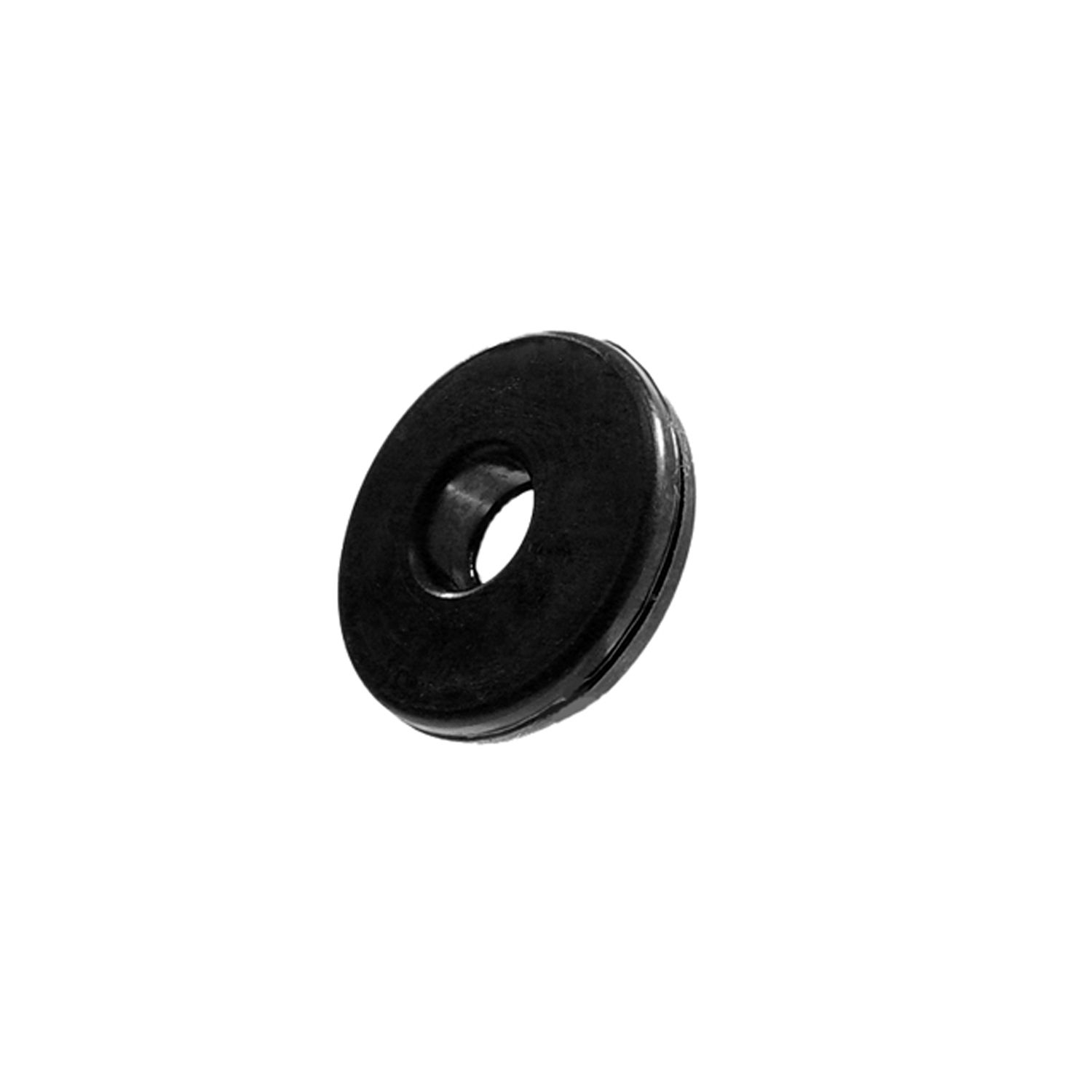 1942 Ford 3/4 Ton Pickup Headlight Wires through Inner Splash Pan, Front Fenders-SM 96Headlight Wires through Inner Splash Pan, Front Fenders. Two used per car. 3/8" I.D., 1-5/16" O.D. Each
 1942 Ford 3/4 Ton Pickup Wiper Motor Control Wire Grommet. Fits a 3/16" to 1/4" hole-SM 97Wiper Motor Control Wire Grommet. Fits a 3/16" to 1/4" hole. 3/32" center hole. Each
Why Choose Metro?
For over 100 years, Metro Moulded Parts has been the pinnacle of quality in classic car restoration parts. Our commitment to precision and authenticity in every component ensures a perfect fit and an OEM-level appearance.
- Expert Craftsmanship & Quality: Each part is a testament to our dedication to reliability and perfection, crafted from original designs and thoroughly tested.
- Advanced Technology: We use cutting-edge techniques to create flawless, long-lasting parts that surpass others in performance.
- SuperSoft Sponge – The Ultimate Door Seal: Not only are our door seals 30% softer than competitors', but they're also guaranteed to never leak. They effectively reduce wind and road noise, enhancing your classic car's comfort and driving experience.
- Proudly American: Our parts are a product of American craftsmanship, made in the USA with a spirit of excellence and heritage.
- Unrivaled Warranty: We back our products with a 30-year industry-leading warranty, a testament to our confidence in their quality.
Join us in preserving the legacy of classic cars with parts that are crafted for perfection, not just made.