

Image of 1943 Ford Jeep, Note: These illustrations use artistic license and may differ from actual historical models.
Performance Metrics
Fundamental Metrics
Emotional Appeal
MMP Rating
| Engine Specifications | |
|---|---|
| Engine: | Engine Options: L134 Go Devil |
| Displacement: | Displacement Range: 134.2 cu in (2.2 L) |
| Horsepower: | Horsepower Range: 54 hp |
| Torque: | Torque: 92 lb-ft |
| Compression Ratio: | Compression Ratio: 6.48:1 |
| Ignition System: | Ignition System: 6-volt |
| Cooling System: | Cooling System: Liquid-cooled |
| Performance Specifications | |
| 0-60 Time: | 0-60 Time: N/A |
| 1/4 Mile Time: | 1/4 Mile Time: N/A |
| Top Speed: | Top Speed: 65 mph |
| Transmission and Drive | |
| Drive Type: | Drive Type: 4WD |
| Transmission Type: | Transmission Type: 3-speed manual |
| Fuel and Efficiency | |
| Fuel System Type: | Fuel System Type: Carburetor |
| MPG: | MPG: 15 mpg |
| Dimensions and Brakes | |
| Brakes: | Brakes: Hydraulic drum brakes |
| Wheelbase: | Wheelbase: 80 in |
| Weight: | Weight: 2,337 lbs |
Note: Specifications for classic cars are given to the best of our ability, considering the limited and variant data available.
1943 Ford GPW: The Wartime Jeep Built by Ford
The 1943 Ford GPW was designed to go where roads ended, carry a small crew and keep moving under conditions that would stop an ordinary car. Often called a “Ford Jeep,” it was Ford’s version of the compact four-wheel-drive military vehicle developed to a U.S. Army specification. Its simple shape became one of the most recognizable silhouettes of the Second World War.
Ford built the GPW under contract as a counterpart to the Willys MB. The two vehicles followed the same basic Army design, with Ford producing its own version rather than inventing a separate model. In the GPW designation, “G” referred to a government contract, “P” to Ford’s classification for an 80-inch-wheelbase reconnaissance car, and “W” indicated the Willys-designed engine. The result was a vehicle that combined a Willys powertrain with Ford manufacturing.
One detail that makes the GPW especially interesting to collectors is that it was built for wartime standardization, not showroom individuality. Ford and Willys vehicles were meant to perform the same job and share many parts, yet small production differences, including Ford “F” marks on certain components, can help identify an original Ford-built example today.
Flat-Fender Design and Practical Details
The GPW’s styling was dictated by utility. Its short, upright body had flat fenders, a broad hood, exposed round headlights and a vertical-slot grille. The windshield could fold forward onto the hood, lowering the vehicle’s profile, while the open sides made it easy for troops to climb in and out. There was little trim and almost no bodywork that did not serve a practical purpose.
Inside, the cabin was equally straightforward. Painted metal surfaces, simple gauges, a plain steering wheel and durable seat coverings took priority over comfort or decoration. The front seats accommodated the driver and passenger, while a rear bench or other seating arrangement could carry additional personnel. A canvas top and removable side curtains offered some protection from weather, but the Jeep remained an exposed, noisy vehicle by design.
Olive drab was the best-known finish and the most familiar choice on restored examples. Military paint shades and markings varied with service, unit and period, and some vehicles were repainted during their working lives. The GPW did not offer the consumer-style palette or range of body styles found on a civilian car. Its defining configuration was the open, two-door utility body. Equipment could vary, however, with items such as a canvas top, blackout lighting, radio gear, pioneer tools, a trailer connection or specialist cold-weather and fording equipment.
Wartime Engineering and Jeep Legacy
The GPW used a 134-cubic-inch (2.2-liter) L-head four-cylinder engine, commonly known as the Go-Devil. In typical specification it produced about 60 horsepower and around 105 lb-ft of torque. A three-speed manual transmission and a two-speed transfer case sent power to the wheels, allowing the driver to select four-wheel drive when the terrain called for it. Its 80-inch wheelbase and compact footprint helped it maneuver on narrow tracks and through tight spaces.
Ford’s contribution was significant because the Army needed vehicles in enormous numbers and could not depend on a single manufacturer. Ford’s factories applied mass-production methods to a design intended for hard service, helping expand supply during wartime. Across the war, Ford produced roughly 277,000 GPWs. The exact number built in 1943 alone is less consistently reported, but it was a major production year.
The Jeep’s influence continued after the war. Its compact four-wheel-drive layout helped establish the template for later civilian 4x4s, including the postwar Willys CJ range. The GPW also demonstrated that a small, relatively light vehicle could be more useful in many military roles than a larger truck. Its lasting reputation comes not from luxury or speed, but from mobility, versatility and ease of repair.
Performance on Road and Trail
A 1943 GPW could reach roughly 60 to 65 mph in favorable conditions, but sustained high-speed driving was not its strong suit. A precise 0-to-60-mph figure is difficult to pin down because results depend on gearing, vehicle condition, load and testing method. As a broad estimate, acceleration to 60 mph takes around 25 to 30 seconds or longer. In period use, getting moving reliably and climbing difficult ground mattered much more than quick acceleration.
On rough tracks, the short wheelbase, low gearing and four-wheel drive made the Jeep impressively capable. It could crawl over uneven ground and negotiate ruts that would challenge a passenger car. The trade-off was a firm, choppy ride. On paved roads, the narrow stance, light weight and simple suspension demanded attention, especially in crosswinds or at higher speeds. Drivers generally find it happiest at a steady 45 to 50 mph rather than near its top speed.
The driving experience is direct and physical. The four-cylinder engine produces a busy mechanical note, the manual steering takes effort at low speeds, and the unassisted brakes require a deliberate foot. Controls are simple, but the driver has to think ahead: select the right gear, use the transfer case appropriately and allow generous braking distance. It feels less like driving a modern SUV and more like operating a piece of practical machinery.
Living With a 1943 Ford GPW
Today, most GPWs are used as collector vehicles, historic military vehicles, parade participants or trail machines. Some owners take them on organized off-road events, while others preserve them for shows and living-history displays. They can be driven on public roads where local registration and safety rules permit, but they are not especially comfortable or quiet daily transportation.
Mechanical simplicity is one of the GPW’s great ownership advantages. The engine, gearbox and axles are relatively straightforward, and many jobs can be handled by an experienced home mechanic with ordinary workshop tools. Parts availability is generally good because of the large number of surviving Ford and Willys Jeeps and the strong reproduction-parts market. The challenge is often not finding a replacement part, but determining whether a vehicle has the correct original components or a mix of wartime and later parts.
Before buying, inspect the frame for corrosion or poor repairs, check the body for rust and look closely at the drivetrain. A running engine does not prove that the four-wheel-drive system, transfer case and brakes are sound. Collectors should also check serial numbers, Ford-marked components and military records where available. A Jeep that has been restored with care can be reliable, but originality, workmanship and documentation have a major effect on value.
Ford GPW Facts and Common Criticisms
The GPW served in the European, Pacific and other wartime theaters as a personnel carrier, reconnaissance vehicle, communications platform and general-purpose runabout. Its basic design could be adapted to different jobs with equipment such as radios, trailers and specialist kits. The Jeep’s wartime presence became so widespread that it emerged as a symbol of Allied mobility, though individual vehicles rarely have a famous history unless their service records are documented.
There is no dependable global count of surviving 1943 Ford GPWs. Many were used, repaired, rebuilt or scrapped after military service, while others were modified for civilian work. Thousands are believed to survive worldwide, but original, well-documented examples are much less common than restored or mixed-component vehicles.
Its limitations are part of the story too. The ride is harsh, weather protection is minimal, road noise is substantial and highway performance is modest. The small cabin can feel cramped, and the vehicle’s age means that safety features expected in a modern car are absent. For collectors, those drawbacks are balanced by its rugged character, historical importance and unusually straightforward mechanical layout.
Collector Values and Market Outlook
Prices vary substantially with condition, originality, provenance and location. As a broad current-market guide, a project vehicle may sell for about $8,000 to $15,000, while a sound driver-quality example often falls around $15,000 to $30,000. A well-restored GPW may bring roughly $25,000 to $45,000, with exceptional, highly original or unusually well-documented examples sometimes exceeding $50,000. These are estimates rather than guaranteed sale prices, and restoration quality matters more than a fresh coat of paint.
The market has generally rewarded complete, correctly restored examples and vehicles with convincing wartime documentation. Values can fluctuate with the wider classic-car market, and restoration costs may exceed what a finished Jeep is worth. Buyers should therefore treat a GPW as a historically important hobby vehicle rather than a guaranteed investment. Over the long term, its cultural recognition and limited supply of truly original examples support collector interest.
Why the 1943 Ford Jeep Still Matters
The 1943 Ford GPW was not built to impress with speed, plush materials or styling flourishes. It was built to be compact, repairable and useful in demanding conditions, and it helped Ford meet the enormous logistical needs of wartime production. Its simple body, four-wheel-drive hardware and practical engineering went on to influence generations of civilian off-road vehicles.
More than eight decades later, the GPW remains a vivid reminder that great automotive design is not always about comfort or complexity. Sometimes it is about making a small machine tough enough to carry people and supplies wherever they are needed.
1943 Ford Jeep Catalog of Parts
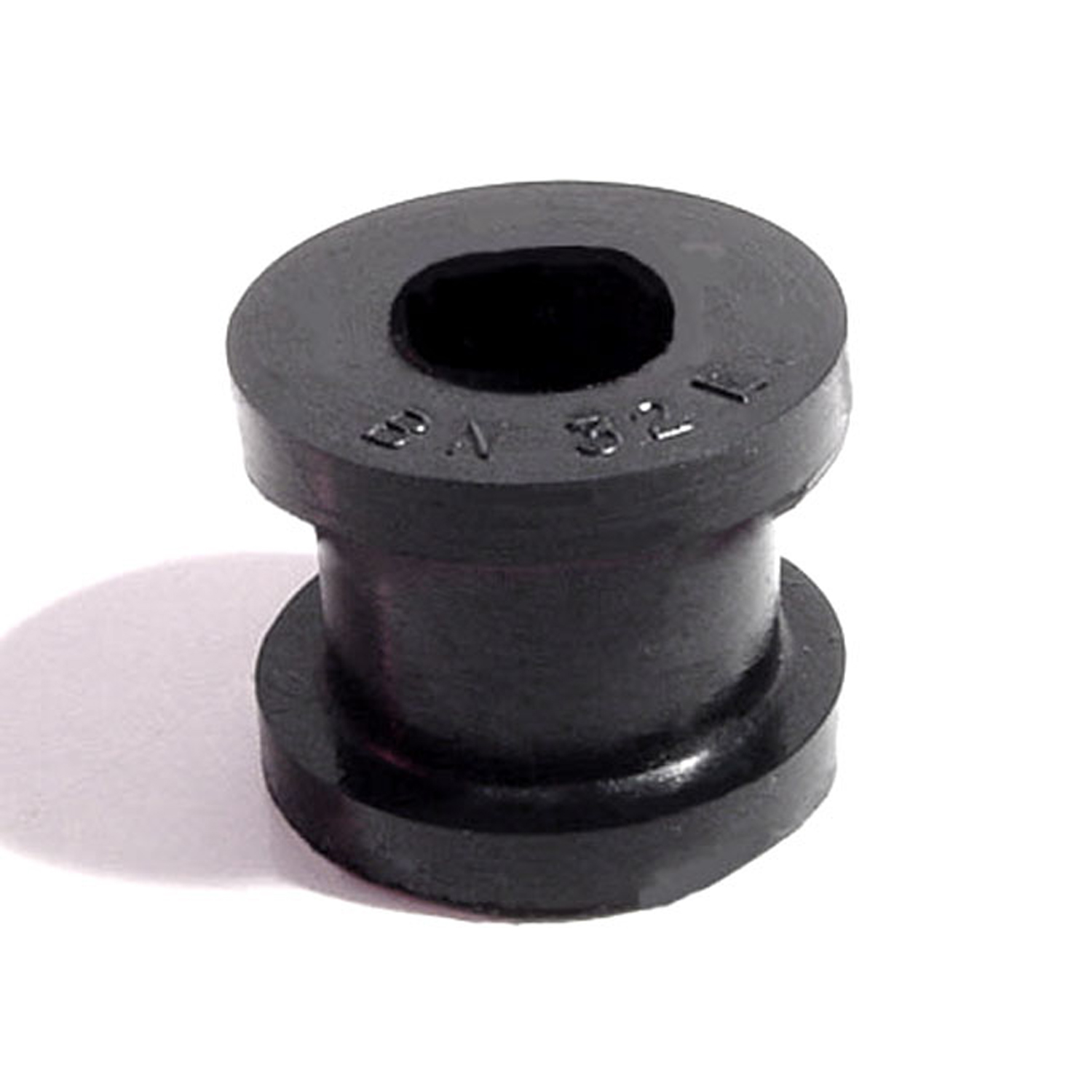 1943 Ford JEEP Generator Support Insulator Bushing. Each-BN 32-EGenerator Support Insulator Bushing. Each
Why Choose Metro?
For over 100 years, Metro Moulded Parts has been the pinnacle of quality in classic car restoration parts. Our commitment to precision and authenticity in every component ensures a perfect fit and an OEM-level appearance.
- Expert Craftsmanship & Quality: Each part is a testament to our dedication to reliability and perfection, crafted from original designs and thoroughly tested.
- Advanced Technology: We use cutting-edge techniques to create flawless, long-lasting parts that surpass others in performance.
- SuperSoft Sponge – The Ultimate Door Seal: Not only are our door seals 30% softer than competitors', but they're also guaranteed to never leak. They effectively reduce wind and road noise, enhancing your classic car's comfort and driving experience.
- Proudly American: Our parts are a product of American craftsmanship, made in the USA with a spirit of excellence and heritage.
- Unrivaled Warranty: We back our products with a 30-year industry-leading warranty, a testament to our confidence in their quality.
Join us in preserving the legacy of classic cars with parts that are crafted for perfection, not just made.