

Image of 1947 Ford 1/2 Ton Pickup, Note: These illustrations use artistic license and may differ from actual historical models.
Performance Metrics
Fundamental Metrics
Emotional Appeal
MMP Rating
| Engine Specifications | |
|---|---|
| Engine: | 239 CID Flathead V8 |
| Displacement: | 239 cubic inches (3.9 liters) |
| Horsepower: | 100 hp |
| Torque: | 180 lb-ft |
| Compression Ratio: | 6.75:1 |
| Ignition System: | Distributor and coil |
| Cooling System: | Water-cooled |
| Performance Specifications | |
| 0-60 Time: | Estimated 20 seconds |
| 1/4 Mile Time: | Not available |
| Top Speed: | 75 mph |
| Transmission and Drive | |
| Drive Type: | Rear-wheel drive |
| Transmission Type: | 3-speed manual |
| Fuel and Efficiency | |
| Fuel System Type: | Carburetor |
| MPG: | Estimated 15 mpg |
| Dimensions and Brakes | |
| Brakes: | Hydraulic drum brakes |
| Wheelbase: | 114 inches |
| Weight: | 3,200 lbs |
Note: Specifications for classic cars are given to the best of our ability, considering the limited and variant data available.
1947 Ford 1/2 Ton Pickup: The Last Ford Before the F-Series
The 1947 Ford 1/2 Ton Pickup has the unmistakable look of a working truck: a broad upright grille, rounded fenders, and a cab built with little interest in frills. It also marks the end of an era. This was the final model year of Ford’s prewar-style truck line, just before the company introduced the F-Series in 1948.
Built by the Ford Motor Company in the United States, the half-ton was designed for farms, small businesses, tradespeople, and families who needed a vehicle that could earn its keep. Its simple construction and familiar flathead engines made it practical to own and repair. Today, its appeal comes from that honest utility, plus its place at the hinge between Ford’s older truck designs and the postwar F-Series.
A useful detail for identification: the familiar F-1 designation belongs to the 1948 F-Series, not the 1947 truck. A 1947 is generally identified by its model year and half-ton rating, so it is best not to call it an F-1 unless describing a later conversion or using the term loosely.
Rounded Fenders and a Working-Truck Cabin
Ford’s 1947 pickup wears the smooth, rounded styling that carried over from the late 1930s and early 1940s. Its tall grille sits between bulbous front fenders, while the headlights are set into the fender line for a more integrated appearance than on many earlier trucks. The hood, running boards, and separate bed give the body a sturdy, unmistakably prewar profile. Compared with the cleaner, more modern designs that followed, the 1947 looks almost sculpted from simple, substantial shapes.
The cab is upright and functional, with a broad windshield, straightforward doors, and a compact dashboard. Inside, the emphasis is on durability: painted metal surfaces, basic gauges, a large steering wheel, and a bench seat covered in practical upholstery. It is not a quiet or luxurious cabin by modern standards, but the materials and controls suit a vehicle meant to be used hard and maintained without specialist equipment. Depending on how it was ordered, a truck could be equipped with conveniences such as a heater or radio, but these were not the defining features of the model.
Factory paint choices varied by year, body type, and intended use. Buyers could choose from several solid colors, while commercial customers might specify fleet colors or simpler finishes. Dark greens, blues, black, and red-toned shades are commonly associated with restored examples, but there was no single color that defined every 1947 pickup. The most recognizable configuration is the standard open-bed pickup, though Ford also offered truck chassis and other commercial body arrangements that could be completed for delivery, agricultural, or trade use.
Flathead Power and Period Equipment
Two familiar Ford engines were available in the 1947 half-ton: a 226-cubic-inch flathead inline-six rated at about 90 horsepower, and a 239-cubic-inch flathead V8 rated at roughly 100 horsepower. Exact output figures can vary by source and rating method. Both engines were paired with a manual transmission, typically a three-speed, and sent power to the rear wheels.
By modern standards, the truck’s technology is simple. Its appeal lies in straightforward mechanical systems rather than advanced equipment: a solid front axle, leaf springs, drum brakes, and a body-on-frame chassis. There are no electronic controls to diagnose, and many routine jobs can be handled with ordinary tools. The tradeoff is that the driver must do more work. Steering, braking, shifting, and clutch operation all demand more effort and attention than they do in a contemporary pickup.
Why the 1947 Model Matters
The 1947 pickup was not a radical engineering breakthrough. Its significance is more practical and historical. It represents the last year of Ford’s pre-F-Series light trucks, a design family shaped by years of incremental development and interrupted by World War II. During the war, civilian vehicle production was curtailed as automakers shifted resources toward military needs. When peacetime production resumed, truck demand surged, and Ford initially continued with familiar designs while preparing its next generation.
That next generation arrived with the 1948 F-Series, bringing new styling and a fresh model-naming system. The 1947 therefore serves as a clear dividing line: traditional in appearance and layout, yet part of the postwar boom that made pickups increasingly important to American work and family life. Its separate fenders, upright cab, and straightforward chassis also give it a character distinct from the smoother, more integrated trucks that followed.
Road Manners and Real-World Performance
Ford did not publish modern-style acceleration figures for the 1947 half-ton, and performance depended on engine choice, gearing, tire condition, load, and mechanical health. As a broad period estimate, a healthy truck might reach around 60 to 70 mph, with a 0-to-60-mph time in the neighborhood of 25 to 35 seconds. A loaded example, or one with the six-cylinder engine and lower gearing, would feel slower. These numbers should be treated as estimates, not factory test results.
On the road, the truck feels tall, solid, and mechanical. The flathead V8 has a deep, even rumble, while the six-cylinder is quieter in character but still sounds distinctly old-fashioned. The steering is relatively slow, the brakes require a firm foot, and the suspension is tuned for carrying work rather than smoothing every bump. Over rough pavement, the rigid front end and leaf springs can make the ride choppy, especially with an empty bed. On winding roads, the high seating position and basic suspension reward measured speeds rather than quick cornering.
At its best, the 1947 Ford is enjoyable at a relaxed pace. The driver feels connected to every shift and steering input, and the truck’s narrow cab and upright windshield create a very different view of the road from a modern pickup. It is charming, but it asks the driver to stay engaged.
Living With a 1947 Ford Pickup
Owners use these trucks as weekend cruisers, show vehicles, farm runabouts, and occasional-use haulers. Some are restored to factory-style specification, while others receive modern brakes, updated electrical systems, or drivetrain swaps. A well-maintained original can handle local errands and light-duty work, but regular highway commuting is less relaxing than it would be in a newer truck.
Mechanical simplicity is a major ownership advantage. Flathead Ford parts and restoration knowledge remain widely available, and many repairs are accessible to a capable home mechanic. That does not mean every job is easy: decades of wear, previous repairs, rust, and scarce body trim can turn a straightforward project into a long one. Before buying, inspect the frame, cab corners, floor, bed, and fenders for corrosion, and check that the engine, cooling system, brakes, and charging system are in sound condition.
Reliability depends heavily on maintenance and the quality of past work. These trucks are now old enough that even a model with a strong reputation may need attention to wiring, fuel delivery, cooling, and brake components. A carefully sorted example can be dependable for local use, but it should not be expected to match the safety, speed, or all-weather performance of a modern pickup.
Details That Make It Memorable
The most notable fact about the 1947 half-ton is its position as the final pre-F-Series Ford pickup. It is easy to mistake one for an early F-Series at a glance, but the model-year distinction matters to restorers and collectors. The following year brought the F-1 name and a new truck family, making the 1947 a one-year endpoint for this particular design.
There is no widely recognized speed or endurance record associated with the standard 1947 half-ton, and no single celebrity connection defines the model. Its importance is rooted in everyday history: trucks like it helped farms, shops, and small businesses get back to work during the postwar years. Common criticisms are equally straightforward. It is slow by modern traffic standards, has limited creature comforts, and asks more effort from the driver than later pickups. For fans, those traits are part of the experience rather than a deal-breaker.
Collector Values and Availability
Ford produced trucks in large numbers, but a precise production figure for the 1947 half-ton pickup alone is difficult to establish because published totals may combine body styles, chassis types, and other truck models. A reasonable broad estimate is that tens of thousands of half-ton pickups were built, perhaps around 50,000 to 100,000. That is a best-guess range, not a verified model-specific count. Many examples were worked hard, altered, or scrapped, so surviving original trucks are less common than the production volume might suggest.
As a general U.S. market guide for 2026, a project truck may sell for roughly $8,000 to $18,000, depending on completeness and rust. A usable driver or older restoration might fall around $20,000 to $35,000. A well-restored, attractive example can bring approximately $40,000 to $70,000, with exceptional restorations or especially desirable configurations potentially exceeding that range. Condition, originality, documentation, location, and the quality of any modifications all have a major effect on price.
Interest in classic pickups has supported values over the long term, especially for clean, correctly restored examples. The market is not immune to shifts in collector demand, and rough projects can be costly to complete, so appreciation is not guaranteed. In general, solid, usable trucks tend to attract more buyers than incomplete restorations, while well-preserved originals can earn a premium from collectors who value authenticity.
A Working Classic With a Place in Ford History
The 1947 Ford 1/2 Ton Pickup combines familiar flathead power, sturdy construction, and the rounded styling of an earlier era. It was built to work, not to pamper its driver, and its simple mechanical layout remains part of its appeal. Most importantly, it stands as the last chapter before Ford’s F-Series reshaped the company’s truck lineup.
Whether restored to factory style or kept as a well-used driver, the 1947 Ford is more than an old pickup. It is a tangible link between prewar design and the postwar truck boom, with enough character to make every short drive feel like a trip through Ford’s working history.
1947 Ford 1/2 Ton Pickup Catalog of Parts
 1947 Ford 1/2 Ton Pickup Headlight Assembly Housing Gasket. 8-5/8" O.D., 8" I.D-HR 11Headlight Assembly Housing Gasket. 8-5/8" O.D., 8" I.D. Pair
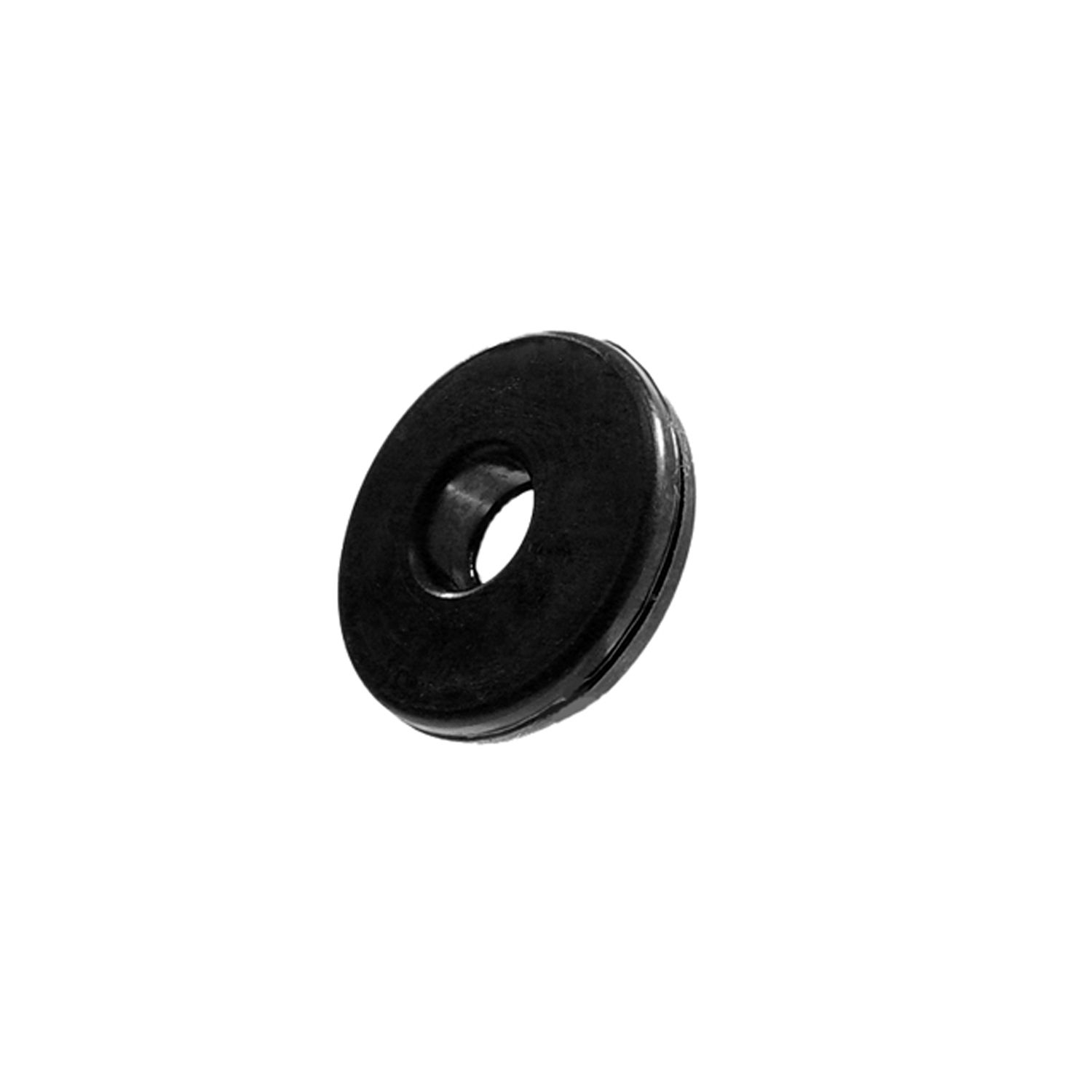 1947 Ford 1/2 Ton Pickup Headlight Wires through Inner Splash Pan, Front Fenders-SM 96Headlight Wires through Inner Splash Pan, Front Fenders. Two used per car. 3/8" I.D., 1-5/16" O.D. Each
 1947 Ford 1/2 Ton Pickup Wiper Motor Control Wire Grommet. Fits a 3/16" to 1/4" hole-SM 97Wiper Motor Control Wire Grommet. Fits a 3/16" to 1/4" hole. 3/32" center hole. Each
Why Choose Metro?
For over 100 years, Metro Moulded Parts has been the pinnacle of quality in classic car restoration parts. Our commitment to precision and authenticity in every component ensures a perfect fit and an OEM-level appearance.
- Expert Craftsmanship & Quality: Each part is a testament to our dedication to reliability and perfection, crafted from original designs and thoroughly tested.
- Advanced Technology: We use cutting-edge techniques to create flawless, long-lasting parts that surpass others in performance.
- SuperSoft Sponge – The Ultimate Door Seal: Not only are our door seals 30% softer than competitors', but they're also guaranteed to never leak. They effectively reduce wind and road noise, enhancing your classic car's comfort and driving experience.
- Proudly American: Our parts are a product of American craftsmanship, made in the USA with a spirit of excellence and heritage.
- Unrivaled Warranty: We back our products with a 30-year industry-leading warranty, a testament to our confidence in their quality.
Join us in preserving the legacy of classic cars with parts that are crafted for perfection, not just made.