

Image of 1949 Ford F4, Note: These illustrations use artistic license and may differ from actual historical models.
Performance Metrics
Fundamental Metrics
Emotional Appeal
MMP Rating
| Engine Specifications | |
|---|---|
| Engine: | Inline 6, V8 |
| Displacement: | 226 cu in (3.7 L) for Inline 6, 239 cu in (3.9 L) for V8 |
| Horsepower: | 95-100 hp |
| Torque: | 180 lb-ft for Inline 6, 200 lb-ft for V8 |
| Compression Ratio: | 6.8:1 for Inline 6, 6.15:1 for V8 |
| Ignition System: | Distributor and coil |
| Cooling System: | Liquid-cooled |
| Performance Specifications | |
| 0-60 Time: | Information not available |
| 1/4 Mile Time: | Information not available |
| Top Speed: | 70-75 mph |
| Transmission and Drive | |
| Drive Type: | Rear-wheel drive |
| Transmission Type: | 3-speed manual |
| Fuel and Efficiency | |
| Fuel System Type: | Carburetor |
| MPG: | Information not available |
| Dimensions and Brakes | |
| Brakes: | Drum brakes |
| Wheelbase: | 134 inches |
| Weight: | 3,400-3,600 lbs |
Note: Specifications for classic cars are given to the best of our ability, considering the limited and variant data available.
1949 Ford F4: The One-Ton Workhorse
The 1949 Ford F4 was built for the jobs that stopped lighter trucks in their tracks: hauling heavy loads, carrying equipment, and working long days on farms, construction sites, and delivery routes. Part of Ford’s first-generation F-Series, it combined postwar styling with sturdy, straightforward engineering. Today, it is less commonly seen than the familiar half-ton F-1, but its heavy-duty character makes it a distinctive piece of Ford truck history.
Ford introduced the F-Series for the 1948 model year, giving buyers a truck range designed specifically for commercial work rather than adapting passenger-car components to the task. The F4 occupied the one-ton class, between lighter pickups and larger commercial trucks. A notable detail: Ford promoted its new trucks as “Bonus Built,” a slogan that promised extra strength and practical features for the money.
Bonus Built Styling and Cab Design
The F4 has the unmistakable shape of a late-1940s Ford truck: rounded front fenders, a tall hood, broad running boards, and a substantial upright grille. Its proportions are purposeful rather than sleek, with a long, strong-looking chassis and a cab positioned high above the road. The 1949 grille and trim differ in detail from other years in the first-generation series, so enthusiasts often look closely at the grille, badges, and hardware when identifying a truck.
Ford’s new cab design, introduced with the F-Series, was a major step forward from many prewar truck interiors. Ford called it the “Million Dollar Cab,” emphasizing its increased room and improved visibility. The cabin remains simple by modern standards: a painted metal dashboard, large, plainly marked gauges, a wide bench seat, and a floor-mounted gearshift. Materials were chosen for durability and easy cleaning, not luxury. Expect painted steel, basic upholstery, and practical controls rather than trim-heavy finishes.
Factory paint depended on the year, body, and order, and commercial trucks could also be painted to suit a fleet or business. Period reds, blues, greens, and darker utility colors are all associated with Ford trucks of the era, but a particular truck’s original paint code is the best guide to its authentic finish. A restored F4 in a strong period color can look especially striking against its black chassis and bright grille trim.
F4 Bodies, Chassis, and Options
The F4 was primarily a heavy-duty chassis, not simply a larger pickup. Buyers could order a cab and chassis for a separate body, or select work-oriented configurations such as a platform or stake body. Depending on the truck’s original specification and subsequent conversion, F4s also served with dump bodies, service bodies, delivery equipment, and specialty commercial or municipal bodies. These variations are part of the model’s appeal: two F4s may share the same basic cab and chassis yet have very different working histories.
Ford offered a 226-cubic-inch flathead six as well as a 239-cubic-inch flathead V8, with availability and equipment varying by configuration. The six was a sensible choice for steady commercial service; the V8 added torque and a more effortless feel under load. A manual transmission and heavy-duty running gear were central to the truck’s character. Many examples also have dual rear wheels, though exact equipment depends on the original build.
Why the 1949 Ford F4 Mattered
The first-generation F-Series helped establish Ford’s lasting presence in the American truck market. Its importance was not based on a single revolutionary engine or a record-setting speed figure. Rather, Ford created a broad, clearly organized range of trucks with purpose-built frames, multiple weight classes, and a roomier cab. That approach made it easier for buyers to choose a truck matched to the work at hand.
The F4 shows how that strategy extended beyond the consumer pickup. It gave businesses and independent operators a one-ton platform that could be adapted to many jobs, while sharing the family resemblance and cab design of the lighter F-Series. The model’s legacy is visible in the continuing popularity of trucks designed as versatile work platforms, not just passenger vehicles with a cargo bed.
Flathead Power and Road Manners
Performance figures for a 1949 F4 are best treated as estimates. Ford did not market it as a quick road vehicle, and results vary with engine, axle ratio, transmission, body, tire size, and load. The available flathead engines produced modest power by modern standards, while the truck’s low gearing favored pulling and carrying. An unloaded truck in sound mechanical condition might manage roughly 50 to 60 mph in suitable conditions, but cruising at that speed is not the same as driving a modern pickup. A 0-to-60-mph time would likely take well over 20 seconds, and can be substantially slower with a heavy body or load.
Behind the wheel, the F4 feels mechanical and direct. The flathead V8 makes a deep, steady burble, while the six-cylinder engine has a quieter, workmanlike note. Manual steering, a firm clutch, and a relatively wide turning circle demand more effort than a modern driver may expect. The solid axles and leaf springs are built to support weight, so an unloaded truck can ride stiffly over broken pavement. With a load aboard, the suspension settles into its intended role.
On winding roads, the F4 rewards measured driving. Its size, high seating position, and work-truck tires call for early braking and smooth steering inputs. Crosswinds can push on a tall stake or service body, and the truck’s heavy-duty gearing makes it happiest at a steady pace rather than in fast traffic. A well-maintained example can be enjoyable on local roads, but it is best treated as a historic work truck, not a modern highway cruiser.
Living With a 1949 Ford F4
Today, F4s are most often used as show vehicles, vintage business displays, farm or property trucks, and parade vehicles. Some remain in working service, though many owners reserve them for occasional hauling or local outings. Their usefulness depends greatly on the body fitted to the chassis: a flatbed can still be practical, while a restored specialty body may be too valuable or delicate for regular work.
Mechanical simplicity is a major ownership advantage. The flathead engines, manual transmissions, and conventional chassis are familiar to many classic-truck specialists, and routine service can be handled by an experienced home mechanic. Parts availability is generally good for common engine and restoration items, though F4-specific chassis, brake, wheel, and body details may take more searching. Before buying, inspect the frame, cab corners, floor, fenders, brakes, steering, and cooling system. A truck that spent decades working outdoors may hide significant corrosion beneath old paint or a replacement body.
Original six-volt electrical equipment is another consideration. It can work reliably when maintained, but corroded connections, tired wiring, or an unsuitable conversion can cause problems. As with any old commercial vehicle, sound brakes and tires should take priority over cosmetic upgrades.
F4 Trivia and Common Criticisms
The F4’s identity is rooted in its place within Ford’s weight-class system: it was the one-ton member of the early F-Series family, rather than a trim level of the F-1 pickup. Its chassis could be tailored to a wide range of commercial bodies, which is why surviving examples can look so different from one another. There is no widely recognized production speed record or famous celebrity-owned F4 that defines the model’s history.
One common criticism is that the truck can feel slow, noisy, and tiring by current standards. That is fair: it has no modern sound insulation, power steering, or contemporary safety equipment. The ride can be harsh when empty, and stopping distances require respect. Those limitations are also a reminder of what the F4 was designed to do. Its priorities were load capacity, durability, and serviceability, not comfort at highway speed.
1949 Ford F4 Collector Values
There is no dependable factory production figure commonly available for the 1949 F4 alone. Ford produced the first-generation F-Series in large numbers overall, but surviving records and published totals do not neatly establish how many were F4s, much less how many remain. A reasonable broad estimate is that tens of thousands of F4s were built across the first-generation run, but any tighter figure should be treated as an informed guess, not an official count. Today, the F4 is noticeably less common on the collector market than the more familiar F-1.
Condition, originality, and body style have a major effect on price. As a broad U.S. market guide, a rough project may sell for about $5,000 to $12,000. A running, presentable driver can fall around $15,000 to $30,000, while a high-quality restoration may bring roughly $30,000 to $55,000 or more. Exceptional restorations, rare original bodies, and carefully finished specialty builds can exceed that range. These are estimates, and local demand or the cost of transporting a large truck can change the final price considerably.
Values have generally benefited from growing interest in vintage pickups and work trucks, although the F4’s market is smaller and more condition-sensitive than the market for light-duty classics. Original, well-documented trucks and attractive restorations tend to draw the strongest attention. A heavily modified F4 may appeal to a narrower group, even if the work is impressive.
A Ford Workhorse With Lasting Character
The 1949 Ford F4 brought the first-generation F-Series’ roomy cab and clear model lineup to the demanding one-ton class. Its flathead power, heavy-duty chassis, adaptable body options, and straightforward mechanicals made it a practical tool in its day and a rewarding restoration subject now. It may not be fast or plush, but it represents an important chapter in the evolution of the American work truck: a machine built to earn its keep, and memorable enough to be treasured long after the workday ended.
1949 Ford F4 Catalog of Parts
 1949 Ford F4 Shock Absorber Grommet. 1" bottom O.D-BN 11Shock Absorber Grommet. 1" bottom O.D., 3/4" high, with 5/8" I.D. Each
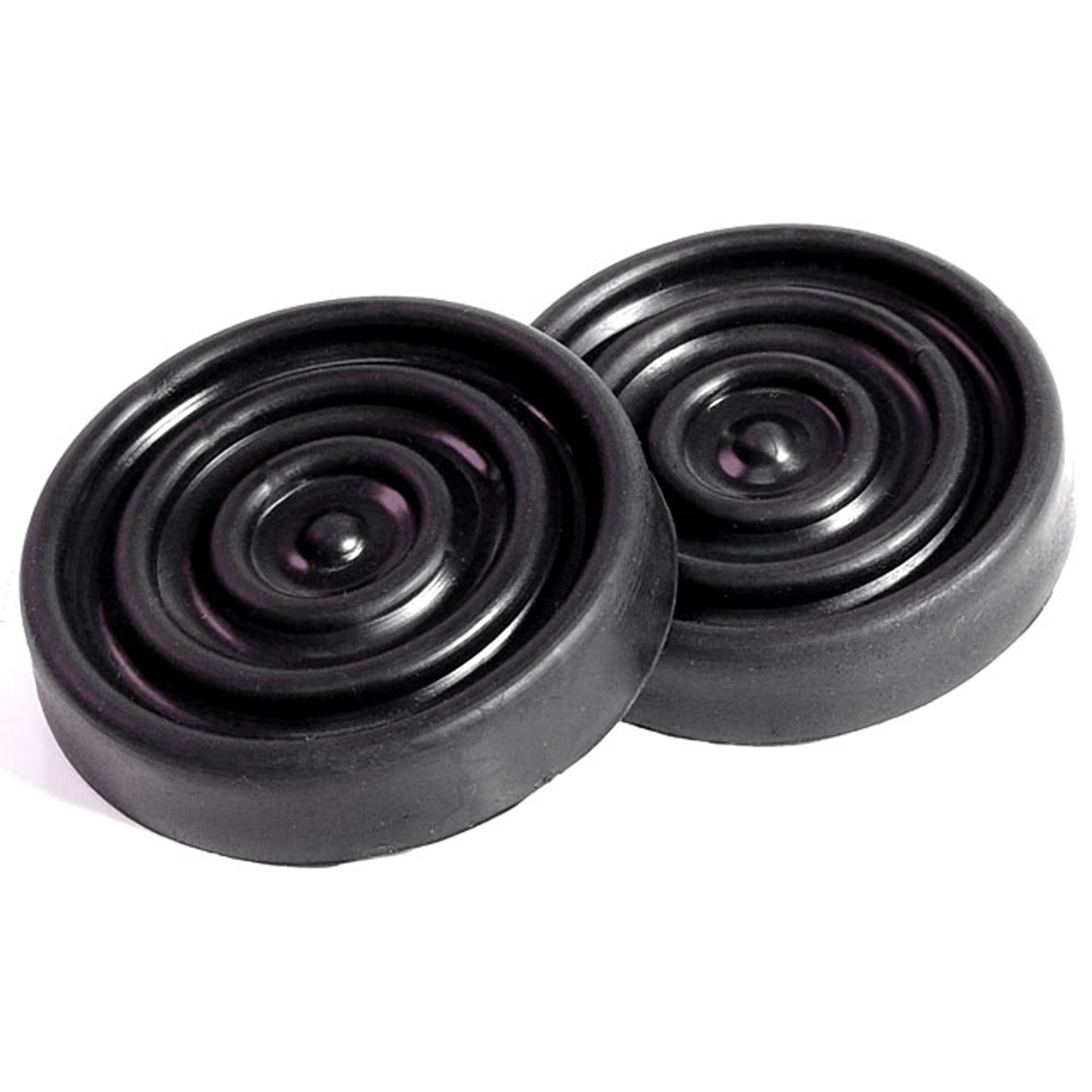 1949 Ford F4 Clutch and Brake Pedal Pads-CB 106Clutch and Brake Pedal Pads. Made with molded steel core and threaded stud. 3" diameter. Pair
 1949 Ford F4 Headlight Assembly Housing Gasket. 8-5/8" O.D., 8" I.D-HR 11Headlight Assembly Housing Gasket. 8-5/8" O.D., 8" I.D. Pair
 1949 Ford F4 Door Weatherstrip Set Fits 48-52 Ford Trucks-LM 48This Door Weatherstrip Set is designed from the original parts for superior fitment and seal. These primary door weatherstrips mount (glue-on) directly to the left and right doors sealing the full perimeter of the doors against the vehicle body when the door is closed. Made of high quality EPDM sponge rubber to ensure a durable positive seal. Fitment Note Note: This set does both doors - Front, Top and Back. The lower door weatherstrip is included.
 1949 Ford F4 Clutch and Brake Arm Bumpers. Top quality reproduction-RP 31-KClutch and Brake Arm Bumpers. Top quality reproduction. Pair
 1949 Ford F4 Wiper Motor Control Wire Grommet. Each-SB 107Wiper Motor Control Wire Grommet. Each
 1949 Ford F4 Hood Bumpers. 3/8" O.D., 3/4" Long. Set of four-SB 900Hood Bumpers. 3/8" O.D., 3/4" Long. Set of four
 1949 Ford F4 Special Purpose Grommet. Main wiring loom. 1-9/16" O.D-SM 78Special Purpose Grommet. Main wiring loom. 1-9/16" O.D., 1/2" hole. Each
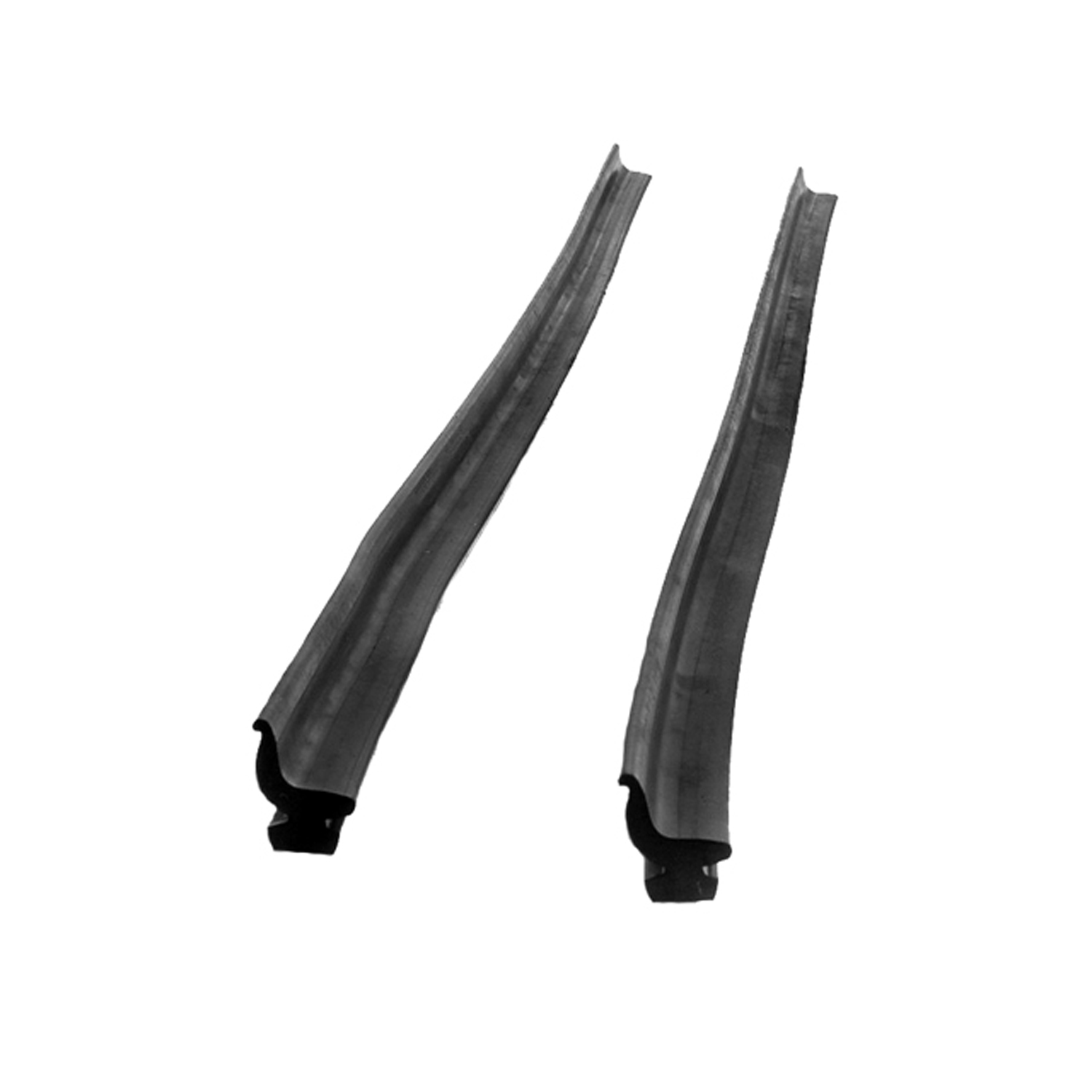 1949 Ford F4 Rear roll-up Seal. Two 18" sections sliced into metal track-VS 4Rear roll-up Seal. Two 18" sections sliced into metal track. this foot with no steel insert. Pair
Why Choose Metro?
For over 100 years, Metro Moulded Parts has been the pinnacle of quality in classic car restoration parts. Our commitment to precision and authenticity in every component ensures a perfect fit and an OEM-level appearance.
- Expert Craftsmanship & Quality: Each part is a testament to our dedication to reliability and perfection, crafted from original designs and thoroughly tested.
- Advanced Technology: We use cutting-edge techniques to create flawless, long-lasting parts that surpass others in performance.
- SuperSoft Sponge – The Ultimate Door Seal: Not only are our door seals 30% softer than competitors', but they're also guaranteed to never leak. They effectively reduce wind and road noise, enhancing your classic car's comfort and driving experience.
- Proudly American: Our parts are a product of American craftsmanship, made in the USA with a spirit of excellence and heritage.
- Unrivaled Warranty: We back our products with a 30-year industry-leading warranty, a testament to our confidence in their quality.
Join us in preserving the legacy of classic cars with parts that are crafted for perfection, not just made.