

Image of 1959 Ford Thunderbird, Note: These illustrations use artistic license and may differ from actual historical models.
Performance Metrics
Fundamental Metrics
Emotional Appeal
MMP Rating
| Engine Specifications | |
|---|---|
| Engine: | 352 cu in (5.8 L) FE V8, 430 cu in (7.0 L) MEL V8 |
| Displacement: | 5.8L - 7.0L |
| Horsepower: | 300 hp (352 cu in V8), 350 hp (430 cu in V8) |
| Torque: | 427 lb-ft (352 cu in V8), 480 lb-ft (430 cu in V8) |
| Compression Ratio: | 8.9:1 (352 cu in V8), 10.5:1 (430 cu in V8) |
| Ignition System: | Conventional |
| Cooling System: | Liquid-cooled |
| Performance Specifications | |
| 0-60 Time: | 9.2 seconds |
| 1/4 Mile Time: | 17 seconds |
| Top Speed: | 120 mph |
| Transmission and Drive | |
| Drive Type: | Rear-wheel drive |
| Transmission Type: | 3-speed Cruise-O-Matic automatic |
| Fuel and Efficiency | |
| Fuel System Type: | Carburetor |
| MPG: | 10-12 mpg |
| Dimensions and Brakes | |
| Brakes: | Drum brakes |
| Wheelbase: | 113.0 in |
| Weight: | 3,800 lbs |
Note: Specifications for classic cars are given to the best of our ability, considering the limited and variant data available.
1959 Ford Thunderbird: The “Square Bird” That Changed the T-Bird
The 1959 Ford Thunderbird put American luxury on a bigger stage, pairing dramatic jet-age styling with room for four and the effortless shove of a V8. Built by the Ford Motor Company in the United States, it belonged to the second-generation Thunderbird, nicknamed the “Square Bird” for its crisp, squared-off proportions. This was no longer the compact personal coupe that had launched the Thunderbird name in 1955. Ford had transformed it into a more spacious, upscale grand touring car, and buyers responded: 1959 production reached roughly 67,500 cars, a major leap from the first four-seat model’s debut year.
That shift was a defining moment in Thunderbird history. Ford had faced a choice between keeping the original two-seat concept or building a car with broader appeal. The four-seat Thunderbird proved that a personal luxury car could be stylish and practical at the same time. One especially memorable touch was the available swing-away steering wheel, which moved aside to make getting into the driver’s seat easier. It was a small convenience with a distinctly 1950s sense of theatrical flair.
Jet-Age Styling and a More Refined Cabin
The 1959 Thunderbird has the long hood, low roofline, and broad stance of a classic American cruiser, but its details make it unmistakable. A wide, horizontal grille anchors the front end, flanked by quad headlights and substantial chrome trim. Along the sides, restrained sculpting leads the eye toward prominent rear fins and distinctive tail lamps. Compared with the rounded, exuberant designs of the early 1950s, the Square Bird looked more deliberate and architectural. It still made a statement, just with cleaner lines.
Inside, the cabin balances comfort with a showpiece dashboard. The driver faces a broad instrument panel, while the front bucket seats and full-length center console give the car a cockpit-like feel. Ford used patterned upholstery, vinyl, and available leather, with coordinated trim and carpeting on better-equipped examples. The rear bench made the Thunderbird a genuine four-passenger car, although the low roof and sporty shape mean the back seat is more comfortable for shorter trips than for stretching out on a long journey.
Available equipment could include power steering, power brakes, power windows, power seats, air conditioning, and an AM radio. The three-speed Cruise-O-Matic automatic transmission suited the car’s relaxed mission. The optional swing-away steering wheel was one of the most talked-about features: on properly equipped cars, it could move laterally to improve access to the driver’s seat. It feels like a novelty today, but it was also a practical solution to a low, narrow doorway.
Ford offered the Thunderbird in a range of period colors. Raven Black, Colonial White, Thunderbird Blue, and red finishes are among the shades commonly associated with the model, alongside various turquoise and other mid-century hues. Color availability and names could vary by production details and trim. White and black remain popular with collectors for their classic look, while bright blue, red, and turquoise bring out the car’s unmistakable 1950s character.
There were two body styles: a fixed-roof hardtop coupe and a convertible with a power-operated soft top. The hardtop was the volume seller, while the convertible is the more visually dramatic and generally more sought-after version today. Both share the Square Bird’s defining shape, but the open car adds a different kind of occasion to every drive.
Why the 1959 Thunderbird Mattered
The most important change had happened with the 1958 model: the Thunderbird grew from a two-seater into a four-seat car. The 1959 version refined that formula and helped establish the Thunderbird as a personal luxury automobile rather than a direct sports-car rival. It combined American V8 performance and expressive styling with genuine passenger space, comfort features, and a more upscale cabin.
That approach influenced the market well beyond one model year. The Thunderbird helped define a category for drivers who wanted something more individual than a conventional family sedan, but more comfortable and usable than a two-seat sports car. It also demonstrated that adding practicality did not have to erase personality. The result was a car with room for family or friends that still looked and felt like a special purchase.
Against contemporaries, the 1959 Thunderbird stood out for its blend of size, equipment, and visual confidence. It was not a lightweight sports car, nor was it meant to be. Its appeal lay in making distance feel easy and arriving in style. The four-seat layout broadened its audience, while the hardtop and convertible gave buyers two distinct ways to enjoy the same formula.
V8 Power and the Grand-Touring Drive
The standard engine was Ford’s 352-cubic-inch V8, rated at approximately 300 horsepower under the gross rating system used at the time. Some cars were also equipped with a 430-cubic-inch V8, rated at about 350 horsepower. These period ratings are not directly comparable with modern net horsepower figures. A three-speed automatic transmission was a natural match for the car, sending the V8’s torque to the rear wheels.
Performance figures depend on engine, gearing, condition, and the testing method, but a healthy 352-equipped Thunderbird can generally be expected to reach 60 mph in roughly 9 to 11 seconds. A 430-powered example can be quicker. Top speed is commonly estimated in the neighborhood of 115 to 120 mph, though these substantial cars are much happier cruising than being driven flat out. Such numbers should be treated as period-style estimates, not guarantees for a particular surviving car.
On the road, the Thunderbird feels broad, substantial, and smooth. The V8 produces a deep, unhurried rumble at idle and a fuller growl when the throttle opens. The automatic transmission encourages relaxed acceleration, and power steering helps make low-speed maneuvering easier than the car’s size suggests. On rough pavement, the soft suspension absorbs bumps well, though the body can move and float more than a modern car. On winding roads, expect a comfortable grand tourer rather than a precise sports coupe: it rewards a measured pace and smooth steering inputs.
Braking, tire condition, suspension wear, and steering play can vary considerably on cars that are more than six decades old. A well-maintained example feels composed and comfortable. A neglected one may wander, bounce, or take more effort to stop than a modern driver expects. The driving experience is best understood as a blend of V8 soundtrack, relaxed cruising, and classic American scale.
Living With a Square Bird
Today, most 1959 Thunderbirds serve as weekend cruisers, show cars, or additions to collections. A sound example can handle occasional local use and relaxed highway trips, but age, fuel consumption, and the availability of replacement parts make it less convenient than a modern daily driver. Real-world economy is modest by today’s standards, particularly in city driving, so owners should plan for regular fuel stops.
Routine work is familiar to many classic-car mechanics. The V8 and automatic transmission are conventional by vintage-car standards, and service items such as ignition components, belts, hoses, brakes, and suspension parts are generally approachable for a capable home mechanic. The bigger challenges are often condition and completeness: worn trim, tired upholstery, electrical faults, body corrosion, and poorly repaired accident damage can turn a seemingly simple restoration into an expensive project. Power accessories and the swing-away steering mechanism deserve careful inspection because repairs may require specialized parts or patient troubleshooting.
Before buying, check the frame and body structure, floor pans, trunk, lower body panels, and areas around the windshield and rear window for corrosion. Confirm that the engine and transmission operate correctly when warm, and test every power feature. On a convertible, inspect the top, its mechanism, and the surrounding bodywork closely. A detailed inspection can save far more than it costs, especially on a car with decades of repairs behind it.
Production Numbers, Trivia, and Common Complaints
Ford built approximately 67,456 Thunderbirds for the 1959 model year, including about 57,195 hardtops and 10,261 convertibles. Those figures make the convertible less common, though it is not an impossibly rare car. Production was substantial for a specialty model, which helps explain why collectors can still find examples in a range of conditions.
The swing-away steering wheel is one of the model’s signature bits of clever engineering. Another piece of useful trivia is the car’s role in the Thunderbird’s transformation: the second-generation design turned the name into a four-seat personal-luxury proposition, and the strong 1959 production total showed how much broader that appeal had become. Rather than chase racing records, the Thunderbird made its mark through design, comfort, and market influence.
Common criticisms are part of the ownership conversation. The car is heavy, thirsty, and less nimble than its long hood and sporty profile might suggest. Rear-seat access and headroom are limited compared with a full-size sedan, and the large body can be challenging in tight parking spaces. Owners also need to distinguish attractive cosmetic restoration from sound mechanical and structural condition. Those compromises do little to dull its charm, but they matter when choosing a car to drive regularly.
1959 Thunderbird Collector Values
Values depend heavily on body style, originality, rust, mechanical condition, and the quality of any restoration. As a broad U.S. market estimate, a project or rough driver may sell for roughly $10,000 to $20,000. A presentable hardtop in good running condition often falls around $20,000 to $40,000, while a very well-restored or unusually original hardtop can bring approximately $40,000 to $65,000 or more.
Convertibles usually command a premium. A usable driver might be in the range of $30,000 to $55,000, with excellent examples often reaching roughly $60,000 to $100,000 or higher. Exceptional restorations, rare equipment, and outstanding documentation can push prices beyond those estimates. These are general guide ranges rather than fixed appraisals; actual sale prices vary with location, condition, and the market at the time.
The 1959 Thunderbird remains reasonably findable compared with genuinely low-production classics, thanks to its estimated 67,500-unit build. The convertible is scarcer than the hardtop and tends to attract more competition from buyers. In recent years, values have generally been strongest for correctly restored, rust-free cars, while average examples have tended to move more gradually. The model may appreciate over the long term, but condition and restoration costs matter more than assuming every old Thunderbird is an automatic investment.
A Classic Built for the Open Road
The 1959 Ford Thunderbird is a landmark of American automotive design: a four-seat cruiser with a strong V8, a distinctive jet-age profile, and comfort features that made it feel special in its own time. Its hardtop is the classic all-rounder, while the convertible offers extra rarity and open-air appeal. It may be big, thirsty, and less nimble than a modern car, but that is not the point. The Square Bird invites you to slow down, listen to the V8, and enjoy the road in a car that helped define the personal-luxury era.
1959 Ford Thunderbird Catalog of Parts
 1959 Ford Thunderbird Shock Absorber Grommet. 1-1/4" bottom O.D., 1" high-BN 12Shock Absorber Grommet. 1-1/4" bottom O.D., 1" high., with 3/4" I.D. Each
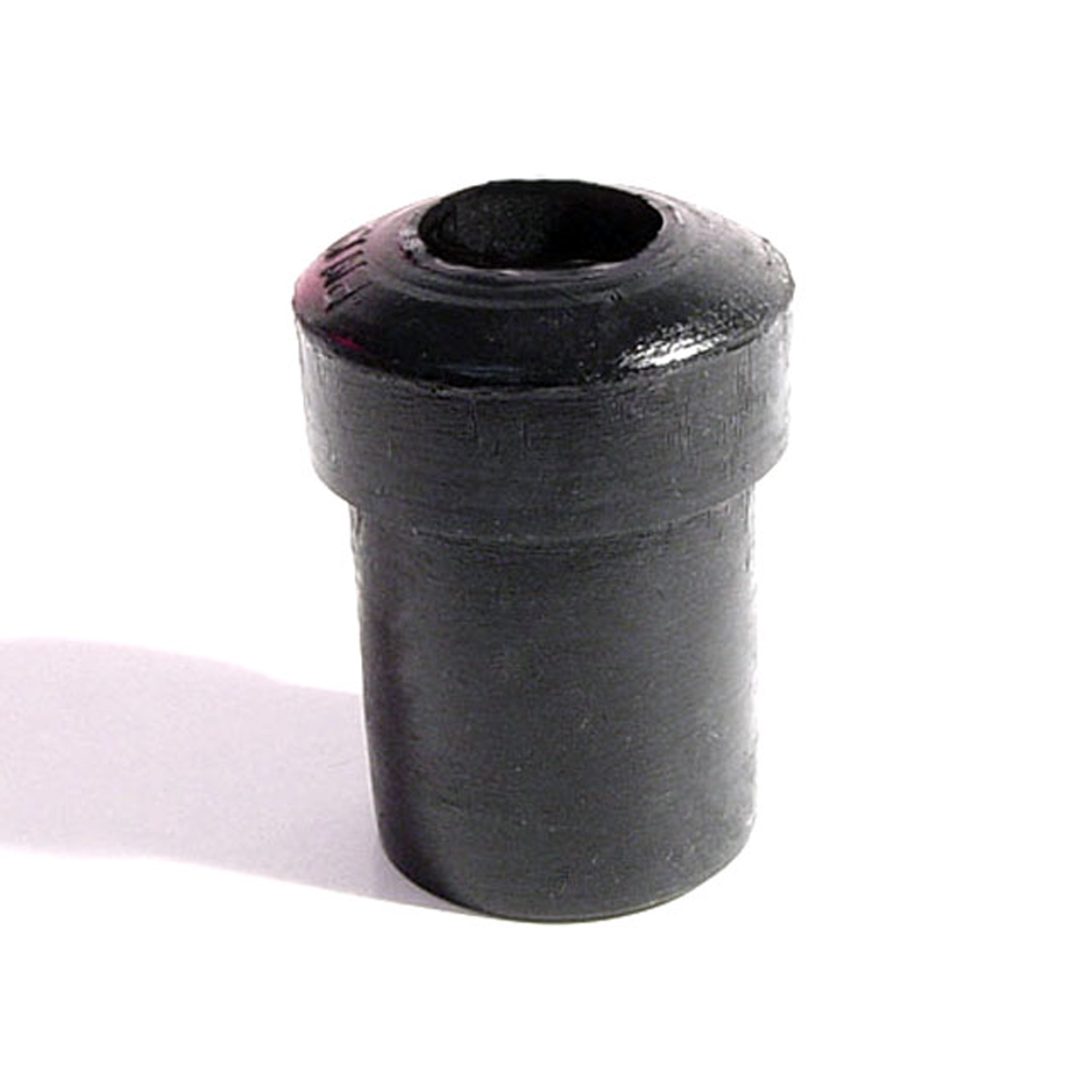 1959 Ford Thunderbird Spring and Shackle Bushing. 7/8" bottom O.D-BN 19Spring and Shackle Bushing. 7/8" bottom O.D. X 1-1/4" high, with 1/2" I.D. Each
 1959 Ford Thunderbird Door, Hood and Trunk Bumper Cap for adjustment bolt-HA 6Door, Hood and Trunk Bumper Cap for adjustment bolt. 1-1/16" O.D. X 1/2" I.D. X 7/16" thick. Each
 1959 Ford Thunderbird Rear Top Pad Seals for Convertibles-HD 302Rear Top Pad Seals for Convertibles. Made with soft rubber and steel core. Beautiful reproduction. 21-1/2" long X 3-1/8" wide. Pair R&L
 1959 Ford Thunderbird Top-bow to header seal. Convertibles-HD 304Top-bow to header seal. Convertibles. Made with full steel core and molded ends. Premium quality soft rubber for proper sealing. 50-1/4 in. long. Each. NOTE: $20 special shipping charge applies for domestic orders. Call or email for overseas shipping costs.
 1959 Ford Thunderbird Top Bow to Header Seal for Convertibles. 56" long. Each-HD 305Top Bow to Header Seal for Convertibles. 56" long. Each
 1959 Ford Thunderbird Hood Bumper. Each-HF 1Hood Bumper. Each
 1959 Ford Thunderbird Hood Bumper. Made with steel core. Held by screw. Each-HF 40Hood Bumper. Made with steel core. Held by screw. Each
 1959 Ford Thunderbird Molded Door Seals-LM 15Molded Door Seals. Made of sponge rubber, with steel cores where needed. Each is 118-1/2" long. Pair R&L
 1959 Ford Thunderbird Fender Skirt Seal. Sold by the foot-LP 111-DFender Skirt Seal. Sold by the foot
 1959 Ford Thunderbird Antenna Pad. 1-1/4" wide X 3-5/8" long. Each-MP 780-DAntenna Pad. 1-1/4" wide X 3-5/8" long. Each
 1959 Ford Thunderbird Tail-light Gaskets. 2-Pieces, 35" long. Pair-MP 800-BTail-light Gaskets. 2-Pieces, 35" long. Pair
 1959 Ford Thunderbird Door Handle Pads. 3" long & 3" long. Set R&L-MP 996-ABDoor Handle Pads. 3" long & 3" long. Set R&L
 1959 Ford Thunderbird Mirror Pad. 1-3/4" wide X 7-1/2" long. Each-MP 996-CMirror Pad. 1-3/4" wide X 7-1/2" long. Each
 1959 Ford Thunderbird Switch Grommet. 2-1/8" wide X 4-1/8" long. Each-MP 996-FSwitch Grommet. 2-1/8" wide X 4-1/8" long. Each
 1959 Ford Thunderbird Trunk Lock Pad. 1-5/8" wide X 1-7/8" long. Each-MP 996-GTrunk Lock Pad. 1-5/8" wide X 1-7/8" long. Each
 1959 Ford Thunderbird Window Switch Pad. 2-1/4" O.D. Each-MP 996-IWindow Switch Pad. 2-1/4" O.D. Each
 1959 Ford Thunderbird Trunk Lock Pad. 1-1/4" wide X 2-1/4" long. Each-MP 996-JTrunk Lock Pad. 1-1/4" wide X 2-1/4" long. Each
 1959 Ford Thunderbird Fender Ornament Pad. 5-3/8" long X 3/4" wide. Each-MP 996-OFender Ornament Pad. 5-3/8" long X 3/4" wide. Each
 1959 Ford Thunderbird Basic kit. Convertible-RKB 3005-101Basic kit. Convertible. Door (LM 15), convertible top-rails (RR 3320), header (HD 304) and trunk (TK 42-16) seals. 10-piece kit.
 1959 Ford Thunderbird Auxiliary Door Seals. Pair-RP 201Auxiliary Door Seals. Pair
 1959 Ford Thunderbird Convertible Top Rail Kit-RR 3320Convertible Top Rail Kit. 6-Piece set includes all right and left side top rail seals, with molded ends and steel cores. Does not include header seal (order p/n HD 304).
 1959 Ford Thunderbird Trunk Lid Bumper. Two used per car. Each-SB 31Trunk Lid Bumper. Two used per car. Each
 1959 Ford Thunderbird Front Fender Lower Rear Plug and Door Vent Adjustment Plug-SB 58-AFront Fender Lower Rear Plug and Door Vent Adjustment Plug. Fits 1-5/16" hole. Each
 1959 Ford Thunderbird Trunk Seal. 16 feet long. Each-TK 42-16Trunk Seal. 16 feet long. Each
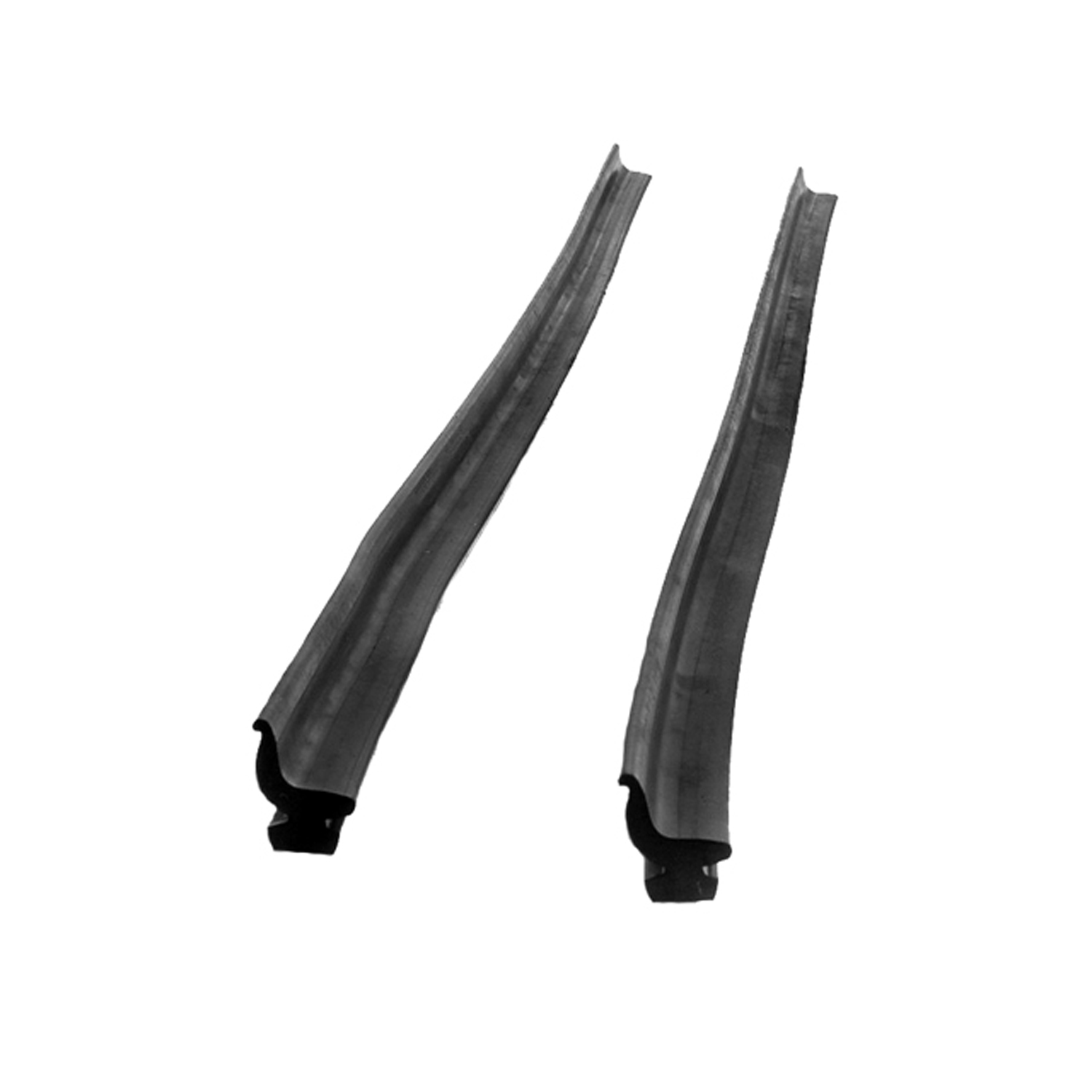 1959 Ford Thunderbird Rear roll-up Seal. Two 18" sections sliced into metal track-VS 4Rear roll-up Seal. Two 18" sections sliced into metal track. this foot with no steel insert. Pair
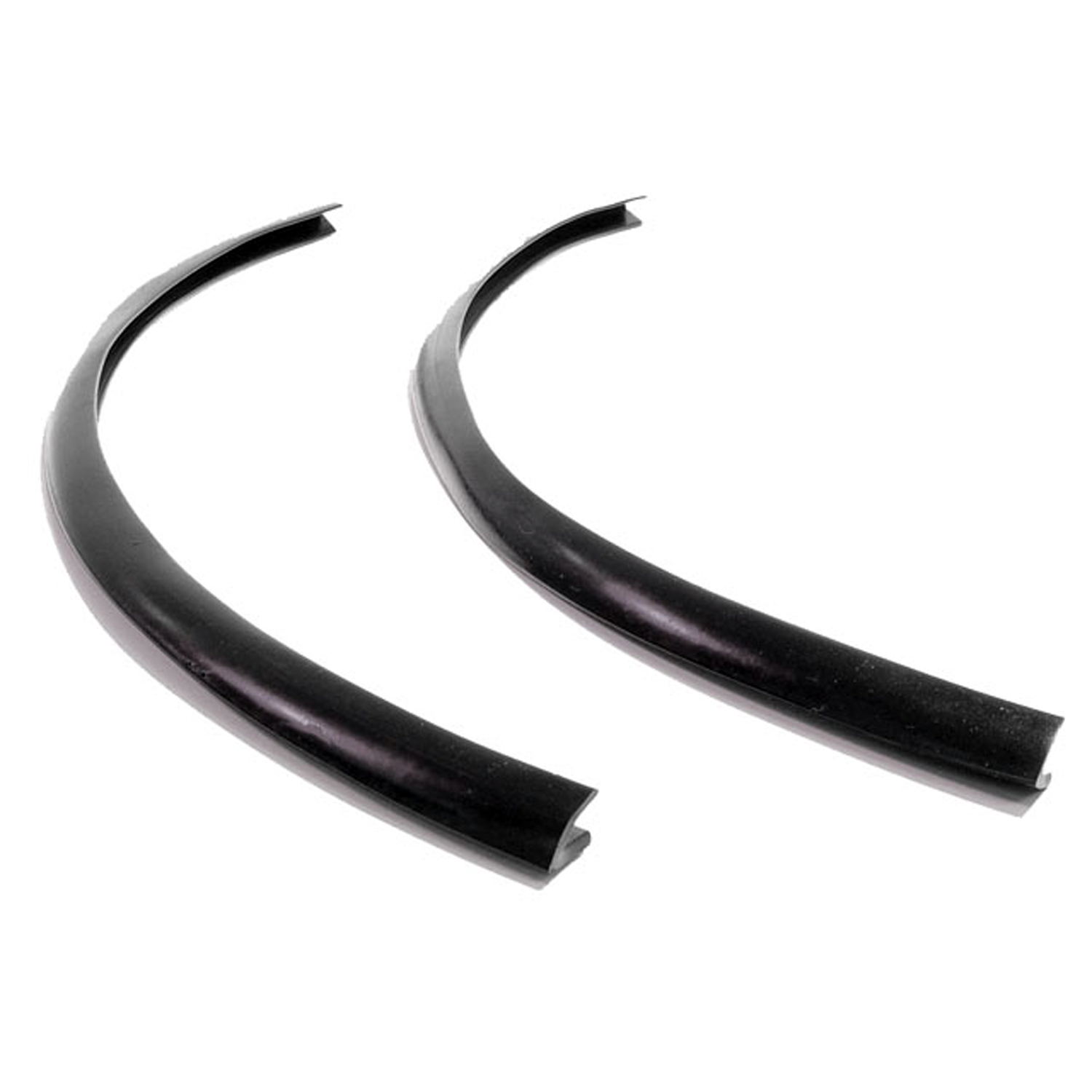 1959 Ford Thunderbird Vertical Seals for Vent Window. Each piece is 17" long-VS 6Vertical Seals for Vent Window. Each piece is 17" long. Pair
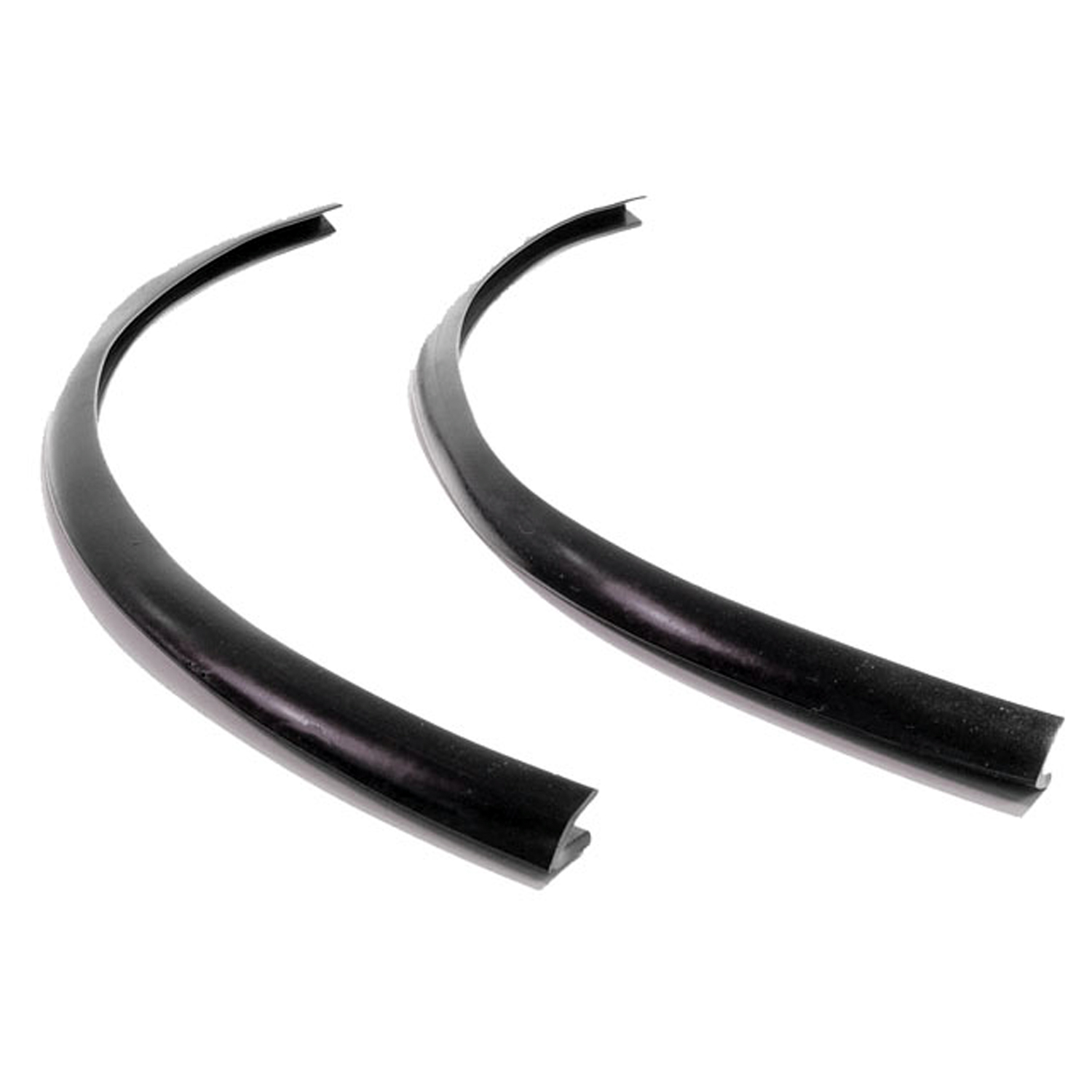 1959 Ford Thunderbird Vertical Seal for Vent Window. Sold by the foot.-VS 6/FTVertical Seal for Vent Window. Sold by the foot.
 1959 Ford Thunderbird Rigid division-bar channel-WC 28-96Rigid division-bar channel. Made with stainless steel bead, heavy steel core and pile lining. 96 in. long. Each. NOTE: $20 special shipping charge applies for domestic orders. Call or email for overseas shipping costs. Part can be sectioned in two or three equal lengths to reduce overseas shipping costs.
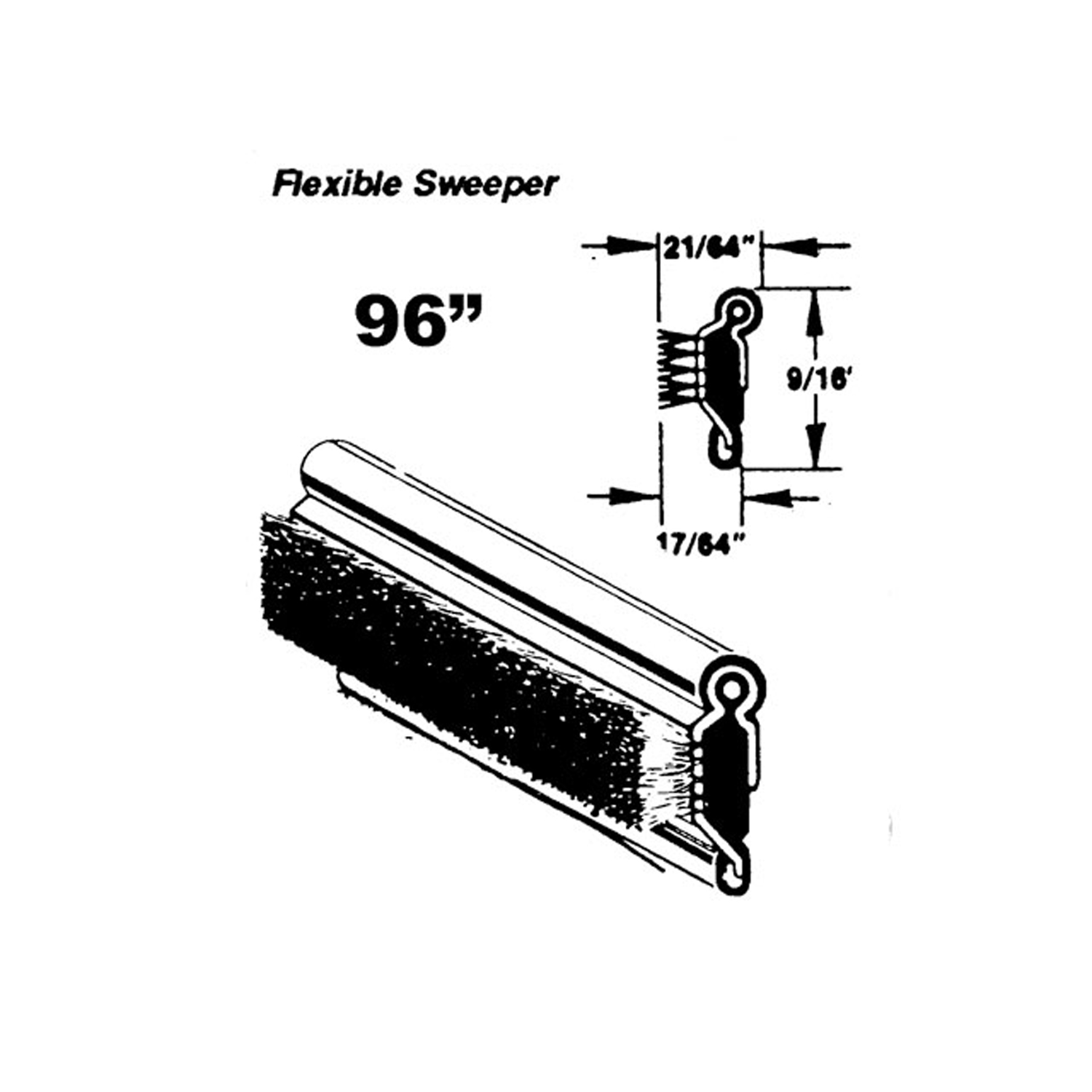 1959 Ford Thunderbird Flexible window sweeper. Made with stainless steel bead-WC 7-96Flexible window sweeper. Made with stainless steel bead. 96 in. long. Each. NOTE: $20 special shipping charge applies for domestic orders. Call or email for overseas shipping costs. Part can be sectioned in two or three equal lengths to reduce overseas shipping costs.
Why Choose Metro?
For over 100 years, Metro Moulded Parts has been the pinnacle of quality in classic car restoration parts. Our commitment to precision and authenticity in every component ensures a perfect fit and an OEM-level appearance.
- Expert Craftsmanship & Quality: Each part is a testament to our dedication to reliability and perfection, crafted from original designs and thoroughly tested.
- Advanced Technology: We use cutting-edge techniques to create flawless, long-lasting parts that surpass others in performance.
- SuperSoft Sponge – The Ultimate Door Seal: Not only are our door seals 30% softer than competitors', but they're also guaranteed to never leak. They effectively reduce wind and road noise, enhancing your classic car's comfort and driving experience.
- Proudly American: Our parts are a product of American craftsmanship, made in the USA with a spirit of excellence and heritage.
- Unrivaled Warranty: We back our products with a 30-year industry-leading warranty, a testament to our confidence in their quality.
Join us in preserving the legacy of classic cars with parts that are crafted for perfection, not just made.