
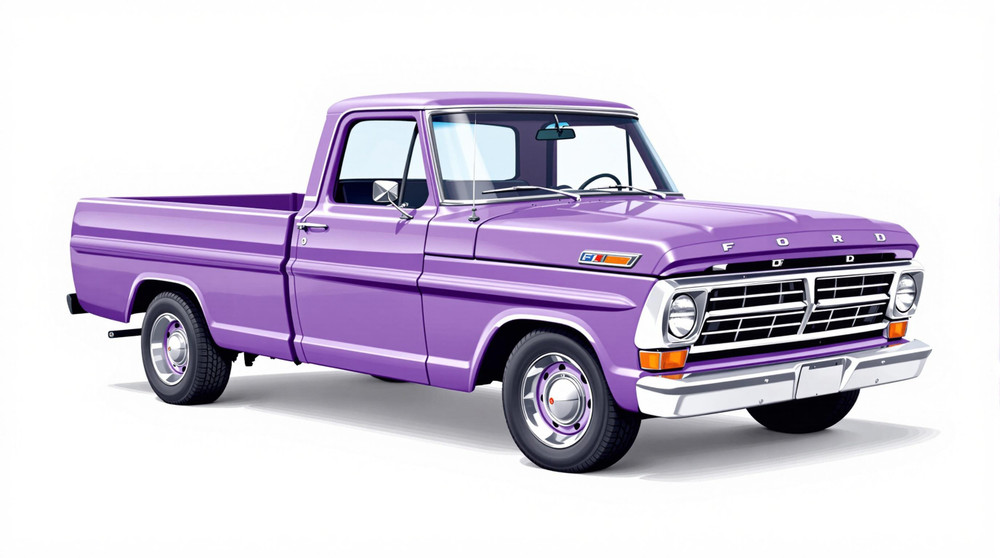
Image of 1968 Ford F-100, Note: These illustrations use artistic license and may differ from actual historical models.
Performance Metrics
Fundamental Metrics
Emotional Appeal
MMP Rating
| Engine Specifications | |
|---|---|
| Engine: | 240 CID I6, 300 CID I6, 302 CID V8, 360 CID V8, 390 CID V8 |
| Displacement: | 240 - 390 cubic inches |
| Horsepower: | 150 - 265 HP |
| Torque: | 235 - 390 lb-ft |
| Compression Ratio: | 8.0:1 - 10.5:1 |
| Ignition System: | Conventional breaker-point ignition system |
| Cooling System: | Liquid-cooled |
| Performance Specifications | |
| 0-60 Time: | Estimated 10 - 15 seconds |
| 1/4 Mile Time: | Estimated 17 - 20 seconds |
| Top Speed: | 90 - 100 mph |
| Transmission and Drive | |
| Drive Type: | Rear-wheel drive |
| Transmission Type: | 3-speed manual, 4-speed manual, 3-speed automatic |
| Fuel and Efficiency | |
| Fuel System Type: | Carburetor |
| MPG: | Estimated 10 - 15 mpg |
| Dimensions and Brakes | |
| Brakes: | Front disc and rear drum brakes |
| Wheelbase: | 115 - 129 inches |
| Weight: | 3,200 - 3,800 lbs |
Note: Specifications for classic cars are given to the best of our ability, considering the limited and variant data available.
1968 Ford F-100: A Workhorse with Staying Power
The 1968 Ford F-100 was built for chores, hauling and long days on the road, but it had enough style to become a classic in its own right. Part of Ford’s fifth-generation F-Series, introduced for 1967, it came from a truck line that had been serving American drivers since 1948. The F-100 sat in the half-ton class, offering a useful balance of payload, size and everyday drivability.
Its place in history is about more than a familiar badge. The fifth-generation F-Series helped establish the comfortable, versatile pickup as a vehicle that could work hard during the week and still serve as family transportation. A fun detail for model-year spotters: 1968 trucks gained federally required side-marker lights, making the year easier to distinguish from earlier examples.
Bold Lines, Practical Details
The F-100 wears the fifth-generation truck’s squared-off shape, with a broad hood, upright cab and tall front end. Its wide grille and simple, clearly defined body panels give it a purposeful look without the bulky styling of many later pickups. The 1968 model has the sturdy proportions that make these trucks look equally at home parked beside a barn or cleaned up at a weekend show.
Inside, the cab is straightforward and durable. Painted metal surfaces, a simple instrument panel and vinyl upholstery were typical, with equipment and trim depending on how the truck was ordered. It is a more open, less insulated environment than a modern pickup: the driver sits close to the controls, sees plenty of hood and fender, and gets a clear view of the basic gauges. Optional trim and comfort features could make the cabin more inviting, but this was still a working truck at heart.
Ford offered the F-100 in Styleside and Flareside bed configurations. Styleside trucks have a wider, slab-sided bed integrated visually with the cab, while Flareside models have separate rear fenders and a narrower-looking cargo box. Both came in different wheelbase and bed-length combinations, with availability varying by configuration. The regular-cab Styleside is a particularly recognizable and practical choice today; the Flareside is prized by owners who prefer its more traditional pickup profile.
Trim ranged from basic work-truck appointments to better-equipped versions, including Ranger trim. Buyers could also choose from a variety of factory paint colors, though exact names and availability depended on the order. White, red, blue and green shades are common sights among surviving trucks. Original paint codes and production records are useful when authenticity matters, since a truck’s current color may not be its original one.
Useful Technology for Its Era
Ford’s Twin I-Beam front suspension was one of the F-Series’ notable engineering features. On two-wheel-drive models, the arrangement used independent front beams designed to handle rough roads and heavy work while giving the truck a more composed ride than a traditional solid front axle. Four-wheel-drive versions used a different front suspension layout, so the driving character depends partly on which drivetrain a particular F-100 has.
Engine choices varied with equipment and market. Commonly listed options included the 240- and 300-cubic-inch inline-six engines and several V8s, such as 352-, 360- and 390-cubic-inch versions, depending on specification. Transmission choices included manual gearboxes and, on suitably equipped trucks, an automatic. The result was a range of personalities, from economical, torque-focused work trucks to stronger V8 haulers.
Why the F-100 Mattered
The 1968 F-100 did not introduce a single technology that transformed the industry. Its influence came from combining useful engineering with a broad range of configurations. Twin I-Beam suspension, a choice of engines and beds, and available comfort and trim upgrades helped make a pickup adaptable to farms, trades, businesses and personal use.
That versatility helped shape expectations for later pickups. Buyers increasingly wanted a truck that could carry a load without feeling like specialized equipment every moment they drove it. The F-100 was part of that shift, though it remained a simpler and more utilitarian machine than today’s trucks. Ford’s F-Series eventually became America’s best-selling truck line, a milestone achieved in 1977, years after this model left the showroom.
Performance and Road Manners
There was no single performance figure for every 1968 F-100. Engine, gearing, transmission, tire size, payload and mechanical condition all make a difference. As a broad real-world estimate, a six-cylinder truck might take roughly 18 to 23 seconds to reach 60 mph. A healthy V8 version could manage approximately 13 to 18 seconds. Top speed might fall around 80 to 95 mph, but these are estimates, not guarantees or recommended cruising targets. Original brakes, old tires and decades-old suspension components make high-speed driving a poor way to judge one.
On rough pavement, the F-100 feels solid and mechanical. Twin I-Beam two-wheel-drive models can absorb uneven roads capably, but the ride is still firm, especially when the truck is unladen. A short-bed truck feels more maneuverable, while a longer wheelbase can feel steadier with a load. On winding roads, expect slower steering response and more body movement than in a modern pickup. Crosswinds and a tall load can also push the truck around, so deliberate steering and conservative speed are part of the experience.
The engine is a big part of the appeal. The sixes deliver a steady, low-speed pull, while a V8 adds a deeper exhaust note and more effortless acceleration. Manual versions involve a direct, physical connection to the truck, and the steering and controls remind the driver that this is a machine built before power assistance and sound insulation became routine. In good condition, it can be enjoyable on local roads, but it is not a quiet, quick or effortless modern commuter.
Living with a 1968 F-100
Owners use these trucks as weekend drivers, farm and property vehicles, show trucks, project builds and occasional daily drivers. Their simple construction is a major advantage: many repairs are understandable to a capable home mechanic, and parts support is strong for common service items and restoration components. The straightforward engine bays also make routine work less intimidating than on a modern vehicle.
Age is the main reliability challenge. Check the frame, cab corners, floorboards, bed and inner fenders carefully for rust, and inspect the brakes, steering, cooling system, wiring and fuel system before regular use. A truck that has sat for years may need more than fresh fluids and a battery. Engine parts are generally accessible, but original trim, correct components and rust-free body panels can take time and money to find. A thorough pre-purchase inspection is worth the effort, even when the truck looks tidy in photographs.
F-100 Facts and Common Complaints
The F-100 name was part of Ford’s longer-running F-Series family, not a standalone special edition. Ranger was a trim level on the truck, not the compact Ford Ranger pickup that arrived much later. Four-door crew-cab F-Series trucks existed in the broader line, but the F-100 is best known in regular-cab form; buyers seeking heavier-duty or specialized configurations often looked to other F-Series models.
There is no widely recognized speed or endurance record that belongs specifically to the 1968 F-100, and it is not tied to one defining historical event. Its significance is more everyday: generations of trucks like it served as work equipment and transportation across the country. Nor is there a single celebrity connection that defines the model. Its appeal comes from broad familiarity and practical character rather than a famous owner.
Common criticisms are part of the ownership conversation. The cabin can be noisy, the ride can be firm, and steering and braking feel dated beside modern pickups. Fuel economy is modest, particularly with a V8, and an old truck’s safety equipment is limited by present-day standards. Those drawbacks matter, especially for regular highway use, but they also explain why a well-preserved F-100 feels so direct and uncomplicated.
Collector Value and Availability
Exact production totals for every 1968 F-100 body, engine and trim combination are not readily available in a single reliable figure. A reasonable broad estimate is that Ford built somewhere in the range of 150,000 to 250,000 F-100s for the model year, but that should be treated as an informed estimate rather than a factory-certified count. The model is not rare overall. Clean, original examples, desirable configurations and rust-free trucks are much harder to find than project vehicles.
As a general U.S. market guide, a rough project may sell for about $5,000 to $12,000. A usable driver often falls around $15,000 to $30,000, while a very good restoration or unusually clean original can bring approximately $30,000 to $50,000 or more. Exceptional show-quality trucks and carefully executed restomods may exceed that range. Short-bed examples, appealing original colors, documented history and desirable equipment can command premiums, but condition and workmanship usually matter more than a badge or engine claim.
Values have generally strengthened over the long term as classic pickups have attracted more collector interest. More recently, prices have varied by region and condition rather than rising evenly across the board. A sound, correctly restored truck is likely to hold interest better than a rushed build, while a rusty project can become expensive quickly. The best purchase is usually the most complete, solid truck a buyer can afford, not the one with the most ambitious restoration plan.
A Classic Built to Keep Working
The 1968 Ford F-100 combines purposeful styling, practical engineering and the simple mechanical character of a working pickup. Its range of beds, engines and trim levels made it useful to many kinds of owners, while its straightforward construction keeps it approachable for today’s enthusiasts. It may not offer modern speed or comfort, but that is not why it has endured. The F-100 remains a memorable piece of truck history because it did its job well and made hard work look good.
1968 Ford F-100 Catalog of Parts
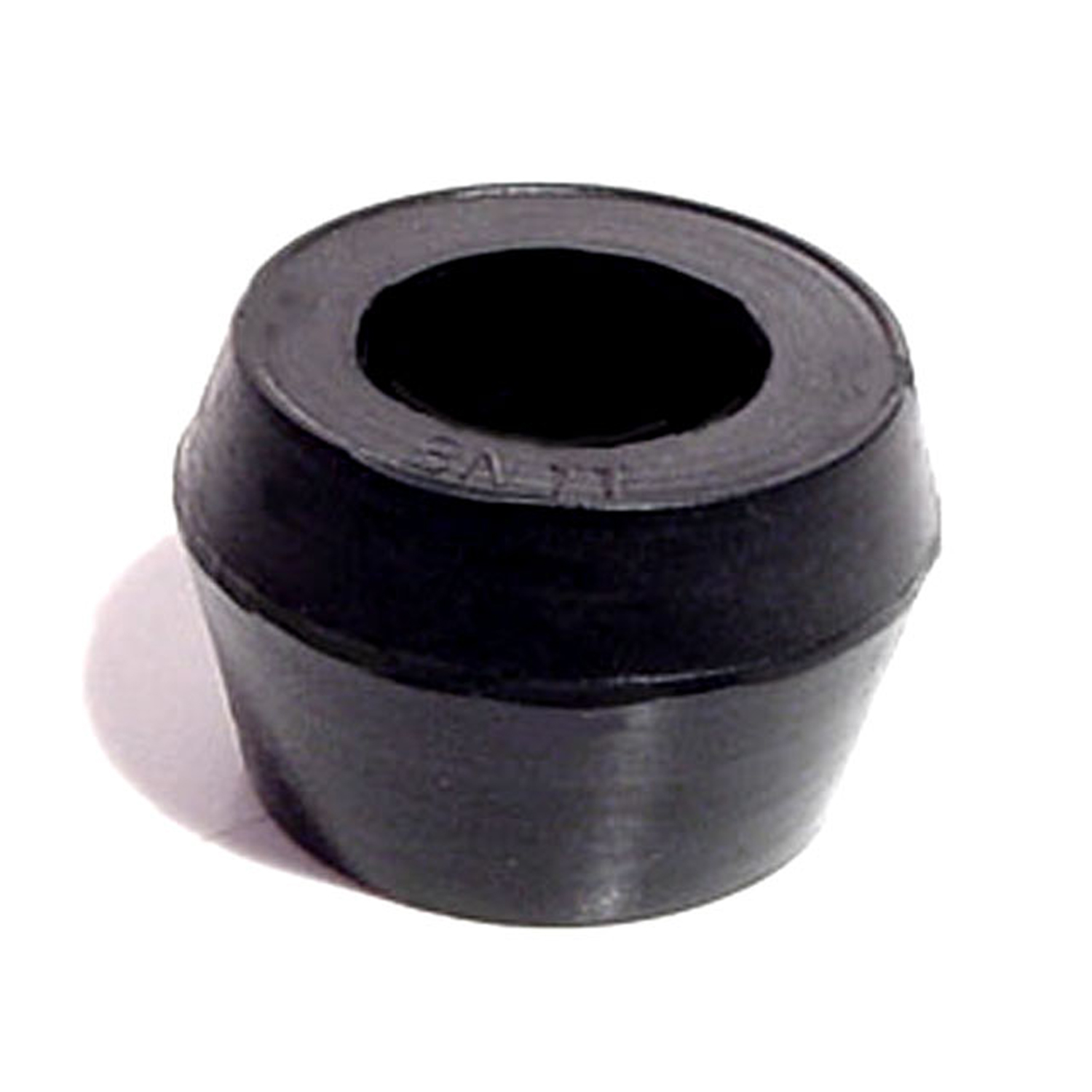 1968 Ford F-100 Shock Absorber Grommet. 1" bottom O.D-BN 11Shock Absorber Grommet. 1" bottom O.D., 3/4" high, with 5/8" I.D. Each
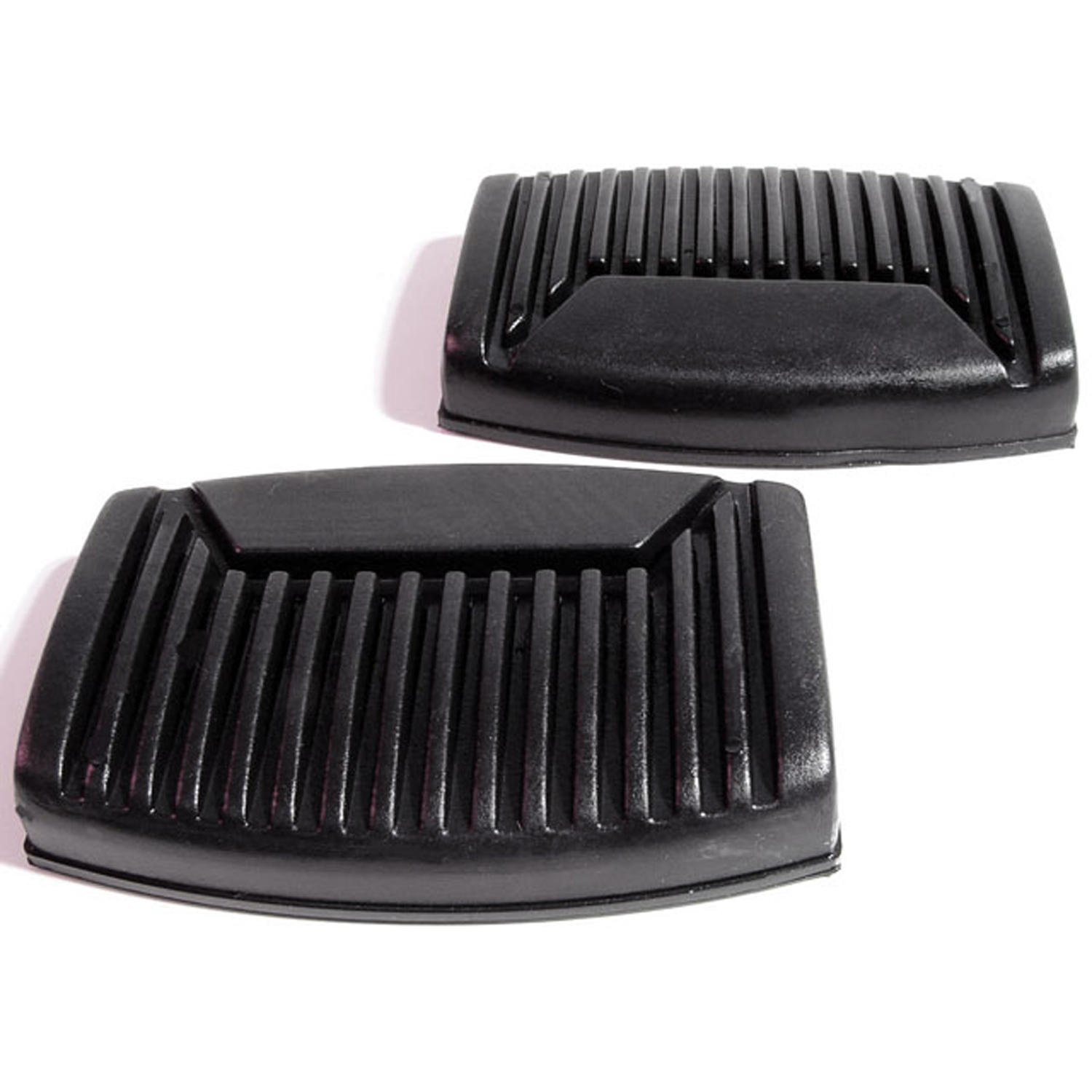 1968 Ford F-100 Clutch and Brake Pedal Pads. 3-1/4" wide X 2-1/4" long-CB 111Clutch and Brake Pedal Pads. 3-1/4" wide X 2-1/4" long. Pair
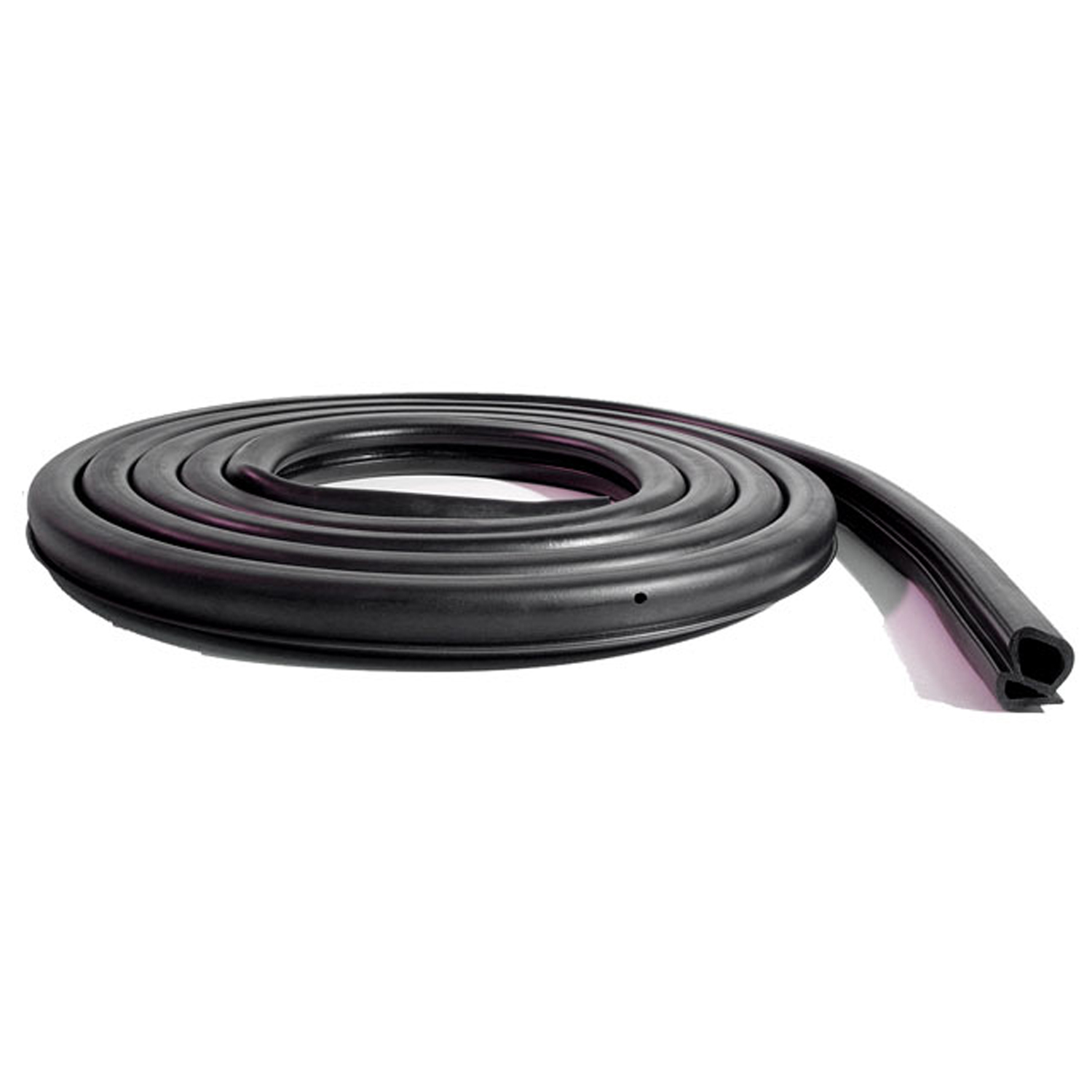 1968 Ford F-100 Door Seal. Fits either side. Each-LM 110-BDoor Seal. Fits either side. Each
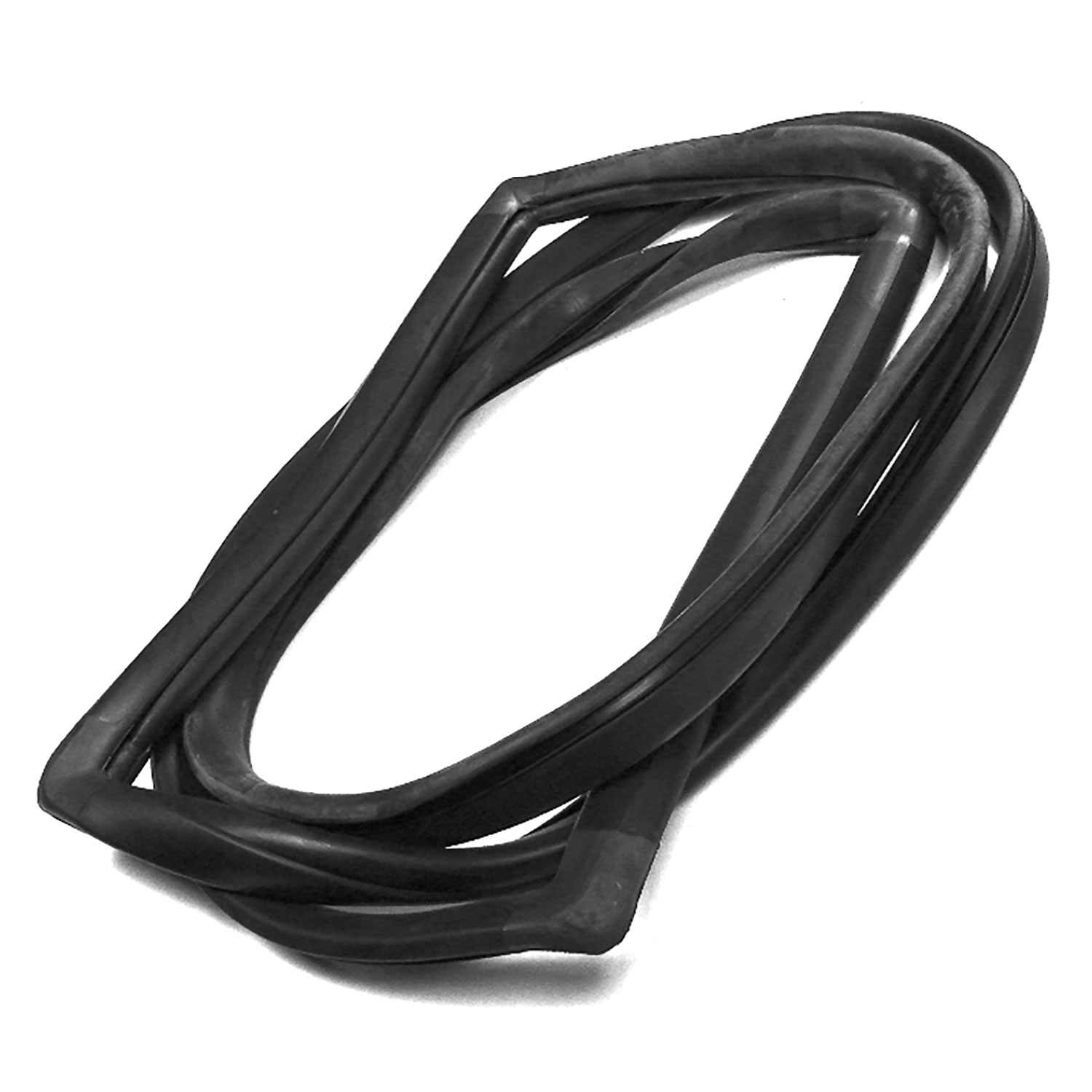 1968 Ford F-100 Windshield Seal, 67-79 Ford Full Size Truck, 78-79 Bronco, Without Trim Groove-VWS 3304-CThis windshield seal goes first on the glass and is installed using the rope-in method. This product is made from the original specs and with high quality ozone resistant EPDM rubber for a great fit and long life. This item is designed to be installed during glass replacement.
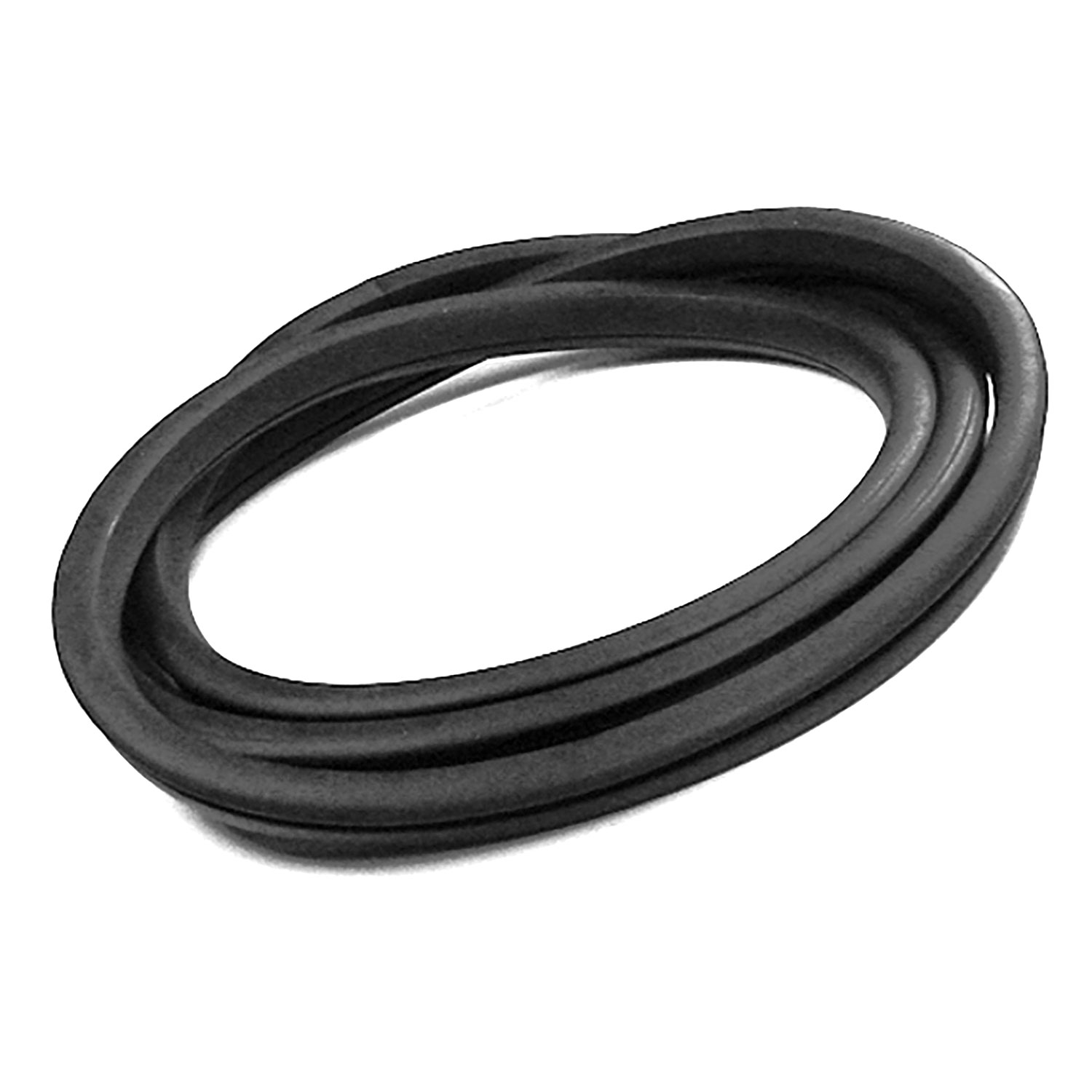 1968 Ford F-100 Rear Window Seal, 67-72 Ford Full Size Truck, Without Trim Groove, Each-VWS 3304-QThis rear window seal goes first on the body then the glass is placed in the opening. It is a standard black gasket without trim groove. This product is made from the original specs and with high quality ozone resistant materials for a great fit and long life. This item is designed to be installed during glass replacement.
Why Choose Metro?
For over 100 years, Metro Moulded Parts has been the pinnacle of quality in classic car restoration parts. Our commitment to precision and authenticity in every component ensures a perfect fit and an OEM-level appearance.
- Expert Craftsmanship & Quality: Each part is a testament to our dedication to reliability and perfection, crafted from original designs and thoroughly tested.
- Advanced Technology: We use cutting-edge techniques to create flawless, long-lasting parts that surpass others in performance.
- SuperSoft Sponge – The Ultimate Door Seal: Not only are our door seals 30% softer than competitors', but they're also guaranteed to never leak. They effectively reduce wind and road noise, enhancing your classic car's comfort and driving experience.
- Proudly American: Our parts are a product of American craftsmanship, made in the USA with a spirit of excellence and heritage.
- Unrivaled Warranty: We back our products with a 30-year industry-leading warranty, a testament to our confidence in their quality.
Join us in preserving the legacy of classic cars with parts that are crafted for perfection, not just made.