

Image of 1970 Ford Bronco, Note: These illustrations use artistic license and may differ from actual historical models.
Performance Metrics
Fundamental Metrics
Emotional Appeal
MMP Rating
| Engine Specifications | |
|---|---|
| Engine: | 170 CID I6, 200 CID I6, 289 CID V8, 302 CID V8 |
| Displacement: | 170-302 cubic inches |
| Horsepower: | 105-205 hp |
| Torque: | 158-282 lb-ft |
| Compression Ratio: | 8.7:1 - 9.5:1 |
| Ignition System: | Conventional, distributor |
| Cooling System: | Liquid-cooled |
| Performance Specifications | |
| 0-60 Time: | 10-12 seconds |
| 1/4 Mile Time: | 17-19 seconds |
| Top Speed: | 80-90 mph |
| Transmission and Drive | |
| Drive Type: | 4WD |
| Transmission Type: | 3-speed manual, 3-speed automatic |
| Fuel and Efficiency | |
| Fuel System Type: | Carburetor |
| MPG: | 10-14 mpg |
| Dimensions and Brakes | |
| Brakes: | Front disc brakes, rear drum brakes |
| Wheelbase: | 92 inches |
| Weight: | 3200-3600 lbs |
Note: Specifications for classic cars are given to the best of our ability, considering the limited and variant data available.
1970 Ford Bronco: A Compact 4x4 With Big Ambitions
The 1970 Ford Bronco was built for people who wanted to leave the pavement without piloting a full-size truck. Compact, four-wheel drive, and refreshingly simple, it helped establish the early SUV as a vehicle for both everyday use and serious trail work.
Ford introduced the Bronco in 1965 as a 1966 model. Developed under Ford executive Donald Frey, it was designed to compete with compact off-roaders such as the Jeep CJ and International Scout. By 1970, the first-generation Bronco had become a familiar sight on farms, beaches, hunting trips, and rugged trails. Its short 92-inch wheelbase and straightforward mechanical layout made it nimble where larger 4x4s could feel cumbersome.
One intriguing detail: the Bronco began life in three body styles, including a doorless roadster. By 1970, the roadster had been discontinued, leaving the wagon and half-cab pickup as the available choices. The open-sided original is now one of the first-generation Bronco’s most distinctive pieces of history.
Bronco Styling, Cabin, and Options
The 1970 Bronco has a purposeful, upright shape: a flat hood, nearly vertical windshield, squared-off body panels, and a simple grille carrying the Ford name. Its compact proportions give it a more agile look than contemporary full-size 4x4s. The removable hardtop on the wagon added versatility, while exposed hinges and practical bumpers reinforced its work-ready character.
Inside, the Bronco favored durability over decoration. The cabin was narrow and straightforward, with vinyl upholstery, a painted metal dashboard, basic gauges, and rubber flooring suited to mud, sand, and wet boots. Comfort and sound insulation were modest by modern standards, but the uncomplicated layout made the controls easy to understand and the interior relatively easy to clean.
For its era, the Bronco’s notable technology was functional rather than luxurious. It combined four-wheel drive with a two-speed transfer case, allowing the driver to select a lower range for slow, controlled travel over difficult terrain. The front axle used coil springs and radius arms, while the rear relied on leaf springs. That front suspension helped distinguish the Bronco from many work-oriented 4x4s that used leaf springs at both ends.
Ford offered a range of period paint colors, with choices varying by model year and production schedule. White, red, blue, and earthy tones all suited the Bronco’s outdoors-focused image. The Sport package added brighter exterior trim and a more dressed-up appearance, while the basic model kept things plain and practical. Buyers could also choose accessories and equipment to tailor the truck for work, recreation, or comfort.
For 1970, the two body styles were the wagon and the half-cab pickup. The wagon, with its enclosed cabin and removable hardtop, is the most recognizable and sought-after configuration today. The half-cab offered a small pickup-style cargo area and a more trucklike profile. The roadster, once the most open-air option, was no longer part of the lineup.
Why the 1970 Bronco Matters
The Bronco helped define a compact 4x4 formula: manageable exterior dimensions, genuine low-range capability, and a cabin that could still serve everyday needs. It was not the first vehicle to combine passenger-car use with off-road ability, but Ford gave that idea a distinctive, accessible package that appealed to a broad range of buyers.
Compared with the Jeep CJ, the Bronco offered a more enclosed and versatile cabin. Against the larger International Scout, it had a shorter footprint and a particularly maneuverable feel. Its coil-sprung front suspension also gave it a different handling character from many rivals. The result was a vehicle that could tackle rough ground without being limited to specialized off-road use.
The first-generation Bronco’s influence remains visible in later SUVs and in the modern Ford Bronco. Its combination of removable body panels, compact dimensions, and trail-focused hardware became central to the nameplate’s identity. The classic model also helped build the Bronco’s reputation as a vehicle that could be modified, repaired, and personalized rather than simply driven as delivered.
302 Power and Trail Manners
The 1970 Bronco was offered with a 170-cubic-inch inline-six as its standard engine, while the available 302-cubic-inch V8 provided more muscle. Both were paired with a three-speed manual transmission in the typical period setup. Ford’s published horsepower ratings from this era used gross measurement standards, so they should not be compared directly with modern net-horsepower figures.
Performance depended heavily on engine, axle gearing, tire size, condition, and modifications. A healthy V8 Bronco may reach 60 mph in roughly 10 to 13 seconds, while six-cylinder examples are generally slower. Approximate top speed is around 80 to 90 mph, though this is not a truck that feels especially relaxed at sustained highway speeds. These are practical estimates, not guaranteed factory test figures for every vehicle.
On a trail, the Bronco’s compact size and low-range gearing are major advantages. Its short wheelbase helps it turn through tight sections, and the suspension can handle uneven ground at sensible speeds. On pavement, however, the ride is firm and the steering requires more attention than a modern SUV. Crosswinds, worn suspension parts, large tires, and lifted setups can make it wander, while the short wheelbase can feel busy over broken pavement.
Driving a 1970 Bronco is a tactile experience. The V8 produces a familiar, unfiltered rumble, while the six-cylinder is more subdued. The manual steering and transmission ask the driver to stay involved, and the upright seating position provides a clear view over the hood. It feels mechanical in the best sense, though its noise, ride, braking, and safety equipment are unmistakably from another era.
Living With a Classic Bronco
Owners use these Broncos as weekend cruisers, trail rigs, show vehicles, and, in some cases, regular drivers. A stock or lightly modified example can be enjoyable on local roads and dirt tracks, but modern traffic and long highway journeys can be tiring. Many owners upgrade brakes, steering, lighting, cooling, and seat belts while preserving the original appearance.
Mechanical simplicity is a major ownership advantage. The engines and driveline are familiar to many classic Ford specialists, and routine work is generally approachable for a capable home mechanic with the right tools. Parts support is strong because the early Bronco has a large enthusiast community and a healthy aftermarket. Still, a restoration can become expensive quickly, especially if it needs body panels, a complete interior, or extensive drivetrain work.
Rust deserves close inspection. Check the floors, inner and outer fenders, door posts, rocker areas, tailgate, and body supports, along with the frame and suspension mounting points. A shiny paint job can hide old repairs, so examine seams and structural areas carefully. Also check whether modifications have been installed correctly, particularly suspension lifts, steering changes, and larger tires.
Bronco Trivia and Common Complaints
The 1970 Bronco was part of a first-generation run that lasted through 1977. Ford produced an estimated 18,450 Broncos for the 1970 model year, with roughly 225,000 first-generation examples built across the full 1966–77 run. Production figures can vary slightly among historical references, but the overall picture is clear: the Bronco was not a limited-production vehicle when new.
The Bronco also became a foundation for off-road competition. Parnelli Jones’s highly modified Bronco-based “Big Oly” won the Baja 1000 in 1971 and 1972. Big Oly was a purpose-built racing vehicle, not a stock 1970 Bronco, but its success helped cement the model’s association with desert racing and serious off-road performance.
A common criticism is that the early Bronco is less comfortable and refined than its modern reputation might suggest. The cabin is noisy, the ride can be choppy, and early safety equipment is limited by today’s expectations. Buyers should also be alert to poorly executed restorations and modified examples advertised as more original than they really are. Its appeal lies in its character and capability, not modern-road comfort.
1970 Ford Bronco Values and Rarity
The 1970 Bronco is collectible, but it is not rare in the strict production sense. Its availability today depends more on condition, originality, body style, and rust than on the original build total. The wagon is the most familiar and widely desired configuration; clean, unmodified examples are increasingly difficult to find.
As a broad U.S. market estimate, a project needing substantial work might sell for about $15,000 to $30,000. A usable driver could fall around $30,000 to $60,000, while a high-quality restoration may bring roughly $60,000 to $100,000 or more. Exceptional, highly original, or unusually well-restored examples can exceed $100,000, and premium custom builds may reach considerably higher. These are general ranges, not a substitute for a current appraisal; location, documentation, originality, and mechanical condition can shift values substantially.
Early Bronco values rose sharply as interest in vintage 4x4s and the revived Bronco name grew. The market can fluctuate, and heavily modified vehicles do not always command the same premium as carefully restored or well-documented examples. In the long term, strong enthusiast demand and limited supplies of rust-free trucks have supported values, though buyers should assess each Bronco on its own merits.
A Small 4x4 With Lasting Presence
The 1970 Ford Bronco combines compact dimensions, straightforward engineering, genuine four-wheel-drive ability, and unmistakable vintage style. It is not the fastest or most comfortable classic truck, but it offers a direct connection to the road and trail that many modern vehicles have smoothed away.
More than half a century later, the early Bronco remains a benchmark for the compact 4x4. Its appeal is simple: it looks ready for an adventure, has the hardware to pursue one, and rewards owners who enjoy a vehicle with a little grit and a lot of character.
1970 Ford Bronco Catalog of Parts
 1970 Ford Bronco Body Cushion. 2-5/16" O.D., 15/16" I.D., 3/4" Thick. Each-BC 6Body Cushion. 2-5/16" O.D., 15/16" I.D., 3/4" Thick. Each
 1970 Ford Bronco Body Cushion. 2-9/16" O.D., 3/4" I.D., 13/16" Thick. Each-BC 6-ABody Cushion. 2-9/16" O.D., 3/4" I.D., 13/16" Thick. Each
 1970 Ford Bronco Door Seals. Fits either side. 83-1/2" long. Pair-LM 11-BDoor Seals. Fits either side. 83-1/2" long. Pair
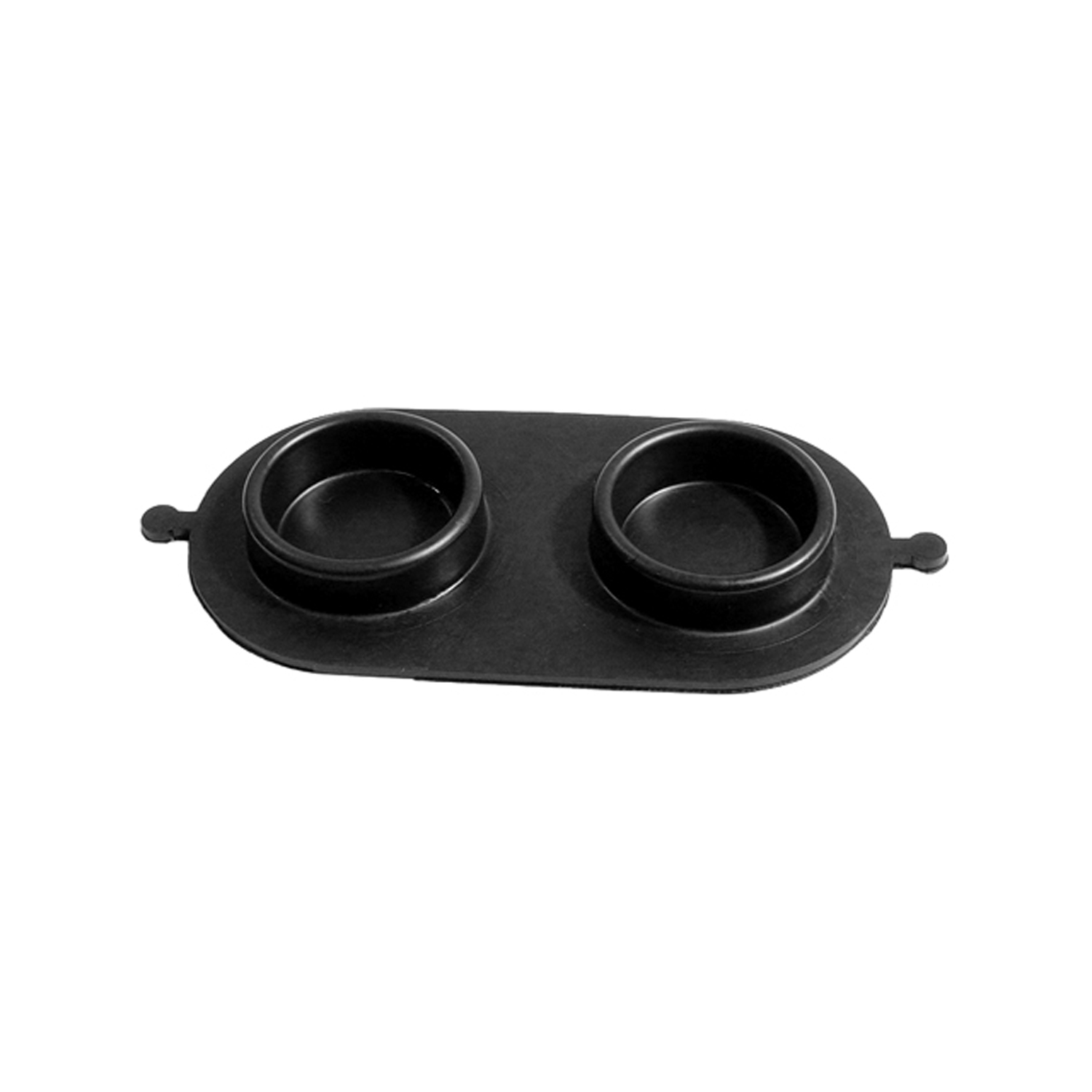 1970 Ford Bronco Brake Master Cylinder Cover Seal. Replaces OEM #C7AZ2167-A-RP 2-BBrake Master Cylinder Cover Seal. Replaces OEM #C7AZ2167-A. Each
 1970 Ford Bronco Molded Roof Rail Seals. Pair R&L-RR 3310Molded Roof Rail Seals. Pair R&L
 1970 Ford Bronco Vulcanized Windshield Seal-VWS 3390Vulcanized Windshield Seal. For models without chrome garnish on windshield. Each
 1970 Ford Bronco Spare Tire Hold Down Nut. 3/8- 16 thread size-WF 3504Spare Tire Hold Down Nut. 3/8- 16 thread size. Replaces OEM #B9AZ-1462-A. Each
Why Choose Metro?
For over 100 years, Metro Moulded Parts has been the pinnacle of quality in classic car restoration parts. Our commitment to precision and authenticity in every component ensures a perfect fit and an OEM-level appearance.
- Expert Craftsmanship & Quality: Each part is a testament to our dedication to reliability and perfection, crafted from original designs and thoroughly tested.
- Advanced Technology: We use cutting-edge techniques to create flawless, long-lasting parts that surpass others in performance.
- SuperSoft Sponge – The Ultimate Door Seal: Not only are our door seals 30% softer than competitors', but they're also guaranteed to never leak. They effectively reduce wind and road noise, enhancing your classic car's comfort and driving experience.
- Proudly American: Our parts are a product of American craftsmanship, made in the USA with a spirit of excellence and heritage.
- Unrivaled Warranty: We back our products with a 30-year industry-leading warranty, a testament to our confidence in their quality.
Join us in preserving the legacy of classic cars with parts that are crafted for perfection, not just made.