

Image of 1971 Ford Bronco, Note: These illustrations use artistic license and may differ from actual historical models.
Performance Metrics
Fundamental Metrics
Emotional Appeal
MMP Rating
| Engine Specifications | |
|---|---|
| Engine: | 170 CID I6, 200 CID I6, 289 CID V8, 302 CID V8 |
| Displacement: | 170-302 cubic inches |
| Horsepower: | 105-210 hp |
| Torque: | 245 lb-ft for the V8 engines |
| Compression Ratio: | 9.0:1 |
| Ignition System: | Conventional, distributor |
| Cooling System: | Liquid-cooled |
| Performance Specifications | |
| 0-60 Time: | 10-12 seconds |
| 1/4 Mile Time: | 17-18 seconds |
| Top Speed: | 100 mph |
| Transmission and Drive | |
| Drive Type: | 4WD |
| Transmission Type: | 3-speed manual, 3-speed automatic |
| Fuel and Efficiency | |
| Fuel System Type: | Carburetor |
| MPG: | 10-14 mpg |
| Dimensions and Brakes | |
| Brakes: | Front disc and rear drum brakes |
| Wheelbase: | 92 inches |
| Weight: | 3,200 lbs |
Note: Specifications for classic cars are given to the best of our ability, considering the limited and variant data available.
1971 Ford Bronco: The Compact 4x4 That Started a Legacy
The 1971 Ford Bronco was a compact 4x4 with the attitude of a much bigger truck and the agility to go places full-size pickups could not. Built by Ford in Wayne, Michigan, the first-generation Bronco debuted for the 1966 model year as the company’s answer to the Jeep CJ-5 and International Harvester Scout. By 1971, it had become a respected off-roader in its own right, equally at home on a muddy trail, a ranch road, or a suburban driveway.
One detail that makes the early Bronco especially appealing is its purposeful size: a 92-inch wheelbase gave it a tight turning circle and made it easier to maneuver on narrow trails than many larger 4x4s. Its small footprint also helped establish the compact sport-utility vehicle as a category worth taking seriously. Decades later, Ford revived the Bronco name for the 2021 model year, drawing heavily on the original’s upright shape and trail-ready character.
Boxy Bronco Design and Cabin
The 1971 Bronco wears its function plainly. Its short hood, upright windshield, flat body sides, squared-off fenders, and simple grille give it a clean, almost toy-like profile. The styling is not decorative so much as practical: the compact body is easy to place on a trail, while the removable hardtop lets owners open up the cabin for warm-weather driving. The rear-mounted spare tire and high stance complete the unmistakable early-Bronco look.
Inside, the Bronco was straightforward and durable rather than luxurious. Painted metal, vinyl upholstery, and rubber flooring suited a vehicle expected to see dust, mud, and work clothes. The dashboard kept the essential instruments and controls within easy reach, while the cabin’s simple layout made cleaning and repair relatively uncomplicated. Depending on the configuration and equipment, buyers could choose different seating and trim details, but no version pretended to be a plush family car.
Ford offered the Bronco in a changing range of period colors. Bright, high-impact shades could make the truck stand out, while white, red, and other more restrained tones gave it a classic work-truck appearance. Exact paint choices depended on the model year and production details, so buyers restoring one should confirm the original color through factory records or a vehicle-specific Marti Report rather than relying on a modern paint chart.
For 1971, the most familiar configuration was the wagon with its removable full hardtop. A half-cab pickup body, with a shorter cab and open cargo bed, was also part of the early Bronco lineup. The roadster, a more open-bodied version offered in the Bronco’s earliest years, had been discontinued before 1971. Trim packages such as Sport and Ranger added appearance and comfort details, but the wagon remains the most iconic and commonly recognized body style.
Simple Technology, Serious 4x4 Hardware
The Bronco’s engineering favored accessible, proven hardware. Power went through a three-speed manual transmission to a two-speed Dana 20 transfer case, allowing the driver to select low range for slow, controlled work off-road. A part-time four-wheel-drive system, Dana 30 front axle, and Ford 9-inch rear axle gave the truck a strong mechanical foundation. The front suspension used coil springs and radius arms, while the rear relied on leaf springs.
Those components were not cutting-edge luxury technology, but they were well suited to the Bronco’s mission. The coil-sprung front end helped it ride and articulate better than some leaf-sprung rivals, while the short wheelbase and compact dimensions made tight trails less intimidating. The trade-off was a cabin with few modern conveniences and a driving experience that demanded more attention than a contemporary SUV.
Why the 1971 Bronco Matters
The first Bronco helped shape the idea of the personal 4x4: a vehicle small enough to use every day, yet capable enough to leave paved roads behind. Before the market filled with modern SUVs, Ford was already combining a compact footprint, removable body panels, four-wheel drive, and truck-like utility in one package. The Bronco’s success helped encourage competitors to develop their own sport-utility vehicles, including Chevrolet’s larger Blazer.
What distinguished the Bronco from many contemporaries was its balance of scale and capability. It was not as open and minimal as a Jeep CJ, nor as large as later full-size SUVs. Its solid axles, low-range gearing, simple construction, and short wheelbase made it genuinely useful off-road, while its enclosed wagon body made it more practical for everyday errands and changing weather. That basic formula remains central to the Bronco’s appeal today.
The Bronco also built a competition reputation. Ford-supported and modified Broncos, including those associated with racer and builder Bill Stroppe, competed in demanding desert events such as the Baja 1000. The connection between the production truck and desert racing helped give the Bronco an image that went beyond its modest dimensions.
Engine, Speed, and Trail Manners
In 1971, buyers could choose an economical 170-cubic-inch inline-six or an optional 302-cubic-inch V8. Period horsepower figures were generally quoted using the older gross-rating system, so they should not be compared directly with modern net-horsepower figures. The V8 was commonly rated at about 205 gross horsepower and roughly 300 lb-ft of torque, giving the Bronco useful low-speed pulling power. A three-speed manual was the normal transmission; an automatic was not part of the regular 1971 lineup.
Factory performance figures vary by source, equipment, gearing, and vehicle condition. As a practical estimate, a healthy V8 Bronco might reach 60 mph in roughly 13 to 16 seconds, while a six-cylinder example would generally take longer. Top speed for a standard truck is often estimated in the neighborhood of 85 to 95 mph, though these are not figures that describe its best use. The Bronco is geared and shaped for utility, not high-speed cruising.
On rough ground, the short wheelbase and capable four-wheel-drive system make the Bronco nimble and entertaining. The front coil springs help it absorb uneven surfaces, although its vintage suspension, narrow cabin, and solid axles still transmit plenty of bumps and movement. On winding pavement, steering can feel slow and less precise than modern drivers expect. Crosswinds and highway speeds also make the upright body and relatively narrow stance noticeable, so a relaxed pace suits the truck best.
From behind the wheel, the experience is mechanical and direct. The V8 delivers a deep, familiar rumble, while the manual transmission and transfer-case lever keep the driver closely involved. The ride is firm by modern standards, the controls require more effort, and the cabin is far from quiet. For many owners, those traits are part of the charm: the Bronco feels like a piece of working 4x4 machinery rather than a modern vehicle pretending to be one.
Living With a Classic Bronco
A 1971 Bronco can serve as a weekend driver, trail rig, show vehicle, or restored collector truck. Some owners use them regularly, but an unmodified example is usually most enjoyable on back roads and at moderate speeds rather than in heavy, high-speed commuting. The removable top makes summer driving especially appealing, though it also means buyers should inspect seals, weatherstripping, and the hardtop carefully.
Mechanical repairs are generally approachable for an owner with basic tools and experience. The V8 and three-speed manual are conventional, and the Bronco’s simple layout is one reason restoration parts and specialist knowledge remain widely available. However, age brings familiar concerns: rust in the floors, door posts, inner fenders, and body supports; worn steering and suspension parts; tired brakes; and electrical work from decades of repairs. A clean, well-documented truck is often a better buy than a cheaper project with hidden corrosion.
Reliability depends heavily on condition and maintenance. A well-sorted Bronco can be enjoyable and dependable for local use, but it is still more than half a century old. Buyers should budget for inspection and catch-up work, especially if the truck has been modified, used hard off-road, or stored outdoors. Originality can matter to collectors, while sensible upgrades such as improved cooling, safer tires, or carefully chosen brake components may suit a truck intended for regular use.
Bronco Trivia and Common Criticisms
The famous white Bronco associated with O.J. Simpson’s 1994 police chase was a later-generation vehicle, not a 1971 first-generation Bronco. That distinction is often missed because the incident made the Bronco name familiar to people who might otherwise know it only as a classic 4x4.
Another notable chapter is the Baja Bronco, a limited production performance version developed with Bill Stroppe. These trucks featured special off-road equipment and distinctive styling, and roughly 650 are often cited as having been built across the program’s run. A 1971 Bronco should not automatically be assumed to be a Baja model, however. Buyers should verify the vehicle’s identity and equipment through documentation and expert inspection.
The first-generation Bronco’s most common criticisms are also easy to understand: it can be noisy, uncomfortable on long trips, slow by modern standards, and vulnerable to rust. Its narrow cabin and old-fashioned steering do not suit everyone. But those compromises are part of the same simple design that makes it so easy to recognize, customize, and enjoy off-road.
1971 Ford Bronco Values and Availability
Ford produced approximately 18,700 Broncos for the 1971 model year, based on commonly cited production totals. That is a useful estimate rather than a guarantee for any particular body style or configuration. Many trucks have been modified, rebuilt, or lost to rust, so finding an untouched example with clear records can be much harder than the original production figure suggests.
As a broad current-market guide, a project Bronco may sell for about $20,000 to $40,000, depending on rust, completeness, and documentation. A solid driver or older restoration can fall around $40,000 to $80,000. High-quality restorations and especially desirable original examples can bring roughly $80,000 to $130,000 or more, while exceptional builds and rare, verified special versions may exceed that range. Condition, originality, body style, engine, and restoration quality can move prices substantially in either direction.
Early Broncos have generally appreciated over the long term as interest in vintage 4x4s has grown. Prices can still fluctuate, and a highly modified truck may not appeal to the same buyers as a well-preserved original. The market increasingly rewards sound bodywork, documented history, and professional restoration, while rust-heavy projects can become expensive quickly. Before purchasing, compare recent sales of similar trucks rather than relying on asking prices alone.
A Small Truck With a Lasting Footprint
The 1971 Ford Bronco combines compact proportions, honest styling, useful four-wheel-drive hardware, and a driving experience that feels unmistakably vintage. It helped define the early sport-utility vehicle and gave Ford a nameplate with a lasting connection to both everyday utility and serious off-road adventure. Its ride may be firm and its pace modest, but the Bronco’s appeal is not about refinement or speed. It is about a simple, capable machine that still makes every trail feel like an invitation.
1971 Ford Bronco Catalog of Parts
 1971 Ford Bronco Body Cushion. 2-5/16" O.D., 15/16" I.D., 3/4" Thick. Each-BC 6Body Cushion. 2-5/16" O.D., 15/16" I.D., 3/4" Thick. Each
 1971 Ford Bronco Body Cushion. 2-9/16" O.D., 3/4" I.D., 13/16" Thick. Each-BC 6-ABody Cushion. 2-9/16" O.D., 3/4" I.D., 13/16" Thick. Each
 1971 Ford Bronco Door Seals. Fits either side. 83-1/2" long. Pair-LM 11-BDoor Seals. Fits either side. 83-1/2" long. Pair
 1971 Ford Bronco Molded Roof Rail Seals. Pair R&L-RR 3310Molded Roof Rail Seals. Pair R&L
 1971 Ford Bronco Vulcanized Windshield Seal-VWS 3390Vulcanized Windshield Seal. For models without chrome garnish on windshield. Each
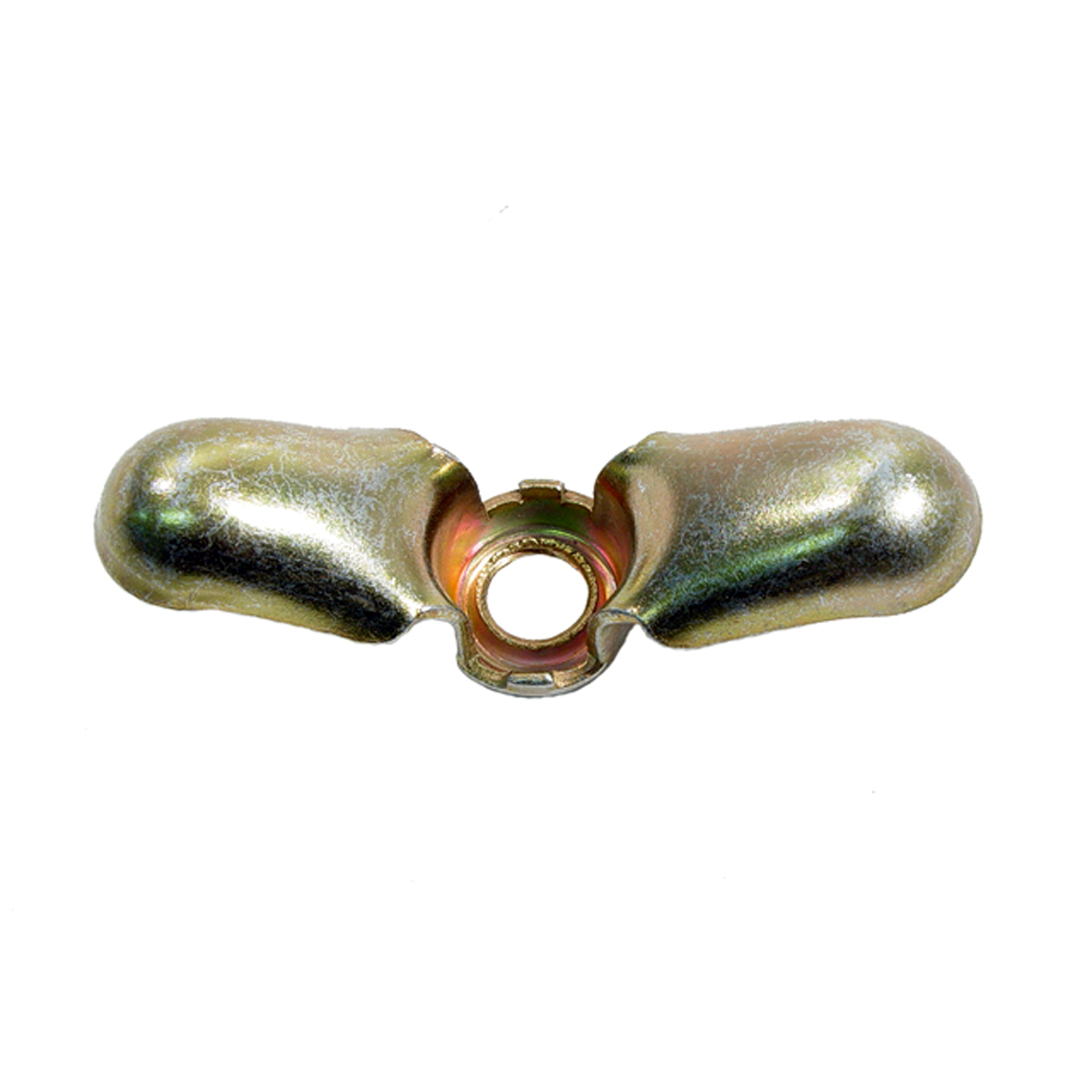 1971 Ford Bronco Spare Tire Hold Down Nut. 3/8- 16 thread size-WF 3504Spare Tire Hold Down Nut. 3/8- 16 thread size. Replaces OEM #B9AZ-1462-A. Each
Why Choose Metro?
For over 100 years, Metro Moulded Parts has been the pinnacle of quality in classic car restoration parts. Our commitment to precision and authenticity in every component ensures a perfect fit and an OEM-level appearance.
- Expert Craftsmanship & Quality: Each part is a testament to our dedication to reliability and perfection, crafted from original designs and thoroughly tested.
- Advanced Technology: We use cutting-edge techniques to create flawless, long-lasting parts that surpass others in performance.
- SuperSoft Sponge – The Ultimate Door Seal: Not only are our door seals 30% softer than competitors', but they're also guaranteed to never leak. They effectively reduce wind and road noise, enhancing your classic car's comfort and driving experience.
- Proudly American: Our parts are a product of American craftsmanship, made in the USA with a spirit of excellence and heritage.
- Unrivaled Warranty: We back our products with a 30-year industry-leading warranty, a testament to our confidence in their quality.
Join us in preserving the legacy of classic cars with parts that are crafted for perfection, not just made.