
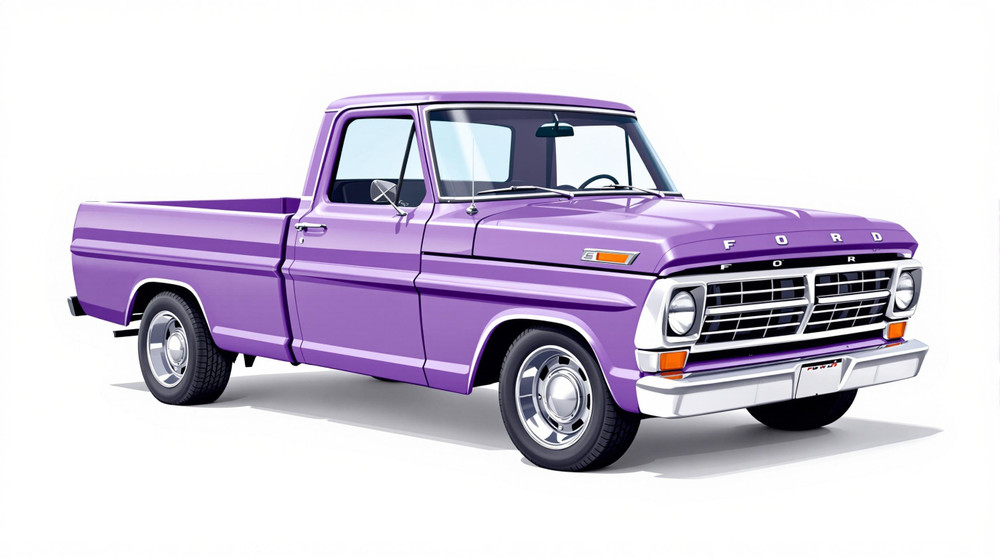
Image of 1971 Ford F-100, Note: These illustrations use artistic license and may differ from actual historical models.
Performance Metrics
Fundamental Metrics
Emotional Appeal
MMP Rating
| Engine Specifications | |
|---|---|
| Engine: | 240 CID I6, 300 CID I6, 302 CID V8, 360 CID V8, 390 CID V8 |
| Displacement: | 240 - 390 cubic inches |
| Horsepower: | 150 - 255 hp |
| Torque: | 235 - 375 lb-ft |
| Compression Ratio: | 8.0:1 - 9.5:1 |
| Ignition System: | Conventional breaker point ignition system |
| Cooling System: | Liquid-cooled |
| Performance Specifications | |
| 0-60 Time: | Estimated 10 - 15 seconds |
| 1/4 Mile Time: | Estimated 17 - 20 seconds |
| Top Speed: | 85 - 100 mph |
| Transmission and Drive | |
| Drive Type: | Rear-wheel drive |
| Transmission Type: | 3-speed manual, 4-speed manual, 3-speed automatic |
| Fuel and Efficiency | |
| Fuel System Type: | Carburetor |
| MPG: | Estimated 10 - 15 mpg |
| Dimensions and Brakes | |
| Brakes: | Front disc and rear drum brakes |
| Wheelbase: | 115 - 129 inches |
| Weight: | 3,500 - 4,500 lbs |
Note: Specifications for classic cars are given to the best of our ability, considering the limited and variant data available.
1971 Ford F-100: A Classic Pickup with Working-Class Roots
The 1971 Ford F-100 looks ready for a lumber run, a ranch chore, or a slow cruise down Main Street, and that versatility is exactly what made it a lasting American icon. Built by the Ford Motor Company as part of its fifth-generation F-Series, the F-100 paired straightforward truck engineering with more comfort and trim choices than earlier work pickups. Today, its clean lines, sturdy chassis, and easy-to-understand mechanicals make it a favorite among classic-truck fans.
The 1971 model belongs to the 1967–1972 F-Series generation. Ford had given this generation a broader cab and a more substantial appearance than its predecessor, while continuing to offer the F-100 as a practical half-ton pickup. A notable piece of its history is the Twin I-Beam front suspension, introduced on two-wheel-drive F-Series trucks earlier in the generation. It gave the truck independent front suspension without abandoning the strength and ruggedness buyers expected from a pickup.
Classic Ford Truck Styling and Cab Options
The F-100 has the squared-off proportions that define many late-1960s and early-1970s pickups: a tall hood, upright windshield, broad fenders, and a simple, imposing front end. Its 1971 grille and trim details give it a distinct model-year identity, but the overall design remains restrained. There is little ornament for ornament’s sake. The result is a truck that looks handsome in original trim and equally at home with a mild custom treatment.
Ford offered two familiar bed styles. The Styleside has a full-width bed integrated into the rear fenders, giving it a broad, modern look and useful cargo space. The Flareside, with its separate rear fenders and narrower bed, has a more traditional pickup silhouette and is often the more eye-catching choice today. Styleside trucks were a popular practical option, while Flareside examples have particular appeal to collectors who like the older, distinctly truck-like profile.
Buyers could choose from different cab and wheelbase configurations, with regular-cab trucks forming the heart of the lineup. The range also included two-wheel-drive and four-wheel-drive versions, along with work-oriented chassis configurations. Trim varied from basic, easily cleaned interiors to better-equipped versions such as the Ranger and Ranger XLT, which added more brightwork and comfort-focused details.
Interior Comfort and Period Features
Inside, the F-100 is functional rather than luxurious. The broad dashboard is straightforward, with clear instruments and controls that are easy to reach. Depending on trim and options, the cabin might have a vinyl bench seat or upgraded upholstery, along with carpeting or more decorative trim. Materials were chosen to stand up to work, not to imitate a premium passenger car, though the higher trims could make the truck feel surprisingly comfortable for its era.
Available equipment could include a radio, heater, power steering, power brakes, air conditioning, and an automatic transmission, depending on configuration. These features were options rather than guaranteed equipment, so two F-100s from the same year can have very different cabins. The technology is simple by modern standards: no electronic driver aids or touchscreens, just mechanical controls and systems that an owner can understand and service.
Ford’s paint choices changed across markets and trim combinations. Period colors included a variety of whites, reds, blues, greens, and earthier shades. White and red trucks are especially familiar sights, while bold blues and greens can make a restored example stand out. Original paint codes are worth checking when authenticity matters, since a correct color can add to a restoration’s appeal.
Why the 1971 F-100 Mattered
The F-100’s importance lies less in a single headline-grabbing invention than in how it helped make the pickup a more versatile vehicle. Ford’s Twin I-Beam suspension gave two-wheel-drive models a more car-like front-end response than a traditional solid front axle, while retaining the durability expected of a working truck. The system was not a luxury-car setup, but it helped the F-Series appeal to people who wanted one vehicle for both work and everyday driving.
By 1971, pickups were increasingly serving as personal transportation as well as farm and trade equipment. Ford responded with a wide range of trims, body styles, engines, and options. That flexibility set the F-100 apart from more narrowly focused work trucks and helped establish a formula that remains central to the pickup market: offer a tough basic model, then let buyers tailor it for comfort, appearance, or harder use.
The 1971 F-100 was not a revolutionary redesign on its own. Its significance comes from carrying forward a successful generation of trucks that blended utility with growing everyday comfort. Its familiar proportions and mechanical simplicity have also influenced what many enthusiasts now consider the classic American pickup look.
Engines, Speed, and Road Manners
Engine availability depended on model, drivetrain, and market. The lineup included inline-six engines such as the 240- and 300-cubic-inch units, as well as V8 choices including the 302, 360, and 390. The smaller sixes suited steady work and economical operation, while the 300 six earned a strong reputation for durability and useful low-speed torque. V8 models delivered more relaxed acceleration, especially when paired with an automatic transmission.
There is no single dependable top-speed or 0–60-mph figure for every 1971 F-100. Engine, axle ratio, transmission, tires, load, and mechanical condition all make a substantial difference. As a broad period-style estimate, a V8 truck in good condition might reach 60 mph in roughly 11 to 14 seconds and manage a top speed in the neighborhood of 85 to 100 mph. A six-cylinder truck may take closer to 15 to 20 seconds to reach 60 mph, with a practical top speed more likely around 75 to 85 mph. These are estimates, not guaranteed factory test results, and an old truck should not be judged by modern highway performance standards.
On the road, the F-100 feels substantial and direct. The steering is slower than a modern truck’s, and the long hood and upright seating position make the driver feel connected to the vehicle’s size. Two-wheel-drive models with Twin I-Beam suspension can ride more comfortably over ordinary bumps than their rugged appearance suggests, though a worn front end or uneven pavement can produce a firm, sometimes unsettled response. Four-wheel-drive trucks, with their different front suspension layout, tend to feel more truck-like.
On winding roads, expect body roll and a relaxed pace rather than sports-car precision. The engine’s character is part of the charm: a six-cylinder gives a steady, purposeful note, while a V8 adds a deeper rumble under acceleration. The driving experience is tactile and uncomplicated. You hear the engine, feel the road, and operate controls that do not hide the truck’s mechanical nature.
Living with a 1971 Ford F-100
F-100s serve a wide range of modern roles. Some remain working trucks, hauling tools or light loads. Others are weekend cruisers, show vehicles, or the basis for tasteful restomods. Their straightforward construction makes them appealing to owners who want to do at least some of their own maintenance.
Routine service is generally approachable for a mechanically confident owner. The engines and drivetrains are conventional, and replacement parts and restoration components are widely available. Common inspection points include rust in the cab corners, floorboards, bed, and lower body; worn suspension and steering components; brake condition; and signs of poor-quality previous repairs. Parts availability is a major advantage, but a solid, unmodified truck is usually a better starting point than a cheap example with extensive corrosion.
Reliability depends heavily on maintenance and the quality of any restoration. A well-kept 300 six can be a dependable companion, while an old V8 can also serve reliably if its cooling, fuel, ignition, and lubrication systems are in good order. Even a carefully restored F-100 is more than fifty years old, so buyers should budget for age-related repairs and remember that classic brakes, tires, lighting, and crash protection are not equivalent to modern equipment.
F-100 Trivia and Common Criticisms
The 1971 F-100 was part of a generation that helped turn the pickup into a vehicle people could choose for personal use as well as work. Its Twin I-Beam suspension is one of the generation’s best-known engineering features. It is also worth remembering that “F-100” describes a broad family of trucks, not one fixed specification. A basic six-cylinder Styleside and a well-equipped V8 Ranger XLT can differ significantly in performance, appearance, and value.
There is no widely recognized speed or endurance record associated with the standard 1971 F-100. It was designed as a versatile production truck, not a competition special. Nor is there a single celebrity-owned example that defines the model’s story. Its claim to fame is broader: it represents the pickup’s transition from essential work tool to desirable everyday vehicle.
Common criticisms are part of the ownership picture. The truck is slow by current standards, fuel economy is modest, and its handling can feel vague if the steering or suspension is worn. The cabin is noisy, safety equipment is limited compared with modern vehicles, and rust can turn a seemingly affordable project into an expensive restoration. Those drawbacks are easier to accept when the truck is bought for what it is: a classic, mechanical, utility-focused vehicle rather than a modern daily driver.
1971 Ford F-100 Values and Collector Outlook
Values vary widely with condition, originality, engine, drivetrain, body style, and location. As a broad U.S. market guide, a project truck may sell for roughly $3,000 to $8,000. A usable driver in fair-to-good condition might bring about $10,000 to $25,000. Well-restored examples commonly fall in the $25,000 to $45,000 range, while exceptional restorations, desirable four-wheel-drive trucks, and especially attractive or rare configurations can exceed $50,000.
These are approximate ranges, not formal appraisals. A documented, rust-free truck with correct equipment can command more than a comparable example with modifications or hidden repair needs. Flareside models, strong V8 configurations, and four-wheel-drive examples often draw extra interest, although condition and workmanship remain the biggest factors.
Ford did not publish a simple, widely verified production total for every 1971 F-100 body, engine, and drivetrain combination. A reasonable rough estimate is that roughly 150,000 to 250,000 F-100s were built for the model year, but that range should be treated as an informed guess rather than an archival count. The trucks are not exceptionally rare overall, and parts support is good, though finding an original, unmodified example in excellent condition is increasingly difficult.
Values for clean classic pickups have generally strengthened over the long term, with the best examples benefiting from strong enthusiast demand. Prices can still rise and fall with the broader collector market, and heavily modified or poorly restored trucks do not always follow the same trend. The most secure purchases tend to be solid, well-documented examples rather than projects bought solely on the promise of future appreciation.
A Classic Pickup That Still Feels Useful
The 1971 Ford F-100 combines the enduring shape of a classic American pickup with practical engineering, a broad choice of engines and body styles, and a mechanical layout that remains approachable to enthusiasts. It is not fast or refined by modern standards, but its strong personality is precisely the point. Whether restored as a showpiece or driven as a weekend hauler, the F-100 captures a pivotal moment when the pickup became more than a tool. It became a vehicle people were proud to own.
1971 Ford F-100 Catalog of Parts
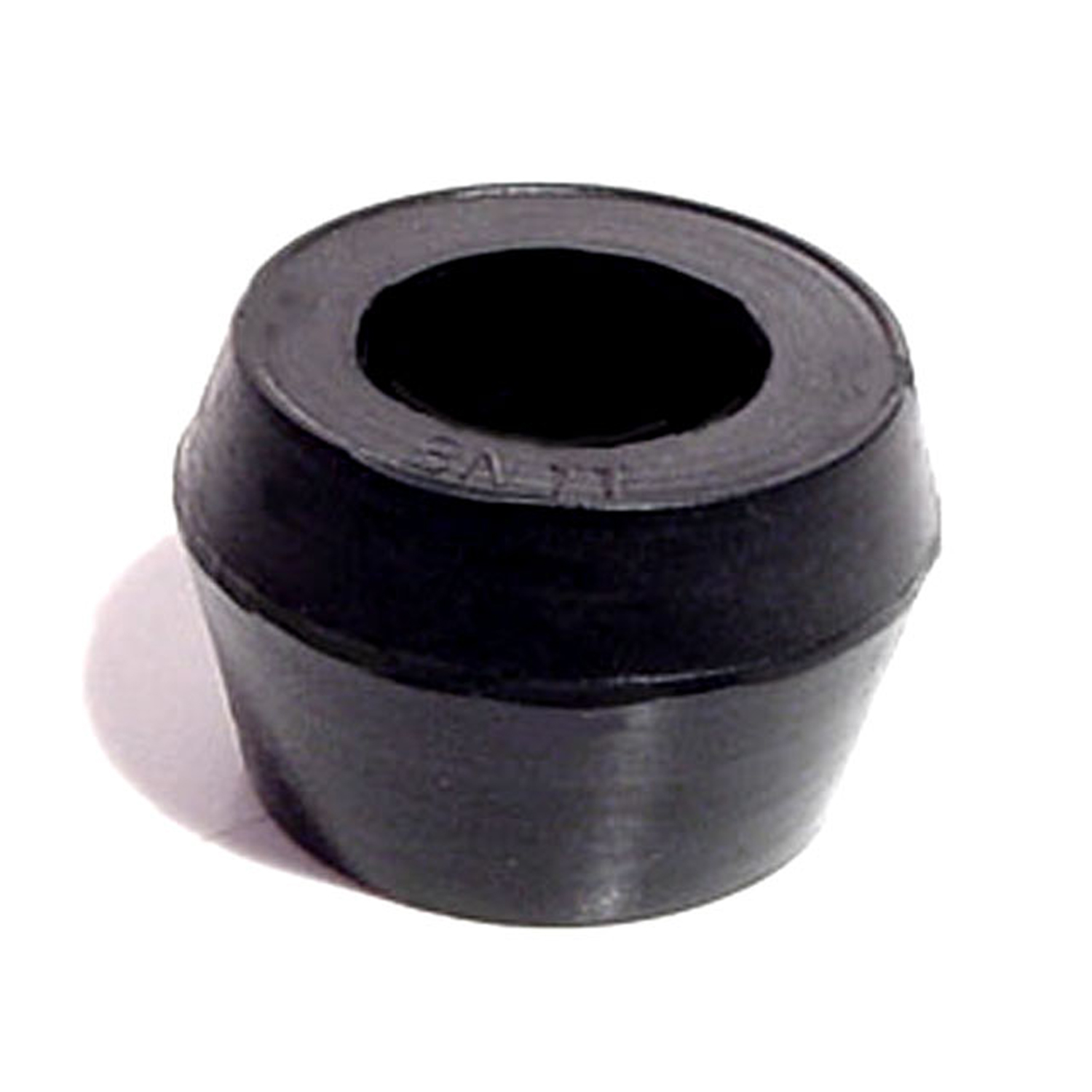 1971 Ford F-100 Shock Absorber Grommet. 1" bottom O.D-BN 11Shock Absorber Grommet. 1" bottom O.D., 3/4" high, with 5/8" I.D. Each
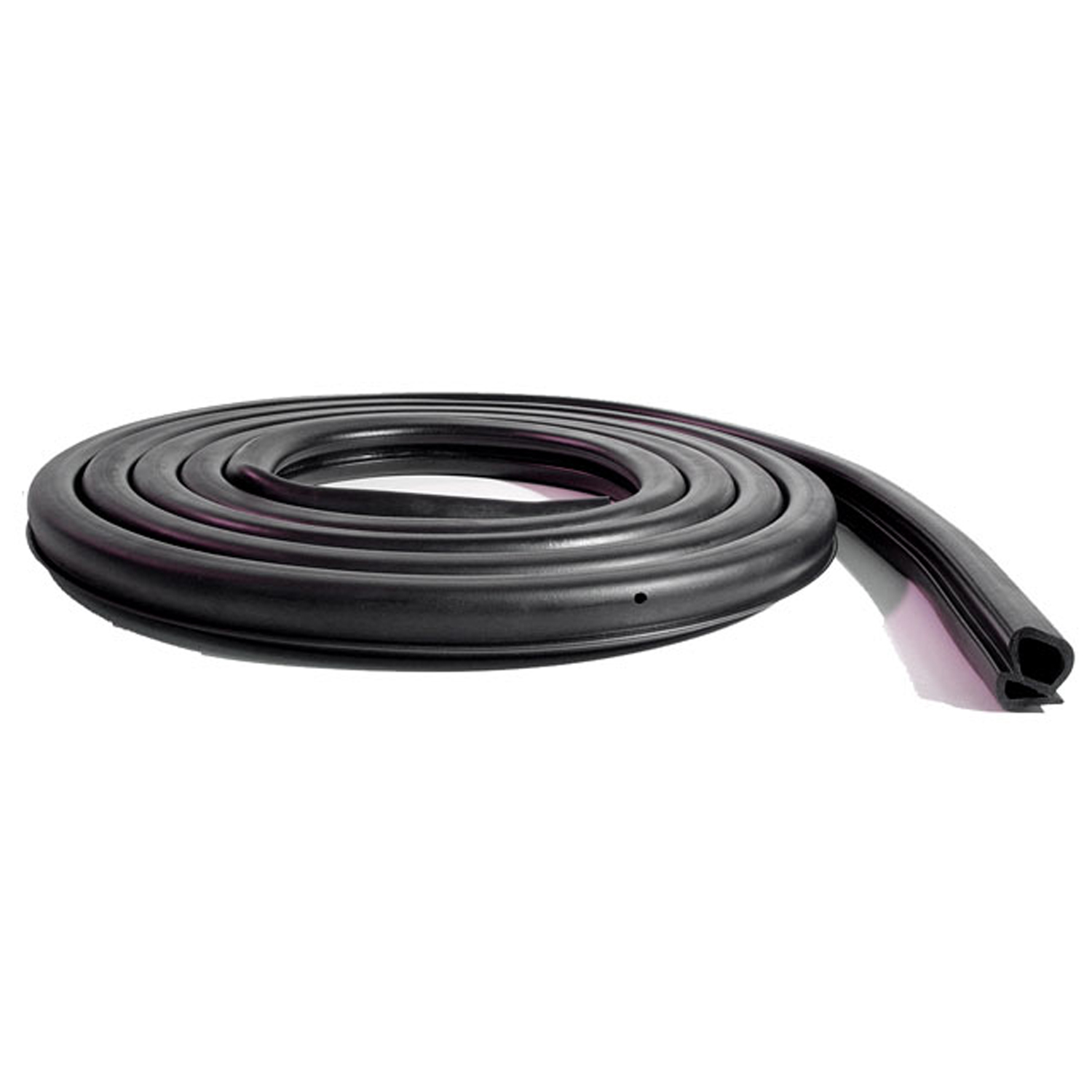 1971 Ford F-100 Door Seal. Fits either side. Each-LM 110-BDoor Seal. Fits either side. Each
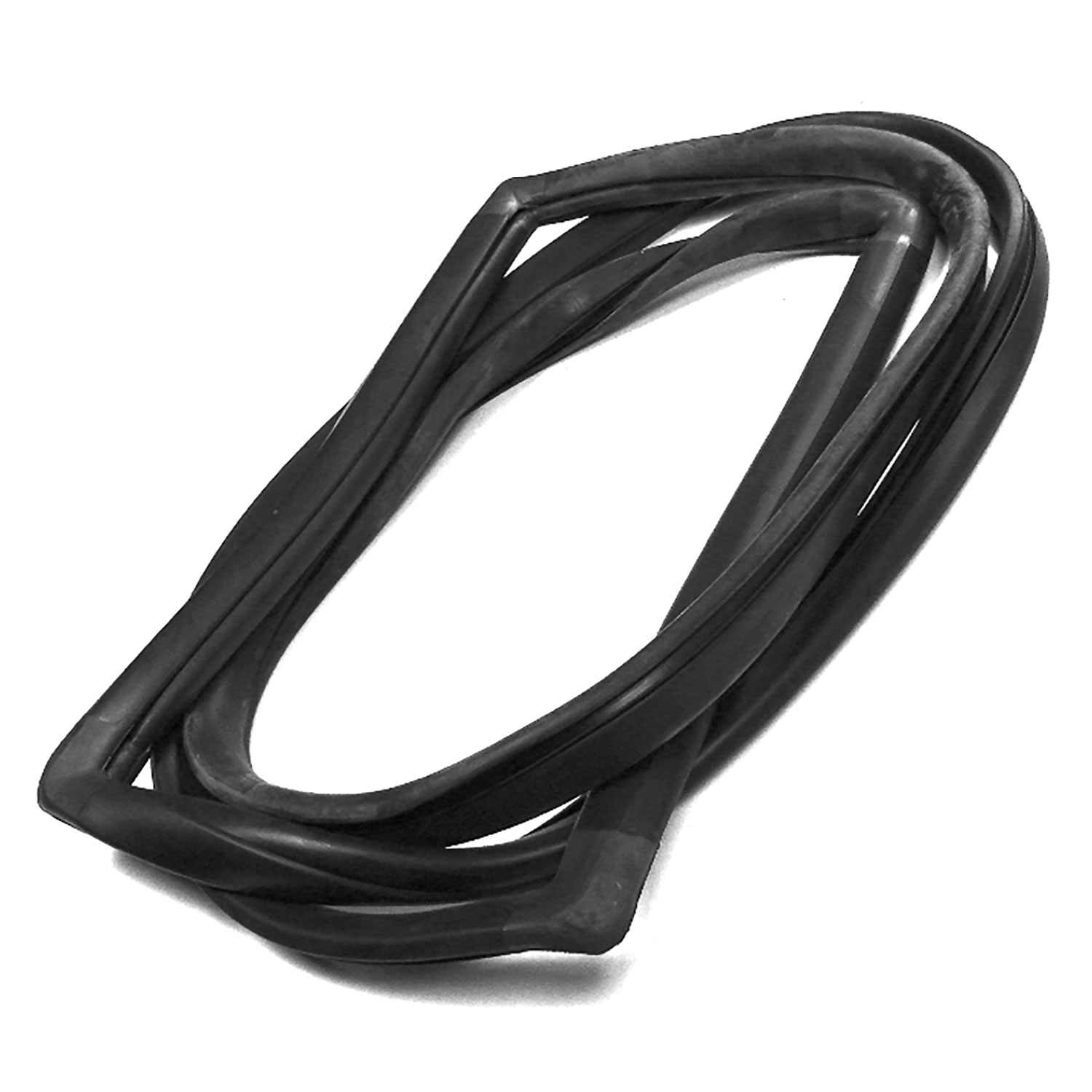 1971 Ford F-100 Windshield Seal, 67-79 Ford Full Size Truck, 78-79 Bronco, Without Trim Groove-VWS 3304-CThis windshield seal goes first on the glass and is installed using the rope-in method. This product is made from the original specs and with high quality ozone resistant EPDM rubber for a great fit and long life. This item is designed to be installed during glass replacement.
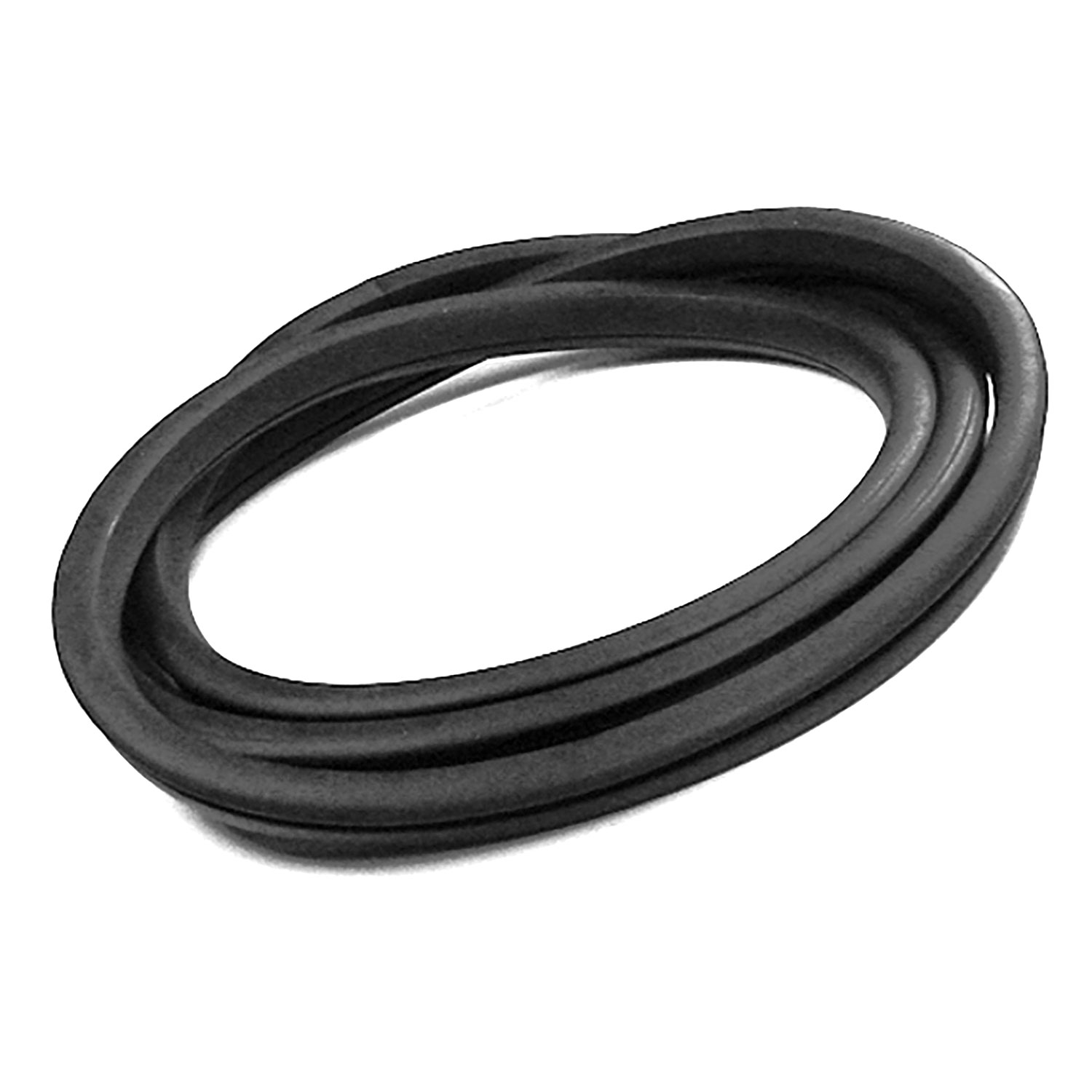 1971 Ford F-100 Rear Window Seal, 67-72 Ford Full Size Truck, Without Trim Groove, Each-VWS 3304-QThis rear window seal goes first on the body then the glass is placed in the opening. It is a standard black gasket without trim groove. This product is made from the original specs and with high quality ozone resistant materials for a great fit and long life. This item is designed to be installed during glass replacement.
Why Choose Metro?
For over 100 years, Metro Moulded Parts has been the pinnacle of quality in classic car restoration parts. Our commitment to precision and authenticity in every component ensures a perfect fit and an OEM-level appearance.
- Expert Craftsmanship & Quality: Each part is a testament to our dedication to reliability and perfection, crafted from original designs and thoroughly tested.
- Advanced Technology: We use cutting-edge techniques to create flawless, long-lasting parts that surpass others in performance.
- SuperSoft Sponge – The Ultimate Door Seal: Not only are our door seals 30% softer than competitors', but they're also guaranteed to never leak. They effectively reduce wind and road noise, enhancing your classic car's comfort and driving experience.
- Proudly American: Our parts are a product of American craftsmanship, made in the USA with a spirit of excellence and heritage.
- Unrivaled Warranty: We back our products with a 30-year industry-leading warranty, a testament to our confidence in their quality.
Join us in preserving the legacy of classic cars with parts that are crafted for perfection, not just made.