
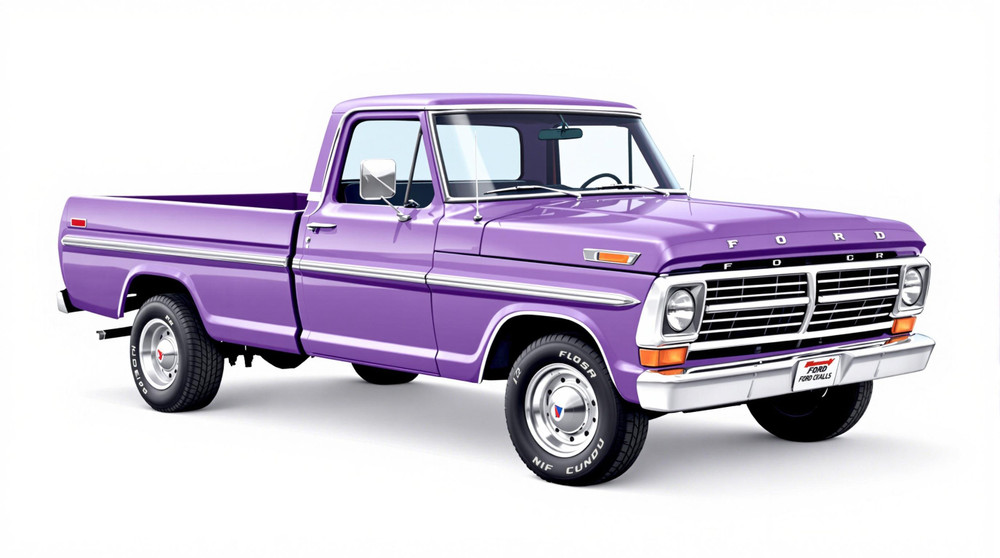
Image of 1971 Ford F-250, Note: These illustrations use artistic license and may differ from actual historical models.
Performance Metrics
Fundamental Metrics
Emotional Appeal
MMP Rating
| Engine Specifications | |
|---|---|
| Engine: | 360 CID V8, 390 CID V8 |
| Displacement: | 360 - 390 cubic inches |
| Horsepower: | 215 - 255 hp |
| Torque: | 315 - 390 lb-ft |
| Compression Ratio: | 8.9:1 - 9.5:1 |
| Ignition System: | Conventional breaker-point ignition system |
| Cooling System: | Liquid-cooled |
| Performance Specifications | |
| 0-60 Time: | Estimated 10 - 12 seconds |
| 1/4 Mile Time: | Estimated 17 - 19 seconds |
| Top Speed: | 100 mph |
| Transmission and Drive | |
| Drive Type: | Rear-wheel drive |
| Transmission Type: | 3-speed manual, 4-speed manual, 3-speed automatic |
| Fuel and Efficiency | |
| Fuel System Type: | Carburetor |
| MPG: | Estimated 10 - 12 mpg |
| Dimensions and Brakes | |
| Brakes: | Front disc and rear drum brakes |
| Wheelbase: | 131 inches |
| Weight: | 4,500 lbs |
Note: Specifications for classic cars are given to the best of our ability, considering the limited and variant data available.
1971 Ford F-250: The Bumpside Workhorse
The 1971 Ford F-250 was built for jobs that made ordinary pickups feel small: hauling heavy loads, towing equipment, and traveling roads that were more ruts than pavement. It belongs to Ford’s fifth-generation F-Series, the 1967–1972 trucks commonly nicknamed “Bumpsides” for the pronounced character line running along their body sides. Tough, straightforward, and offered in a remarkable range of configurations, the F-250 remains one of the most useful and recognizable classic Ford trucks.
Ford Motor Company had introduced the F-Series in 1948, and by 1971 the line had become a cornerstone of American work and family life. The F-250 sat between the lighter F-100 and heavier F-350, giving buyers a substantial payload and towing platform without stepping all the way up to a one-ton truck. A noteworthy detail: the fifth-generation F-Series was already available with a factory crew cab, an uncommon choice among pickups of its era. That made it possible to carry a work crew as well as a substantial load.
Bumpside Styling and Built-to-Work Details
The 1971 F-250 has the squared-off, confident proportions that define early-1970s pickups. Its broad hood leads to a tall, upright grille, while the flat windshield, simple fenders, and crisp body creases give it a practical, almost industrial appearance. The Bumpside’s sculpted side panel is more than a nickname-maker: it gives the otherwise boxy body a distinct profile. Depending on trim and equipment, brightwork and grille details add a little polish without disguising the truck’s working purpose.
Buyers could choose a Styleside bed, with its smooth, integrated-looking sides, or a Flareside bed, whose separate rear fenders gave the truck a more traditional, narrow-bed pickup appearance. The regular cab was the familiar choice, while crew-cab versions offered extra passenger space and were especially useful for work crews. Ford also offered specialized packages, including the Camper Special, aimed at owners carrying slide-in campers, and Ranger trim, which added more comfort and decorative touches.
Paint choices varied with trim and production details, but the palette included familiar period colors such as white, red, blue, green, yellow, and earthy brown shades. Two-tone treatments and bright trim could make a truck look more dressed up. White and red remain popular choices among restored examples, though original paint, unusual colors, and well-preserved factory combinations can attract extra interest from collectors.
A Practical Cab with Period Comfort
Inside, the F-250 favors durability over luxury. The dashboard is upright and uncomplicated, with clear, easy-to-read instruments and large controls that make sense in a work truck. A wide bench seat was common, while trim level and options could bring upgrades to the upholstery and interior finish. Vinyl was a natural choice for a truck expected to see muddy boots and long workdays; carpeting and more comfort-oriented details were available on better-equipped examples.
Technology was modest by modern standards, but buyers could add useful equipment such as power steering, power brakes, an AM radio, air conditioning, and an automatic transmission, depending on configuration. Four-wheel drive was available for buyers who needed traction beyond paved roads. The F-250’s appeal was not a long list of electronics. It was a straightforward cabin, familiar mechanical controls, and systems that a capable owner or local mechanic could understand.
Why the 1971 F-250 Matters
The F-250 did not introduce a single technology that transformed the entire industry. Its significance is more practical: it helped establish the modern pickup as both a serious work tool and a versatile personal vehicle. Buyers could tailor one to a farm, construction site, camper, or family’s hauling needs, choosing from different beds, engines, cab arrangements, drivetrains, and equipment packages.
Ford’s fifth-generation trucks also helped shape the visual language of the American pickup. Their tall stance, broad front end, defined body shoulders, and simple, durable interiors became familiar design cues. Underneath, two-wheel-drive F-Series trucks used Ford’s Twin I-Beam front suspension, introduced for the 1965 model year, while four-wheel-drive versions used a more conventional solid front axle. The result was a truck range that balanced everyday road use with genuine working capability.
Engines, Speed, and Road Manners
Engine availability depended on configuration and market, but the 1971 F-250 could be equipped with inline-six and V8 power. Common choices included the 240- and 300-cubic-inch sixes and V8s such as the 302, 360, and 390 cubic-inch engines. The sixes suited steady work and simpler ownership, while the larger V8s were popular for heavier hauling and towing. Transmission choices included manual gearboxes and, on appropriately equipped trucks, an automatic.
Performance figures are best treated as estimates rather than fixed specifications. A well-running F-250 with a strong V8 might reach 60 mph in roughly 13 to 18 seconds; a six-cylinder truck, a four-wheel-drive model, or one carrying a heavy load could take longer. Depending on gearing, tires, engine, and condition, a plausible top speed is around 85 to 95 mph. These are old, high-bodied work trucks, not vehicles designed for sustained high-speed travel, and actual performance varies widely.
On the road, the F-250 feels substantial. Its steering is slower and less precise than that of a modern pickup, and a lightly loaded truck can ride firmly, especially over sharp bumps. Add cargo or a trailer and the suspension settles into its intended working role. On windy roads, the tall body and solid, heavy feel call for measured inputs rather than quick changes of direction. Four-wheel drive helps on loose or slippery surfaces, but it does not turn the truck into a modern off-road vehicle.
The driving experience is part of the charm. A V8 delivers a deep, unfiltered rumble, while the six-cylinder engines have a more even, purposeful note. The driver feels connected to the machinery through the larger steering wheel, mechanical controls, and firm feedback from the road. There is little insulation between the truck and its surroundings, which makes every shift, engine sound, and change in pavement part of the experience.
Ownership, Repairs, and Everyday Use
Today, a 1971 F-250 can serve as a weekend cruiser, farm or property truck, vintage show vehicle, or occasional hauler. Some owners use them regularly, but a well-preserved classic is often spared constant heavy work. Before putting one to serious use, it is important to inspect the frame, brakes, steering, suspension, cooling system, and drivetrain rather than assuming that a rugged reputation means every component is ready for duty.
Many routine repairs are approachable for an experienced home mechanic. The truck’s carbureted engines and conventional mechanical systems are comparatively simple, and replacement parts for common service items are generally available through classic Ford and aftermarket suppliers. Rust is a more serious concern than mechanical complexity. Inspect the cab floor, cab mounts, inner and outer fenders, bed, frame rails, and areas around the windshield and doors. A clean, straight body can be more valuable than a truck with a freshly rebuilt engine but extensive corrosion.
Common ownership complaints include fuel consumption, heavy steering on trucks without power assistance, drum-brake performance on some configurations, and the effort required to drive an old truck in modern traffic. These are part of the period design, not necessarily signs of poor maintenance. Buyers should also verify that an advertised engine, transmission, axle, and trim package match the truck’s documentation, since decades of repairs and swaps are common.
F-250 Facts and Collector Appeal
The Bumpside nickname applies to the whole 1967–1972 F-Series generation, not just the F-250. Its successor, the 1973 model, began the square-sided generation often called the “Dentside.” The F-250’s range of factory configurations is another point of interest: a plain six-cylinder work truck and a well-equipped V8 Camper Special can look like entirely different vehicles despite sharing the same basic model name.
There is no widely cited, definitive production total for every 1971 F-250 configuration. As a rough estimate rather than an official figure, production may have been in the neighborhood of 70,000 to 100,000 trucks. That estimate should not be confused with total 1971 F-Series production, which included F-100s, F-250s, and F-350s. Standard F-250s are not exceptionally rare, but surviving trucks with original drivetrains, desirable factory options, crew cabs, or documented Camper Special equipment are much harder to find.
The 1971 F-250 has no widely recognized model-specific land-speed or endurance record. Its story is instead tied to years of ordinary labor: towing, farming, construction, camping, and transportation across rural America. Its most common criticism is also its most obvious limitation today: it is heavy, relatively thirsty, and less comfortable or capable at highway speeds than a new pickup. Its straightforward engineering and distinctive styling are the counterargument.
1971 Ford F-250 Values and Availability
Values depend heavily on body condition, rust, originality, drivetrain, and the quality of any restoration. As a broad U.S. market guide, a project truck may fall around $5,000 to $12,000. A usable driver in decent condition might bring roughly $15,000 to $30,000, while a very good restoration or unusually desirable configuration can reach $30,000 to $55,000 or more. Exceptional trucks can exceed that range, but asking prices are not the same as completed sale prices.
F-250s still appear regularly in the classic-truck market, though clean, unmodified examples are increasingly difficult to source. Values for desirable vintage pickups have generally strengthened over the long term, particularly for four-wheel-drive models, crew cabs, and well-documented factory packages. Prices can nevertheless vary with the broader collector market, and a costly restoration does not guarantee that the truck will sell for the amount invested.
A Classic Ford with Real Working Roots
The 1971 Ford F-250 combines the honest design of a working truck with the presence and character of a classic. Its Bumpside styling, broad engine and body-style choices, repair-friendly mechanicals, and genuine utility explain why it remains popular with collectors and drivers alike. It may not deliver modern speed or comfort, but it offers something newer trucks often filter out: a direct, mechanical connection to the work it was built to do.
1971 Ford F-250 Catalog of Parts
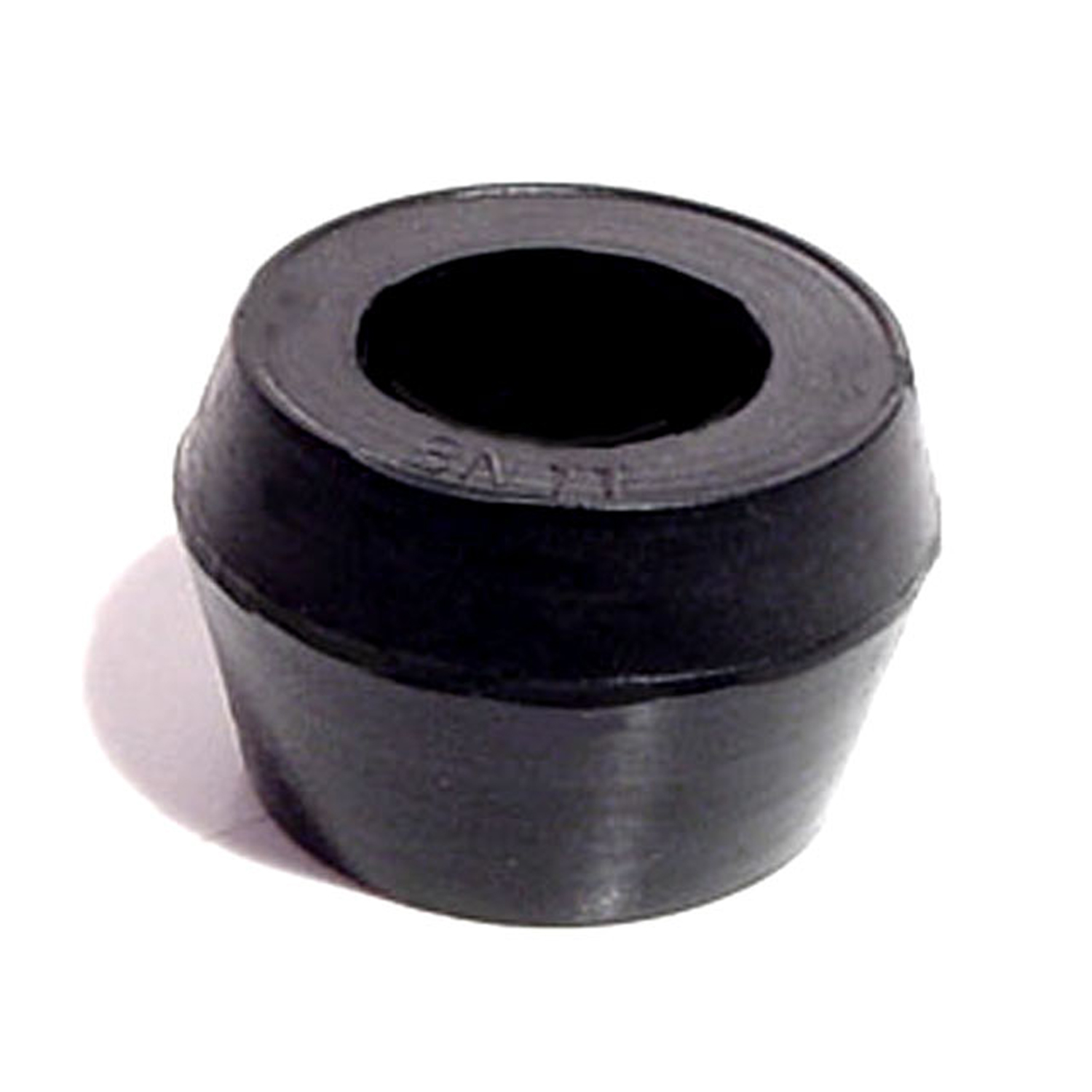 1971 Ford F-250 Shock Absorber Grommet. 1" bottom O.D-BN 11Shock Absorber Grommet. 1" bottom O.D., 3/4" high, with 5/8" I.D. Each
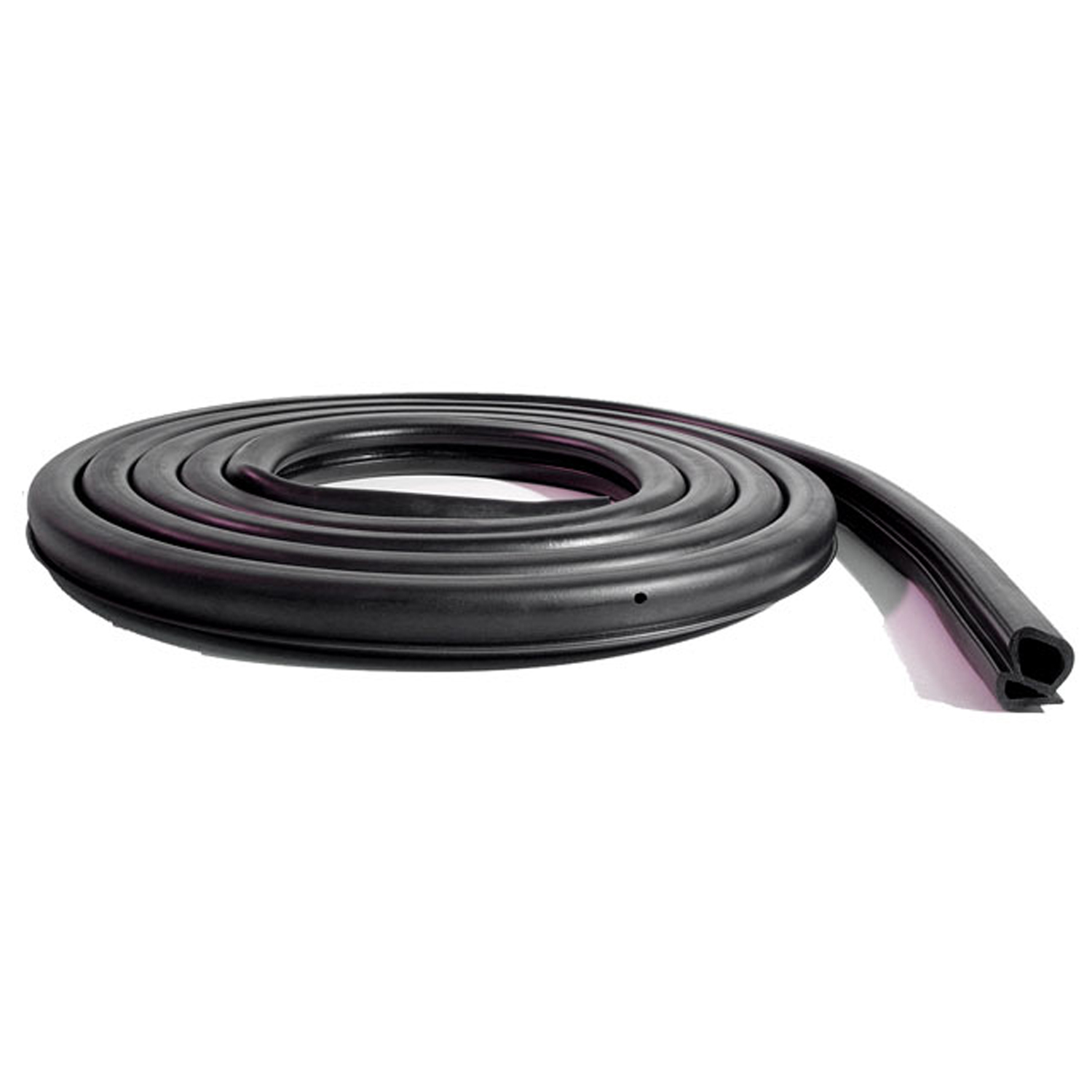 1971 Ford F-250 Door Seal. Fits either side. Each-LM 110-BDoor Seal. Fits either side. Each
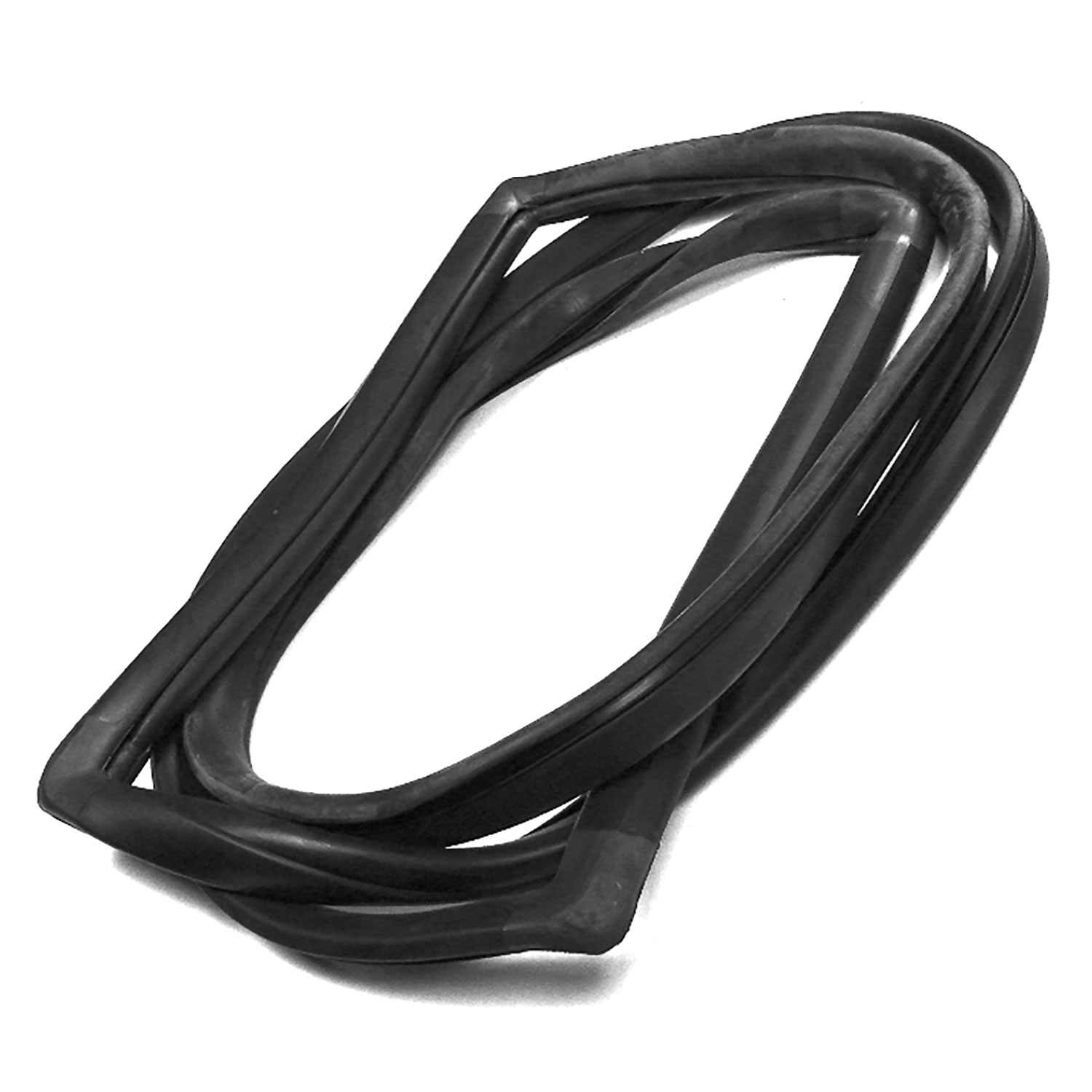 1971 Ford F-250 Windshield Seal, 67-79 Ford Full Size Truck, 78-79 Bronco, Without Trim Groove-VWS 3304-CThis windshield seal goes first on the glass and is installed using the rope-in method. This product is made from the original specs and with high quality ozone resistant EPDM rubber for a great fit and long life. This item is designed to be installed during glass replacement.
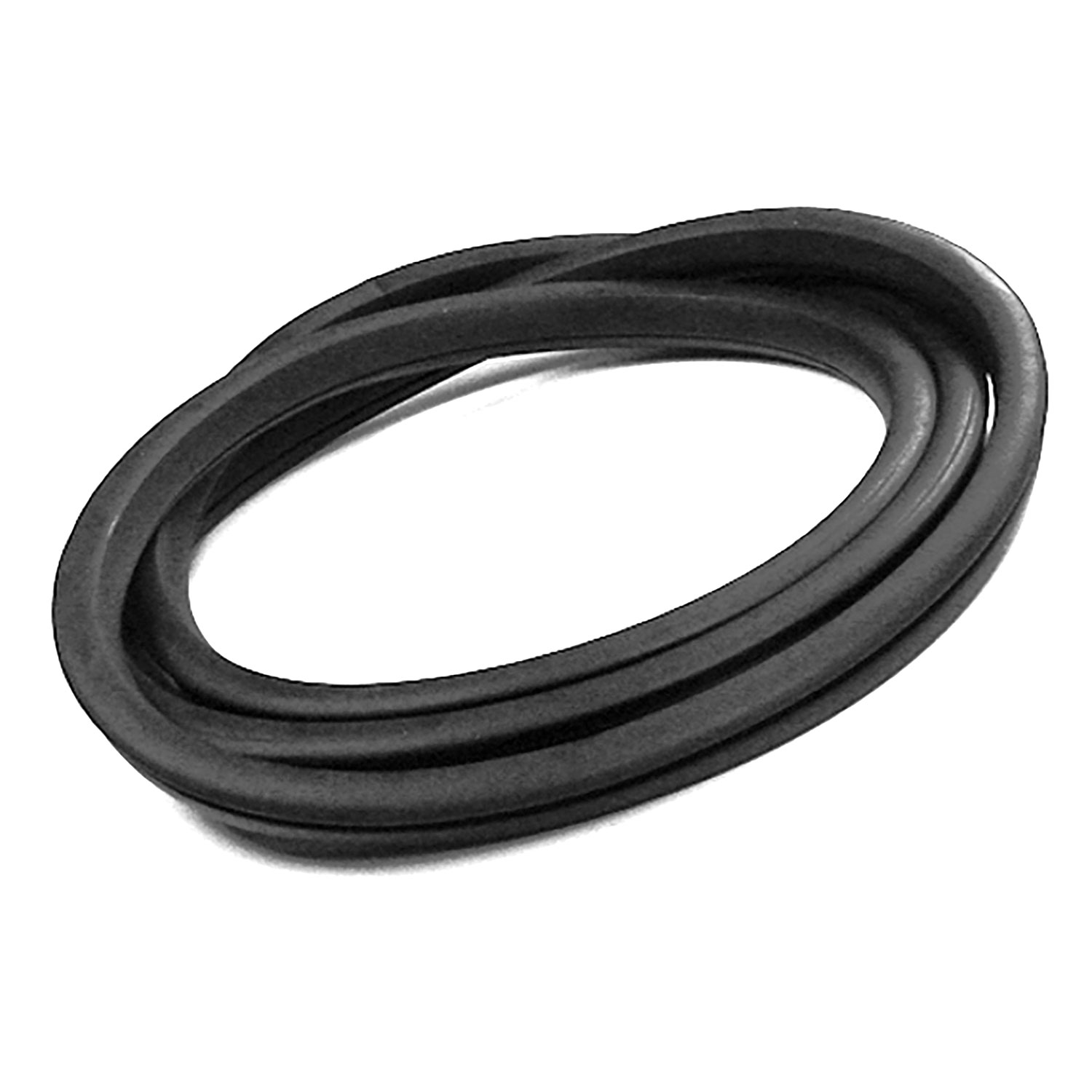 1971 Ford F-250 Rear Window Seal, 67-72 Ford Full Size Truck, Without Trim Groove, Each-VWS 3304-QThis rear window seal goes first on the body then the glass is placed in the opening. It is a standard black gasket without trim groove. This product is made from the original specs and with high quality ozone resistant materials for a great fit and long life. This item is designed to be installed during glass replacement.
Why Choose Metro?
For over 100 years, Metro Moulded Parts has been the pinnacle of quality in classic car restoration parts. Our commitment to precision and authenticity in every component ensures a perfect fit and an OEM-level appearance.
- Expert Craftsmanship & Quality: Each part is a testament to our dedication to reliability and perfection, crafted from original designs and thoroughly tested.
- Advanced Technology: We use cutting-edge techniques to create flawless, long-lasting parts that surpass others in performance.
- SuperSoft Sponge – The Ultimate Door Seal: Not only are our door seals 30% softer than competitors', but they're also guaranteed to never leak. They effectively reduce wind and road noise, enhancing your classic car's comfort and driving experience.
- Proudly American: Our parts are a product of American craftsmanship, made in the USA with a spirit of excellence and heritage.
- Unrivaled Warranty: We back our products with a 30-year industry-leading warranty, a testament to our confidence in their quality.
Join us in preserving the legacy of classic cars with parts that are crafted for perfection, not just made.