
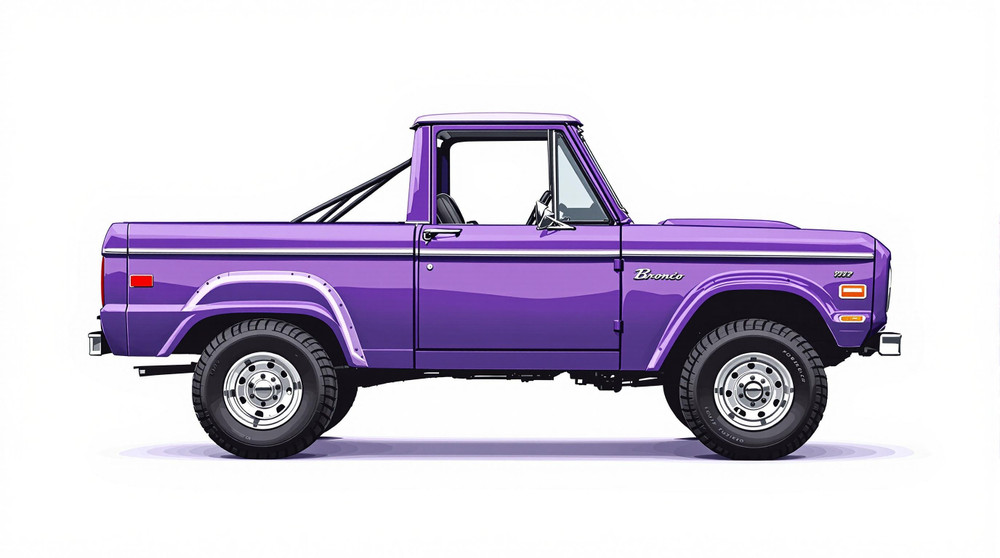
Image of 1972 Ford Bronco, Note: These illustrations use artistic license and may differ from actual historical models.
Performance Metrics
Fundamental Metrics
Emotional Appeal
MMP Rating
| Engine Specifications | |
|---|---|
| Engine Options: | 170, 200, 289, 302 V8 |
| Displacement Range: | 170-302 cu in |
| Horsepower Range: | 105-205 hp |
| Torque: | 158-300 lb-ft |
| Compression Ratio: | 8.7:1 - 9.5:1 |
| Ignition System: | Conventional, distributor |
| Cooling System: | Liquid-cooled |
| Performance Specifications | |
| 0-60 Time: | 10-14 seconds |
| 1/4 Mile Time: | 17-20 seconds |
| Top Speed: | 80-100 mph |
| Transmission and Drive | |
| Drive Type: | 4WD |
| Transmission Type: | 3-speed manual, 3-speed automatic |
| Fuel and Efficiency | |
| Fuel System Type: | Carburetor |
| MPG: | 10-14 mpg |
| Dimensions and Brakes | |
| Brakes: | Front disc and rear drum brakes |
| Wheelbase: | 92 inches |
| Weight: | 3200-3600 lbs |
Note: Specifications for classic cars are given to the best of our ability, considering the limited and variant data available.
1972 Ford Bronco: The Compact 4x4 That Became a Legend
The 1972 Ford Bronco was small enough to feel nimble on a narrow trail, tough enough to take on rough country, and simple enough that its owner could understand much of what was happening beneath the hood. Built by Ford in the United States, it belonged to the first generation of Bronco, produced from 1966 through 1977. Its blend of short-wheelbase maneuverability, four-wheel drive, and everyday usability helped define the compact sport-utility vehicle long before SUVs became family-car staples.
The Bronco arrived in an era when off-road choices were often specialized machines such as the Jeep CJ and International Scout. Ford wanted a 4x4 that could work hard but also serve as practical transportation. One intriguing part of the Bronco story is its connection to desert racing: racer and vehicle builder Bill Stroppe helped turn Broncos into formidable competition machines, giving the model an image that went well beyond the farm, worksite, or weekend trail.
1972 Bronco Styling and Cabin
The first-generation Bronco has a clean, upright shape that is instantly recognizable. Its short hood, nearly vertical windshield, flat body sides, and squared-off fenders were designed around function rather than fashion. The high stance and compact 92-inch wheelbase made it look ready for the trail even when parked. On a 1972 model, the removable hardtop could come off to open up the cabin, while the simple, broad panels kept the design easy to repair and personalize.
Inside, the Bronco was deliberately straightforward. The cabin typically used durable vinyl upholstery, painted metal surfaces, and practical rubber flooring rather than the plush trim of a luxury car. Depending on its equipment, it could have a front bench seat or separate front seats, along with useful options such as a heater and radio. The finish was workmanlike, but that simplicity is now part of its appeal: the driver sits upright, has a clear view over the hood, and is surrounded by controls that are easy to identify and operate.
Ford offered a modest selection of period paint colors, including whites, reds, blues, greens, and earth tones. Exact choices depended on the paint code and ordering details, but Wimbledon White and bold red or blue shades are especially familiar on restored Broncos. The Sport trim package added dressier touches, while the basic model kept its equipment and appearance more utilitarian.
By 1972, buyers could choose between the wagon, with its removable hardtop, and the half-cab pickup configuration. The open roadster body had been discontinued earlier, so it was not a regular 1972 production choice. The wagon became the most iconic and widely recognized version, thanks to its enclosed cabin, removable top, and adaptable layout.
What Made the Early Bronco Different
The Bronco stood apart from many 4x4s of its day because Ford developed it as a compact vehicle with its own dedicated chassis, rather than simply adapting a larger truck. Its short wheelbase helped it maneuver on tight trails, while its body-on-frame construction and four-wheel-drive hardware gave it the toughness buyers expected. The 1972 model used a solid front axle with coil springs and a solid rear axle with leaf springs, a combination that balanced trail articulation with a relatively composed ride for a vehicle of its type.
Its influence is easy to see in the way later SUVs combined off-road ability with everyday usefulness. The first Bronco helped establish that a 4x4 could be more than a specialized work vehicle or recreational toy. It could be both. That formula became central to the modern SUV, even as later generations grew larger, more comfortable, and increasingly road-focused.
Technology in the 1972 Bronco was mechanical and accessible by modern standards. A three-speed manual transmission, a two-speed transfer case, and simple engine controls put the driver directly in charge. There were no electronic traction systems or driving modes to manage. The trade-off was that the Bronco asked more of its driver, especially on pavement, but its basic layout also made repairs and modifications more approachable.
Engines, Speed, and Trail Manners
A 1972 Bronco was available with a 200-cubic-inch inline-six or Ford’s 302-cubic-inch V8, with exact equipment varying by vehicle. The six-cylinder suited owners who prioritized basic utility, while the 302 became a popular choice for drivers who wanted more power and the familiar V8 rumble. A three-speed manual transmission was typical, and the Dana 20 transfer case provided high- and low-range four-wheel drive. As with any classic vehicle, original specifications can vary, so the engine and drivetrain on an individual Bronco should be checked against its documentation and components.
Performance figures are best treated as estimates because gearing, engine condition, tire size, and modifications make a major difference. A healthy V8 Bronco might reach 60 mph in roughly 12 to 15 seconds, while an inline-six model would generally be slower. Top speed is often estimated in the 80 to 90 mph range for a standard, well-maintained example, but the Bronco feels most comfortable at moderate speeds. Its upright body and vintage brakes are not suited to modern high-speed traffic in the way a contemporary SUV is.
On a trail, the short wheelbase and low-range gearing are major advantages. The Bronco can pick its way through ruts and uneven ground with a sense of purpose, though its solid axles and older suspension transmit bumps directly into the cabin. On winding pavement, it feels more like a classic truck than a modern crossover: the steering is comparatively slow, body lean is noticeable, and narrow tires provide less grip than modern rubber. Crosswinds can also push against the upright body.
The driving experience is wonderfully direct. The engine’s sound comes through clearly, the manual gearbox requires deliberate shifts, and the driver feels the surface through the steering wheel and suspension. A V8 adds a deeper exhaust note, while the six-cylinder offers a simpler, more measured character. Neither is particularly quiet or refined by current standards, but that mechanical honesty is a big part of the Bronco’s charm.
Owning and Maintaining a 1972 Ford Bronco
These Broncos serve a variety of roles today. Some are carefully restored show vehicles, while others are trail rigs, weekend cruisers, or heavily modified restomods. A sound, mostly original example can also be driven regularly, although owners should remember that a fifty-year-old 4x4 needs more attention than a modern daily driver. It is wise to inspect the frame, body mounts, floor pans, and other areas vulnerable to rust before buying.
The Bronco’s straightforward mechanical design is a strong point for do-it-yourself owners. Many repairs can be handled with common tools and a workshop manual, and parts support is extensive thanks to the model’s popularity. That does not mean every job is easy: rusty fasteners, worn suspension components, aging wiring, and decades of previous repairs can turn a simple task into a larger project. A professional inspection is especially useful when evaluating a vehicle with an engine swap, altered wiring, or extensive off-road modifications.
Reliability depends heavily on condition and maintenance. A well-sorted Bronco can be dependable for local trips and recreational use, but age-related issues such as cooling problems, fuel-system wear, brake wear, and electrical faults are worth watching. Original drum brakes and vintage tires also require more planning and stopping distance than modern drivers may expect. Keeping the vehicle’s cooling, steering, and braking systems in top condition is essential.
Stroppe Broncos and Other Interesting Facts
Bill Stroppe’s association with the Bronco is one of the model’s most exciting chapters. Stroppe prepared Broncos for desert competition, helping build the truck’s reputation in demanding off-road events. Special Baja-style Broncos are highly sought after today, but buyers should distinguish documented Stroppe-built or period-correct examples from later tributes and replicas. Authenticity, provenance, and surviving details can make a substantial difference in value.
There is no widely recognized production record or speed record attached specifically to the 1972 Bronco. Its more meaningful achievement was helping Ford establish a durable presence in the emerging compact 4x4 market. For the model year, production is commonly reported at about 21,000 vehicles, a healthy number at the time but modest compared with today’s mass-market SUVs. Many have since been lost to rust, hard use, or extensive modification.
Common criticisms are part of the ownership reality: the ride is firm, the cabin is noisy, fuel economy is modest, and the short wheelbase can make highway driving feel busy. Rust and the price of a high-quality restoration can also surprise prospective owners. Still, those drawbacks are often accepted as part of the experience rather than deal-breakers.
1972 Bronco Values and Collector Outlook
Bronco prices vary widely according to rust, originality, mechanical condition, restoration quality, and documentation. As a broad 2026 market estimate, a project vehicle may sell for roughly $15,000 to $30,000. A usable driver can fall around $30,000 to $60,000, while a well-restored example may bring approximately $60,000 to $100,000 or more. Exceptional restorations, rare documented builds, and genuine Stroppe-related vehicles can exceed those figures, sometimes by a considerable margin.
The first-generation Bronco has appreciated significantly over the long term, helped by its iconic design, strong enthusiast community, and limited supply of unmodified, rust-free examples. Prices can still move with the broader collector-car market, and restoration costs are high, so not every project represents a bargain. Clean, authentic vehicles tend to attract the strongest interest, while modified trucks are valued according to the quality and appeal of their build.
Why the 1972 Bronco Still Matters
The 1972 Ford Bronco brought together compact dimensions, genuine four-wheel-drive ability, simple engineering, and unmistakable styling. Its plain cabin and firm ride may feel old-fashioned, but its mechanical character is exactly what many enthusiasts want from a classic 4x4. More than fifty years after it left the factory, the first-generation Bronco remains a capable trail companion, a rewarding restoration project, and a landmark in the history of the SUV.
It is not just a small old truck with a removable top. The 1972 Bronco helped shape what an off-road vehicle could be, and its enduring appeal proves that a clear purpose, honest engineering, and a great silhouette can outlast nearly every trend.
1972 Ford Bronco Catalog of Parts
 1972 Ford Bronco Body Cushion. 2-5/16" O.D., 15/16" I.D., 3/4" Thick. Each-BC 6Body Cushion. 2-5/16" O.D., 15/16" I.D., 3/4" Thick. Each
 1972 Ford Bronco Body Cushion. 2-9/16" O.D., 3/4" I.D., 13/16" Thick. Each-BC 6-ABody Cushion. 2-9/16" O.D., 3/4" I.D., 13/16" Thick. Each
 1972 Ford Bronco Door Seals. Fits either side. 83-1/2" long. Pair-LM 11-BDoor Seals. Fits either side. 83-1/2" long. Pair
 1972 Ford Bronco Molded Roof Rail Seals. Pair R&L-RR 3310Molded Roof Rail Seals. Pair R&L
 1972 Ford Bronco Vulcanized Windshield Seal-VWS 3390Vulcanized Windshield Seal. For models without chrome garnish on windshield. Each
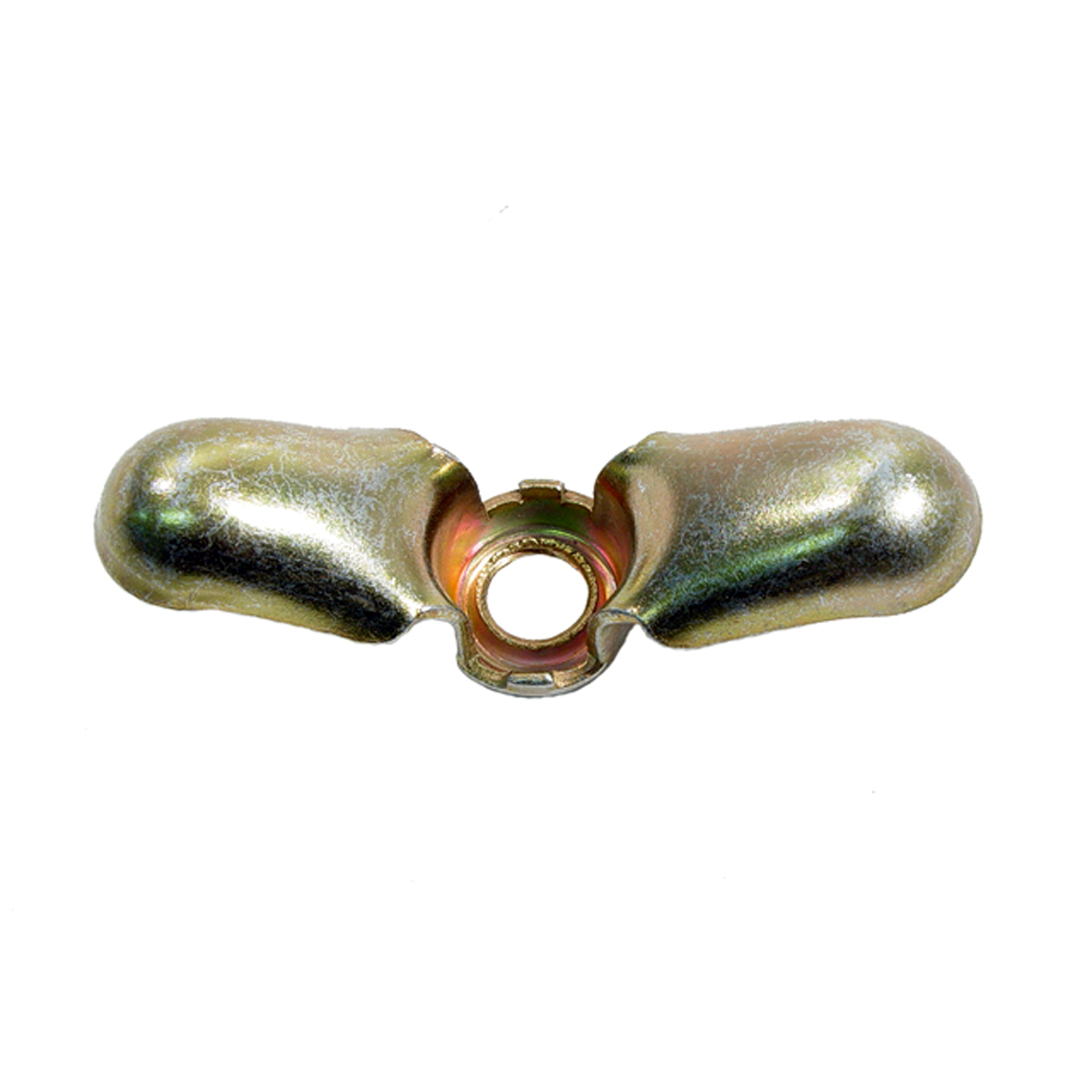 1972 Ford Bronco Spare Tire Hold Down Nut. 3/8- 16 thread size-WF 3504Spare Tire Hold Down Nut. 3/8- 16 thread size. Replaces OEM #B9AZ-1462-A. Each
Why Choose Metro?
For over 100 years, Metro Moulded Parts has been the pinnacle of quality in classic car restoration parts. Our commitment to precision and authenticity in every component ensures a perfect fit and an OEM-level appearance.
- Expert Craftsmanship & Quality: Each part is a testament to our dedication to reliability and perfection, crafted from original designs and thoroughly tested.
- Advanced Technology: We use cutting-edge techniques to create flawless, long-lasting parts that surpass others in performance.
- SuperSoft Sponge – The Ultimate Door Seal: Not only are our door seals 30% softer than competitors', but they're also guaranteed to never leak. They effectively reduce wind and road noise, enhancing your classic car's comfort and driving experience.
- Proudly American: Our parts are a product of American craftsmanship, made in the USA with a spirit of excellence and heritage.
- Unrivaled Warranty: We back our products with a 30-year industry-leading warranty, a testament to our confidence in their quality.
Join us in preserving the legacy of classic cars with parts that are crafted for perfection, not just made.