

Image of 1972 Ford Custom 500, Note: These illustrations use artistic license and may differ from actual historical models.
Performance Metrics
Fundamental Metrics
Emotional Appeal
MMP Rating
| Engine Specifications | |
|---|---|
| Engine: | 240 CID I6, 302 CID V8, 351 CID V8, 400 CID V8, 429 CID V8 |
| Displacement: | 240 - 429 cubic inches |
| Horsepower: | 98 - 208 hp |
| Torque: | 185 - 322 lb-ft |
| Compression Ratio: | 8.0:1 - 8.5:1 |
| Ignition System: | Conventional breaker-point ignition system |
| Cooling System: | Liquid-cooled |
| Performance Specifications | |
| 0-60 Time: | 10 - 14 seconds |
| 1/4 Mile Time: | 17 - 20 seconds |
| Top Speed: | 105 - 120 mph |
| Transmission and Drive | |
| Drive Type: | Rear-wheel drive |
| Transmission Type: | 3-speed manual, 3-speed automatic, 4-speed manual |
| Fuel and Efficiency | |
| Fuel System Type: | Carburetor |
| MPG: | 10 - 15 mpg |
| Dimensions and Brakes | |
| Brakes: | Front disc and rear drum brakes |
| Wheelbase: | 119 inches |
| Weight: | 3,500 - 4,000 lbs |
Note: Specifications for classic cars are given to the best of our ability, considering the limited and variant data available.
1972 Ford Custom 500: Full-Size Ford, No-Frills Appeal
Long, broad-shouldered and built to cover miles without fuss, the 1972 Ford Custom 500 was a full-size American sedan for buyers who wanted room and durability more than luxury trim. Ford Motor Company positioned it near the practical end of its full-size range, below better-equipped Galaxie 500 and LTD models. Its restrained styling and straightforward equipment made it a natural choice for families, businesses and government fleets.
The Custom 500 belonged to Ford’s long-running full-size family, which had evolved from postwar models into some of the most recognizable American cars on the road. By 1972, the market was still devoted to big, comfortable sedans, though rising insurance costs and growing interest in smaller cars were beginning to change the landscape. One intriguing part of the Custom 500 story is that its plain, fleet-friendly character helped it become familiar in police and municipal service, even as more luxurious Fords attracted the showroom spotlight.
Big-Ford Styling and a Practical Cabin
The 1972 Custom 500 had the substantial proportions expected of a full-size Ford: a long hood, broad front end, generous glass area and a squared-off rear. Its styling was formal rather than sporty, with restrained brightwork and a simple grille that distinguished it from the more elaborate Galaxie 500 and LTD. The result was a car that looked substantial without relying on luxury details to make its point.
Inside, the Custom 500 emphasized function. The cabin offered wide seating, plenty of legroom and a straightforward dashboard, with materials and trim generally more modest than those in the higher-series Fords. Vinyl upholstery was common, while cloth-and-vinyl combinations and other interior choices varied with equipment and ordering decisions. The interior was not designed to feel opulent, but its broad seats and uncomplicated layout suited long trips and everyday use.
Available paint colors changed with production and ordering combinations, but the palette included familiar period shades such as white, blue, green, gold and red, along with darker tones. White and subdued colors were popular choices for fleet cars, while brighter blues, greens and metallic finishes gave privately owned examples more personality. Exact color names and availability depended on the original sales market and build.
The Custom 500 was principally known as a two-door or four-door sedan. Ford’s full-size range also included station wagons, but body-style availability and naming varied across series and markets, so it is worth checking the original documentation when identifying a particular car. The four-door sedan is arguably the most representative Custom 500: practical, roomy and easy to use, with the two-door sedan offering a slightly less conventional alternative.
Technology was sensible rather than groundbreaking. Depending on specification, buyers could order power steering, power brakes, air conditioning and an automatic transmission. The car used conventional body-on-frame construction, independent front suspension with coil springs and a solid rear axle supported by leaf springs. These familiar components made the Ford serviceable at ordinary repair shops and accessible to owners comfortable with basic mechanical work.
Where the Custom 500 Fit in Ford History
The Custom 500’s significance lies less in introducing a revolutionary feature than in representing the strengths of the traditional American full-size car. It delivered generous passenger space, a broad choice of engines and a sturdy chassis at a more accessible level of trim than Ford’s premium models. That combination made it useful to households and fleet operators alike.
In contrast with more highly styled or luxury-focused contemporaries, the Custom 500 kept its message simple: a large Ford with fewer frills. Its conventional layout also made it comparatively easy to maintain, an important advantage for police departments, taxi operators and other organizations that valued serviceability. The model did not create a new design trend, but it illustrates how manufacturers used trim levels to serve different buyers within one vehicle family.
Its era was also a turning point for full-size cars. The 1973 oil crisis would soon make fuel consumption a far more urgent concern, while changing safety and emissions rules reshaped the industry. The 1972 Custom 500 therefore captures the final years of a period when a big sedan could still be an ordinary, practical choice rather than a specialized luxury purchase.
Engines, Road Manners and Performance
Engine availability depended on body style, equipment and market. The range could include an inline-six and several V8 choices, with small-block and larger-displacement engines available on appropriately equipped cars. A three-speed manual transmission was offered in some configurations, while Ford’s Cruise-O-Matic automatic was a popular choice. Because individual cars were ordered in many combinations, the engine code and transmission should be verified from the vehicle’s identification details rather than assumed from its badges.
Period horsepower figures need context: manufacturers were moving to net horsepower ratings, which were lower and more representative of an engine installed in a car than earlier gross figures. Performance also varied considerably with engine, axle ratio, transmission, vehicle condition and load. As a broad real-world estimate, a six-cylinder or modest V8 example might take roughly 12 to 16 seconds to reach 60 mph. A stronger V8 could bring that down to around 9 to 12 seconds. These are estimates, not a single factory figure for every Custom 500.
Top speed likewise depended on specification and mechanical condition. A typical car was built for relaxed highway travel, not sustained high-speed running; a rough estimate for a healthy example is about 100 to 115 mph, with gearing, tires and engine choice affecting the result. For a classic car today, safe cruising speed matters more than chasing a maximum-speed number, particularly if the brakes, tires and suspension have not been recently inspected.
On the road, the Custom 500 feels like a product of its full-size era. Its long wheelbase and soft suspension take the sting out of ordinary bumps, while the wide body and substantial weight make it feel settled on a straight highway. Tight, winding roads are less natural territory. The car requires more room to turn than a modern sedan, and body lean is noticeable when pushed through corners. Power steering, when fitted and in good condition, makes low-speed maneuvering much easier.
The driving experience is unhurried and pleasantly direct. The engine’s low rumble, the broad hood ahead and the cushioned ride encourage steady cruising rather than aggressive driving. The driver sits in a spacious cabin with simple controls and a clear view over the front fenders. A well-maintained example feels solid and comfortable, though it will not offer the sharp braking response, fuel economy or cornering precision of a modern car.
Everyday Use, Maintenance and Reliability
When new, Custom 500s served as family transportation as well as work vehicles. Their roomy cabins and large trunks suited road trips, while fleet versions were used by police departments, businesses and public agencies. Today, most examples are enjoyed as weekend classics, local-show cars or relaxed cruisers. A sound car can still be driven regularly, but modern traffic and fuel costs make many owners reserve theirs for shorter trips and special outings.
Mechanical repair is one of the model’s advantages. Its conventional Ford V8 and six-cylinder layouts, automatic transmissions and straightforward chassis are familiar to many classic-car shops. Replacement service parts are generally easier to find than rare trim pieces or model-specific body components. Owners with basic tools can handle routine work such as tune-ups, fluid changes and brake inspections, while major engine or transmission repairs are best left to someone with the right experience.
Age, rather than a unique design flaw, is the main reliability concern. Check carefully for rust in the floors, trunk, lower body panels and frame areas, as well as worn suspension bushings, steering components, brake lines and cooling-system parts. Old wiring, neglected carburetors and deteriorated fuel hoses can also cause trouble. A pre-purchase inspection should include the underside and a cold start, not just a shiny paint job.
Custom 500 Facts and Common Misconceptions
The Custom 500’s fleet reputation is one of its most distinctive claims to fame. Its practical equipment and full-size platform made it suitable for police and other service use, though not every Custom 500 was a police car and not every example had a special high-performance package. Buyers should distinguish an ordinary model from a documented police-specification car rather than relying on badges or appearance alone.
There is no widely recognized speed, endurance or sales record associated specifically with the 1972 Custom 500. Its appeal was its usefulness, not a headline-grabbing competition achievement. Nor is there a reliable basis for assigning a particular celebrity owner or a single famous historical appearance to the model as a whole. Individual cars may have interesting histories, but those stories should be supported by paperwork or credible records.
Common criticisms are much the same ones aimed at full-size American sedans of the period: high fuel consumption, a large footprint, soft handling and modest braking performance by modern standards. Some enthusiasts also find the Custom 500’s plain trim less visually dramatic than an LTD or Galaxie 500. For others, that understated character is precisely the attraction.
Collector Value and Market Outlook
Exact production totals for the 1972 Custom 500 are not consistently available by model, body style and engine, so any precise figure should be treated cautiously. As a working estimate rather than a factory-confirmed total, perhaps 50,000 to 100,000 Custom 500 sedans were built for the U.S. market in 1972. Surviving cars are much less common than that original volume suggests, particularly in rust-free condition with intact trim and documentation.
In the current classic-car market, a running but weathered driver might sell for roughly $4,000 to $8,000. A clean, mechanically sound example with presentable paint and interior could bring about $8,000 to $15,000. A high-quality restoration or exceptionally preserved car may reach $18,000 to $25,000 or more, depending on its engine, originality, condition and buyer interest. These are broad estimates, not guaranteed asking or sale prices; regional demand and the cost of needed repairs can shift the value considerably.
The Custom 500 remains more affordable than many better-known muscle cars and luxury models from the same period. Values have generally been supported by nostalgia and the appeal of simple, big-bodied American cars, but the model is not a uniformly fast-appreciating investment. Exceptional survivors and unusual documented specifications attract the strongest interest. For most buyers, the best reason to own one is the experience, not a promise of rapid resale gains.
Why the 1972 Ford Custom 500 Still Matters
The 1972 Ford Custom 500 was a roomy, durable and deliberately uncomplicated full-size car. Its sedate styling, broad engine range and conventional mechanical layout made it useful to families and fleets, while its comfortable ride still suits relaxed cruising today. It was not a technology showpiece or a factory hot rod, but it represents an important chapter in Ford’s full-size lineup and in the final years of the classic American sedan’s everyday dominance.
For the right owner, the Custom 500’s appeal is refreshingly straightforward: a big, honest Ford with space to spare and a story rooted in ordinary American life. That quiet usefulness is exactly what makes this overlooked classic worth remembering.
1972 Ford Custom 500 Catalog of Parts
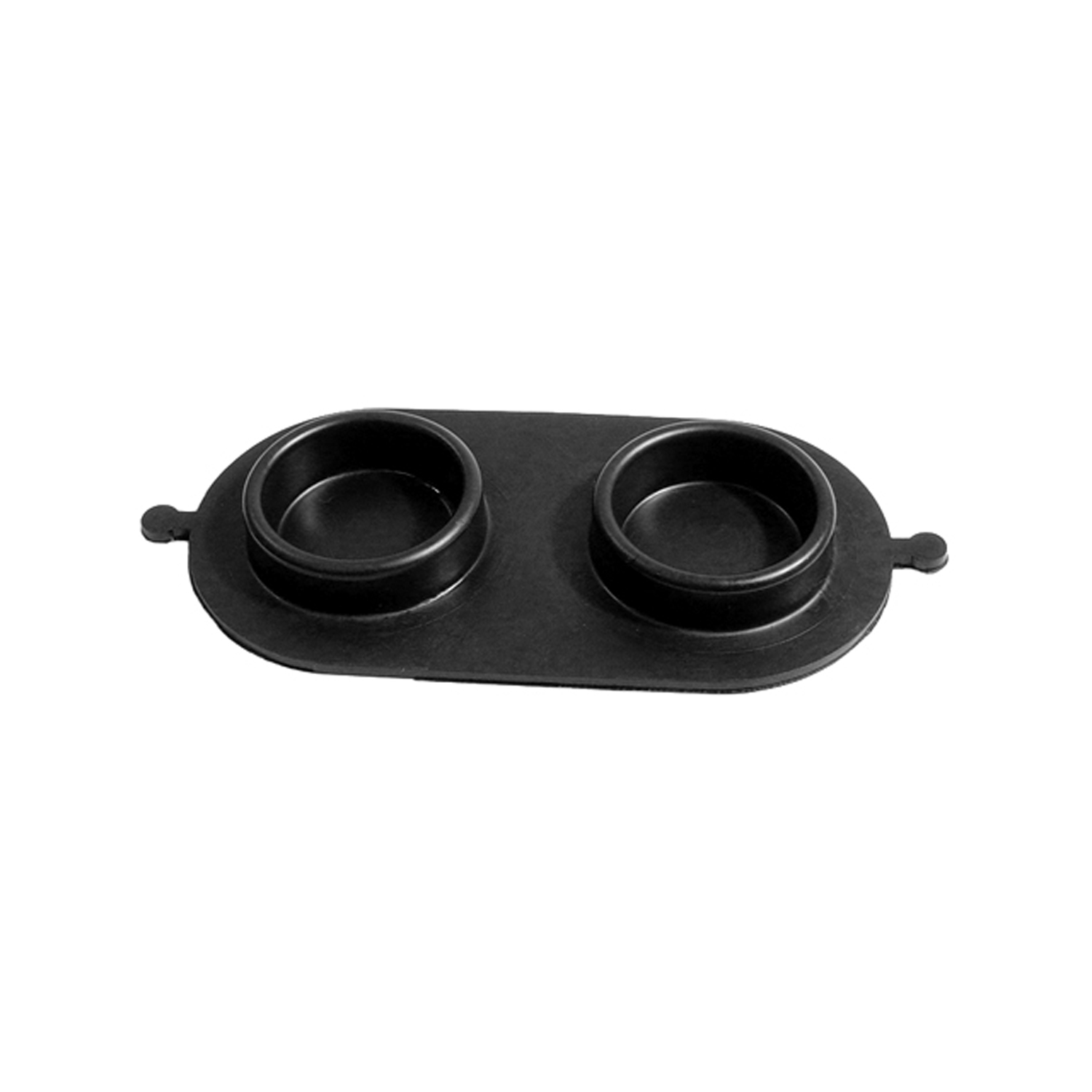 1972 Ford Custom 500 Brake Master Cylinder Cover Seal. Replaces OEM #C7AZ2167-A-RP 2-BBrake Master Cylinder Cover Seal. Replaces OEM #C7AZ2167-A. Each
 1972 Ford Custom 500 Rear Windshield Reveal Molding Clip. Made of steel. Each-WF 228Rear Windshield Reveal Molding Clip. Made of steel. Each
Why Choose Metro?
For over 100 years, Metro Moulded Parts has been the pinnacle of quality in classic car restoration parts. Our commitment to precision and authenticity in every component ensures a perfect fit and an OEM-level appearance.
- Expert Craftsmanship & Quality: Each part is a testament to our dedication to reliability and perfection, crafted from original designs and thoroughly tested.
- Advanced Technology: We use cutting-edge techniques to create flawless, long-lasting parts that surpass others in performance.
- SuperSoft Sponge – The Ultimate Door Seal: Not only are our door seals 30% softer than competitors', but they're also guaranteed to never leak. They effectively reduce wind and road noise, enhancing your classic car's comfort and driving experience.
- Proudly American: Our parts are a product of American craftsmanship, made in the USA with a spirit of excellence and heritage.
- Unrivaled Warranty: We back our products with a 30-year industry-leading warranty, a testament to our confidence in their quality.
Join us in preserving the legacy of classic cars with parts that are crafted for perfection, not just made.