
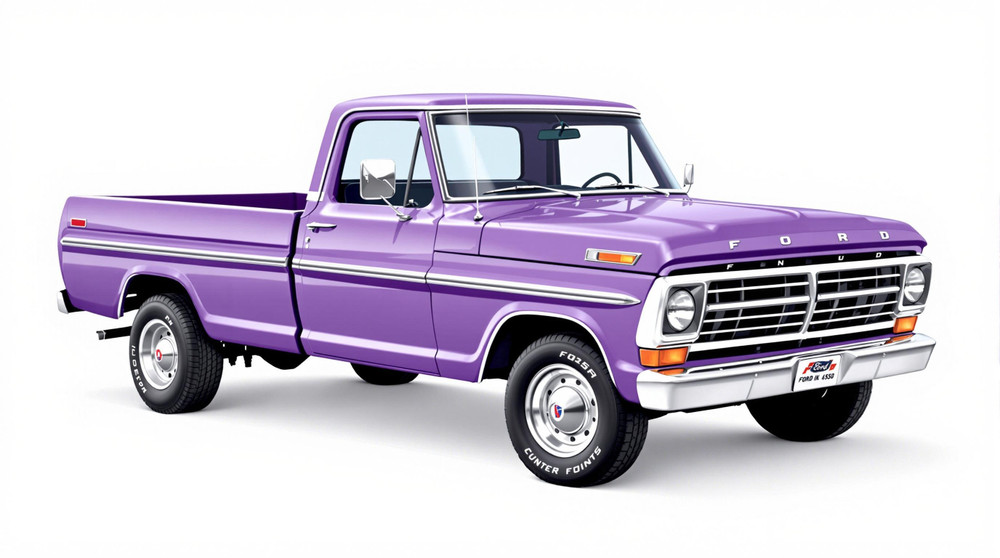
Image of 1972 Ford F-250, Note: These illustrations use artistic license and may differ from actual historical models.
Performance Metrics
Fundamental Metrics
Emotional Appeal
MMP Rating
| Engine Specifications | |
|---|---|
| Engine: | 360 cu in (5.9 L) FE V8, 390 cu in (6.4 L) FE V8 |
| Displacement: | 360-390 cu in |
| Horsepower: | 150-170 hp |
| Torque: | 315-325 lb-ft |
| Compression Ratio: | 8.9:1 |
| Ignition System: | Conventional breaker-point ignition system |
| Cooling System: | Liquid-cooled |
| Performance Specifications | |
| 0-60 Time: | Estimated 10-12 seconds |
| 1/4 Mile Time: | Estimated 17-19 seconds |
| Top Speed: | 100 mph |
| Transmission and Drive | |
| Drive Type: | Rear-wheel drive |
| Transmission Type: | 3-speed automatic, 4-speed manual |
| Fuel and Efficiency | |
| Fuel System Type: | Carburetor |
| MPG: | Estimated 10-12 mpg |
| Dimensions and Brakes | |
| Brakes: | Front disc and rear drum brakes |
| Wheelbase: | 131 inches |
| Weight: | 4,500 lbs |
Note: Specifications for classic cars are given to the best of our ability, considering the limited and variant data available.
1972 Ford F-250: The Last of the Bumpsides
The 1972 Ford F-250 is a working truck with a surprisingly strong following among classic-car fans. Built by Ford Motor Company in the final year of the fifth-generation F-Series, it combines straightforward mechanicals with the square, muscular shape enthusiasts call the “Bumpside.” Its raised body crease gives the sides a distinctive profile, while a broad grille and upright cab make it unmistakably a Ford pickup of the early 1970s.
The F-250 sat between the lighter F-100 and the heavier-duty F-350, giving buyers a useful middle ground for hauling, towing, farm work, and camper duty. A particularly intriguing part of its story is that 1972 was the last model year for this body design. Ford replaced it for 1973 with a more modern-looking generation, making the ’72 a natural bookend for the Bumpside era.
Bumpside Styling and Cab Details
The F-250’s design is all business, but it has plenty of character. Its cab is upright and practical, with a long hood, prominent front fenders, and simple, squared-off body lines. The signature crease running along the body sides catches the light and gives the truck its nickname. Depending on trim and equipment, chrome or brightwork could dress up the grille, bumpers, and exterior details without softening the truck’s sturdy appearance.
Inside, the emphasis was on durability rather than luxury. A broad bench seat, straightforward dashboard, large controls, and easy-to-read gauges made the cabin practical for work clothes and long days behind the wheel. Materials were generally hard-wearing vinyl, painted metal, and simple trim. Options such as upgraded upholstery, carpeting, air conditioning, power steering, power brakes, and an AM radio could make the truck more comfortable, but even a well-equipped example feels refreshingly uncomplicated by modern standards.
Ford offered a range of factory paint colors, including familiar whites, reds, blues, greens, and earth tones. Exact colors and names depended on the paint code and production details. White and red trucks remain especially recognizable, while period-correct two-tone paint can make a well-restored example stand out.
F-250 Body Styles and Packages
Buyers could choose a conventional Styleside bed with smooth outer panels or a Flareside bed with exposed rear fenders and a narrower cargo box. The Styleside is the common, versatile choice, while the Flareside’s separate fenders give it a more traditional pickup silhouette. Ford also offered chassis-cab configurations for commercial bodies and equipment, along with two-wheel-drive and four-wheel-drive versions.
Work-oriented and specialty equipment expanded the truck’s usefulness. The Camper Special package, for example, was aimed at owners carrying slide-in campers and could include equipment intended to handle the extra load. Four-wheel-drive F-250s are often called “Highboys” by enthusiasts because of their taller stance. Highboy is a popular nickname, not an official Ford trim name, and generally refers to a particular period of high-riding 4x4 construction and driveline layout.
Engineering That Put Work First
The F-250 was not designed to introduce a radical new technology. Its importance lies in how it delivered useful capability with mechanical systems that were durable, understandable, and serviceable. Two-wheel-drive versions used Ford’s Twin I-Beam front suspension, a distinctive independent arrangement that helped provide a comfortable ride for a truck of its era. Four-wheel-drive models used a more traditional solid front axle and transfer case, favoring strength and traction over carlike handling.
Engine availability varied with configuration and market, but buyers could find inline-six power as well as V8 options. Common choices included Ford’s 300-cubic-inch inline-six and FE-family V8s such as the 360 and 390. Transmission choices included manual gearboxes and an automatic, with final equipment depending on the truck’s order sheet. Axle ratios, tires, transmission, and engine all affected how well a particular F-250 pulled, cruised, or carried a load.
That range of configurations was a major advantage over many rivals. The F-250 could be ordered as a basic work truck or equipped for family travel, a camper, or regular towing. It helped establish the heavy-duty pickup as a multipurpose vehicle, not merely a commercial tool.
Performance, Ride, and Road Manners
There is no single performance figure for every 1972 F-250. Engine, gearing, body style, load, and condition make a substantial difference, and period factory acceleration figures are not consistently available for every configuration. As a broad real-world estimate, many stock examples take roughly 13 to 20 seconds to reach 60 mph. A healthy V8 truck with favorable gearing will generally feel livelier than a six-cylinder work truck, though neither was built to behave like a modern pickup.
Top speed is similarly configuration-dependent. An unloaded truck in good condition might manage approximately 80 to 95 mph, but that is an estimate, not a sensible cruising target. These are heavy, old vehicles with period braking, tires, and suspension. Their strengths are low-speed pulling power and steady work, not high-speed performance.
On a rough road, the F-250 feels substantial, especially when carrying a load. Empty, it can ride firmly and bounce over sharp bumps, as many pickups with leaf-spring rear suspension do. A two-wheel-drive model with Twin I-Beam suspension has its own characteristic movement over uneven pavement, while a 4x4 feels taller and more deliberate. On winding roads, drivers notice the truck’s size, body roll, and slower steering response compared with a modern vehicle.
The driving experience is part of the appeal. The engine’s mechanical rumble, the firm feel of the controls, and the view over the long hood create a direct connection between driver and machine. Manual-transmission examples ask for more effort and attention, while an automatic makes town driving easier. Either way, the F-250 rewards smooth inputs and sensible speeds.
Living With a 1972 Ford Pickup
Today, F-250s serve as weekend drivers, farm and ranch trucks, tow vehicles, restoration projects, and show-field favorites. A clean original truck can be just as appealing as a highly polished restoration, particularly when it retains its factory engine, paint, and trim. Four-wheel-drive examples and trucks with desirable equipment often attract extra interest, though condition and documentation matter more than a long options list.
Mechanical simplicity is a real ownership advantage. Many routine repairs can be handled by an experienced home mechanic using ordinary tools, and the truck’s systems are generally less complex than those of a modern pickup. Replacement parts for common service items and restoration components are widely available through specialist suppliers. Some original trim, cab-specific pieces, and model-correct parts can take more searching.
Age is the main reliability challenge. Inspect the frame, cab mounts, floor pans, bed, and lower body for rust, and check for worn steering and suspension parts. On a truck that has worked hard, look closely at the transmission, clutch or automatic, differentials, brakes, cooling system, and engine oil pressure. A vehicle that starts and drives well can still need significant safety and structural work.
F-250 Trivia and Common Criticisms
The 1972 model is the final Bumpside F-Series. The next generation, introduced for 1973, is often nicknamed the “Dentside” because of the styling pressed into its body sides. That one-year transition gives the ’72 a special place among Ford-truck enthusiasts, even though it was not a limited edition.
“Highboy” is another term worth understanding before shopping. It is enthusiast shorthand for certain tall 4x4 F-250s from this era, not a badge that Ford applied as a formal model designation. Buyers should verify the truck’s original configuration and components rather than relying on a seller’s nickname.
There is no widely recognized speed or endurance record associated with the 1972 F-250. Its legacy is more practical: thousands of trucks earned their reputations through years of hauling, towing, and hard use. That work history also explains the chief criticisms. The truck is noisy, thirsty by modern standards, slow by today’s traffic expectations, and less comfortable when empty. Rust and previous heavy-duty use can turn an inexpensive purchase into an expensive restoration.
Collector Values and Availability
Values vary sharply with rust, originality, drivetrain, and restoration quality. As a broad U.S. guide for the current classic-truck market, a project or rough driver may sell for about $5,000 to $12,000. A usable, presentable example often falls around $15,000 to $30,000. Strong restorations, desirable 4x4s, and especially clean or well-documented trucks can reach roughly $30,000 to $50,000 or more. Exceptional examples may exceed that range, but asking prices are not the same as completed sales.
Exact 1972 F-250 production totals by body style and drivetrain are difficult to establish from commonly available public records. A reasonable estimate is that Ford built several tens of thousands of F-250s for the model year, perhaps in the range of 30,000 to 60,000. That is an informed estimate rather than a confirmed production figure. The trucks are not impossibly rare, but finding one with solid metal, correct parts, and an unmodified history can take patience.
Interest in classic Ford pickups has generally supported values for good examples, particularly four-wheel-drive trucks and original-condition survivors. Market prices can still rise or fall with restoration costs, fuel prices, and broader collector demand. Over time, the best-preserved trucks are likely to remain the strongest performers, while poorly repaired or heavily modified examples may be harder to sell.
Why the 1972 F-250 Still Matters
The 1972 Ford F-250 brings together the Bumpside generation’s unmistakable design, practical engineering, and broad range of working configurations. It is not a fast or pampering truck, but it is honest about what it was built to do. Simple mechanicals make ownership approachable, while the final-year status and the appeal of Highboy 4x4s keep collectors interested.
More than half a century later, the F-250 still looks ready for a day’s work. Its lasting charm comes from that mix of sturdy usefulness and unmistakable character: a classic Ford pickup that earned its reputation one load, one road, and one long-lived engine at a time.
1972 Ford F-250 Catalog of Parts
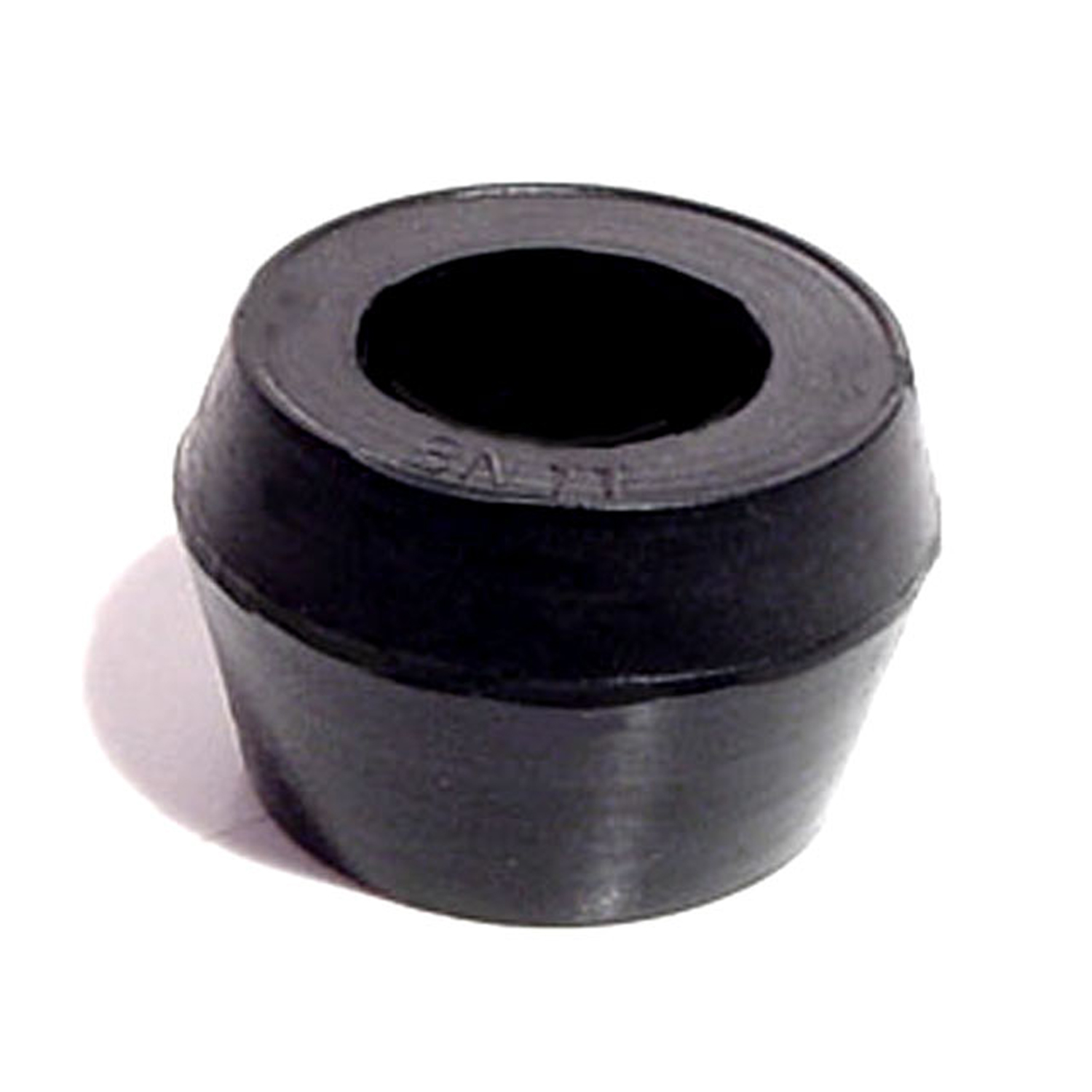 1972 Ford F-250 Shock Absorber Grommet. 1" bottom O.D-BN 11Shock Absorber Grommet. 1" bottom O.D., 3/4" high, with 5/8" I.D. Each
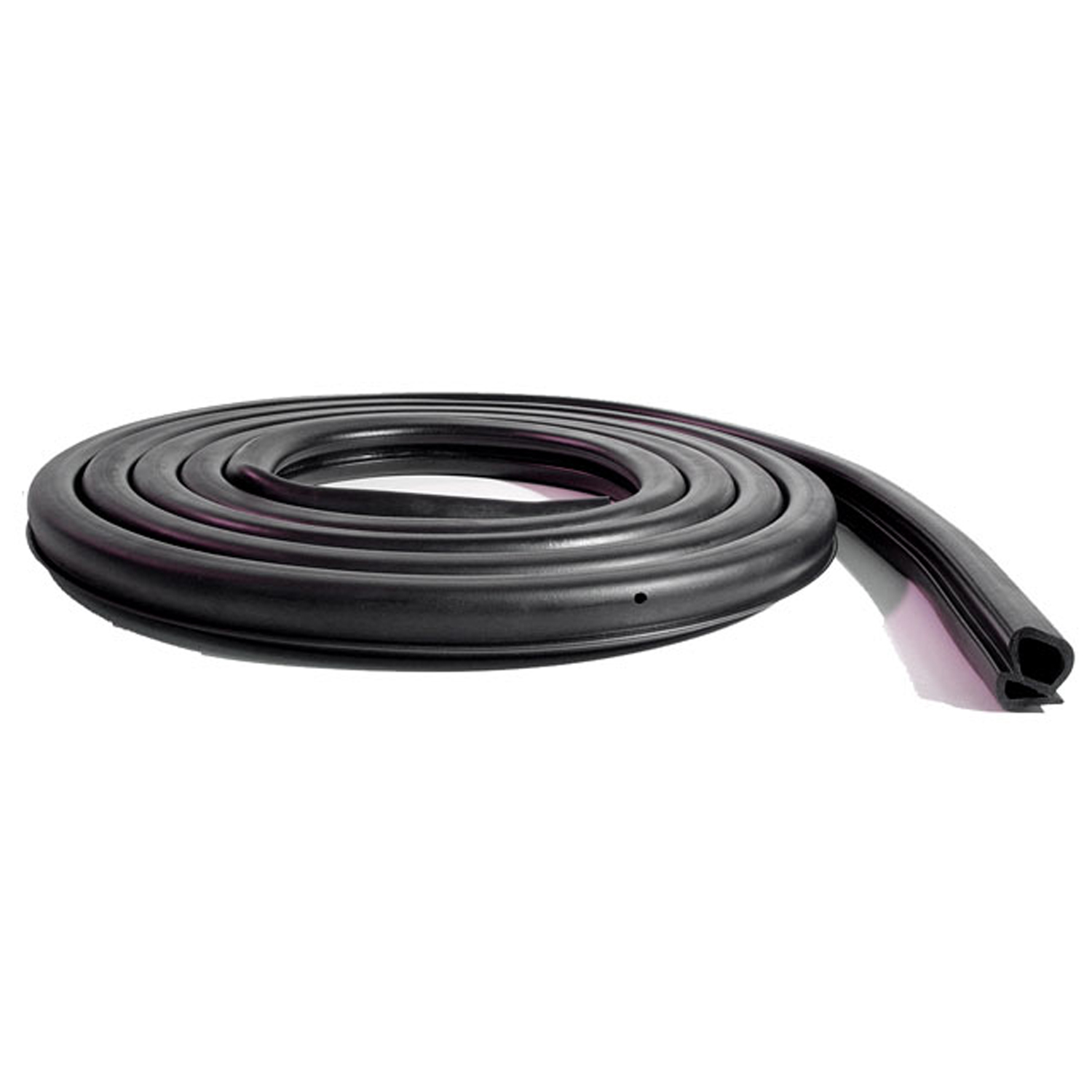 1972 Ford F-250 Door Seal. Fits either side. Each-LM 110-BDoor Seal. Fits either side. Each
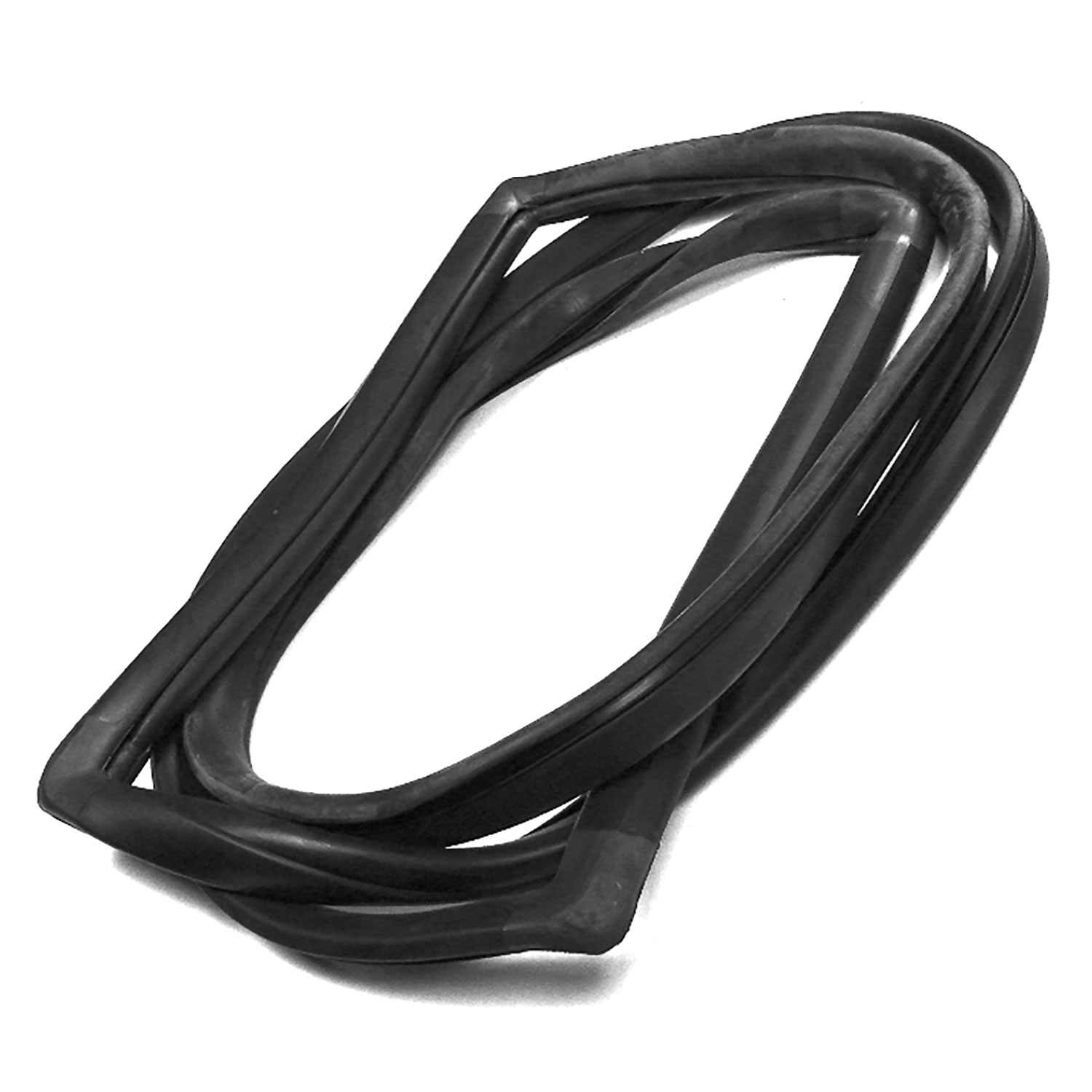 1972 Ford F-250 Windshield Seal, 67-79 Ford Full Size Truck, 78-79 Bronco, Without Trim Groove-VWS 3304-CThis windshield seal goes first on the glass and is installed using the rope-in method. This product is made from the original specs and with high quality ozone resistant EPDM rubber for a great fit and long life. This item is designed to be installed during glass replacement.
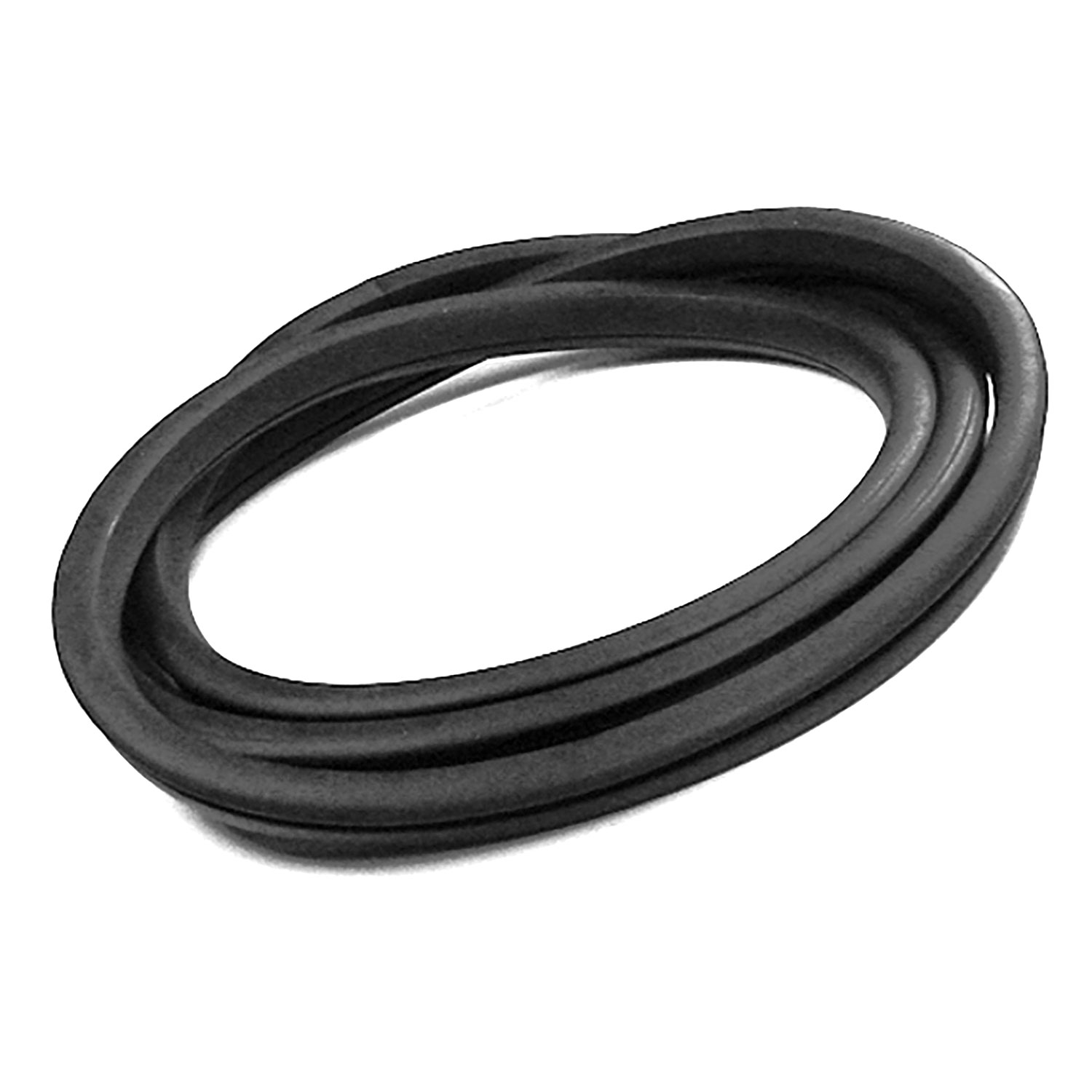 1972 Ford F-250 Rear Window Seal, 67-72 Ford Full Size Truck, Without Trim Groove, Each-VWS 3304-QThis rear window seal goes first on the body then the glass is placed in the opening. It is a standard black gasket without trim groove. This product is made from the original specs and with high quality ozone resistant materials for a great fit and long life. This item is designed to be installed during glass replacement.
Why Choose Metro?
For over 100 years, Metro Moulded Parts has been the pinnacle of quality in classic car restoration parts. Our commitment to precision and authenticity in every component ensures a perfect fit and an OEM-level appearance.
- Expert Craftsmanship & Quality: Each part is a testament to our dedication to reliability and perfection, crafted from original designs and thoroughly tested.
- Advanced Technology: We use cutting-edge techniques to create flawless, long-lasting parts that surpass others in performance.
- SuperSoft Sponge – The Ultimate Door Seal: Not only are our door seals 30% softer than competitors', but they're also guaranteed to never leak. They effectively reduce wind and road noise, enhancing your classic car's comfort and driving experience.
- Proudly American: Our parts are a product of American craftsmanship, made in the USA with a spirit of excellence and heritage.
- Unrivaled Warranty: We back our products with a 30-year industry-leading warranty, a testament to our confidence in their quality.
Join us in preserving the legacy of classic cars with parts that are crafted for perfection, not just made.