

Image of 1972 Ford Mustang, Note: These illustrations use artistic license and may differ from actual historical models.
Performance Metrics
Fundamental Metrics
Emotional Appeal
MMP Rating
| Engine Specifications | |
|---|---|
| Engine: | 250 CID I6, 302 CID V8, 351 CID V8, 429 CID V8 |
| Displacement: | 250-429 cubic inches |
| Horsepower: | 98-375 hp |
| Torque: | 190-450 lb-ft |
| Compression Ratio: | 8.0:1 - 11.3:1 |
| Ignition System: | Electronic |
| Cooling System: | Liquid-cooled |
| Performance Specifications | |
| 0-60 Time: | 6.5 - 8 seconds |
| 1/4 Mile Time: | 14 - 16 seconds |
| Top Speed: | 120 - 140 mph |
| Transmission and Drive | |
| Drive Type: | Rear-wheel drive |
| Transmission Type: | 3-speed automatic, 4-speed manual |
| Fuel and Efficiency | |
| Fuel System Type: | Carburetor |
| MPG: | 10 - 15 mpg |
| Dimensions and Brakes | |
| Brakes: | Front disc, rear drum |
| Wheelbase: | 109 inches |
| Weight: | 2,800 - 3,500 lbs |
Note: Specifications for classic cars are given to the best of our ability, considering the limited and variant data available.
1972 Ford Mustang: The Last of the Big First-Generation Cars
The 1972 Ford Mustang still had the long hood, fastback roofline, and V8 soundtrack that made the name famous, but it also reflected a changing automotive world. Built by Ford Motor Company, it belonged to the first-generation Mustang family, introduced in 1964 as an affordable, sporty car with broad appeal. By 1972, the Mustang had grown larger and heavier, and the emphasis was shifting from unrestrained performance toward emissions compliance, safety, and everyday comfort.
The 1972 model was part of the larger Mustang redesign introduced for 1971. It arrived as American automakers were responding to tighter emissions rules and rising fuel costs, with the oil crisis just around the corner. It was also the final Mustang model year before the 1973 redesign brought larger federally mandated impact bumpers. Ford built approximately 125,000 Mustangs for 1972, making it a less common sight today than the early, high-volume Mustangs, but not an especially rare car in ordinary configurations.
One detail that makes the year interesting is what Ford did not offer: there was no Boss Mustang for 1972, and the mighty 429 V8 had disappeared after 1971. The performance story instead centered on the 351-cubic-inch Cleveland V8, particularly in Mach 1 trim.
Mustang Styling, Mach 1 Trim, and Interior
The 1972 Mustang wore the broad, muscular proportions established by the 1971 redesign. Its long hood sat over a deeply sculpted body with pronounced rear haunches, a wide grille, and a short rear deck. The SportsRoof model, Ford’s name for the fastback, had the most dramatic profile: its roof swept down toward the tail, giving the car a purposeful look even when parked. The standard hardtop offered a more formal roofline, while the convertible brought open-air motoring to the lineup for one more year.
The Mach 1 was the best-known performance-oriented version. It was based on the SportsRoof body and added distinctive badging, sportier trim, and a more assertive appearance. It was a package rather than a separate body style, and its exact equipment varied with the options selected. The Grande, by contrast, dressed up the hardtop with a more comfort-focused character. Buyers could also choose the regular hardtop, SportsRoof, or convertible, so the Mustang could be configured as anything from a stylish cruiser to a V8-powered weekend car.
Inside, the Mustang combined a driver-focused layout with the comfort expected of a mid-size American coupe. Bucket seats were popular, and a center console, floor shifter, and woodgrain-style trim could give the cabin a sportier feel. Vinyl upholstery was common, with optional trim and seat materials offering a more upscale finish. The cabin was not built to modern luxury-car standards, but its straightforward controls and familiar Ford hardware made it approachable and easy to live with.
Factory paint choices ranged from restrained metallics and light shades to vivid colors such as Bright Red and Grabber Blue. High-impact colors were especially well suited to the Mach 1’s bold styling, while darker and more subdued colors gave the Grande a more formal look. Actual availability depended on body style, trim, and production details.
Technology was conventional by modern standards, but the Mustang offered useful period equipment. Buyers could order power steering, power brakes, air conditioning, an automatic transmission, and AM/FM radio. Engine choices included a 250-cubic-inch inline-six, a 302-cubic-inch V8, and several versions of the 351 Cleveland V8. The mix of engines and transmissions let buyers prioritize price, easy cruising, or stronger acceleration.
Why the 1972 Mustang Matters
The 1972 Mustang represents a transitional moment in the model’s history. The original pony car had begun as a compact, relatively light sports coupe, but customer demand for more room, comfort, and power led Ford to make the 1971 redesign substantially larger. The result had more presence and a wider range of equipment, but it was also heavier than the earliest Mustangs.
That change captures a broader shift in American performance cars. The big-block era was fading, emissions requirements were tightening, and manufacturers were beginning to quote horsepower using net ratings that more closely reflected an engine’s installed output. The 1972 Mustang still offered a strong V8 experience, but it belonged to a period when performance could no longer be measured by engine size alone.
What set the Mustang apart from many contemporaries was its blend of style, familiarity, and choice. It could be ordered as a six-cylinder convertible or a well-equipped V8 fastback, and its parts and mechanical layout were rooted in widely available Ford components. The Mustang’s original formula influenced generations of sporty coupes, while the 1972 model illustrates how that formula adapted as the market changed.
351 Cleveland Performance and Road Manners
Performance depends heavily on the engine, transmission, axle ratio, and condition of an individual car. A six-cylinder Mustang is best understood as a relaxed cruiser. A V8-equipped car, especially one with a 351 Cleveland four-barrel engine, delivers the stronger acceleration enthusiasts expect. Period horsepower figures can be confusing because Ford used different rating methods over the Mustang’s life. For 1972, published net ratings are generally more useful than earlier gross figures, but they still do not tell the whole story of how a particular car performs.
As a broad estimate, a healthy 351 four-barrel Mustang with a suitable transmission and gearing may reach 60 mph in roughly 6.5 to 8 seconds. A top speed in the neighborhood of 120 to 130 mph is plausible for a well-running example, although gearing, tires, aerodynamics, and mechanical condition make any single figure approximate. Six-cylinder and smaller V8 versions are noticeably slower. These are classic-car estimates, not guaranteed results for every surviving Mustang.
On the road, the 1972 Mustang feels substantial. Its traditional front-engine, rear-wheel-drive layout and solid rear axle give it an unmistakably vintage character. It rides more comfortably than a small sports car, but sharp bumps can unsettle the rear suspension, and rough pavement can make the body move around. On a winding road, the car responds best to smooth inputs. It is not as nimble as a modern performance coupe, and the steering, brakes, and suspension vary considerably depending on whether the car has been restored or upgraded.
The V8 soundtrack is a major part of the appeal: a low idle, a deep growl under acceleration, and a mechanical feel that newer cars often filter out. The driver sits low behind a long hood, working a period steering wheel and, in a manual car, a substantial gear lever. It feels engaging without requiring a racetrack to enjoy it, which is why many owners use their Mustangs for weekend drives, local shows, and relaxed touring.
Living With a 1972 Mustang
For a classic, the 1972 Mustang is generally approachable to maintain. Ford built large numbers of Mustangs, and many mechanical parts are shared with other Ford models or reproduced by the classic-car parts industry. A mechanically inclined owner can handle routine service and many repairs with common tools. Carburetor tuning, ignition work, brake maintenance, and suspension repairs are familiar jobs for a classic-car workshop.
Rust is the major ownership concern. Inspect the floorpans, cowl area, frame rails, trunk, wheel arches, and the lower edges of the body. Past collision repairs and poorly fitted replacement panels can also turn a seemingly clean car into an expensive project. Before buying, check the engine and transmission against the car’s documentation, inspect the underside, and confirm that the electrical system and cooling system work properly.
Many owners preserve their Mustangs as show cars or weekend cruisers, while others use them for touring or install modern upgrades such as electronic ignition, improved brakes, or a more capable suspension. Originality matters to collectors, so keep factory parts and document any changes. A well-maintained car can be enjoyable, but it should not be expected to deliver modern fuel economy, safety equipment, or maintenance-free reliability.
1972 Mustang Facts and Common Criticisms
The 1972 Mustang came in hardtop, SportsRoof, and convertible body styles, with the Mach 1 and Grande adding distinct personalities within the range. Ford also offered a patriotic Sprint decor package during the 1972 model year, part of a broader Sprint promotion that included other Ford models. The Boss models were absent, making the Mach 1 the most recognizable factory performance-oriented Mustang in the lineup.
Common criticisms focus on the car’s size and weight compared with earlier Mustangs. Some enthusiasts also dislike the softer, more comfort-oriented feel of the later first-generation cars. Fuel consumption, drum-brake configurations on some examples, aging wiring, and the limitations of original suspension components can be drawbacks. On the other hand, those same cars offer roomier cabins and a more settled highway ride than many early Mustangs.
There is no single “record-setting” claim that defines the 1972 Mustang. Its significance lies more in its place at the end of the first-generation era and in the way it carried the Mustang name through a period of major change. Individual cars have appeared in films, television, and enthusiast events, but a celebrity connection should be verified with documentation rather than assumed from a model’s popularity.
1972 Ford Mustang Values and Rarity
Values vary widely according to body style, engine, originality, rust, restoration quality, and documentation. As a general 2026 market estimate in the United States, a project car might sell for about $8,000 to $15,000. A usable driver often falls around $18,000 to $35,000, while a clean, well-restored example may bring roughly $35,000 to $60,000. Exceptional, highly original, or especially desirable Mach 1 examples can exceed that range, while heavily modified or poorly repaired cars may sell for less.
The model is uncommon compared with the earliest Mustangs, but it is not scarce in the way a limited-production performance car is. With approximately 125,000 built for the 1972 model year, buyers can still find cars on the market. The challenge is finding one with sound bodywork, correct or well-documented components, and a restoration that matches its asking price.
Values for good classic Mustangs have generally benefited from continued enthusiast interest, though the market is selective. Clean, original, documented cars tend to hold their appeal better than tired projects or restorations with questionable workmanship. The 1972 Mustang is best viewed as an enthusiast car with solid collector interest, not a guaranteed investment. Condition and provenance matter far more than optimistic price predictions.
The 1972 Mustang’s Lasting Appeal
The 1972 Ford Mustang offers a memorable mix of bold early-1970s styling, practical Ford engineering, and genuine V8 character. It is larger and more comfort-oriented than the original pony car, yet it still delivers the long-hood presence, rear-wheel-drive feel, and unmistakable engine note that define the Mustang experience.
As one of the final Mustangs of the first generation, it stands at the crossroads between the high-performance past and the more regulated years ahead. Find a solid example, give it the care its age demands, and a 1972 Mustang rewards you with more than vintage style: it lets you drive a piece of American automotive history on its own terms.
1972 Ford Mustang Catalog of Parts
 1972 Ford Mustang Brake Pedal Pad-CB 111-BBrake Pedal Pad, for models with manual transmission and disc brakes. 3-7/16" wide. Each
 1972 Ford Mustang Brake Pedal Pad-CB 111-FBrake Pedal Pad, for models with manual transmission and manual brakes (without disc brakes). 3-1/2" wide. Each
 1972 Ford Mustang Clutch and Brake Pedal Pads. 2-3/16" long X 3-3/8" wide-CB 111-KClutch and Brake Pedal Pads. 2-3/16" long X 3-3/8" wide. Pair
 1972 Ford Mustang Gas Neck to Body Gasket. Made of Cork. 2-1/2" I.D-GF 46Gas Neck to Body Gasket. Made of Cork. 2-1/2" I.D., 3-11/16" O.D. Each
 1972 Ford Mustang Door Seals, 71-73 Ford Mustang, Mercury Cougar 2 Doors, Pair-LM 10-DDoor Seals, 71-73 Ford Mustang, Mercury Cougar 2 Doors, Pair, R&L. Replaces OEM #'s D1ZZ-6520530-A & D1ZZ-6520531-A.
 1972 Ford Mustang Airfoil Bracket to Body Pads. 2" wide X 4-3/8" long-MP 1050-AAirfoil Bracket to Body Pads. 2" wide X 4-3/8" long. Pair R&L
 1972 Ford Mustang License Lamp Lens Pad. 1-1/2" wide X 3-1/8" long. Each-MP 1052-FLicense Lamp Lens Pad. 1-1/2" wide X 3-1/8" long. Each
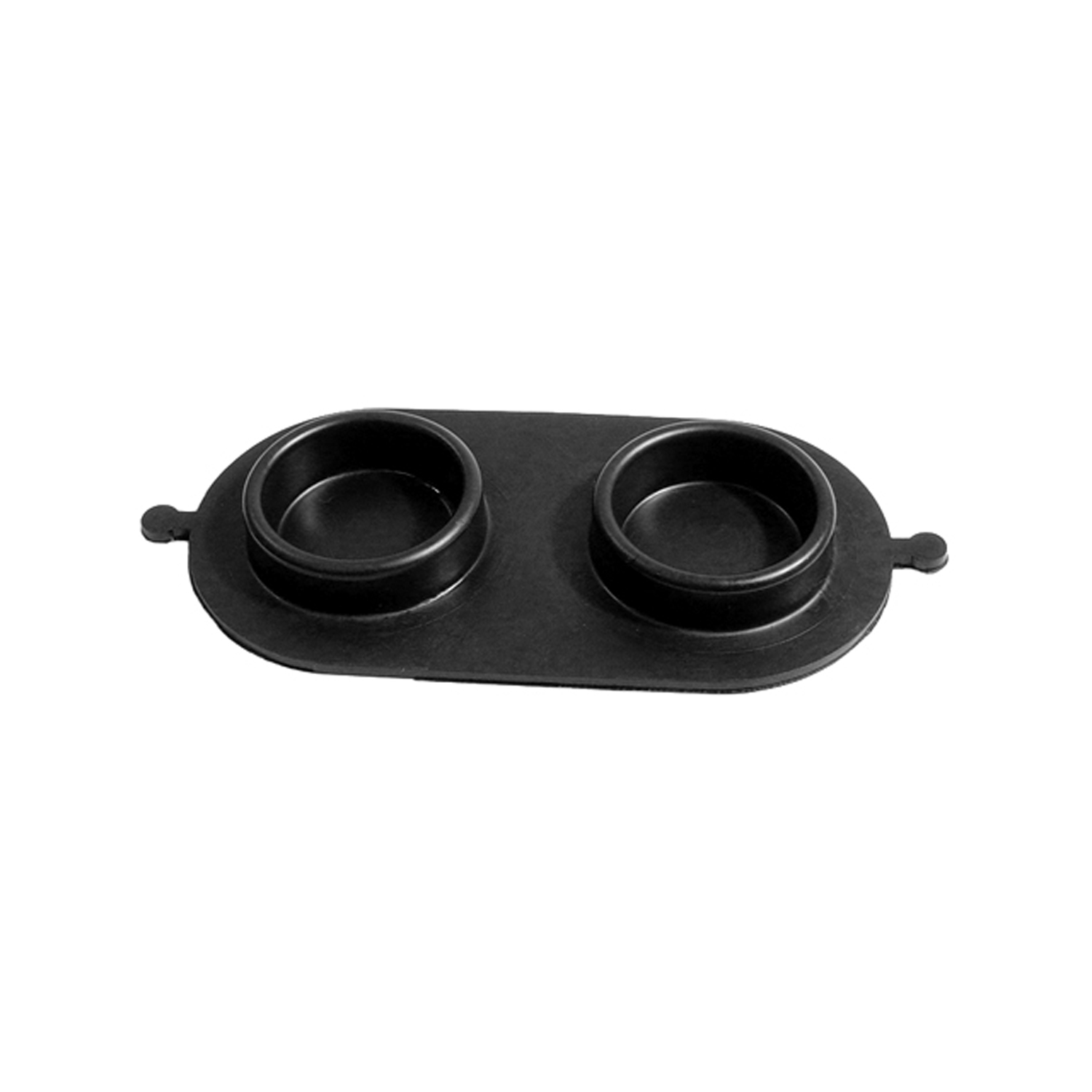 1972 Ford Mustang Brake Master Cylinder Cover Seal. Replaces OEM #C7AZ2167-A-RP 2-BBrake Master Cylinder Cover Seal. Replaces OEM #C7AZ2167-A. Each
 1972 Ford Mustang Door Lock Button Grommet. Made of clear plastic. Each-RP 303-LDoor Lock Button Grommet. Made of clear plastic. Each
 1972 Ford Mustang Roof Rail Seals, 71-73 Ford Mustang Coupe/Fastback & Mercury Cougar Coupe, Pair-RR 6400-DRoof Rail Seals, 71-73 Ford Mustang Coupe/Fastback & Mercury Cougar Coupe, Pair. R&L. Replaces OEM #'s D1ZZ 6551222-A / D1ZZ 6551223-A.
 1972 Ford Mustang Trunk Bumper. 7/8" high, 5/8" O.D. Each-SB 30Trunk Bumper. 7/8" high, 5/8" O.D. Each
 1972 Ford Mustang Special Socket Plug. Fits a 1-1/2" hole. Each-SB 48Special Socket Plug. Fits a 1-1/2" hole. Each
 1972 Ford Mustang Rear Roll-Up Window Seals, for 2-Door Fastback. Pair R&L-VS 3-TRear Roll-Up Window Seals, for 2-Door Fastback. Pair R&L. 15.5" Long. Replaces OEM #'s D1ZZ 6330146-A & D1ZZ 6330147-A.
 1972 Ford Mustang Window Sweeper Set, 71-73 Mustang Convertible 8 piece-WC 6900-22This eight piece Window sweeper kits is the perfect solution for keeping your side windows clean when the glass is lowered. This set includes inner and outer seals for all side windows, and comes ready to install with finished ends and body curvature bends for a factory like appearance.
 1972 Ford Mustang Window sweeper kit. Fits 71-73 Mustang Fastback 8 Piece Kit-WC 6900-23This eight (8) piece set includes inner and outer window sweeps. These sweeps keep the windows from rattling and wipe the glass as it is rolled up and down.
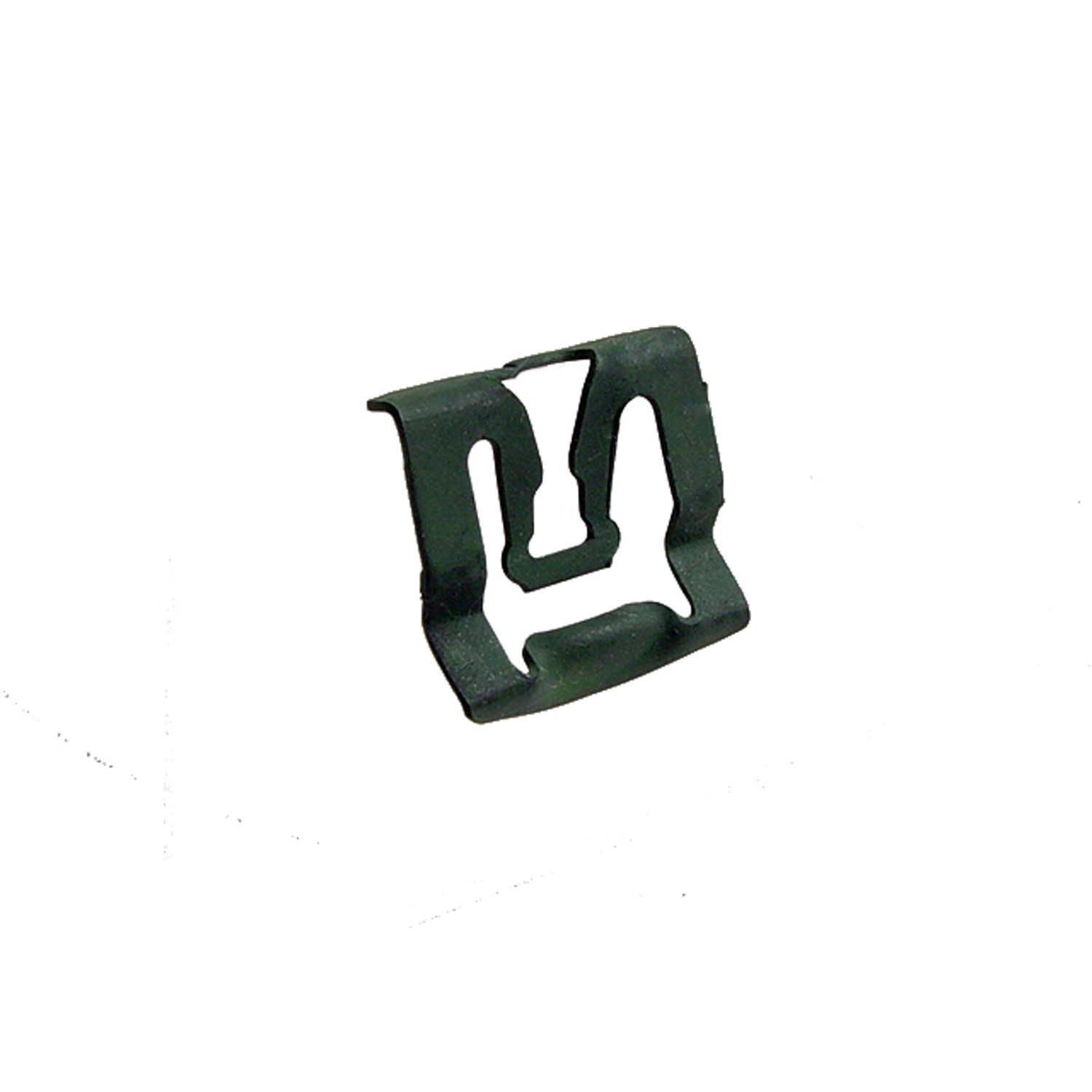 1972 Ford Mustang Windshield Reveal Molding Clip. Made of steel. Each-WF 228-AWindshield Reveal Molding Clip. Made of steel. Each
Why Choose Metro?
For over 100 years, Metro Moulded Parts has been the pinnacle of quality in classic car restoration parts. Our commitment to precision and authenticity in every component ensures a perfect fit and an OEM-level appearance.
- Expert Craftsmanship & Quality: Each part is a testament to our dedication to reliability and perfection, crafted from original designs and thoroughly tested.
- Advanced Technology: We use cutting-edge techniques to create flawless, long-lasting parts that surpass others in performance.
- SuperSoft Sponge – The Ultimate Door Seal: Not only are our door seals 30% softer than competitors', but they're also guaranteed to never leak. They effectively reduce wind and road noise, enhancing your classic car's comfort and driving experience.
- Proudly American: Our parts are a product of American craftsmanship, made in the USA with a spirit of excellence and heritage.
- Unrivaled Warranty: We back our products with a 30-year industry-leading warranty, a testament to our confidence in their quality.
Join us in preserving the legacy of classic cars with parts that are crafted for perfection, not just made.