

Image of 1972 Ford Pinto, Note: These illustrations use artistic license and may differ from actual historical models.
Performance Metrics
Fundamental Metrics
Emotional Appeal
MMP Rating
| Engine Specifications | |
|---|---|
| Engine: | 1.6L Kent OHV I4, 2.0L EAO SOHC I4, 2.3L OHC I4 |
| Displacement: | 98 cu in (1.6 L) to 140 cu in (2.3 L) |
| Horsepower: | 54-88 hp |
| Torque: | 74-118 lb-ft |
| Compression Ratio: | 8.2:1 - 9.0:1 |
| Ignition System: | Conventional, with distributor |
| Cooling System: | Liquid-cooled |
| Performance Specifications | |
| 0-60 Time: | 10-14 seconds |
| 1/4 Mile Time: | 17-20 seconds |
| Top Speed: | 100 mph |
| Transmission and Drive | |
| Drive Type: | RWD (Rear Wheel Drive) |
| Transmission Type: | 4-speed manual, 3-speed automatic |
| Fuel and Efficiency | |
| Fuel System Type: | Carburetor |
| MPG: | 20-25 mpg |
| Dimensions and Brakes | |
| Brakes: | Front disc, rear drum |
| Wheelbase: | 94.0 in |
| Weight: | 2,015-2,270 lbs |
Note: Specifications for classic cars are given to the best of our ability, considering the limited and variant data available.
1972 Ford Pinto: The Small Ford That Made a Big Impression
The 1972 Ford Pinto was a simple, affordable subcompact with a surprisingly large place in American automotive history. Built by Ford Motor Company, it was designed for drivers who wanted economical transportation that was easier to park and less expensive to run than a full-size American car. Its upright mission was straightforward, but the Pinto soon became one of the most debated cars of its era.
Ford launched the Pinto for the 1971 model year as domestic automakers responded to rising interest in smaller cars, including imports from Volkswagen and other European manufacturers. The 1972 model broadened the lineup with two especially memorable additions: the sporty-looking Runabout hatchback and a practical station wagon. One striking detail is how quickly the Pinto became a sales hit. Ford built roughly 480,000 Pintos for the 1972 model year, making it one of the company’s most successful small cars.
Pinto Styling, Colors, and Body Styles
The Pinto wore classic early-1970s proportions: a long hood, a short rear deck, a compact cabin, and a crisp, gently sloping front end. Its shape was tidy rather than flamboyant, with a simple grille, modest bumpers, and clean body sides. The design gave the little Ford a purposeful stance without pretending it was a muscle car. Buyers could add sportier trim and wheels for a more assertive look.
Inside, the Pinto was basic but functional. Hard-wearing vinyl upholstery was common, with cloth-and-vinyl combinations available depending on the trim and options. The dashboard kept the controls within easy reach, and the cabin was more about straightforward usability than plush appointments. Compared with a larger Ford, the materials felt modest, but that was part of the value equation. Options such as upgraded trim, carpeting, an AM radio, and air conditioning could make the car more comfortable.
Ford offered the 1972 Pinto in several body styles. The two-door sedan was the traditional, practical choice. The Runabout, a two-door hatchback introduced for 1972, added a lift-up rear glass section and a foldable rear seat, making it easier to carry bulky items. The station wagon offered the most cargo space, and its optional Squire trim used woodgrain-style exterior panels for a miniature country-wagon look. The Runabout became one of the most recognizable Pintos, while the wagon appealed to buyers who needed compact dimensions with extra utility.
Factory paint choices varied by trim and production details, but buyers could choose from a broad palette of period-appropriate shades, including white, red, blue, green, yellow, and earthy tones. Bright colors suited the Pinto’s youthful image, while neutral finishes were popular with practical buyers. On an old example, the original paint code is the best guide to its factory color, since repainting was common over the decades.
Small-Car Engineering for a Changing Market
The Pinto was part of a major shift in American car design. Before the 1970s, domestic manufacturers had focused heavily on larger vehicles. The Pinto showed that a Detroit-built compact could be mass-produced, attract a broad audience, and compete in a market increasingly shaped by fuel economy and urban driving. Ford’s target was an inexpensive car with a low purchase price and a small footprint, and the Pinto delivered on that basic brief.
Its construction was conventional rather than revolutionary. The Pinto used a unitized body, independent front suspension with coil springs, and a rear live axle supported by leaf springs. That straightforward layout kept manufacturing and repair costs manageable. It also made the car familiar to mechanics and owners who were used to traditional components.
The Pinto’s history is also inseparable from the controversy over rear-impact fuel-tank safety. Its fuel tank was positioned behind the rear axle, and concerns about fire risk in certain rear collisions led to investigations and a later recall covering some 1971-76 Pintos. The issue became a prominent example in debates about automotive safety, corporate decision-making, and the standards applied to crash protection. A 1972 Pinto should therefore be assessed carefully for safe, properly maintained fuel-system components, especially if it has not been restored or updated.
Engine, Speed, and Road Manners
The 1972 Pinto was offered with small four-cylinder engines. The base engine was a 1.6-liter unit, while a 2.0-liter overhead-cam four was available for buyers seeking stronger performance. Depending on engine, transmission, equipment, and emissions calibration, output and acceleration figures varied. Period performance was modest: a 0-to-60-mph run generally took somewhere in the mid-teens, with the 2.0-liter versions typically quicker than the base cars. Top speed was roughly in the 90-mph range, though gearing and condition could change the result.
Buyers could choose manual transmissions or an automatic, depending on configuration. The manual gearbox made the most of the small engine and gave the driver a more involved feel. The optional automatic suited stop-and-go traffic but could make the Pinto feel slower. In either case, the car was built for economical everyday travel, not rapid acceleration.
On the road, the Pinto feels light and compact. Its relatively short wheelbase helps it turn easily in town and fit into tight parking spaces. The suspension is simple, and the car can feel bouncy over sharp pavement breaks or washboard surfaces, particularly if its shocks, bushings, or leaf springs are worn. On a winding road, a sound example is nimble at moderate speeds, though it does not offer the grip or precision of a modern sports car. Crosswinds and passing trucks can make the light body feel unsettled, so smooth steering inputs suit it best.
The driving experience is pleasantly mechanical. The four-cylinder engine has a busy, slightly buzzy sound when pushed, while the cabin lets in more road and wind noise than a modern car. The steering is light by classic-car standards, and the driver sits close to the road with simple controls and good visibility. A well-kept Pinto feels easygoing and approachable, which is much of its charm.
Living With a 1972 Pinto
Today, Pintos turn up as weekend classics, budget show cars, nostalgic daily drivers, and project cars. The Runabout is a natural choice for someone who likes compact hatchbacks, while the wagon offers useful cargo room and an especially distinctive silhouette. Some owners also use Pintos in vintage grassroots events or build them for local drag and bracket racing, though original, unmodified examples are increasingly appealing to collectors.
Routine maintenance is generally accessible to a home mechanic. The Pinto’s conventional layout, simple four-cylinder engines, and straightforward suspension make basic servicing familiar work. Parts availability varies: common service items and some mechanical components remain obtainable, while trim pieces, body panels, and model-specific interior details can take more searching. Before buying, check carefully for rust, previous collision repairs, aging fuel lines, and the condition of the tank and rear structure. A pre-purchase inspection by a mechanic familiar with older Fords is a wise investment.
Reliability depends heavily on maintenance and age. A neglected Pinto may need attention to its cooling system, carburetor, ignition, brakes, suspension, and electrical connections. A carefully maintained car can be enjoyable to own, but it should not be treated as a modern, maintenance-free commuter. Safety updates and a thorough inspection are particularly important on a car with an uncertain history.
Pinto Trivia and Common Criticisms
The Pinto’s name came from the pinto horse, a fitting choice for a small Ford that shared the company’s long-standing horse-themed branding with the Mustang. The Runabout also helped give the model a more youthful image, while the Squire wagon brought woodgrain styling down to a compact-car scale.
The car is often remembered more for the fuel-tank controversy than for its sales success. That reputation can overshadow the fact that the Pinto was a major commercial achievement: Ford produced roughly 480,000 for the 1972 model year and more than three million Pintos across the model’s full production run. It also gave Ford a substantial presence in the growing small-car market.
Common criticisms include modest performance, a noisy cabin, simple interior materials, and limited protection by modern safety standards. The car’s handling and braking also feel dated beside contemporary vehicles. Those shortcomings need to be understood in context: the Pinto was designed as affordable basic transportation, and its equipment reflected the expectations and engineering practices of its time.
1972 Pinto Values and Collector Appeal
The 1972 Pinto remains an affordable classic compared with many better-known American cars. As a broad current-market estimate, a rough project might sell for about $1,000 to $4,000, while a usable driver could fall around $4,000 to $8,000. Clean, well-restored examples may bring approximately $8,000 to $15,000, with exceptional cars or especially desirable configurations potentially selling for more. Actual prices depend on rust, originality, documentation, mechanical condition, and local demand.
There is no widely established, reliable production breakdown for every individual 1972 body style, but total model-year production is commonly estimated at about 480,000 cars. That means the Pinto itself is not especially rare. Surviving examples in strong original condition are far less common, particularly wagons, well-preserved Runabouts, and cars with correct trim and paperwork.
Values have generally been steady to modestly rising for clean, collectible examples, rather than surging like those of high-performance muscle cars. The Pinto’s lower starting prices make it accessible, but rust-free and original cars are becoming harder to find. Buyers tend to pay a premium for completeness and condition rather than for performance upgrades.
Why the 1972 Ford Pinto Still Matters
The 1972 Ford Pinto combined compact dimensions, simple engineering, several useful body styles, and mass-market success at a time when American drivers were rethinking what a car needed to be. Its Runabout and wagon gave the lineup extra character, while its sales demonstrated that a small domestic car could compete for a place in the family driveway.
The Pinto is also a reminder that automotive history includes both design achievements and difficult lessons about safety. Today, a sound example offers an engaging snapshot of early-1970s motoring: uncomplicated, economical, and unmistakably of its time. More than a small Ford, the 1972 Pinto is a rolling piece of the era that changed the American car market.
1972 Ford Pinto Catalog of Parts
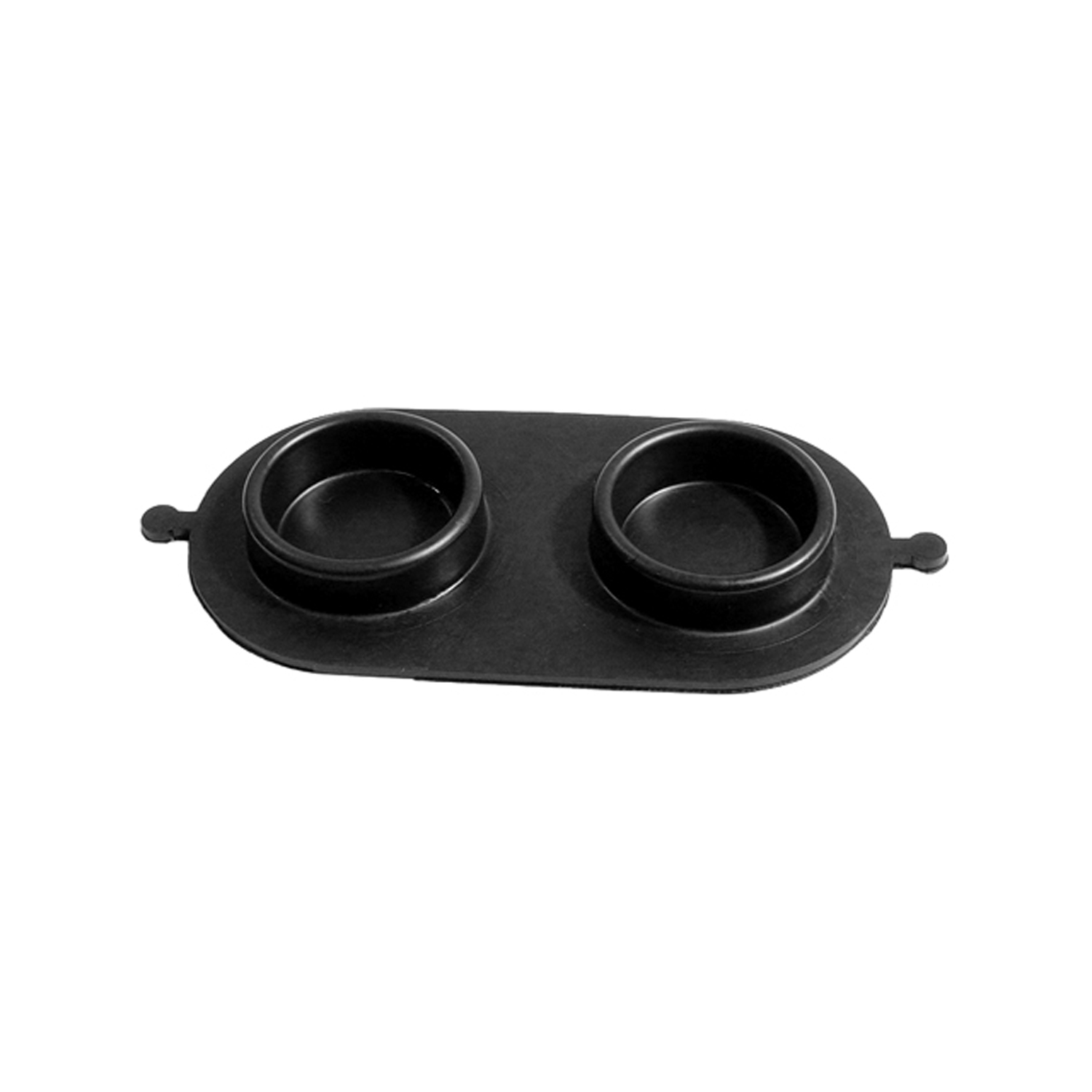 1972 Ford Pinto Brake Master Cylinder Cover Seal. Replaces OEM #C7AZ2167-A-RP 2-BBrake Master Cylinder Cover Seal. Replaces OEM #C7AZ2167-A. Each
 1972 Ford Pinto Windshield and Rear Windshield Reveal Molding Clip-WF 226Windshield and Rear Windshield Reveal Molding Clip. Made of steel. Each
 1972 Ford Pinto Spare Tire Hold Down Nut. 3/8- 16 thread size-WF 3504Spare Tire Hold Down Nut. 3/8- 16 thread size. Replaces OEM #B9AZ-1462-A. Each
Why Choose Metro?
For over 100 years, Metro Moulded Parts has been the pinnacle of quality in classic car restoration parts. Our commitment to precision and authenticity in every component ensures a perfect fit and an OEM-level appearance.
- Expert Craftsmanship & Quality: Each part is a testament to our dedication to reliability and perfection, crafted from original designs and thoroughly tested.
- Advanced Technology: We use cutting-edge techniques to create flawless, long-lasting parts that surpass others in performance.
- SuperSoft Sponge – The Ultimate Door Seal: Not only are our door seals 30% softer than competitors', but they're also guaranteed to never leak. They effectively reduce wind and road noise, enhancing your classic car's comfort and driving experience.
- Proudly American: Our parts are a product of American craftsmanship, made in the USA with a spirit of excellence and heritage.
- Unrivaled Warranty: We back our products with a 30-year industry-leading warranty, a testament to our confidence in their quality.
Join us in preserving the legacy of classic cars with parts that are crafted for perfection, not just made.