

Image of 1973 Ford Custom 500, Note: These illustrations use artistic license and may differ from actual historical models.
Performance Metrics
Fundamental Metrics
Emotional Appeal
MMP Rating
| Engine Specifications | |
|---|---|
| Engine: | 240 CID I6, 302 CID V8, 351 CID V8, 400 CID V8, 429 CID V8 |
| Displacement: | 240 - 429 cubic inches |
| Horsepower: | 100 - 220 hp |
| Torque: | 185 - 360 lb-ft |
| Compression Ratio: | 8.0:1 - 8.5:1 |
| Ignition System: | Conventional breaker-point ignition system |
| Cooling System: | Liquid-cooled |
| Performance Specifications | |
| 0-60 Time: | Estimated 10 - 14 seconds |
| 1/4 Mile Time: | Estimated 17 - 20 seconds |
| Top Speed: | 105 - 120 mph |
| Transmission and Drive | |
| Drive Type: | Rear-wheel drive |
| Transmission Type: | 3-speed manual, 3-speed automatic, 4-speed manual |
| Fuel and Efficiency | |
| Fuel System Type: | Carburetor |
| MPG: | Estimated 10 - 15 mpg |
| Dimensions and Brakes | |
| Brakes: | Front disc and rear drum brakes |
| Wheelbase: | 119 inches |
| Weight: | 3,500 - 4,000 lbs |
Note: Specifications for classic cars are given to the best of our ability, considering the limited and variant data available.
1973 Ford Custom 500: A Full-Size Ford With a Workmanlike Edge
The 1973 Ford Custom 500 was a big, straightforward American sedan built for people who valued room, durability, and a sensible price over luxury-car ornament. Made by Ford Motor Company in the United States, it sat near the practical end of Ford’s full-size lineup, below the better-trimmed Galaxie 500 and LTD. Its unfussy character made it a natural choice for families, businesses, government fleets, and police departments.
The timing gave the Custom 500 a distinctive place in automotive history. It arrived as new federal safety requirements were reshaping car design and, just months into its model year, the 1973 oil crisis made large, thirsty cars harder to justify. One notable detail is that its prominent impact-absorbing front bumper reflected the new requirement for cars to withstand a 5-mph front impact without serious damage. The chunky bumper was more than a styling flourish: it was a visible sign of a changing regulatory era.
Big-Ford Styling and a Practical Cabin
The Custom 500 wore the formal, squared-off look that defined full-size American Fords in the early 1970s. Its long hood, broad body sides, upright glass, and generous trunk gave it a substantial presence. A wide grille and thick chrome-trimmed bumpers emphasized its width, while comparatively restrained brightwork distinguished it from more expensive Galaxie and LTD models. The design was handsome in a no-nonsense way, with little need for decorative excess.
Inside, the emphasis was on space and usefulness. The broad front bench seat could accommodate three across, and the rear bench offered the kind of legroom that made long family trips comfortable. Depending on trim and options, upholstery included durable vinyl or cloth-and-vinyl combinations. The dashboard was functional rather than elaborate, with clear, conventional controls and straightforward instrumentation. Buyers could add comfort and convenience features, but the Custom 500’s appeal was its solid, serviceable interior, not a luxury-car atmosphere.
Available paint choices varied by production date and factory order, but buyers could choose from familiar Ford-era colors such as white, red, blue, green, gold, and metallic shades. White and darker blues are especially recognizable on surviving examples, though the less common colors can make a well-preserved car stand out at a show. Exact paint names and availability depend on the original paint code.
The Custom 500 was chiefly offered as a two-door or four-door sedan. It was a traditional body-on-frame car, and the four-door sedan was the practical, widely useful choice. Ford’s full-size wagon range was marketed separately, so the Custom 500 is best known today as a sedan rather than as a station wagon. Equipment, trim, and drivetrain choices could be tailored to personal or fleet needs.
Technology in the 1973 Ford Custom 500
By modern standards, the Custom 500’s technology was simple. Its strengths were familiar mechanical systems, a conventional rear-wheel-drive layout, and options that let buyers choose a basic manual setup or a more effortless automatic. Power steering and power-assisted brakes were available, and front disc brakes were part of the period’s move toward better stopping performance on large passenger cars. The front suspension used a coil-spring arrangement, while the rear relied on a solid axle and leaf springs, a durable combination suited to carrying people and luggage.
Safety and emissions rules were becoming more influential. The 1973 front bumper incorporated energy-absorbing design, while emissions controls were increasingly common across the industry. The Custom 500 did not offer the electronics or driver aids associated with modern cars; its appeal was mechanical simplicity and room for straightforward maintenance.
Why the Custom 500 Mattered
The Custom 500 was not a glamorous styling or engineering breakthrough, and that is part of its significance. It represents the full-size American sedan at a moment when the formula was under pressure. Buyers still wanted big interiors, smooth highway manners, and the reassuring heft of a body-on-frame car, while new safety rules, emissions requirements, and rising fuel prices were changing what manufacturers could build and what customers wanted to drive.
Its place in the Ford lineup also mattered. The Custom 500 gave Ford a relatively plain, lower-cost full-size car that could serve families and organizations without the extra trim of an LTD. That made the model especially suitable for fleet service. Its straightforward construction and familiar V8 options also reflected a long-running American approach to car design: make the vehicle spacious, make it easy to service, and offer enough configurations to suit different buyers.
Compared with smaller cars, it was exceptionally roomy and comfortable on the open road. Compared with luxury models, it was less ornate and more affordable. Its lasting influence is not a single styling cue or technical invention, but its role as a representative example of the practical, full-size Ford sedan just before fuel economy became a dominant selling point.
Engines, Speed, and Road Manners
Engine availability depended on body style, equipment, and original order. The lineup could include a 250-cubic-inch inline-six and V8 choices such as the 302, 351, and 400 cubic-inch engines. Larger V8s were also offered in parts of Ford’s full-size range, though availability could vary by model and configuration. A three-speed manual transmission was offered, while automatic transmissions were a popular choice. Buyers should verify an individual car’s engine and transmission from its vehicle identification number, documentation, and installed components rather than assuming every Custom 500 left the factory with the same setup.
There is no single meaningful factory 0-to-60-mph figure for every 1973 Custom 500. As a broad period-car estimate, a V8 example might reach 60 mph in roughly 10 to 13 seconds, depending on engine, transmission, axle ratio, condition, and test method. A six-cylinder car would generally be slower. Top speed also varied, but a healthy V8 model could plausibly reach around 100 mph or more. These are estimates, not guaranteed specifications; worn engines, modern tire choices, and gearing can change the results substantially.
The Custom 500 was built to cruise, not carve through tight corners. Its long wheelbase and soft suspension soak up ordinary road imperfections, and the car feels most at home on a straight highway. On a winding road, expect body lean, slow steering response, and a sense of considerable mass. Crosswinds can also make a large, high-sided sedan feel less settled than a modern car. Good tires, tight steering components, fresh shocks, and properly serviced brakes make a significant difference.
From behind the wheel, the experience is unmistakably early-1970s Ford. The hood stretches ahead, the bench seat encourages a relaxed posture, and the engine’s low-pitched rumble arrives with a reassuring mechanical feel. A V8 car delivers easy passing power, while the six-cylinder version is more leisurely, especially with passengers aboard. The ride is cushioned and composed at cruising speeds, though the car’s size is always apparent in parking lots and narrow streets.
Living With a Custom 500
In its day, the Custom 500 could serve as a family car, taxi, company vehicle, or police and government fleet sedan. Today, most examples are used as weekend cruisers, restoration projects, or informal show cars. A clean survivor can also make a distinctive daily driver, but fuel consumption, large dimensions, and the scarcity of some trim and body parts make it less convenient than a newer car for routine commuting.
Mechanical repairs are generally approachable for a competent home mechanic. Ford engines and conventional rear-wheel-drive components are well understood, and many service parts remain available through classic-car suppliers. The bigger challenge is often condition rather than complexity. Check carefully for rust around the floors, trunk, lower body panels, frame, and windshield areas. Also inspect the front suspension, steering linkage, brake system, cooling system, and electrical connections. Cosmetic pieces, original upholstery, and model-specific trim can take more effort to locate than common mechanical parts.
Custom 500 Trivia and Common Criticisms
The Custom 500’s understated appearance helped it work well in fleet roles: it looked official and substantial without the added ornament of a luxury model. It is also a useful snapshot of the transition from the traditional American land yacht to a period of greater concern about fuel use and regulation. No widely recognized speed, endurance, or sales record belongs specifically to the 1973 Custom 500, and claims of a famous individual owner should be checked against reliable documentation rather than repeated as fact.
Its main criticisms are easy to understand. The car is large, heavy, and generally fuel-hungry by modern standards. Even a well-running example can feel slow beside contemporary vehicles, particularly with the six-cylinder engine. Its soft suspension and substantial body roll are comfortable on smooth roads but less appealing to drivers who prefer sharp handling. Rust and age-related wear are now more pressing concerns than the car’s original engineering.
Collector Value and Availability
There is no dependable production total commonly published for the 1973 Custom 500 alone, so any model-specific figure should be treated as an estimate. Given Ford’s large full-size output and the model’s fleet-friendly role, a reasonable guess is that production reached the tens of thousands, perhaps somewhere around 50,000 to 100,000 cars. That estimate is not a confirmed factory count, and the number of surviving, usable examples is much smaller.
As a general 2026 market guide, a rusty project or incomplete car might sell for roughly $2,000 to $5,000. A running, presentable driver may fall around $6,000 to $12,000, while a very clean, correctly restored example could reach approximately $15,000 to $25,000 or more. Exceptional condition, documented history, desirable equipment, and a particularly appealing color can push a sale higher. These are broad estimates, not appraisals; regional demand and the car’s originality have a major effect.
The Custom 500 remains more affordable than many better-known muscle cars and luxury classics. Its prices tend to be driven by condition and buyer interest rather than by a rare, high-profile performance pedigree. In real terms, values have been fairly steady, with gradual gains possible for exceptional examples, but it is not generally considered a fast-appreciating investment. Buyers are most likely to see value in a solid, complete car rather than an ambitious restoration candidate.
A Straightforward Ford With Lasting Character
The 1973 Ford Custom 500 captures a particular moment in American motoring: big, comfortable, mechanically familiar, and built just as safety regulation and fuel concerns began changing the rules. Its roomy cabin, sturdy construction, fleet-friendly simplicity, and relaxed highway manners give it a clear identity among classic full-size Fords.
It may not have the fame of a muscle car or the polish of an LTD, but the Custom 500 tells an important story about the cars Americans actually used. That honest, unpretentious character is exactly what makes this big Ford worth remembering.
1973 Ford Custom 500 Catalog of Parts
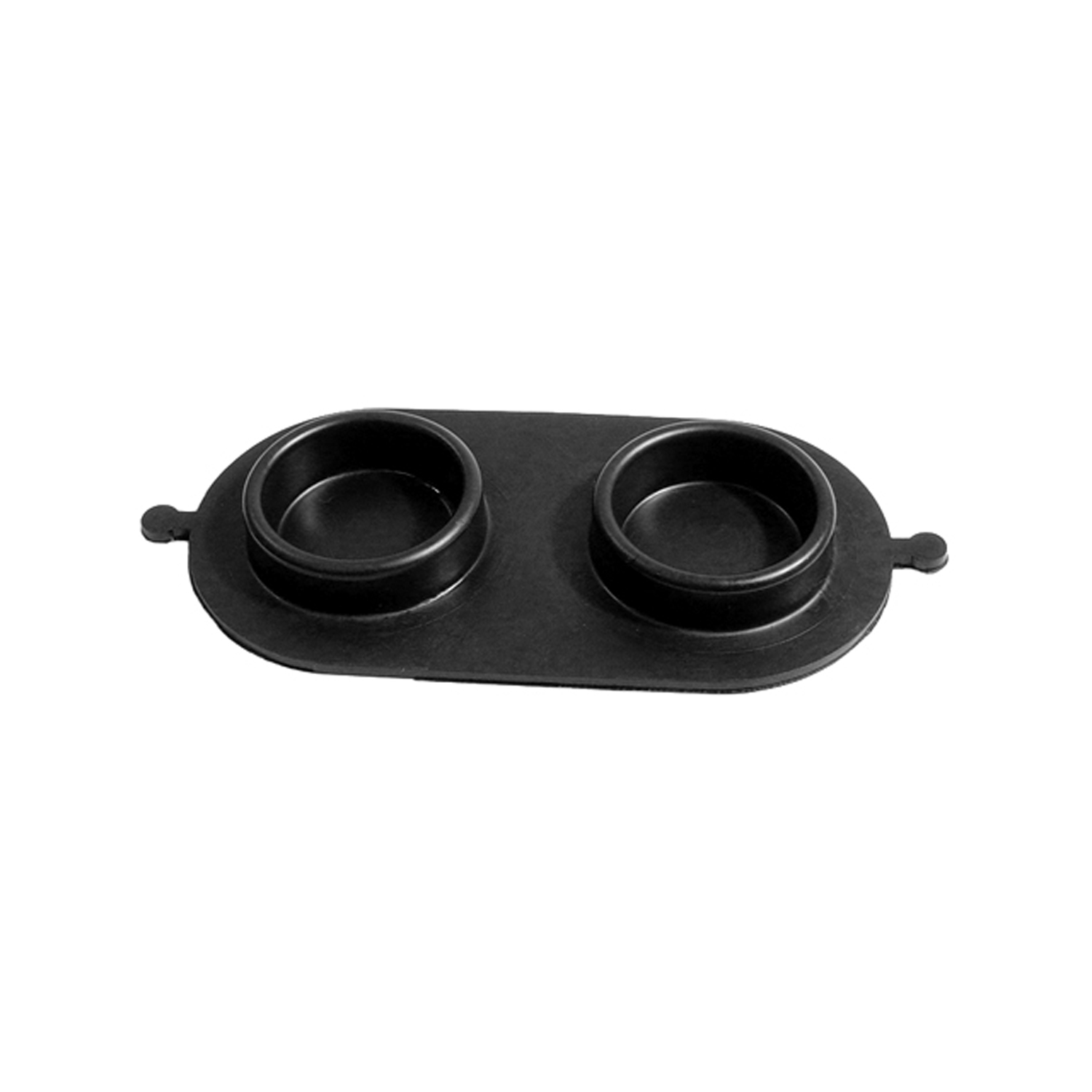 1973 Ford Custom 500 Brake Master Cylinder Cover Seal. Replaces OEM #C7AZ2167-A-RP 2-BBrake Master Cylinder Cover Seal. Replaces OEM #C7AZ2167-A. Each
 1973 Ford Custom 500 Rear Windshield Reveal Molding Clip. Made of steel. Each-WF 228Rear Windshield Reveal Molding Clip. Made of steel. Each
Why Choose Metro?
For over 100 years, Metro Moulded Parts has been the pinnacle of quality in classic car restoration parts. Our commitment to precision and authenticity in every component ensures a perfect fit and an OEM-level appearance.
- Expert Craftsmanship & Quality: Each part is a testament to our dedication to reliability and perfection, crafted from original designs and thoroughly tested.
- Advanced Technology: We use cutting-edge techniques to create flawless, long-lasting parts that surpass others in performance.
- SuperSoft Sponge – The Ultimate Door Seal: Not only are our door seals 30% softer than competitors', but they're also guaranteed to never leak. They effectively reduce wind and road noise, enhancing your classic car's comfort and driving experience.
- Proudly American: Our parts are a product of American craftsmanship, made in the USA with a spirit of excellence and heritage.
- Unrivaled Warranty: We back our products with a 30-year industry-leading warranty, a testament to our confidence in their quality.
Join us in preserving the legacy of classic cars with parts that are crafted for perfection, not just made.