

Image of 1973 Ford E-100 Econoline, Note: These illustrations use artistic license and may differ from actual historical models.
Performance Metrics
Fundamental Metrics
Emotional Appeal
MMP Rating
| Engine Specifications | |
|---|---|
| Engine: | 240 CID I6, 302 CID Windsor V8, 351 CID Windsor V8 |
| Displacement: | 240-351 cubic inches |
| Horsepower: | 100-150 hp |
| Torque: | 185-275 lb-ft |
| Compression Ratio: | 8.0:1 - 8.4:1 |
| Ignition System: | Conventional breaker point ignition system |
| Cooling System: | Liquid-cooled |
| Performance Specifications | |
| 0-60 Time: | Estimated 12-15 seconds |
| 1/4 Mile Time: | Estimated 18-20 seconds |
| Top Speed: | 85-95 mph |
| Transmission and Drive | |
| Drive Type: | Rear-wheel drive |
| Transmission Type: | 3-speed manual, 3-speed automatic |
| Fuel and Efficiency | |
| Fuel System Type: | Carburetor |
| MPG: | Estimated 10-14 mpg |
| Dimensions and Brakes | |
| Brakes: | Front disc and rear drum brakes |
| Wheelbase: | 124 inches |
| Weight: | 3,500-4,000 lbs |
Note: Specifications for classic cars are given to the best of our ability, considering the limited and variant data available.
1973 Ford E-100 Econoline: A Working Van with Classic Character
The 1973 Ford E-100 Econoline was built to haul people, tools, and cargo, but its simple shape and unmistakable front end have since made it a favorite among classic-van enthusiasts. Produced by Ford Motor Company, the E-100 was the light-duty member of the Econoline range. It belonged to the second-generation Econoline family, introduced for 1968 and produced through 1974.
That generation marked a major change from the original, cab-forward Econoline. Ford moved the engine forward beneath a short hood, giving the van a more conventional layout and making the driving position less directly over the front axle. One intriguing detail: the 1973 model was part of the final generation of Econolines to use this basic body design. A substantially redesigned van arrived for 1975, making the ’73 a bridge between the early, cab-over-inspired vans and the more modern full-size vans that followed.
Boxy Lines, Useful Choices
The E-100’s styling is practical rather than decorative. Its squared-off body, upright windshield, broad grille, round headlights, and short hood give it a sturdy, almost architectural profile. The side panels are largely flat, designed to make the most of the cargo area and provide useful space for business lettering or custom paint. Compared with the rounded vans that came before it, the 1973 Econoline looked more planted and conventional, while still being easy to recognize as a van.
Inside, the emphasis was on durability. The dashboard was straightforward, with simple controls and clear instrumentation, while vinyl upholstery and hard-wearing floor coverings were common choices. Depending on configuration and options, buyers could get seating for passengers or leave the cargo area open for equipment and deliveries. It was not a luxury cabin by modern standards, but its uncomplicated layout made it easy to clean, use, and repair.
Ford offered the Econoline in several configurations, including cargo vans, passenger-oriented Club Wagon models, and chassis-cab versions that could be fitted with specialized bodies. The E-100 designation identified the lighter-duty range, while other Econoline models offered greater capacity. Cargo vans were popular with tradespeople and businesses; Club Wagons appealed to families, shuttle operators, and recreational users. Camper and conversion versions were also common, though many were completed by outside conversion companies rather than being unique factory models.
Factory paint choices varied by trim and ordering options. Period colors included practical whites and tans as well as brighter blues, greens, reds, and other colors popular in the early 1970s. White was a natural fleet favorite, while vivid colors and two-tone treatments are especially eye-catching on surviving vans today.
Useful Engineering for the Early 1970s
The biggest engineering story behind the 1973 Econoline was the layout introduced with the 1968 redesign. Moving the engine forward created a short hood and a more conventional front-engine arrangement. It also helped distinguish the van from earlier cab-forward designs, where occupants sat much closer to the front wheels and engine.
Ford’s Twin I-Beam front suspension was another notable feature of the era. It used long, independently moving beams to provide a useful balance of load-carrying ability and ride comfort for a work vehicle. The design was not high-tech in the modern sense, but it was robust and well suited to a van expected to spend its life carrying people, tools, or freight.
Power steering, automatic transmission, air conditioning, and other comfort or convenience equipment depended on the specific build and options. Even with those features, the E-100 remained a relatively simple vehicle. That simplicity is part of its appeal: there are fewer electronic systems to diagnose than in a modern van, and many routine repairs can be handled with ordinary mechanical tools.
Engines, Speed, and Road Manners
Engine availability varied with configuration and equipment, but 1973 E-100s could be found with Ford inline-six engines, including the 240- and 300-cubic-inch units, as well as a 302-cubic-inch V8 in some specifications. Three-speed manual and automatic transmissions were among the available driveline choices. Exact output depended on engine, emissions equipment, and model specification, so surviving vans should be identified by their own engine and vehicle data rather than assumptions based on the badge.
Performance was modest by passenger-car standards. Period figures are not consistently published for every E-100 combination, and condition, gearing, tires, and load make a substantial difference. As a broad modern estimate, a typical six-cylinder van might take roughly 18 to 25 seconds to reach 60 mph, while a V8-equipped example could be quicker. Top speed is best thought of as approximately 75 to 85 mph for many stock configurations, though these vans are more comfortable at moderate highway speeds than at their limit.
Behind the wheel, the Econoline feels sturdy and straightforward. The engine note is audible in the cabin, especially under acceleration, and the tall body catches crosswinds more readily than a car. Its suspension can feel firm over sharp bumps, particularly when the van is lightly loaded, while a properly maintained example settles down with cargo or passengers aboard. On winding roads, expect deliberate steering and noticeable body roll rather than sports-car precision. The driving experience is part of the charm: a large steering wheel, simple gauges, a broad view ahead, and the satisfying mechanical sounds of an older work vehicle.
Why the 1973 Econoline Mattered
The Econoline helped establish the full-size American van as a versatile platform for business, passenger transport, and recreation. The second-generation design made the van feel more like a conventional vehicle without giving up its boxy, useful interior. That combination helped it serve as a delivery van one day, a family shuttle the next, or the foundation for a camper conversion.
It also stood apart from contemporary cars through its sheer flexibility. Buyers could choose a basic cargo hauler or a passenger version, then tailor the vehicle to a trade or personal use. The design’s influence is easy to see in later full-size vans: a front-engine layout, tall enclosed body, and broad range of configurations became familiar ingredients across the segment. The 1973 model itself was not a revolutionary technology showcase, but it represents an important stage in the shift toward the modern American van.
Ownership, Repairs, and Everyday Use
Today, a 1973 Ford E-100 is most often used as a weekend cruiser, show vehicle, vintage business van, camper project, or parts-and-tools hauler. Some owners do drive them regularly, but a classic van needs more attention than a modern daily driver. Fuel consumption is typically high by today’s standards, and the tall body, limited safety equipment, and period braking and steering systems call for a more measured driving style.
Mechanical repairs are generally approachable for an experienced home mechanic. The engines are conventional, many service parts remain available through classic Ford and aftermarket suppliers, and the vehicle’s basic systems are relatively easy to understand. Rust is often the more serious concern. Check the floor, rocker panels, wheel openings, door bottoms, windshield area, and frame carefully. Also inspect the cooling system, brakes, steering components, wiring, and transmission before buying. Conversion vans may have added electrical systems, insulation, cabinetry, or roof modifications that deserve their own close inspection.
Classic Van Trivia and Common Complaints
The E-100 was the lighter-duty member of a broader Econoline family, not a separate one-off model. Its short hood reflects the 1968 shift away from the earliest Econoline’s more forward-control layout. And while many surviving examples look like factory campers or custom vans, a large number were converted after leaving Ford’s assembly line.
There is no widely recognized speed or endurance record associated specifically with the 1973 E-100. Its achievements were more everyday: serving fleets, trades, families, and conversion businesses in large numbers. Exact production figures for the E-100 body and trim combinations are difficult to pin down from commonly available public records. A reasonable estimate is that tens of thousands were built for the 1973 model year, with perhaps 70,000 to 120,000 Econoline vans and related configurations across the range. That is an informed estimate, not a confirmed E-100 production total.
Common criticisms are familiar to anyone who has driven an old van: heavy fuel use, modest acceleration, substantial wind sensitivity, and a ride that can be choppy when unloaded. Safety equipment and crash protection also fall well short of modern expectations. Those drawbacks are real, but they are balanced by the van’s straightforward engineering, spacious body, and distinctive period character.
1973 Ford E-100 Values and Collectability
The E-100 is collectible, though it generally remains more affordable than rare muscle cars or high-profile classic trucks. As a broad U.S. market guide, a project needing major rust or mechanical work might sell for about $3,000 to $8,000. A running, usable driver in fair-to-good condition may bring roughly $8,000 to $18,000. A well-restored, unusually clean, or tastefully converted example can reach approximately $20,000 to $35,000, with exceptional custom builds sometimes asking more. Actual sale prices depend heavily on condition, documentation, body style, location, and the quality of any conversion.
Survivors are not impossible to find, but clean, unmodified examples are becoming less common. Values have generally strengthened as interest in vintage vans and period-correct custom builds has grown. Appreciation is most likely for solid, complete vehicles with quality restoration work; neglected projects can remain expensive to repair and may not rise in value enough to justify every restoration cost.
A Practical Classic with Lasting Appeal
The 1973 Ford E-100 Econoline combines honest utility with an unmistakable early-1970s shape. Its front-engine layout, sturdy construction, multiple body configurations, and simple mechanicals made it useful in its own time and approachable for enthusiasts today. It is not fast, quiet, or especially refined, but it offers space, character, and a direct connection to the era when the American van became an everyday tool and a canvas for personal expression. Restored as a work van, camper, or clean classic, the E-100 still turns a practical machine into something worth a second look.
1973 Ford E-100 Econoline Catalog of Parts
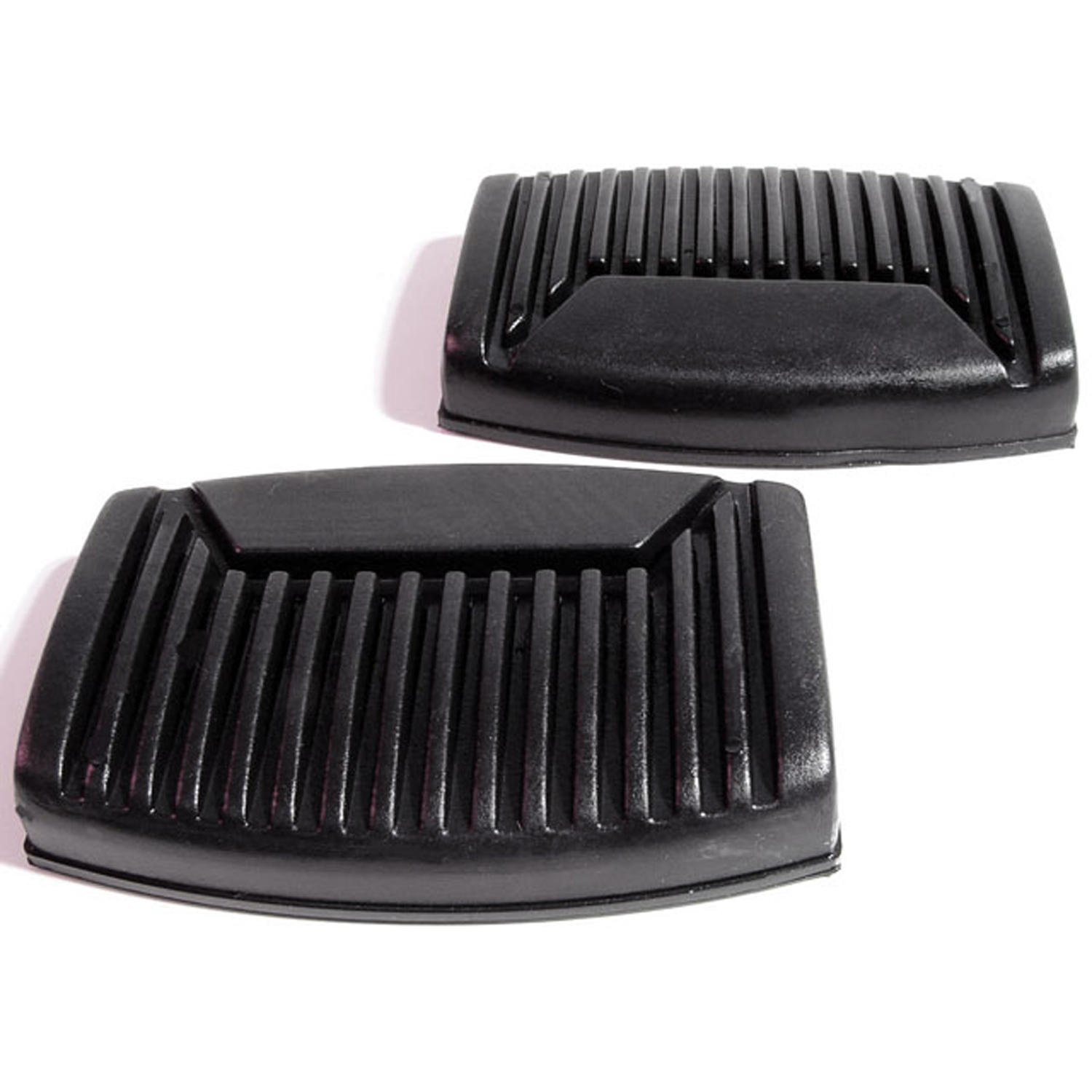 1973 Ford E-100 Econoline Clutch and Brake Pedal Pads. 3-1/4" wide X 2-1/4" long-CB 111Clutch and Brake Pedal Pads. 3-1/4" wide X 2-1/4" long. Pair
Why Choose Metro?
For over 100 years, Metro Moulded Parts has been the pinnacle of quality in classic car restoration parts. Our commitment to precision and authenticity in every component ensures a perfect fit and an OEM-level appearance.
- Expert Craftsmanship & Quality: Each part is a testament to our dedication to reliability and perfection, crafted from original designs and thoroughly tested.
- Advanced Technology: We use cutting-edge techniques to create flawless, long-lasting parts that surpass others in performance.
- SuperSoft Sponge – The Ultimate Door Seal: Not only are our door seals 30% softer than competitors', but they're also guaranteed to never leak. They effectively reduce wind and road noise, enhancing your classic car's comfort and driving experience.
- Proudly American: Our parts are a product of American craftsmanship, made in the USA with a spirit of excellence and heritage.
- Unrivaled Warranty: We back our products with a 30-year industry-leading warranty, a testament to our confidence in their quality.
Join us in preserving the legacy of classic cars with parts that are crafted for perfection, not just made.