
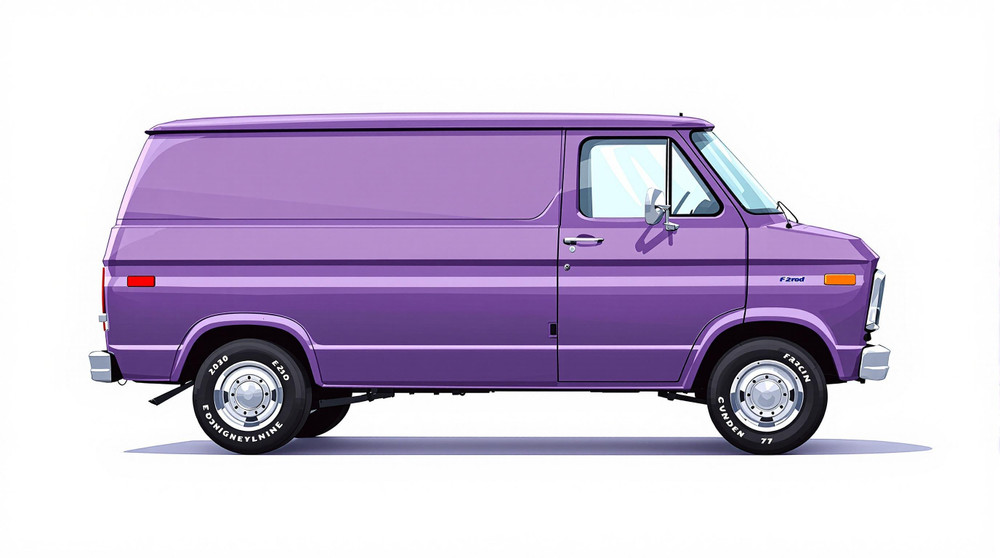
Image of 1973 Ford E-200 Econoline, Note: These illustrations use artistic license and may differ from actual historical models.
Performance Metrics
Fundamental Metrics
Emotional Appeal
MMP Rating
| Engine Specifications | |
|---|---|
| Engine: | 302 cu in (4.9 L) Windsor V8, 351 cu in (5.8 L) Windsor V8, 240 cu in (3.9 L) I6 |
| Displacement: | 240-351 cu in |
| Horsepower: | 101-138 hp |
| Torque: | 223-283 lb-ft |
| Compression Ratio: | 8.0:1 - 8.4:1 |
| Ignition System: | Conventional breaker point ignition system |
| Cooling System: | Liquid-cooled |
| Performance Specifications | |
| 0-60 Time: | Estimated 15-20 seconds |
| 1/4 Mile Time: | Estimated 20-25 seconds |
| Top Speed: | 80-85 mph |
| Transmission and Drive | |
| Drive Type: | Rear-wheel drive |
| Transmission Type: | 3-speed automatic, 3-speed manual |
| Fuel and Efficiency | |
| Fuel System Type: | Carburetor |
| MPG: | Estimated 10-12 mpg |
| Dimensions and Brakes | |
| Brakes: | Front disc, rear drum |
| Wheelbase: | 124 in |
| Weight: | 4,000-4,500 lbs |
Note: Specifications for classic cars are given to the best of our ability, considering the limited and variant data available.
1973 Ford E-200 Econoline: A Classic American Work Van
The 1973 Ford E-200 Econoline was built for the unglamorous jobs that keep a country moving, but its boxy silhouette helped make the full-size van an American icon. Produced by Ford Motor Company, it belonged to the second-generation Econoline family, redesigned for 1968 with a front-mounted engine and a more conventional long-nose layout. The E-200 sat between the lighter E-100 and heavier E-300, giving buyers a useful middle ground for hauling equipment, goods, or passengers.
Its timing is part of its story. The van arrived as American businesses were relying on versatile commercial vehicles and customizers were beginning to turn vans into personal statements. Then the 1973 oil crisis made fuel economy a much bigger concern. The E-200 was no economy car, but its practical size and configurable body made it a familiar sight for tradespeople, delivery fleets, and families looking for a roomy people mover.
One detail that often surprises modern enthusiasts is how much the Econoline changed before this model appeared. Early Econolines put the engine between the front seats, while the 1968 redesign moved it ahead of the cabin beneath a conventional hood. That change improved access to the cab and gave the van a more familiar driving position, while retaining the upright, space-efficient shape that made vans so useful.
Exterior Design and Available Body Styles
The E-200 has a straightforward, purposeful look: a short, broad hood, a nearly upright windshield, a tall roof, and large flat side panels. Its proportions are unmistakably from the era when commercial vehicles were designed around cargo capacity first. The broad grille and simple headlamp arrangement give the front a sturdy face, while the large windows on passenger versions brighten the otherwise plain, work-focused body.
Ford offered the Econoline in different configurations, including panel vans for cargo, window vans, passenger-oriented Club Wagon models, and chassis-cab forms intended for specialized bodies. Exact combinations varied by equipment and ordering choice. For many owners, the classic image is the panel van: solid sides, rear cargo doors, and a large open space ready for shelving, tools, deliveries, or a custom interior. The Club Wagon offered a more passenger-friendly alternative, with additional windows and seating.
Paint choices depended on the model, trim, and fleet order. Period colors commonly included practical whites and light neutrals alongside brighter reds, blues, greens, and yellows. White was a natural fleet favorite because it was easy to maintain and could be lettered with a company name. More colorful examples now stand out at shows, especially when paired with period graphics or a carefully preserved factory finish.
Cabin, Materials, and 1970s Equipment
The E-200’s cabin was designed to work hard rather than impress with luxury. Expect durable vinyl upholstery, hard-wearing painted or molded surfaces, straightforward controls, and a large steering wheel. The driving position is upright, with a broad view through the windshield and a relatively simple dashboard. Passenger versions could be equipped with more seats and trim, while cargo models prioritized an open, adaptable load area.
Equipment varied considerably from one van to another. Power steering, power brakes, air conditioning, and an automatic transmission could be ordered on some configurations, but they were not universal. A basic work van might have manual steering and a simple three-speed transmission, while a more comfortable Club Wagon could be specified with several convenience options. The technology was uncomplicated by modern standards: no electronic driver aids or digital displays, just conventional gauges and mechanical controls that are generally understandable to a hands-on owner.
Why the Econoline Mattered
The 1973 E-200 was part of a broader shift in van design. Moving the engine forward gave the Econoline a longer nose and a more conventional cab than the original cab-over vans. That layout helped establish the basic formula used by later full-size vans: a front-mounted engine, a roomy cabin, and a large, configurable body behind it.
What distinguished the E-200 was its balance of capacity and everyday usability. The E-100 was the lighter-duty choice, while the E-300 served buyers who needed a heavier platform. The E-200’s middle position made it attractive to small businesses and organizations that needed more capability than a passenger car or light van could offer without moving to the largest model. Its influence is less about a single technical breakthrough than about making the full-size van a flexible, mainstream tool.
The Econoline also became part of the custom-van movement of the 1970s. Owners added shag carpeting, elaborate upholstery, murals, side windows, and custom paint. The production van and the customized show van could be radically different, but both reflected the same useful foundation: a large, mostly open interior that invited conversion.
Engines, Speed, and Road Manners
Depending on configuration and order, 1973 Econolines were available with a 240-cubic-inch inline-six and V8 choices that included 302- and 351-cubic-inch engines. A three-speed manual was a common transmission, with an automatic available on suitable configurations. Engine availability and equipment could vary, so a particular van’s original specification is best confirmed from its identification plate, paperwork, or factory documentation.
Ford did not market the E-200 as a quick vehicle, and period performance figures are not consistent across engine, axle, transmission, and body combinations. As a practical estimate, a healthy V8 van might reach 0 to 60 mph in roughly 15 to 20 seconds, while a six-cylinder example could take longer. A realistic top-speed range is about 75 to 85 mph, though age, load, gearing, tires, and mechanical condition make such figures especially variable. These are estimates, not guaranteed factory test results.
Behind the wheel, the E-200 feels like a vehicle built to carry weight. The upright seating position gives a commanding view, but the steering and braking feel are less precise than those of a modern van. On bumps, the suspension can feel firm when the vehicle is empty and more settled when it carries a sensible load. On a winding road, its height and boxy body encourage a measured pace. Crosswinds are noticeable, particularly in a tall, lightly loaded van.
The driving experience has plenty of old-school character. A six-cylinder model tends to sound workmanlike, while a V8 adds a deeper rumble under acceleration. Road and wind noise are part of the package, and the driver remains closely involved through a large steering wheel, simple instruments, and a traditional transmission. It is best enjoyed as a steady, useful classic rather than a fast or quiet cruiser.
Living With a 1973 E-200
Today, E-200s can serve as weekend drivers, vintage work vans, camper projects, mobile businesses, or show vehicles. A clean, mostly original panel van has a different appeal from a heavily customized Club Wagon, but either can make a memorable classic. They are also useful for people who want a period vehicle with enough interior space for equipment, displays, or a simple camper setup.
Mechanical maintenance is approachable for an owner with basic experience. The engines and drivetrains use conventional technology, and many routine service tasks do not require specialist electronics. Parts availability is generally reasonable for common Ford mechanical components, although model-specific trim, glass, body panels, and original interior pieces can be harder to find. Rust deserves close inspection, especially around the floors, lower body, wheel openings, and structural areas. A worn van may also need attention to brakes, steering components, cooling, fuel lines, and aging wiring.
Reliability depends more on condition and maintenance than on the badge. A neglected example with years of hard commercial use can become an expensive project, while a well-maintained van can remain a practical driver. Before buying, check that the engine runs at operating temperature, the transmission shifts properly, the brakes stop evenly, and the cooling system handles traffic without overheating.
Notable Details and Common Criticisms
The E-200’s model number signaled its place in Ford’s load-capacity range, with the E-200 serving as the middle-duty option between the E-100 and E-300. It was not a special performance edition, and there is no widely recognized 1973 E-200 speed or endurance record associated with the model. Its significance comes instead from how commonly this kind of van served businesses and how readily owners could adapt it to new uses.
Individual Econolines have appeared in film, television, and period photography, but there is no single celebrity-owned 1973 E-200 or defining historical event that established the model’s reputation. Its more notable cultural connection is the broader 1970s custom-van scene, where vans became rolling expressions of their owners’ personalities.
Common criticisms are familiar to anyone who has driven an old full-size van: modest acceleration, heavy or vague steering on some examples, substantial wind noise, and poor fuel economy by modern standards. The tall body can also be unsettled by strong crosswinds. Those shortcomings are balanced by its roomy interior, straightforward mechanical layout, and distinctive period character.
Collector Value and Market Outlook
There is no dependable public production breakdown for 1973 E-200s alone. As a clearly labeled estimate, production may have been in the tens of thousands, perhaps roughly 20,000 to 50,000 units, but that should not be treated as an official Ford figure. The number of surviving examples is much smaller, particularly for vans that retain their original bodywork and interior.
In the current collector market, condition, originality, body style, and rust usually matter more than the E-200 badge by itself. A rough project might sell for around $3,000 to $7,000. A running, presentable driver could fall roughly between $8,000 and $16,000, while a very clean or properly restored example might bring $18,000 to $30,000 or more. High-quality custom builds can exceed those ranges, but their value depends on the workmanship and whether buyers appreciate the modifications. These are broad U.S. market estimates, not appraisals.
Values have generally strengthened as interest in classic vans and 1970s vehicles has grown, especially for rust-free examples with appealing period styling. The E-200 is still less collectible than some early Econolines and certain custom-van icons, so it remains relatively attainable compared with rarer or more celebrated models. Well-preserved examples are likely to hold interest, while heavily worn work vans may remain inexpensive because restoration costs can quickly exceed their market value.
A Useful Classic With Lasting Character
The 1973 Ford E-200 Econoline is a practical piece of American automotive history. Its front-engine layout, adaptable body, and middle-duty capacity made it useful to businesses, families, and customizers alike. It was never built for speed or luxury, but its straightforward engineering and spacious interior gave it a long list of possible lives.
More than five decades later, the E-200 still does what a good van should: carry people, carry gear, and invite its owner to make it their own. That combination of honest utility and unmistakable 1970s character is what keeps this Ford worth remembering.
1973 Ford E-200 Econoline Catalog of Parts
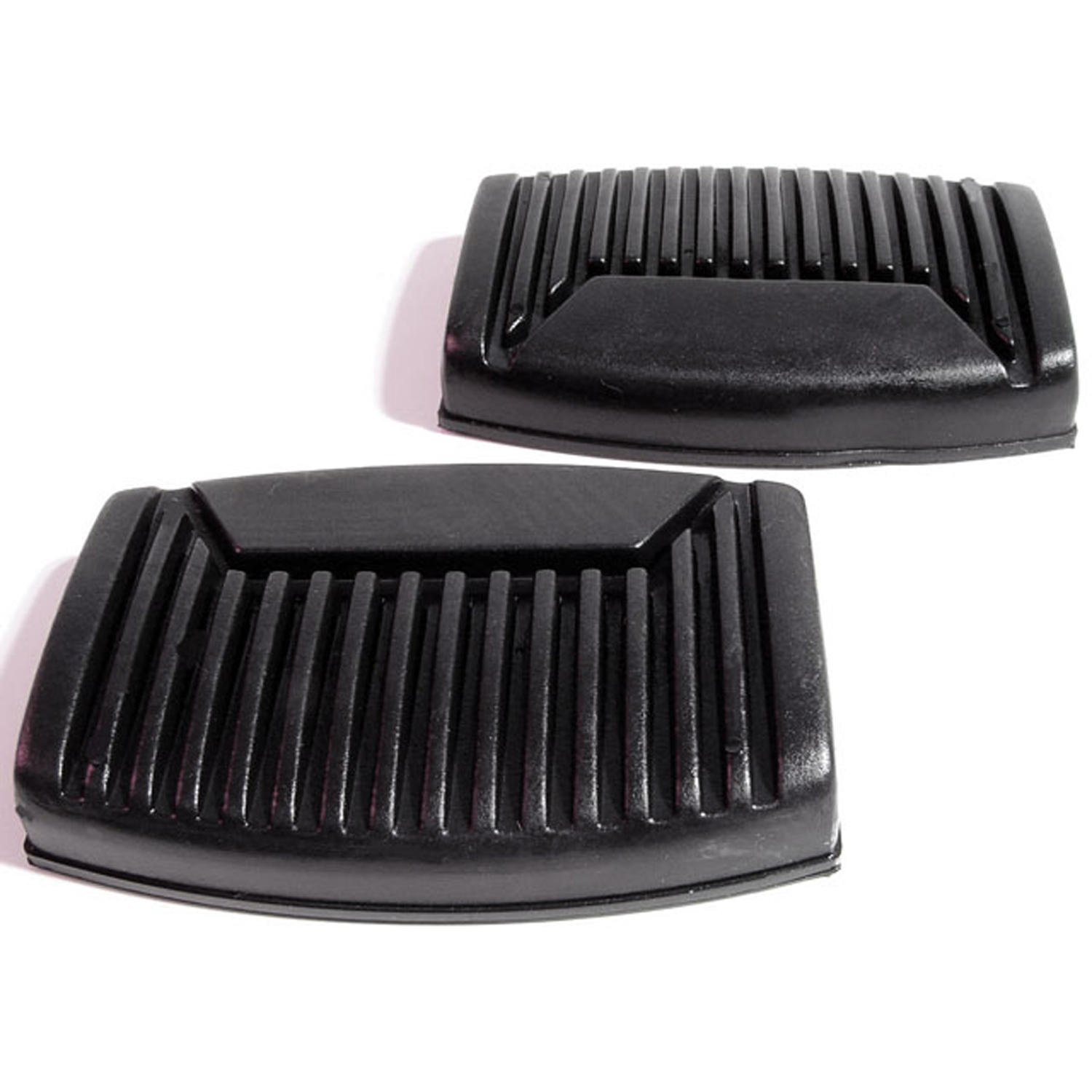 1973 Ford E-200 Econoline Clutch and Brake Pedal Pads. 3-1/4" wide X 2-1/4" long-CB 111Clutch and Brake Pedal Pads. 3-1/4" wide X 2-1/4" long. Pair
Why Choose Metro?
For over 100 years, Metro Moulded Parts has been the pinnacle of quality in classic car restoration parts. Our commitment to precision and authenticity in every component ensures a perfect fit and an OEM-level appearance.
- Expert Craftsmanship & Quality: Each part is a testament to our dedication to reliability and perfection, crafted from original designs and thoroughly tested.
- Advanced Technology: We use cutting-edge techniques to create flawless, long-lasting parts that surpass others in performance.
- SuperSoft Sponge – The Ultimate Door Seal: Not only are our door seals 30% softer than competitors', but they're also guaranteed to never leak. They effectively reduce wind and road noise, enhancing your classic car's comfort and driving experience.
- Proudly American: Our parts are a product of American craftsmanship, made in the USA with a spirit of excellence and heritage.
- Unrivaled Warranty: We back our products with a 30-year industry-leading warranty, a testament to our confidence in their quality.
Join us in preserving the legacy of classic cars with parts that are crafted for perfection, not just made.