
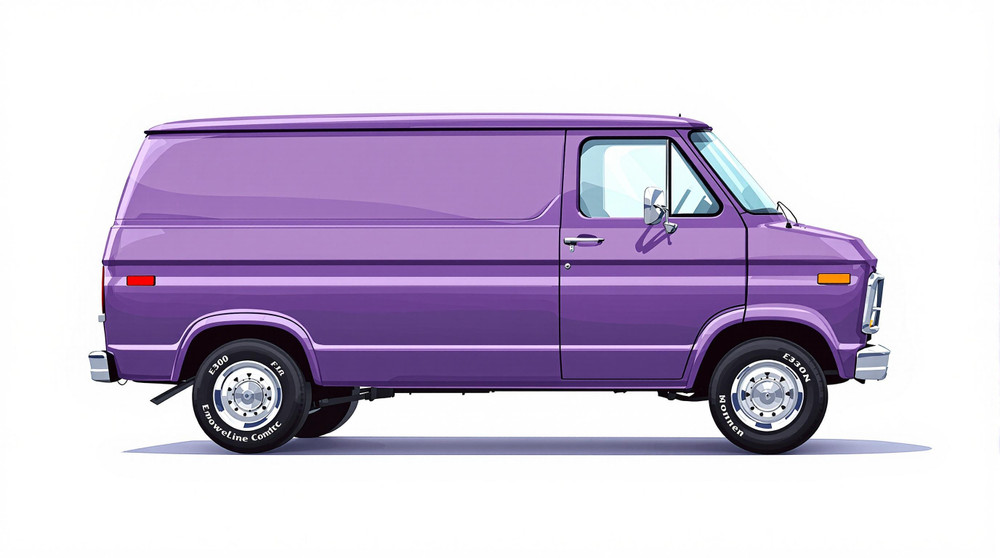
Image of 1973 Ford E-300 Econoline, Note: These illustrations use artistic license and may differ from actual historical models.
Performance Metrics
Fundamental Metrics
Emotional Appeal
MMP Rating
| Engine Specifications | |
|---|---|
| Engine Options: | 302 CID V8, 351 CID V8, 460 CID V8 |
| Displacement Range: | 302 - 460 cubic inches |
| Horsepower Range: | 140 - 220 HP |
| Torque: | 240 - 350 lb-ft |
| Compression Ratio: | 8.0:1 - 8.5:1 |
| Ignition System: | Conventional breaker-point ignition system |
| Cooling System: | Liquid-cooled |
| Performance Specifications | |
| 0-60 Time: | Estimated 12 - 15 seconds |
| 1/4 Mile Time: | Estimated 18 - 20 seconds |
| Top Speed: | 85 - 95 mph |
| Transmission and Drive | |
| Drive Type: | Rear-wheel drive |
| Transmission Type: | 3-speed automatic |
| Fuel and Efficiency | |
| Fuel System Type: | Carburetor |
| MPG: | Estimated 10 - 12 mpg |
| Dimensions and Brakes | |
| Brakes: | Front disc and rear drum brakes |
| Wheelbase: | 124 inches |
| Weight: | 4,500 - 5,000 lbs |
Note: Specifications for classic cars are given to the best of our ability, considering the limited and variant data available.
1973 Ford E-300 Econoline: A One-Ton Van With Room to Work
The 1973 Ford E-300 Econoline was built for people who needed a serious amount of space, not a car with a few extra seats. As Ford’s heavy-duty, one-ton Econoline van, it could serve as a work truck with an enclosed body, a passenger hauler, or the starting point for a camper conversion. Its squared-off shape and hardworking mechanicals made it a familiar sight on American roads during the booming van and recreational-vehicle culture of the 1970s.
Ford introduced the Econoline in 1961 as a compact, cab-over van. By 1968, the model had adopted a more conventional front-engine layout, with the engine set ahead of the driver rather than directly beneath the cab. The 1973 E-300 belonged to that second-generation design. It was a larger, more road-oriented van, though its engine cover still occupied space inside the cabin.
One interesting detail is that “E-300” described the heavy-duty class of the van, not a particular engine size. Buyers could choose among different powertrains and configurations, so two E-300s from the same year might feel quite different on the road. Exact equipment depended on body style, market, and how the van was ordered.
Boxy Styling, Built for Business
The E-300 wore the practical design language of a work vehicle. Its broad, nearly vertical windshield, flat sides, upright grille, and squared-off roof made the most of the available interior volume. A short hood extended ahead of the cabin, giving the van a more conventional profile than the original cab-over Econoline. Large side doors and broad rear doors helped make loading bulky equipment or cargo straightforward.
Inside, the cabin was functional rather than luxurious. Vinyl upholstery, hard-wearing trim, simple door panels, and durable flooring suited commercial use and were relatively easy to clean. The engine “doghouse” between the front seats was a defining feature: it gave the van a compact front end, but it also took up cabin room and could radiate heat and engine noise into the cab.
Instrumentation was straightforward, with the essentials close at hand. Depending on specification, equipment could include a heater and defroster, radio, power steering, or an automatic transmission. These were useful conveniences, but the E-300 did not offer the electronic driver aids or comfort features expected in a modern van. Its appeal was sturdy simplicity.
Ford offered a range of period paint colors, with choices varying by order and body configuration. White was a common fleet and commercial choice, while red, blue, green, and other brighter shades gave privately owned vans more personality. For a restored example, original paint codes and trim combinations are worth checking against factory documentation because the palette and availability could vary.
The E-300 was available in cargo-van and passenger-oriented forms, with details such as windows, seating, and interior trim changing the van’s purpose. Passenger versions were marketed within the Econoline and Club Wagon family. Depending on the configuration, buyers could also choose different wheelbases, roof and window arrangements, and conversion equipment. The classic cargo van remains the most recognizable E-300, while windowed passenger vans and camper conversions are especially appealing to enthusiasts today.
Why the Econoline Mattered
The 1973 E-300 was part of a broader shift in van design. Ford’s move away from the original cab-over layout placed the engine farther forward, creating a more conventional driving position and a front end that could be engineered for better road manners. The design also gave the Econoline a familiar truck-like stance while keeping the basic advantages of a van: a large enclosed load area and a relatively compact footprint compared with a box truck.
Its importance was not that it introduced a single revolutionary technology. Rather, it helped make the full-size van a flexible platform for American businesses, families, and specialty builders. Tradespeople used cargo versions as mobile workshops, while passenger vans and aftermarket conversions helped fuel the custom-van and camper scenes of the 1970s. That adaptable formula still defines the modern full-size van.
The E-300 stood apart from lighter vans through its one-ton-duty positioning. That made it attractive to buyers who needed greater carrying capacity or a sturdier base for upfitting. The trade-off was size and weight: it was not as nimble or economical as a smaller van, but it could take on jobs that lighter vehicles were not suited for.
Engines, Speed, and Road Manners
Engine availability varied by specification and market, but the 1973 Econoline range could be ordered with inline-six and V8 power. Depending on the build, examples may have a six-cylinder engine or a small-block or larger V8. Three-speed manual and automatic transmissions were among the period choices, with exact combinations depending on the engine and order. Because many vans have been modified over the decades, a buyer should verify the engine and transmission rather than rely on badges alone.
Ford did not commonly publish modern-style acceleration figures for every E-300 configuration, and performance changed substantially with engine, axle ratio, transmission, body equipment, and load. As a broad real-world estimate, a V8-powered van might take roughly 15 to 20 seconds to reach 60 mph, with a six-cylinder version or a heavily loaded example taking longer. A plausible top-speed range is around 80 to 90 mph, but that is not a recommendation for sustained cruising. Tire condition, gearing, brakes, and the van’s age matter far more than a theoretical maximum.
On the road, the E-300 feels substantial. Its truck-derived construction and heavy-duty suspension are suited to carrying weight, so an empty van can ride firmly and may feel unsettled over sharp bumps. Add a proper load and the suspension often feels more composed. The tall body catches crosswinds, and a long or high-roof conversion needs a calm hand on exposed highways. On winding roads, the steering and body response are slower than those of a passenger car, and the driver needs to plan ahead.
The driving experience is unmistakably mechanical. A V8 adds a low, familiar rumble, while the engine cover brings sound and warmth into the cabin. The steering is typically less precise than modern rack-and-pinion systems, and braking distances are longer than those of contemporary vehicles. Behind the wheel, the E-300 rewards smooth inputs, sensible speeds, and respect for its size.
Living With a 1973 E-300
These vans have served as delivery vehicles, contractor rigs, family transport, camper bases, and custom show vehicles. Today, a sound example can still be used for weekend travel or local hauling, but many owners preserve them as classics or transform them into retro campers. Their large interior is a major advantage, though fuel consumption is typically high by modern standards, especially with a V8, tall body, or heavy conversion.
Mechanical repairs are often approachable for an experienced home mechanic. The engines and drivetrains come from a period when many systems were straightforward and repairable without specialized diagnostic equipment. Routine service parts can be found through classic Ford suppliers and general parts channels, but availability varies by component. Body parts, trim, glass, and original interior pieces may take more searching.
Rust is a major inspection point. Check the frame, floor, step areas, wheel arches, door bottoms, and windshield surrounds. Also inspect the front suspension, steering components, brakes, cooling system, and the doghouse for signs of heat damage or poor repair. A van that has spent years as a work vehicle or camper may hide corrosion beneath flooring, insulation, or conversion cabinetry. Before buying, confirm that the tires are correctly rated for the vehicle’s weight and intended use.
Van Trivia and Common Complaints
The E-300’s biggest claim to fame is its versatility rather than a single racing record or limited-edition model. It was built as a working platform, and many were customized after leaving the factory. That makes original, unmodified examples interesting to collectors, while well-executed camper and custom builds have their own following.
There is no widely recognized E-300 speed or endurance record that defines the 1973 model. Production figures broken down specifically by E-300 body style and equipment are also difficult to establish from commonly available public records. A reasonable, explicitly rough estimate is that production of 1973 E-300s across body styles likely reached the thousands and could have been in the low tens of thousands. That is a best-guess range, not a confirmed factory total.
Common criticisms are familiar to anyone who has driven an old full-size van: heavy steering, a firm ride when empty, substantial wind sensitivity, modest fuel economy, and considerable engine heat and noise in the cabin. The doghouse can also make front-seat access and servicing less convenient. Those shortcomings are part of the trade-off for a durable, spacious vehicle built to carry people or equipment.
Collector Values and Availability
Values depend heavily on rust, mechanical condition, originality, body style, and the quality of any conversion. As a broad 2026 guide in the U.S. market, a rough project or non-running van might sell for about $2,000 to $6,000. A usable driver with sound structure could fall around $7,000 to $15,000, while a clean, well-restored, or thoughtfully converted example may bring roughly $18,000 to $35,000 or more. Exceptional restorations and professionally built campers can exceed that range, but asking prices are not the same as completed sale prices.
The 1973 E-300 is uncommon compared with mass-market passenger cars, but it is not necessarily rare in the strict collector sense. Condition is the real scarcity. Work vans often accumulated heavy mileage, suffered corrosion, or were modified, so an intact example with documented history can be much harder to find than the original production numbers suggest.
Prices for classic vans have generally benefited from renewed interest in vintage campers and period-correct custom builds. That does not mean every E-300 is appreciating quickly. A rusty project can remain difficult to sell, while a safe, dependable, well-presented van is more likely to attract buyers. Over the long term, solid examples may hold or gradually gain value, but restoration costs can easily exceed the market value of an ordinary build.
A Working Classic With Lasting Appeal
The 1973 Ford E-300 Econoline combined one-ton utility with the flexibility that made full-size vans an American staple. Its upright styling, roomy cargo area, straightforward mechanicals, and broad range of possible uses helped it move easily from jobsite to family duty to camper conversion. It is not fast, quiet, or especially economical, but it has the honest character of a vehicle designed to get a practical job done.
For collectors and van enthusiasts, the E-300’s appeal lies in that mix of usefulness and personality. Find one with a solid body, sound mechanicals, and a configuration that suits your plans, and you have more than a vintage van. You have a rolling reminder of how one adaptable Ford helped shape the American full-size van.
1973 Ford E-300 Econoline Catalog of Parts
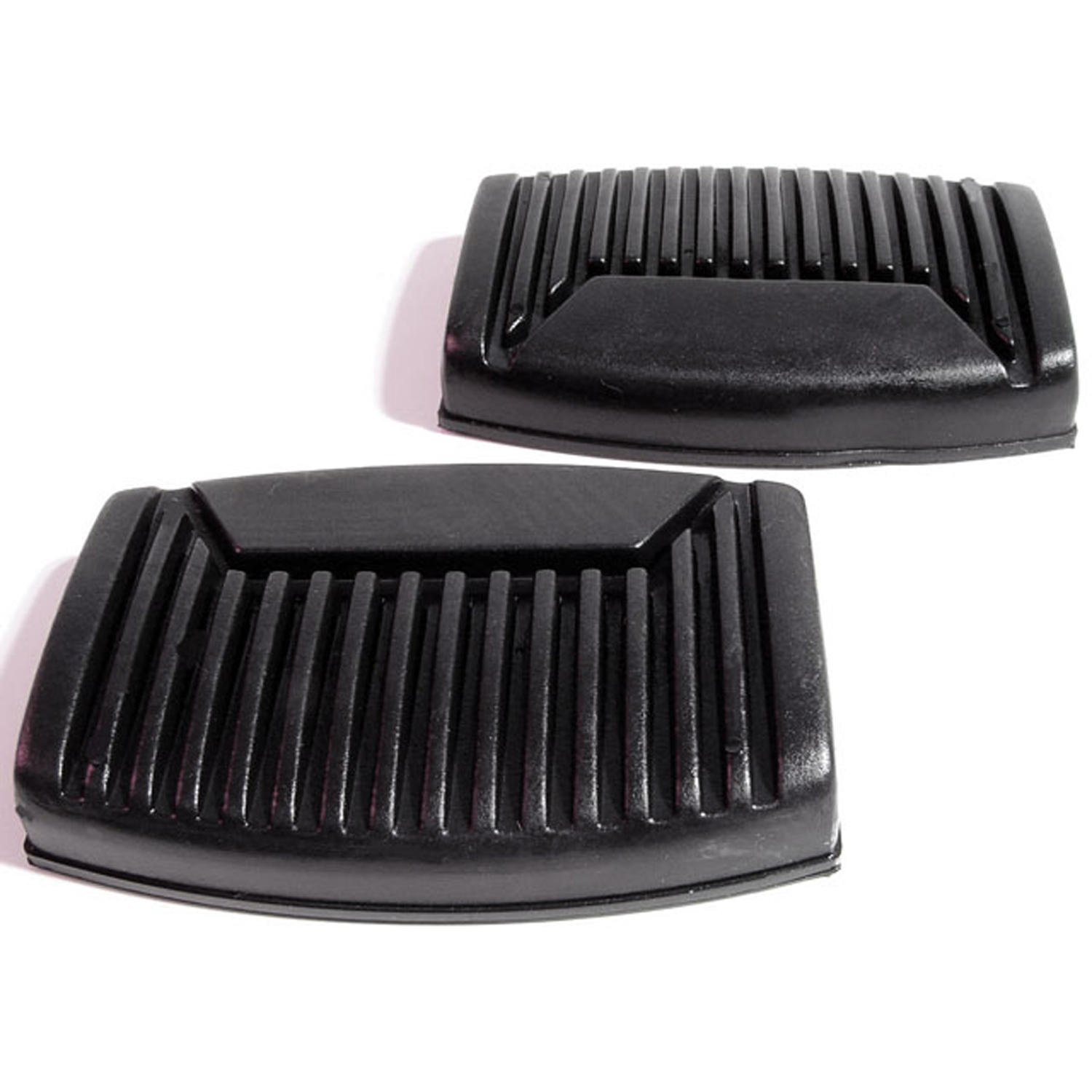 1973 Ford E-300 Econoline Clutch and Brake Pedal Pads. 3-1/4" wide X 2-1/4" long-CB 111Clutch and Brake Pedal Pads. 3-1/4" wide X 2-1/4" long. Pair
Why Choose Metro?
For over 100 years, Metro Moulded Parts has been the pinnacle of quality in classic car restoration parts. Our commitment to precision and authenticity in every component ensures a perfect fit and an OEM-level appearance.
- Expert Craftsmanship & Quality: Each part is a testament to our dedication to reliability and perfection, crafted from original designs and thoroughly tested.
- Advanced Technology: We use cutting-edge techniques to create flawless, long-lasting parts that surpass others in performance.
- SuperSoft Sponge – The Ultimate Door Seal: Not only are our door seals 30% softer than competitors', but they're also guaranteed to never leak. They effectively reduce wind and road noise, enhancing your classic car's comfort and driving experience.
- Proudly American: Our parts are a product of American craftsmanship, made in the USA with a spirit of excellence and heritage.
- Unrivaled Warranty: We back our products with a 30-year industry-leading warranty, a testament to our confidence in their quality.
Join us in preserving the legacy of classic cars with parts that are crafted for perfection, not just made.