

Image of 1973 Ford M-400, Note: These illustrations use artistic license and may differ from actual historical models.
Performance Metrics
Fundamental Metrics
Emotional Appeal
MMP Rating
| Engine Specifications | |
|---|---|
| Engine: | 5.8L Windsor V8, 6.4L FE V8 |
| Displacement: | 351 - 390 cubic inches |
| Horsepower: | 150 - 265 hp |
| Torque: | 275 - 405 lb-ft |
| Compression Ratio: | 8.0:1 - 10.5:1 |
| Ignition System: | Conventional, distributor |
| Cooling System: | Liquid-cooled |
| Performance Specifications | |
| 0-60 Time: | Estimated 10 - 12 seconds |
| 1/4 Mile Time: | Estimated 17 - 19 seconds |
| Top Speed: | 100 - 120 mph |
| Transmission and Drive | |
| Drive Type: | Rear-wheel drive |
| Transmission Type: | 3-speed automatic, 4-speed manual |
| Fuel and Efficiency | |
| Fuel System Type: | Carburetor |
| MPG: | Estimated 10 - 12 mpg |
| Dimensions and Brakes | |
| Brakes: | Front disc, rear drum |
| Wheelbase: | 140 inches |
| Weight: | 4,500 - 5,000 lbs |
Note: Specifications for classic cars are given to the best of our ability, considering the limited and variant data available.
1973 Ford M-400: The Motorhome Chassis Behind the Coach
A 1973 Ford M-400 is less a truck you admire for its pickup-bed styling and more the sturdy foundation beneath a rolling home. Ford built the M-400 as a medium-duty motorhome chassis, then supplied it to recreational-vehicle manufacturers that added the coach body, furnishings, and much of the finished vehicle’s personality.
That distinction matters: there was no single, standard 1973 M-400 motorhome. Two examples could share a Ford frame and drivetrain but look entirely different once their coachbuilders were done. The M-400 belongs to the generation of American RVs that turned road travel into a self-contained family holiday, just as motorhome ownership was becoming a mainstream dream.
Its timing also makes it an interesting artifact. The 1973 model year arrived amid rising concerns about fuel economy and tightening emissions rules. A large, heavy motorhome with a big V8 was built for comfort and carrying capacity, not thrift. The appealing twist is that the Ford name on the chassis may be the most familiar part of a vehicle whose body, layout, and décor were created by another company.
Ford M-400 Design and Construction
The M-400’s appearance depended largely on the finished RV. Many motorhomes used a cab-forward or cutaway-style arrangement, with Ford’s truck cab forming the front of a larger, coachbuilt body. The cab’s broad windshield, upright stance, substantial hood, and simple truck-like lines gave the vehicle a purposeful face. Behind it, the coach could be a squared-off box with over-cab sleeping space, a more integrated motorhome body, or another layout chosen by the builder.
Inside the driving cab, the look and feel were typical of a working Ford truck of the period: durable vinyl, hard-wearing trim, straightforward gauges, and controls designed to be understood without fuss. The cab was not a luxury-car environment, although equipment such as power steering and power-assisted brakes could make a large vehicle easier to manage. The living area was a separate story. Cabinetry, upholstery, appliances, flooring, and sleeping arrangements varied by coachbuilder and trim level, ranging from practical and plain to surprisingly homey.
Ford supplied the rolling platform, not a universal catalogue of RV colors or interiors. Exterior paint and graphics were usually selected by the motorhome manufacturer, so period examples might wear cream, white, tan, or two-tone schemes with bold stripes. Cream and white paired with contrasting brown, gold, or colored graphics were common visual choices across vintage RVs, but the exact palette depended on the coach and its first owner.
Body styles were likewise determined by the builder. The M-400 could underpin different motorhome layouts, including compact coach designs and larger family-oriented bodies. Over-cab sleeping space was especially useful on cab-forward and Class C-style layouts because it added beds without taking up as much room in the main cabin. The M-400’s identity is therefore best understood as a chassis designation, not a single body style or trim package.
Engine, Chassis, and Period Technology
Many 1970s Ford motorhome chassis were equipped with a big-block 460-cubic-inch V8 and a heavy-duty automatic transmission, often Ford’s C6. However, equipment could vary by build date, market, and chassis specification. A surviving vehicle’s engine, axle, transmission, and gross vehicle weight rating should be confirmed from its identification plate and component numbers rather than assumed from the M-400 badge alone.
For its intended work, the M-400 favored robust, familiar mechanicals over cutting-edge technology. Its truck-derived construction was meant to carry a heavy coach, passengers, water, supplies, and camping equipment. Power steering and assisted braking were valuable features on a vehicle of this size, but the design remained fundamentally mechanical by modern standards. There were no electronic stability systems, backup cameras, or engine computers managing the driving experience.
That simplicity is part of the appeal today. A mechanic who understands vintage Ford trucks can often recognize the basic service approach, though motorhome packaging can make access difficult. The coachbuilder’s wiring, plumbing, appliances, and added equipment are often more complicated than the Ford powertrain itself.
Why the M-400 Matters
The M-400 represents an important stage in the growth of the American motorhome industry. Ford offered a purpose-built platform with the load-carrying ability and familiar service network that coachbuilders needed. RV companies could concentrate on designing living space instead of engineering a complete heavy vehicle from scratch.
That division of labor helped make motorhomes more varied and widely available. It also explains why the M-400 does not have the same kind of design legacy as a landmark passenger car. Its influence was practical: it supported an expanding market for integrated, self-propelled vacation vehicles and helped establish the truck-chassis motorhome as a recognizable category.
Compared with a conventional pickup, an M-400-based RV was built around a much greater payload and a very different mission. Compared with a purpose-designed modern motorhome chassis, it feels more like a heavy truck adapted for travel. That blend of work-truck hardware and coachbuilt living space is precisely what makes surviving examples distinctive.
1973 Ford M-400 Performance and Road Manners
There is no single factory top-speed or 0-to-60-mph figure that accurately describes every 1973 M-400. Ford supplied a chassis, and coachbuilders fitted bodies of different weights and shapes. Tire size, axle gearing, engine choice, transmission, load, and mechanical condition all affect performance. Period test data for individual finished motorhomes is scarce, so precise figures should be treated with caution.
As a broad estimate, a sound, fully equipped example may take roughly 20 to 30 seconds or more to reach 60 mph, especially when carrying passengers and travel gear. A light or unusually well-preserved build could differ. Top speed is similarly dependent on gearing and condition; many owners will find that sustained speeds around 55 to 65 mph are more comfortable and sensible than chasing a theoretical maximum. These are practical estimates, not guaranteed Ford specifications.
On the road, the M-400 feels tall, heavy, and distinctly truck-like. Its high seating position gives the driver a commanding view, while the large steering wheel and broad body demand deliberate inputs. Wind can push a coach around, and narrow roads require planning well ahead. Broken pavement and expansion joints are felt through the chassis, though a well-maintained suspension and properly loaded coach can make the ride more settled.
The engine experience is part of the charm. A large V8 produces a low, purposeful rumble and works audibly when the vehicle is climbing or accelerating. The automatic transmission and power-assisted controls, when fitted and functioning properly, make the M-400 more approachable than its size suggests. Still, it rewards smooth driving, generous following distance, and patience on hills rather than quick reactions or sporty cornering.
Living With a Vintage Ford Motorhome
The M-400’s natural role is recreational travel, not commuting or racing. It can serve as a show vehicle, a weekend camper, or a rolling piece of 1970s Americana. Some owners keep them as stationary guest rooms or display vehicles, especially when the coach interior is attractive but the RV needs more work than they want to take on.
Routine engine and chassis maintenance can be manageable for an experienced owner, particularly when the vehicle retains common Ford components. The hard part is often age-related rather than M-400-specific. Long periods of storage can leave fuel systems, cooling systems, brakes, tires, seals, and electrical connections needing attention. Parts for the underlying Ford mechanicals may be easier to locate than original coach fittings, cabinetry, appliances, or body panels.
Before buying, inspect the coach carefully for roof leaks, soft flooring, wall delamination, water damage, and signs of past repairs. Check the frame, suspension, brakes, steering, tires, and cooling system, then confirm that the engine and transmission match the vehicle’s records where possible. A running V8 is only one part of the equation: a structurally damaged or waterlogged motorhome can require far more work than a healthy truck drivetrain.
Ford M-400 Facts and Common Criticisms
The most useful fact about the M-400 is also the easiest one to miss: it identifies the Ford chassis, not necessarily the finished motorhome’s manufacturer. The coachbuilder’s badge and model name may be more important when researching the living area, original equipment, or restoration parts.
There is no widely recognized M-400 record for speed, endurance, or sales, and no single celebrity connection defines the model. Its claim to historical interest is broader and more relatable: it is part of the generation that helped put self-contained motorhome travel within reach of American families. Nor is there a dependable public production total for 1973 M-400 chassis alone. Because Ford supplied chassis to multiple coachbuilders and records are incomplete, a precise number would be speculation.
Owners and critics tend to agree on the main drawbacks: substantial fuel consumption, slow acceleration, large dimensions, and the ongoing maintenance demands of a vehicle that may be more than half a century old. Coach condition can be an even bigger concern than the Ford mechanicals. On the positive side, the straightforward truck-based layout and unmistakable vintage character continue to win fans.
1973 Ford M-400 Values and Availability
Values depend more on the complete motorhome’s condition, coachbuilder, layout, and documentation than on the M-400 chassis alone. As a rough U.S. market guide, a non-running or heavily deteriorated project might sell for about $1,000 to $5,000. A running but worn example could bring roughly $5,000 to $12,000, while a clean, roadworthy motorhome with a sound interior may reach approximately $12,000 to $25,000. An unusually well-restored or especially desirable coach could exceed that range, but buyers should compare similar finished RVs rather than treat these numbers as fixed values.
Survivors are uncommon in the sense that few 1970s motorhomes remain in excellent condition, but the M-400 is not a documented limited edition. They appear periodically in online listings, vintage-RV groups, and regional classifieds, often needing mechanical or coach repairs. Any estimate of total 1973 production would be a best guess rather than a verified factory figure; the scattered records and multiple coachbuilders make a defensible count difficult.
Prices for ordinary vintage motorhomes are driven heavily by usability and condition, not simply age. A complete, road-ready example may attract more interest than a rare but badly deteriorated one. Well-restored vintage RVs have gained attention as nostalgia pieces, but repair costs can outpace resale value, so the M-400 is best approached as a vehicle to enjoy rather than a guaranteed investment.
The M-400’s Lasting Appeal
The 1973 Ford M-400 is a working foundation with a second life: Ford supplied the truck hardware, and RV builders transformed it into a home on wheels. Its big-V8 character, truck-like road manners, and coachbuilder-specific styling capture a period when family travel was becoming more self-contained and adventurous.
It is not quick, economical, or easy to hide in a parking lot. But for enthusiasts who appreciate vintage trucks and classic motorhomes, the M-400 offers something more memorable than polished performance: a tangible piece of the open-road era, built to carry both a heavy coach and a generous slice of American travel history.
1973 Ford M-400 Catalog of Parts
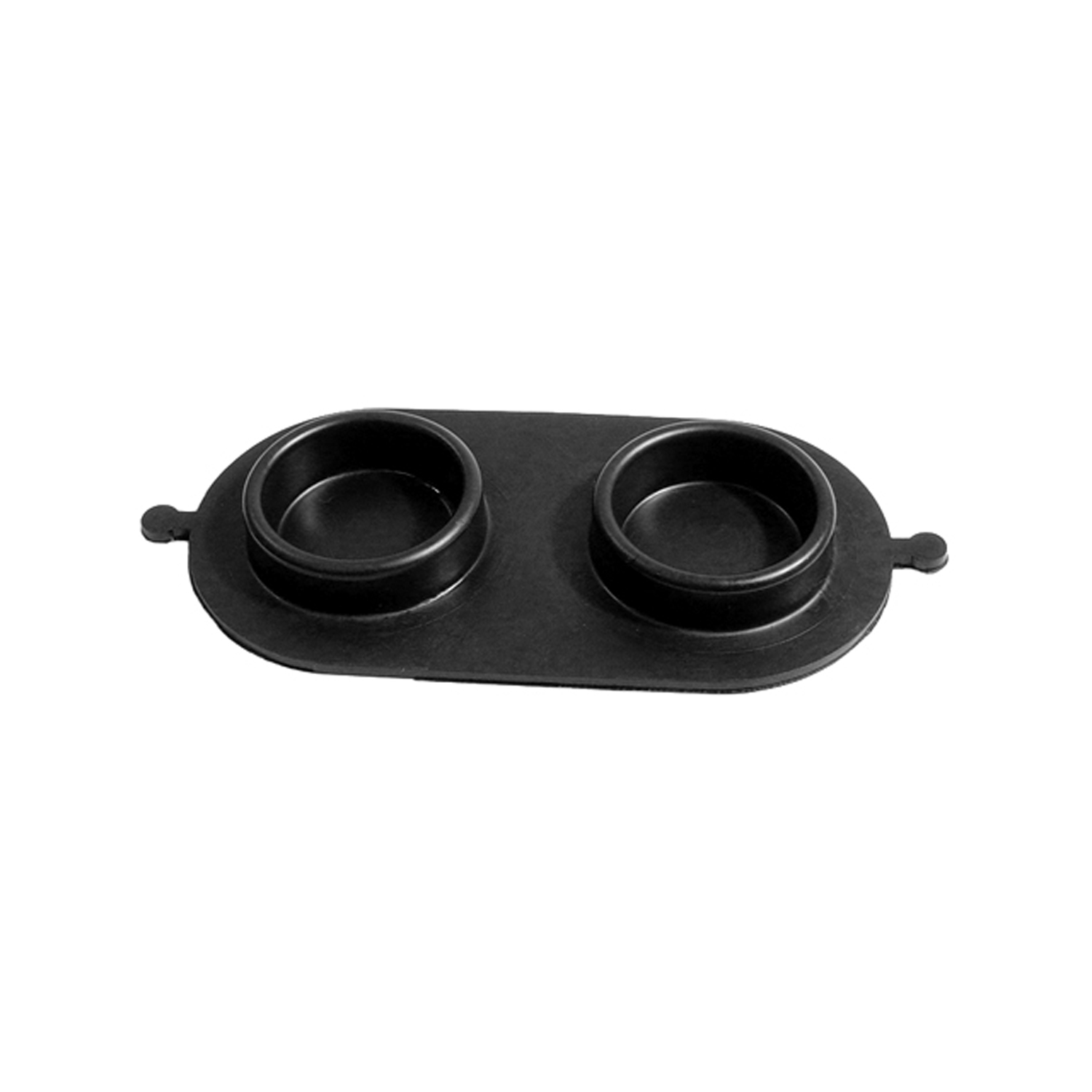 1973 Ford M-400 Brake Master Cylinder Cover Seal. Replaces OEM #C7AZ2167-A-RP 2-BBrake Master Cylinder Cover Seal. Replaces OEM #C7AZ2167-A. Each
Why Choose Metro?
For over 100 years, Metro Moulded Parts has been the pinnacle of quality in classic car restoration parts. Our commitment to precision and authenticity in every component ensures a perfect fit and an OEM-level appearance.
- Expert Craftsmanship & Quality: Each part is a testament to our dedication to reliability and perfection, crafted from original designs and thoroughly tested.
- Advanced Technology: We use cutting-edge techniques to create flawless, long-lasting parts that surpass others in performance.
- SuperSoft Sponge – The Ultimate Door Seal: Not only are our door seals 30% softer than competitors', but they're also guaranteed to never leak. They effectively reduce wind and road noise, enhancing your classic car's comfort and driving experience.
- Proudly American: Our parts are a product of American craftsmanship, made in the USA with a spirit of excellence and heritage.
- Unrivaled Warranty: We back our products with a 30-year industry-leading warranty, a testament to our confidence in their quality.
Join us in preserving the legacy of classic cars with parts that are crafted for perfection, not just made.