

Image of 1974 Ford Custom 500, Note: These illustrations use artistic license and may differ from actual historical models.
Performance Metrics
Fundamental Metrics
Emotional Appeal
MMP Rating
| Engine Specifications | |
|---|---|
| Engine Options: | 302 CID 2V V8, 351 CID 2V V8, 400 CID 2V V8, 429 CID 4V V8 |
| Displacement Range: | 302 - 429 cu in |
| Horsepower Range: | 140 - 360 hp (approximately) |
| Torque: | 239 - 480 lb-ft (approximately) |
| Compression Ratio: | 8.0:1 - 10.5:1 (approximately) |
| Ignition System: | Conventional breaker-point ignition system |
| Cooling System: | Liquid-cooled |
| Performance Specifications | |
| 0-60 Time: | 10 - 12 seconds (approximately) |
| 1/4 Mile Time: | 17 - 19 seconds (approximately) |
| Top Speed: | 115 - 130 mph (approximately) |
| Transmission and Drive | |
| Drive Type: | Rear-wheel drive |
| Transmission Type: | 3-speed automatic, 4-speed manual |
| Fuel and Efficiency | |
| Fuel System Type: | Carburetor |
| MPG: | 10 - 14 mpg (approximately) |
| Dimensions and Brakes | |
| Brakes: | Front disc, rear drum |
| Wheelbase: | 114.0 in |
| Weight: | 3,500 - 4,000 lbs (approximately) |
Note: Specifications for classic cars are given to the best of our ability, considering the limited and variant data available.
1974 Ford Custom 500: A Full-Size Classic
The 1974 Ford Custom 500 was built for drivers who wanted the room and road presence of a full-size American car without paying for a luxury trim package. Made by Ford Motor Company, it sat near the practical end of Ford’s full-size lineup, below more richly appointed Galaxie 500 and LTD models. Its appeal today is much the same: honest, spacious, mechanically straightforward, and unmistakably from the era of big American sedans.
The Custom 500 arrived at a pivotal moment. The 1973 oil crisis had made fuel economy a national concern, while emissions rules and new federal crash requirements were reshaping cars. Yet Ford’s 1974 full-size models remained substantial machines, with broad seats, long hoods, and a comfortable ride. One detail that captures the times is the car’s imposing bumper design: the rear bumper was built to meet new federal impact standards, adding to the substantial look that became a hallmark of mid-1970s cars.
Exterior and Interior Design
The Custom 500 wore a clean, formal shape rather than the elaborate trim and decorative brightwork found on upscale models. Its long hood, squared-off roofline, upright grille, and broad rear quarters gave it a sturdy, almost architectural appearance. Chrome accents were present, but generally restrained. The large bumpers and tall body sides made the car look ready for hard use, whether parked outside a family home or lined up in a government fleet.
Body-style availability could vary by market and production configuration, but the Custom 500 was chiefly offered as a two-door or four-door sedan. The four-door sedan was the practical choice for families and fleet buyers, while the two-door had a slightly sportier profile. These were conventional sedans, not pillarless hardtops, so the fixed center roof pillar added strength and helped distinguish them from some more expensive Ford models.
Inside, the Custom 500 favored durability over luxury. Buyers could expect a wide front bench seat, straightforward controls, and materials chosen to withstand everyday use. Depending on equipment, upholstery could be vinyl or cloth-and-vinyl, with more basic trim than in the LTD. The dashboard was broad and easy to read, while the column-mounted gear selector left the front seat area open. Optional equipment such as air conditioning, power steering, power brakes, upgraded upholstery, and an AM radio could make the cabin much more comfortable.
Ford offered a range of exterior colors, with choices generally spanning traditional whites, blacks, reds, blues, greens, and earth tones. Availability depended on the paint program and trim combination. White and darker colors suit the Custom 500’s formal shape particularly well, while period greens, golds, and browns give surviving examples a distinctive 1970s character.
Features for the 1970s
The Custom 500 was not a showcase for futuristic electronics. Its strengths were practical features and familiar engineering. Power steering and power-assisted brakes were popular options, and automatic transmissions were common. Front disc brakes were available and fitted to many examples, though equipment could differ by configuration. Safety equipment and the car’s structure reflected the standards of the period, including federally influenced bumper design.
Engine choices varied with the car’s configuration and intended use. Common V8 options included 302-, 351-, and 400-cubic-inch engines, while larger-displacement power, including the 460-cubic-inch V8, was available in parts of Ford’s full-size range. A six-cylinder engine could also be found in some lower-specification applications. As with any old Ford, the best way to establish what a particular car was built with is to check its VIN, data plate, and engine stamping rather than relying on badges or seller descriptions.
Why the Custom 500 Matters
The 1974 Custom 500 was not a radical design breakthrough, and that is part of its significance. It represents the full-size American sedan at a turning point: still large and comfort-focused, but being pushed by fuel concerns, tighter emissions requirements, and changing safety rules. Ford kept the basic formula recognizable while adapting its cars to a new regulatory and economic landscape.
Compared with an LTD, the Custom 500 offered less decorative trim and a more workmanlike interior. Compared with smaller cars, it delivered more cabin room, a broad bench seat, and a settled highway ride. It also suited fleet use, where straightforward equipment and familiar Ford mechanicals mattered more than luxury details. Its lasting influence is less about a single feature than about the role it represents: the roomy, rear-wheel-drive American sedan that served families, businesses, and public agencies before the market shifted toward smaller cars.
Performance and Road Manners
Performance depends heavily on which engine, axle ratio, transmission, and equipment a car has. A 302-powered example is generally more relaxed than quick, while a 351 or 400 provides stronger low-speed pull. A 460-equipped car can feel surprisingly forceful for its size, especially when accelerating onto a highway. As broad estimates rather than guaranteed factory test figures, many examples are likely to reach 60 mph in roughly 11 to 16 seconds. A strong V8 car may approach the quicker end of that range; a heavier or lower-powered example may take longer.
Top speed is similarly dependent on gearing, condition, and tires. A healthy V8 Custom 500 might reach approximately 100 to 110 mph, but these cars were designed for comfortable cruising, not sustained high-speed driving. Today, tire age, brake condition, and cooling-system health matter much more than a theoretical maximum speed.
On the road, the Custom 500 feels unmistakably large. Its long wheelbase and soft suspension take the sting out of ordinary bumps and broken pavement, making it a relaxed companion on open roads. The trade-off is body lean and a less precise feel on winding roads. Crosswinds can also make a tall, broad-bodied sedan require steady correction. The steering is typically light with power assist, and the driver sits behind a wide hood that gives the car a commanding presence.
With a V8, the soundtrack is a low, unhurried rumble rather than a high-revving bark. The automatic transmission encourages smooth acceleration, and the car feels most at home rolling along at a steady pace. It is less a sports sedan than a comfortable cruiser, built to carry people and luggage without making a long trip feel like work.
Living With a 1974 Ford Custom 500
Today, most Custom 500s are used as weekend cruisers, nostalgia cars, or occasional show vehicles. Some are restored to original specification, while others serve as approachable project cars or are customized with period-style wheels and suspension changes. Their size and fuel consumption make them less practical as everyday transportation than a modern sedan, especially for owners who regularly face crowded parking and high fuel prices.
Routine maintenance is familiar to anyone who has worked on a traditional American car: ignition and carburetor service, cooling-system upkeep, brake work, suspension repairs, and attention to aging rubber components. Many mechanical parts are shared with other Ford models of the period, which can make common repairs manageable for a home mechanic. However, trim, interior pieces, and model-specific body parts can be harder to source. Before buying, inspect the frame and body carefully for rust, especially around floors, lower body panels, wheel openings, and the trunk.
Custom 500 Trivia and Common Criticisms
The Custom 500’s unpretentious specification helped make it suitable for fleet service, including use by businesses and government agencies. That association is one reason many people connect large 1970s Fords with police cars. It is worth being precise, though: a Custom 500 badge alone does not mean a car was a police-package vehicle. Fleet equipment and performance packages varied, and many surviving cars were ordinary civilian sedans.
There is no widely recognized production record, speed record, or endurance achievement that belongs specifically to the 1974 Custom 500. Nor is there a famous celebrity ownership story that defines the model. Its more interesting claim to fame is its everyday history: cars like it moved families, workers, and public-service crews through a decade of rapid change.
The criticisms are familiar. The Custom 500 is thirsty by modern standards, its handling is soft, and its size can make parking a chore. The basic trim can also feel plain beside a richly equipped LTD. In return, owners get a roomy cabin, a comfortable ride, and uncomplicated old-school character.
Collector Value and Availability
Custom 500 production totals for the 1974 model year are not consistently reported in accessible model-by-model references. A reasonable working estimate is several tens of thousands of cars, perhaps around 50,000 to 100,000 across the relevant sedan configurations, but that should be treated as an informed estimate rather than a confirmed factory figure. Many were used hard as everyday or fleet cars, so clean survivors are less common than the original production number might suggest.
In the current U.S. market, a project or rough driver might sell for roughly $2,000 to $5,000. A solid, running example in presentable condition may bring about $5,000 to $10,000, while a carefully restored or unusually well-preserved car could reach $10,000 to $18,000 or more. Condition, rust, originality, engine, documentation, and local demand have a major effect on price. Exceptional cars can exceed these ranges, but the Custom 500 generally remains more affordable than a comparable top-trim Ford.
Values have tended to be steady rather than explosive. Interest in 1970s American cars and nostalgia can help well-preserved examples, but the Custom 500 is not usually a high-dollar investment car. Buyers are often drawn to its character and value rather than the promise of rapid appreciation.
A Straightforward Ford With Staying Power
The 1974 Ford Custom 500 captures a moment when American cars were still big, comfortable, and built around familiar V8 power, even as the industry faced fuel shortages and new regulations. Its restrained styling, spacious cabin, and serviceable mechanicals made it a practical alternative to Ford’s more ornate full-size models. It may not be the rarest or most prestigious classic, but a clean Custom 500 offers something increasingly distinctive: the relaxed presence of a traditional full-size Ford and an honest connection to a changing era of motoring.
1974 Ford Custom 500 Catalog of Parts
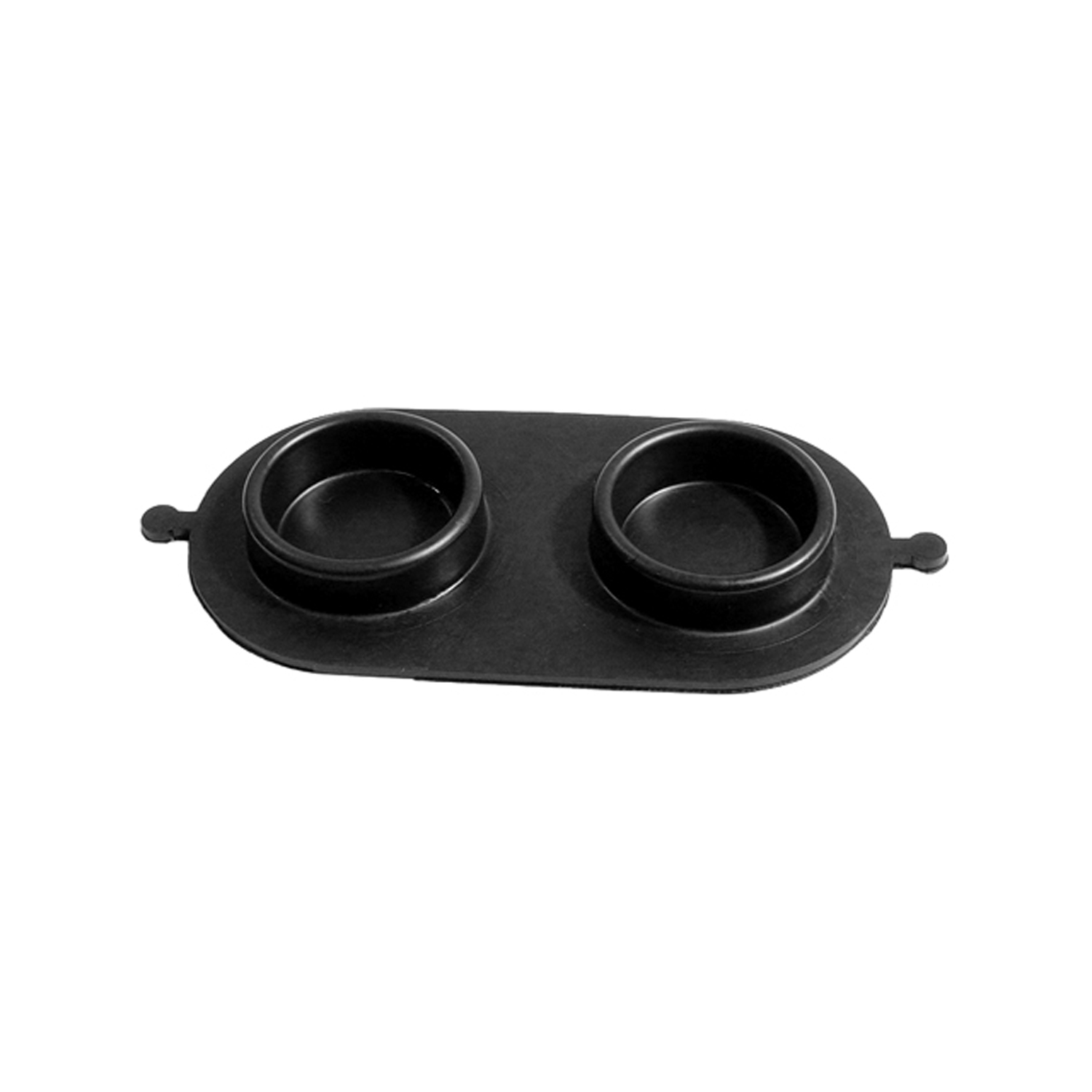 1974 Ford Custom 500 Brake Master Cylinder Cover Seal. Replaces OEM #C7AZ2167-A-RP 2-BBrake Master Cylinder Cover Seal. Replaces OEM #C7AZ2167-A. Each
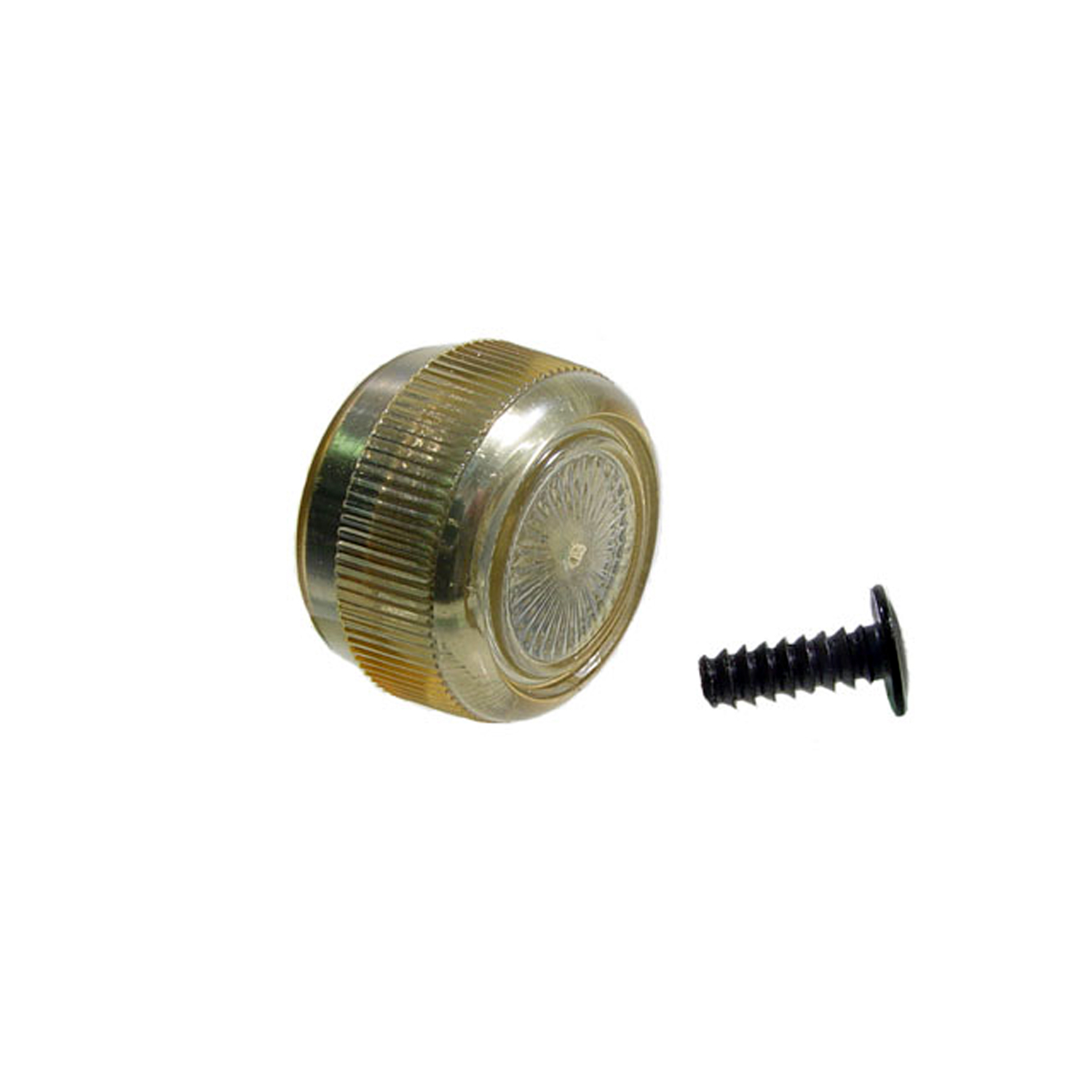 1974 Ford Custom 500 Window Crank Handle Knob and Attaching Parts. Clear. Each-RP 400-BWindow Crank Handle Knob and Attaching Parts. Clear. Each
 1974 Ford Custom 500 Rear Windshield Reveal Molding Clip. Made of steel. Each-WF 228Rear Windshield Reveal Molding Clip. Made of steel. Each
Why Choose Metro?
For over 100 years, Metro Moulded Parts has been the pinnacle of quality in classic car restoration parts. Our commitment to precision and authenticity in every component ensures a perfect fit and an OEM-level appearance.
- Expert Craftsmanship & Quality: Each part is a testament to our dedication to reliability and perfection, crafted from original designs and thoroughly tested.
- Advanced Technology: We use cutting-edge techniques to create flawless, long-lasting parts that surpass others in performance.
- SuperSoft Sponge – The Ultimate Door Seal: Not only are our door seals 30% softer than competitors', but they're also guaranteed to never leak. They effectively reduce wind and road noise, enhancing your classic car's comfort and driving experience.
- Proudly American: Our parts are a product of American craftsmanship, made in the USA with a spirit of excellence and heritage.
- Unrivaled Warranty: We back our products with a 30-year industry-leading warranty, a testament to our confidence in their quality.
Join us in preserving the legacy of classic cars with parts that are crafted for perfection, not just made.