

Image of 1974 Ford E-100 Econoline, Note: These illustrations use artistic license and may differ from actual historical models.
Performance Metrics
Fundamental Metrics
Emotional Appeal
MMP Rating
| Engine Specifications | |
|---|---|
| Engine: | 240 CID I6, 302 CID Windsor V8, 351 CID Windsor V8, 460 CID Lima V8 |
| Displacement: | 240-460 CID |
| Horsepower: | 100-225 HP |
| Torque: | 180-350 lb-ft |
| Compression Ratio: | 8.0:1 - 8.5:1 |
| Ignition System: | Conventional distributor with points |
| Cooling System: | Liquid-cooled |
| Performance Specifications | |
| 0-60 Time: | Estimated 10-15 seconds |
| 1/4 Mile Time: | Estimated 17-20 seconds |
| Top Speed: | 85-100 mph |
| Transmission and Drive | |
| Drive Type: | Rear-wheel drive |
| Transmission Type: | 3-speed automatic, 4-speed manual |
| Fuel and Efficiency | |
| Fuel System Type: | Carburetor |
| MPG: | Estimated 10-15 mpg |
| Dimensions and Brakes | |
| Brakes: | Front disc and rear drum brakes |
| Wheelbase: | 124 inches |
| Weight: | 4,000-5,000 lbs |
Note: Specifications for classic cars are given to the best of our ability, considering the limited and variant data available.
1974 Ford E-100 Econoline: A Classic Van with a Working-Class Soul
The 1974 Ford E-100 Econoline is a classic American van built for hauling tools, carrying passengers, and turning an empty cargo bay into something entirely its owner’s own. It came from Ford Motor Company, whose Econoline line began in 1961 as a smaller, more maneuverable alternative to full-size delivery trucks. By 1974, the Econoline had grown into a more substantial rear-wheel-drive van, equally at home in a contractor’s fleet or a family’s weekend plans.
This model year also marks the end of the 1968-generation Econoline body design. Ford gave the van a major redesign for 1975, making the 1974 model a final-year example of a familiar shape. One intriguing part of its story is how adaptable it was: the same basic platform could serve as a plain delivery van, a windowed passenger vehicle, or a foundation for a camper conversion.
1974 E-100 Styling and Body Options
The E-100 has a straightforward, upright profile, with a broad windshield, a blunt front end, and a tall, box-shaped body that puts function ahead of decoration. Compared with the earlier, more cab-forward Econolines, this generation has a longer front section and a more conventional driving position. Its flat sides and large doors make loading easy, while the broad rear opening gives the van a practical, unmistakably commercial look.
Ford offered the Econoline in several configurations. The E-100 was the light-duty version, while heavier E-200 and E-300 models served buyers needing greater capacity. Depending on configuration, shoppers could choose a cargo van, a window van, passenger-oriented Club Wagon, or a chassis cab intended for specialist bodies and commercial equipment. The basic cargo van is the most iconic today, though windowed passenger versions and period camper conversions are especially appealing to enthusiasts.
Factory paint choices varied by market, trim, and fleet order. White was a common choice for work vans, while red, blue, green, and other brighter colors gave some examples more personality. Many surviving vans have since been repainted, so original paint and trim details can add interest to a collector’s inspection.
Cabin, Materials, and Period Features
The E-100’s cabin is built around usefulness. Expect a simple dashboard, durable surfaces, practical switches, and hard-wearing upholstery, often vinyl in work-oriented examples. The driving position is upright, and the large windshield gives a clear view of the road. In cargo models, the rear compartment is usually an open, easily customized space rather than a finished passenger interior.
Equipment depended on the original order. Basic examples could be quite plain, while options such as power steering, power brakes, an automatic transmission, passenger seating, and upgraded interior trim made the van more comfortable to use. Depending on the specific configuration, the E-100 could be ordered with a manual transmission or an automatic. These were useful conveniences rather than luxury-car technology, but they mattered in a vehicle expected to spend long days in traffic or on delivery routes.
By modern standards, the E-100 has few electronic features. Its appeal is partly that simplicity: the driver interacts with the vehicle through conventional controls, and the mechanical systems are generally easier to understand than those in a modern van.
Why the Econoline Mattered
The Econoline helped establish the American full-size van as a versatile tool for business and recreation. Its boxy shape offered a useful amount of interior space, while the E-100’s relatively light-duty specification made it a practical choice for smaller businesses and personal use. Tradespeople could fit shelving or equipment inside, passenger buyers could carry a group, and conversion companies could transform the cargo area into a camper or leisure vehicle.
The 1974 model reflects an important transition in the van market. It arrived during a period shaped by the 1973 oil crisis, rising attention to fuel economy, and changing emissions and safety requirements. It was not a technological showpiece, but its adaptable platform and straightforward layout helped make vans a lasting part of American road life. The camper and custom-van boom that followed owed much to vehicles like the Econoline, which provided a large, workable space ready for transformation.
Engines, Speed, and Road Manners
Engine availability varied with the E-100’s build and equipment. Six-cylinder engines were common choices for buyers prioritizing everyday work, while V8 power was available for those wanting stronger acceleration or more capability under load. Exact specifications should be checked against the vehicle’s identification data and original build information, since engines and equipment differed by order.
There is no single meaningful factory 0-60 mph figure for every 1974 E-100. Engine choice, transmission, axle ratio, vehicle weight, and cargo all make a considerable difference. As a broad real-world estimate, a six-cylinder van may take roughly 20 seconds or more to reach 60 mph, while a V8-equipped example can be quicker. Top speed is similarly configuration-dependent; many examples are most comfortable at ordinary highway speeds rather than being pushed toward their maximum. These figures are estimates, not guaranteed specifications for an individual van.
On the road, the E-100 feels solid and work-focused. The upright seating position and large glass area help visibility, but the tall body catches crosswinds more than a passenger car does. An unloaded van can feel firm over bumps, while a properly loaded one may ride more calmly. Steering and braking feel distinctly older than modern van systems, and winding roads call for measured inputs rather than quick, sporty driving.
Start the engine and the experience is satisfyingly mechanical: engine noise comes through the front doghouse, the cabin is not heavily insulated, and the van’s size is always part of the conversation between driver and road. It is not quick or quiet by modern standards, but that direct, uncomplicated character is a major part of its charm.
Living with a 1974 E-100
Owners use E-100s as weekend cruisers, vintage work vans, camper projects, show vehicles, and occasional daily drivers. A well-sorted example can still be useful, but it asks for more attention than a modern vehicle. Before buying, inspect the frame, floor, body seams, wheel arches, and windshield area for rust. Commercial service often meant hard use, frequent loading, and repairs made with practicality rather than originality in mind.
Mechanical work is generally approachable for an owner with basic tools and repair experience. The traditional engine and chassis layout avoids many modern electronic complications, and replacement parts for common service items are often available through classic Ford and truck suppliers. That does not mean every repair is effortless: age, previous modifications, worn components, and rust can turn a simple job into a larger project. Check the cooling system, brakes, steering, transmission, and electrical wiring carefully.
For regular road use, good tires, sound brakes, reliable cooling, and properly functioning lights are essential. A van that has sat for years may need a thorough recommissioning before it is safe to drive, even if the engine starts readily.
Trivia, Reputation, and Common Criticisms
The 1974 E-100 is the final-year version of its 1968-generation design, just before Ford’s extensive 1975 Econoline redesign. It also belongs to a period when vans were moving beyond strictly commercial duties and becoming popular platforms for passenger transport and personal conversions. Its unadorned cargo body is now a particularly appealing blank canvas for restorers and custom builders.
There is no widely recognized E-100 speed, endurance, or sales record associated specifically with the 1974 model, and famous celebrity ownership claims are not a defining part of its history. Its significance is more everyday than glamorous: thousands of vans like it served businesses, families, service fleets, and conversion shops. The best-known criticisms are also practical ones: modest acceleration, substantial fuel consumption compared with a modern van, wind sensitivity, limited crash protection by current standards, and a ride that can feel firm when the vehicle is empty.
Collector Value and Availability
Exact 1974 E-100 production figures by body style and engine are not consistently available in public sources. As a cautious estimate rather than a factory-confirmed count, production may have been in the tens of thousands, perhaps roughly 20,000 to 40,000 E-100s for the model year. That estimate should not be treated as an official production total. The model is not exceptionally rare in the way a limited-edition car might be, but surviving examples in original, rust-free condition are much less common than its production scale suggests.
As a broad U.S. market guide, a rough project or heavily worn example might sell for about $2,000 to $5,000. A usable driver with sound structure could fall around $5,000 to $12,000, while a clean, well-restored, or thoughtfully converted van may bring roughly $15,000 to $30,000 or more. Condition, originality, body style, mechanical health, and the quality of any camper or custom work can move the price substantially. These are estimated ranges, not a formal appraisal, and actual sale prices vary by region and timing.
Interest in vintage vans has supported gradual appreciation for desirable examples, especially clean passenger models and high-quality period conversions. At the same time, ordinary work vans remain condition-sensitive: rust and deferred maintenance can outweigh the appeal of the model year. Buyers should prioritize a sound body and chassis over cosmetic upgrades.
The Last Word on the 1974 Ford E-100
The 1974 Ford E-100 Econoline combines practical engineering, a distinctive squared-off profile, and the flexibility that made American vans so popular. It is not a high-performance vehicle, and it was never meant to be. Its value lies in its honest character, adaptable interior, and place at the end of a significant Econoline design generation.
Whether restored as a period work van, turned into a camper, or simply driven as a piece of everyday automotive history, the E-100 remains a reminder that a useful vehicle can become an icon. Its boxy shape may have been designed for work, but its possibilities have always been much bigger than the cargo bay.
1974 Ford E-100 Econoline Catalog of Parts
 1974 Ford E-100 Econoline Clutch and Brake Pedal Pads. 3-1/4" wide X 2-1/4" long-CB 111Clutch and Brake Pedal Pads. 3-1/4" wide X 2-1/4" long. Pair
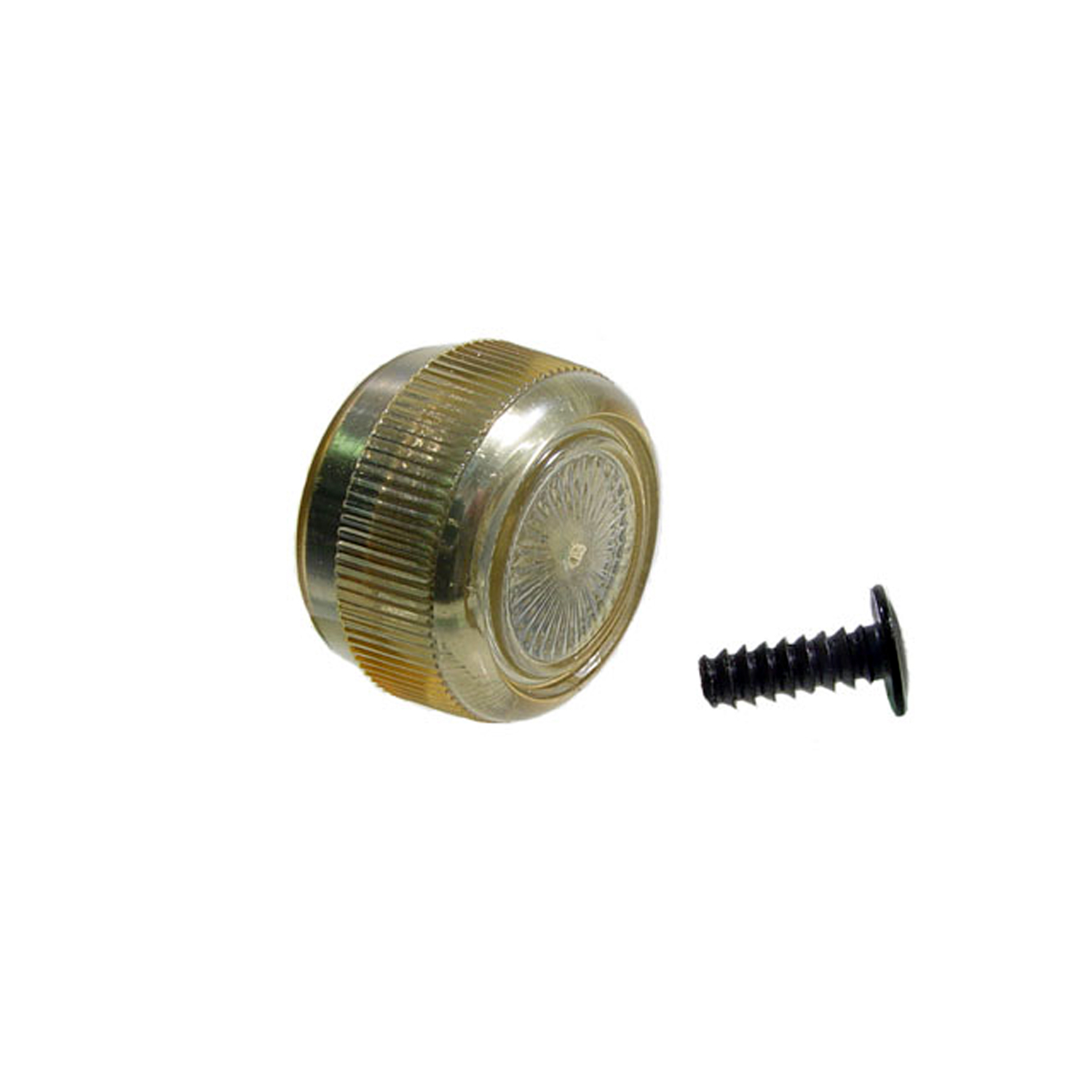 1974 Ford E-100 Econoline Window Crank Handle Knob and Attaching Parts. Clear. Each-RP 400-BWindow Crank Handle Knob and Attaching Parts. Clear. Each
Why Choose Metro?
For over 100 years, Metro Moulded Parts has been the pinnacle of quality in classic car restoration parts. Our commitment to precision and authenticity in every component ensures a perfect fit and an OEM-level appearance.
- Expert Craftsmanship & Quality: Each part is a testament to our dedication to reliability and perfection, crafted from original designs and thoroughly tested.
- Advanced Technology: We use cutting-edge techniques to create flawless, long-lasting parts that surpass others in performance.
- SuperSoft Sponge – The Ultimate Door Seal: Not only are our door seals 30% softer than competitors', but they're also guaranteed to never leak. They effectively reduce wind and road noise, enhancing your classic car's comfort and driving experience.
- Proudly American: Our parts are a product of American craftsmanship, made in the USA with a spirit of excellence and heritage.
- Unrivaled Warranty: We back our products with a 30-year industry-leading warranty, a testament to our confidence in their quality.
Join us in preserving the legacy of classic cars with parts that are crafted for perfection, not just made.