

Image of 1974 Ford E-200 Econoline, Note: These illustrations use artistic license and may differ from actual historical models.
Performance Metrics
Fundamental Metrics
Emotional Appeal
MMP Rating
| Engine Specifications | |
|---|---|
| Engine: | 302 CID V8, 351 CID V8, 460 CID V8 |
| Displacement: | 302 - 460 cubic inches |
| Horsepower: | 140 - 220 HP |
| Torque: | 240 - 350 lb-ft |
| Compression Ratio: | 8.5:1 - 10.5:1 |
| Ignition System: | Distributor, points and condenser |
| Cooling System: | Liquid cooled |
| Performance Specifications | |
| 0-60 Time: | Estimated 10 - 14 seconds |
| 1/4 Mile Time: | Estimated 17 - 20 seconds |
| Top Speed: | 85 - 100 mph |
| Transmission and Drive | |
| Drive Type: | Rear-wheel drive |
| Transmission Type: | 3-speed automatic |
| Fuel and Efficiency | |
| Fuel System Type: | Carburetor |
| MPG: | Estimated 10 - 14 mpg |
| Dimensions and Brakes | |
| Brakes: | Front disc and rear drum brakes |
| Wheelbase: | 124 inches |
| Weight: | 4,000 - 4,500 lbs |
Note: Specifications for classic cars are given to the best of our ability, considering the limited and variant data available.
1974 Ford E-200 Econoline: The Work Van That Found a Second Life
The 1974 Ford E-200 Econoline could haul a crew, carry a workday’s worth of tools, or become a rolling home, all while wearing the unmistakable long-nose shape that helped define the American full-size van. Built by Ford, the E-200 was the three-quarter-ton member of the Econoline range, positioned between the lighter E-100 and heavier E-300.
By 1974, the Econoline had already moved beyond its compact, cab-forward beginnings. The redesigned second-generation van, introduced for 1968, brought the engine farther forward and gave the driver a more conventional driving position. The 1974 model was the final year of this body generation before Ford launched a substantially redesigned Econoline for 1975. That makes it a useful snapshot of a changing era: a traditional, durable work van arriving just as the oil crisis and shifting tastes were reshaping American motoring.
There is a timely piece of history behind the model year, too. The 1973 oil crisis had made fuel economy a much bigger concern by 1974, but the E-200 was built first for capacity and utility, not thrift. Its size and appetite were part of the bargain, and buyers chose it because they needed a van that could earn its keep.
Long-Nose Styling and Practical Cabin
The E-200’s squared body, upright windshield, broad grille, and projecting hood give it a distinctly workmanlike presence. Its front end looks almost truck-like, while the tall, box-shaped rear section makes the van’s purpose plain. The long-nose design also moved the engine away from the driver compared with the original Econoline, improving access and changing the way the van felt from behind the wheel.
Inside, the emphasis was function rather than luxury. The dashboard was simple and easy to read, with large, straightforward controls and durable trim suited to commercial use. Depending on how it was ordered, the cabin might have basic vinyl seating and minimal appointments, or more comfortable trim and passenger-oriented equipment. The engine cover, often called the doghouse, still intruded between the front seats. It could make the cab feel cozy, but it also gave the driver and passenger a close-up reminder of the machinery at work.
Ford offered the Econoline in a range of factory colors, from restrained fleet-friendly shades to brighter colors that suited personal and recreational use. Exact names and availability varied by paint code and order. White was a common choice for commercial vans because it was easy to match and practical in service, while period blues, greens, reds, and earth tones gave privately owned vans more personality. Today, original paint and surviving trim details can help a van stand out at a show.
The range included cargo vans, window-equipped versions, and passenger-oriented Club Wagon models. Buyers could also order different seating and equipment configurations, while independent conversion companies turned vans into campers and custom cruisers. The plain cargo van became the most recognizable working version, while customized and camper-style vans are often the most eye-catching survivors.
Engineering Built for the Job
The second-generation Econoline was a significant step away from the first van’s compact, cab-forward formula. Its longer front end and more conventional layout helped make room for larger engines and gave Ford a stronger platform for commercial and passenger use. The E-200’s three-quarter-ton rating offered a useful middle ground: more carrying capacity than an E-100 without moving up to the heaviest E-300 configuration.
Underneath, the van used rear-wheel drive, a solid rear axle with leaf springs, and Ford’s Twin I-Beam front suspension. Twin I-Beam was a distinctive Ford truck design that used two separate front axle beams, each pivoting from the frame. It was intended to handle hard use and uneven loads, though worn components or poor alignment can contribute to tire wear and vague steering today. Depending on the order, equipment could include items such as power steering, power brakes, or an automatic transmission. The exact specification varied with engine, body, and intended use.
The E-200 was not a high-tech luxury vehicle, but it reflected the era’s practical engineering priorities: straightforward mechanicals, familiar Ford parts, and a chassis designed to work. Its influence is less about introducing a single revolutionary gadget than about helping establish the full-size van as a flexible vehicle for tradespeople, families, shuttle operators, and conversion builders.
Engine, Speed, and Road Manners
Engine availability varied by configuration and market, but the 300-cubic-inch inline-six was a well-known choice in Ford trucks of the period, with V8 power available on appropriate versions. Transmission choices depended on the specification and could include manual and automatic gearboxes. As with any surviving example, the engine currently under the hood may not be the one it left the factory with, so checking the vehicle’s identification and documentation is worthwhile.
There is no single reliable performance figure for every 1974 E-200. Engine choice, axle ratio, transmission, vehicle weight, and cargo load all make a major difference. As a broad real-world estimate, a sound, lightly loaded van might reach 60 mph in roughly 15 to 25 seconds. Top speed could fall somewhere around 75 to 90 mph, but these are estimates rather than a universal factory specification. A heavily loaded van, or one with a low-geared axle, will feel slower and may be happiest cruising well below its theoretical maximum.
On the road, the E-200 feels substantial. The steering is not sports-car quick, and the van’s height and broad sides make it sensitive to crosswinds. Bumps can be felt through the firm, load-oriented suspension, particularly when the van is empty. Add cargo or passengers and the ride may settle down, though extra weight also demands more distance for braking and more patience when accelerating.
The engine note is part of the experience: a steady six-cylinder rumble or a deeper V8 growl, often close enough to hear clearly through the doghouse. The driver sits upright with a commanding view, but the long front end, large turning circle, and limited modern safety technology call for measured driving. It is best enjoyed at a relaxed pace, with a sensible following distance and careful attention to its size.
Owning and Maintaining an E-200
These vans have served as delivery vehicles, contractor rigs, passenger haulers, campers, mobile workshops, and show vehicles. A stock cargo van can be a useful classic for local errands or club events, while a well-planned conversion makes an appealing vintage camper. They are not generally suited to modern commuting if fuel cost, parking ease, and crash protection are top priorities.
Routine mechanical work is often approachable for an experienced home mechanic. Many engine and drivetrain parts share family connections with Ford trucks, and the van’s relatively simple systems are easier to understand than those of a modern vehicle. Access can be the challenge: the doghouse and confined engine bay make some jobs less comfortable, and age-related repairs may require patience to reach corroded fasteners or find correct trim.
Rust deserves close inspection. Check the floors, lower body panels, wheel arches, door bottoms, frame, and areas around the windshield and side windows. Also inspect the steering and suspension, brakes, cooling system, and the condition of any camper or custom conversion. A van with a solid body and sound frame is usually a better starting point than a shiny project hiding structural corrosion.
Van-Culture Trivia and Common Complaints
The E-200 belongs to the era when full-size vans became blank canvases for personal expression. Owners added custom paint, shag carpet, lounge seating, curtains, and camper equipment, creating vehicles that could be as individual as their owners. Many conversions were completed by outside companies rather than Ford, so two vans with similar bodies may have very different interiors and equipment.
There is no widely recognized speed, endurance, or sales record specific to the 1974 E-200. Nor is there a dependable, model-specific production figure commonly cited for E-200 vans alone. A cautious estimate would put 1974 E-200 production in the low tens of thousands, perhaps around 10,000 to 30,000 units, but that is an informed guess, not a confirmed Ford total. The number surviving in original, usable condition is much smaller.
Owners most often criticize fuel consumption, sluggish acceleration when loaded, wind sensitivity, and the challenge of parking such a large vehicle. Rust and aging wiring can add to the workload. On the other hand, many enthusiasts appreciate the van’s simple mechanical character, practical shape, and the fact that it can be repaired and personalized without sacrificing its unmistakable period style.
Collector Values and Availability
Values depend heavily on body condition, originality, mechanical health, and the quality of any conversion. As a broad U.S. market guide, a rough project might sell for about $3,000 to $8,000. A running, usable example could fall around $8,000 to $18,000, while a clean, well-restored van may bring roughly $20,000 to $35,000 or more. High-quality camper or custom builds can exceed that range, although expensive modifications do not always translate into an equally high resale price.
These figures are estimates, not formal appraisals, and local markets can differ considerably. Original paint, documented history, rust-free structure, and period-correct equipment tend to help a van’s appeal. Modified examples are often easier to enjoy immediately, but buyers should look closely at workmanship, wiring, added weight, and whether the changes can be reversed.
The E-200 is not rare in the same way as a limited-production sports car, but good examples are increasingly hard to find. Many spent decades working outdoors, accumulating mileage, or undergoing incomplete conversions. Prices for usable vintage vans have generally strengthened as interest in classic camping and van culture has grown, though condition remains the deciding factor. Expect values to be uneven rather than to rise in a straight line.
Why the 1974 E-200 Still Matters
The 1974 Ford E-200 Econoline combines honest commercial engineering with the visual character of a formative era in American van culture. Its long-nose design, useful load capacity, simple mechanical layout, and range of possible configurations made it more than a delivery vehicle. It could be a worker, passenger carrier, camper, or personal project.
It is not quick, economical, or effortless to drive by modern standards. What it offers instead is space, presence, mechanical simplicity, and a direct connection to the people who built and used it. A sound E-200 is a practical piece of automotive history, and every mile in one feels like a reminder that a great van does not need to be fast to make an impression.
1974 Ford E-200 Econoline Catalog of Parts
 1974 Ford E-200 Econoline Clutch and Brake Pedal Pads. 3-1/4" wide X 2-1/4" long-CB 111Clutch and Brake Pedal Pads. 3-1/4" wide X 2-1/4" long. Pair
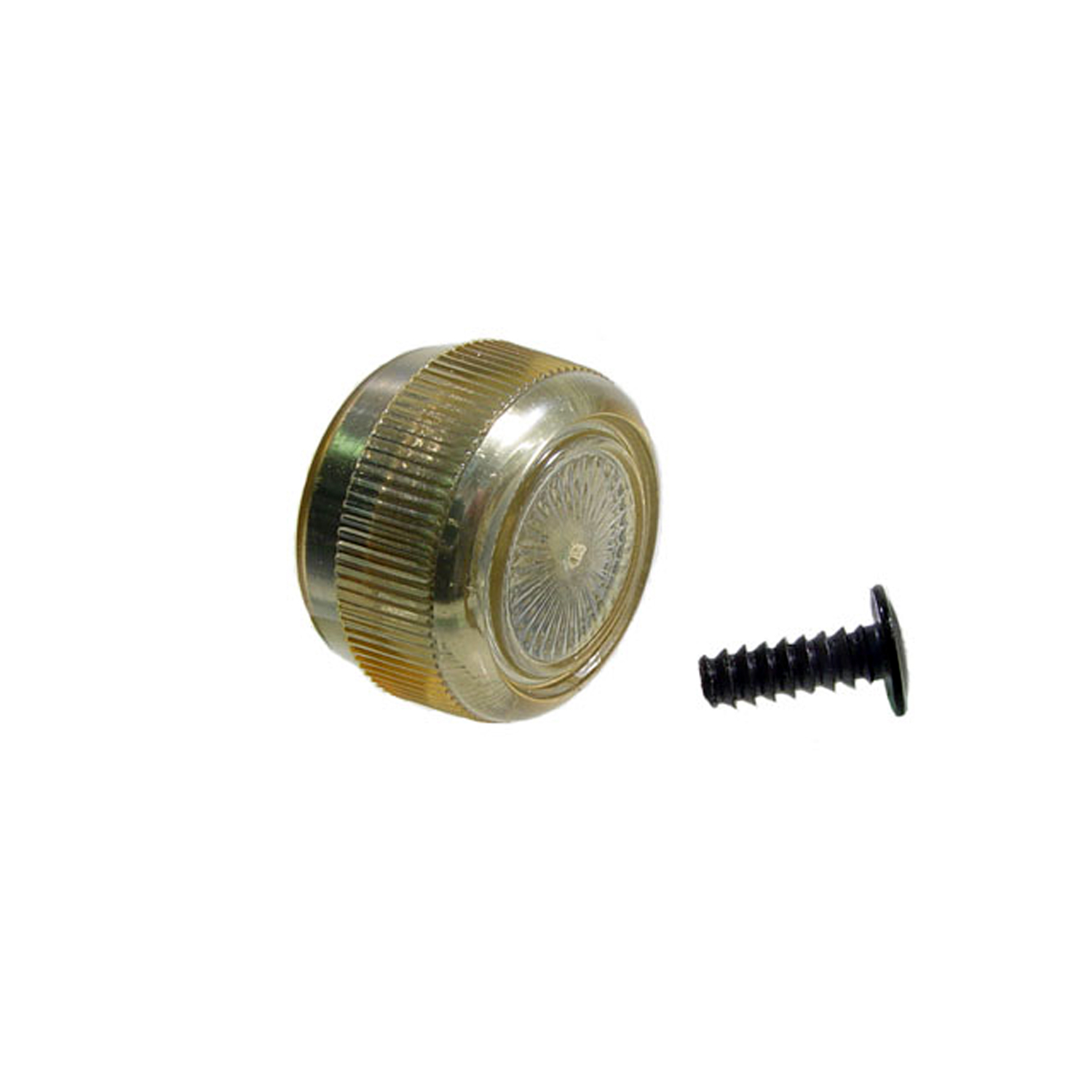 1974 Ford E-200 Econoline Window Crank Handle Knob and Attaching Parts. Clear. Each-RP 400-BWindow Crank Handle Knob and Attaching Parts. Clear. Each
Why Choose Metro?
For over 100 years, Metro Moulded Parts has been the pinnacle of quality in classic car restoration parts. Our commitment to precision and authenticity in every component ensures a perfect fit and an OEM-level appearance.
- Expert Craftsmanship & Quality: Each part is a testament to our dedication to reliability and perfection, crafted from original designs and thoroughly tested.
- Advanced Technology: We use cutting-edge techniques to create flawless, long-lasting parts that surpass others in performance.
- SuperSoft Sponge – The Ultimate Door Seal: Not only are our door seals 30% softer than competitors', but they're also guaranteed to never leak. They effectively reduce wind and road noise, enhancing your classic car's comfort and driving experience.
- Proudly American: Our parts are a product of American craftsmanship, made in the USA with a spirit of excellence and heritage.
- Unrivaled Warranty: We back our products with a 30-year industry-leading warranty, a testament to our confidence in their quality.
Join us in preserving the legacy of classic cars with parts that are crafted for perfection, not just made.