

Image of 1974 Ford F-100, Note: These illustrations use artistic license and may differ from actual historical models.
Performance Metrics
Fundamental Metrics
Emotional Appeal
MMP Rating
| Engine Specifications | |
|---|---|
| Engine Options: | 240 CID I6, 300 CID I6, 302 CID V8, 360 CID V8, 390 CID V8 |
| Displacement Range: | 240-390 cubic inches |
| Horsepower Range: | 100-215 hp (approximately) |
| Torque: | 223-315 lb-ft (approximately) |
| Compression Ratio: | 8.0:1 - 8.4:1 (approximately) |
| Ignition System: | Conventional breaker point ignition system |
| Cooling System: | Liquid-cooled |
| Performance Specifications | |
| 0-60 Time: | 10-15 seconds (estimated) |
| 1/4 Mile Time: | 17-20 seconds (estimated) |
| Top Speed: | 85-100 mph (estimated) |
| Transmission and Drive | |
| Drive Type: | Rear-wheel drive |
| Transmission Type: | 3-speed manual, 4-speed manual, 3-speed automatic |
| Fuel and Efficiency | |
| Fuel System Type: | Carburetor |
| MPG: | 10-15 mpg (estimated) |
| Dimensions and Brakes | |
| Brakes: | Front disc and rear drum brakes |
| Wheelbase: | 115-133 inches |
| Weight: | 3,800-4,500 lbs (approximately) |
Note: Specifications for classic cars are given to the best of our ability, considering the limited and variant data available.
1974 Ford F-100: A Classic Pickup with Everyday Grit
The 1974 Ford F-100 looks ready for work even when it is parked in a polished show-car spotlight. With its broad hood, squared-off cab and unmistakable indented body sides, it represents the practical, hard-wearing pickup that helped make Ford’s F-Series a fixture on American roads. Ford built the F-100 as part of its sixth-generation F-Series, introduced for 1973, and the 1974 model carried that fresh, larger design into a decade marked by changing fuel costs and new expectations for trucks.
One especially notable development arrived that year: Ford introduced the SuperCab, an extended-cab option that offered extra room behind the front seats. It was an early step toward the more versatile pickup cabins familiar today. The F-100 remained a working truck first, but features like the SuperCab showed that buyers increasingly wanted their pickups to serve as both tools and everyday transportation.
Dentside Styling and Practical Cab Design
The 1974 F-100 belongs to the generation enthusiasts call the “Dentside,” a nickname inspired by the distinctive recessed crease running along the body panels. Its front end is upright and straightforward, with a wide grille, round headlamps and a substantial hood. The overall shape is more angular and imposing than the earlier generation, but it avoids unnecessary decoration. It looks like a truck designed to take a few knocks and keep going.
Buyers could choose a Styleside bed, with smooth sides that extend over the rear wheels, or a Flareside bed, whose separate fenders and exposed step-side profile give the truck a more traditional look. Regular-cab trucks were the classic choice, while the new SuperCab added useful interior space. Two-wheel drive and four-wheel drive configurations were available, though exact combinations depended on the model and equipment ordered.
Inside, the F-100 was functional rather than luxurious. The dashboard used a simple, legible layout, with large controls and clear instrumentation. Vinyl upholstery was common on work-oriented trucks, while trim and upholstery choices could be upgraded. Materials were sturdy and easy to clean, an advantage for owners who used the truck around farms, job sites or muddy recreation areas. Compared with a modern pickup, the cabin is simple, but its uncluttered design is part of the appeal.
Paint and trim choices varied by equipment and market. Popular looks included white, red, blue, green and earth-toned finishes, alongside two-tone combinations on suitably equipped trucks. Today, bright original colors and period-correct two-tone paint tend to stand out at shows, while white and red trucks remain familiar sights among surviving examples.
Engines, Equipment and Period Technology
The 1974 F-100 offered a range of engines that could be matched to work, budget and driving preference. Inline-six options included the 240-cubic-inch engine and the widely respected 300-cubic-inch six. V8 choices included 360- and 390-cubic-inch engines, with availability depending on configuration. A manual transmission was typical, and buyers could also specify other transmission options, including an automatic. Equipment varied, so it is worth checking a truck’s identification tags and documentation rather than assuming its engine or transmission is original.
By modern standards, the technology was straightforward. Power steering and power brakes were available, and four-wheel-drive models added capability for rough roads and poor weather. Two-wheel-drive F-100s used Ford’s Twin-I-Beam front suspension, a design introduced earlier in the F-Series that used a pair of independent I-beam axles. It was intended to combine a comfortable ride with the durability expected of a pickup. The 1974 truck did not have electronic driver aids or today’s safety systems, but its mechanical simplicity makes its basic systems relatively approachable for classic-truck owners.
Why the 1974 F-100 Matters
The F-100’s significance is not that it introduced a radical new kind of vehicle. Its importance lies in how well it reflected the changing role of the pickup. The sixth-generation F-Series paired traditional body-on-frame construction and practical capability with a larger, more comfortable design. The SuperCab was particularly forward-looking: it gave buyers extra passenger or storage space without requiring a full-size four-door crew cab.
The F-100 also carried forward a distinctly Ford approach to truck engineering. The Twin-I-Beam front suspension on two-wheel-drive models set the truck apart from pickups using more conventional front suspension layouts. It became a recognizable part of Ford’s light-truck identity, though owners should remember that suspension condition and alignment are important to how these trucks drive today.
More broadly, the 1974 model sits at an interesting point in pickup history. The oil crisis had made fuel use a more visible concern, while trucks were beginning to attract buyers who valued comfort and personal transportation as well as hauling ability. The F-100 could still be ordered as a no-frills work vehicle, but it also offered a path toward a roomier, more versatile pickup.
Performance and Road Manners
Performance depends heavily on engine, transmission, axle gearing, cab and bed configuration, and the condition of the truck. Period pickup testing is not as standardized as modern car testing, so figures should be treated as practical estimates rather than definitive factory specifications. A six-cylinder F-100 might take roughly 16 to 20 seconds to reach 60 mph, while a healthy V8 truck could do it in approximately 11 to 15 seconds. A typical example may reach around 85 to 95 mph, though gearing, tires and mechanical condition can shift that figure considerably. These were work trucks, not high-speed performance machines.
On a smooth road, a well-maintained F-100 feels steady and substantial. The ride is firm compared with a modern pickup, especially when the suspension is set up for carrying a load. Empty, the rear can feel bouncy over broken pavement, while potholes and expansion joints make their presence known through the frame and cab. A two-wheel-drive truck’s Twin-I-Beam front end can feel different from a modern independent suspension, and worn components may contribute to wandering or uneven tire wear.
On winding roads, the F-100 rewards a measured driving style. Its size, steering feel and vintage tires call for planning rather than quick directional changes. Four-wheel-drive models can be useful on snow, gravel and muddy tracks, but four-wheel drive is not a substitute for good tires, careful speed or sound mechanical upkeep. From behind the wheel, the experience is direct and pleasantly mechanical: you hear the engine, feel the road and operate controls that ask for more involvement than a contemporary truck.
Living with a 1974 Ford F-100
Today, owners use the F-100 in several ways. Some keep them as weekend cruisers or show trucks, while others use them for light hauling, camping and occasional work. Restored examples often draw attention at classic-car events, while original, weathered trucks have their own appeal as honest survivors. They are not ideal for every modern commute: fuel economy, braking distances, cabin noise and safety equipment are all products of their era.
Routine maintenance is generally manageable for a mechanically confident owner. The engines and many other components are familiar to classic-truck specialists, and replacement parts are widely available through the vintage Ford and aftermarket communities. Regular attention to cooling, ignition, brakes, steering and suspension is important, especially if the truck has been sitting for years. Rust deserves a careful inspection. Check the cab corners, floor, wheel arches, bed and frame, as well as previous repairs that may conceal corrosion.
Reliability depends more on condition and maintenance than on the badge. A properly serviced 300-cubic-inch six has a strong reputation for workaday durability, but no engine can compensate for neglected oil changes, overheating or poor repairs. Before buying, look for signs of smoke, low oil pressure, transmission trouble and brake pull. A pre-purchase inspection by a shop familiar with old Ford trucks can save substantial time and money.
F-100 Facts Worth Knowing
The SuperCab’s 1974 debut is the model-year headline. It anticipated the extended-cab pickup format that became a popular middle ground between a regular cab and a larger crew cab. Ford’s sixth-generation trucks are also commonly identified by the “Dentside” nickname, which helps distinguish them from the later “Bullnose” generation.
There is no single dependable public production figure for every 1974 F-100 engine, cab, bed and drivetrain combination. Ford produced the F-Series in large numbers, but surviving examples vary widely in specification and condition. Rather than claiming a precise model-level total, it is safest to say that the F-100 was a mass-produced truck, while particular configurations, original colors and well-documented survivors can be much less common today.
The truck was not built to set speed or endurance records, and its enduring reputation comes from usefulness rather than competition. Common criticisms include modest fuel economy, dated crash protection, relatively slow acceleration and a firm ride when unloaded. Those drawbacks are real, but they are also part of the honest old-truck character that many enthusiasts enjoy.
Collector Values and Availability
Values depend on originality, rust, engine and drivetrain specification, restoration quality and location. As a broad U.S. market guide for 2026, a project truck may sell for about $3,000 to $8,000. A running driver in fair-to-good condition often falls around $10,000 to $20,000, while a clean, well-restored example may bring $20,000 to $35,000 or more. Exceptional restorations, desirable four-wheel-drive trucks and unusual or especially well-preserved configurations can exceed that range. These are general estimates, not a formal appraisal, and local prices can differ substantially.
Good examples remain available, but condition is the deciding factor. A truck with attractive paint can still hide serious rust, while a less polished example with a solid body and sound mechanicals may be the better buy. Prices for classic pickups have generally strengthened over the long term as enthusiasts have embraced vintage trucks, though the market moves in cycles. Excellent, usable examples tend to hold interest better than heavily modified trucks with questionable workmanship.
The Lasting Appeal of the Dentside F-100
The 1974 Ford F-100 combines familiar Ford toughness with a design that is now instantly recognizable to classic-truck fans. Its Dentside body, practical cabin, range of engines and debut-year SuperCab option make it a revealing snapshot of the pickup’s transition from work tool toward multipurpose vehicle. It is simple enough to maintain, distinctive enough to stand out and substantial enough to feel like a real truck on the road.
Whether restored to showroom condition or kept as a hardworking survivor, the 1974 F-100 captures a moment when pickups were becoming more versatile without losing their grit. That balance is why this Ford remains more than an old workhorse: it is a lasting piece of American truck history.
1974 Ford F-100 Catalog of Parts
 1974 Ford F-100 Shock Absorber Grommet. 1" bottom O.D-BN 11Shock Absorber Grommet. 1" bottom O.D., 3/4" high, with 5/8" I.D. Each
 1974 Ford F-100 Door seal. '73-'79 Ford F-Series trucks. '78-'79 Ford Bronco-LM 110-ADoor seal. '73-'79 Ford F-Series trucks. '78-'79 Ford Bronco. Fits on cab, either side. Each.
 1974 Ford F-100 Upper Door Seal, 73-79 Ford Full Size Truck, 78-79 Ford Bronco, On Door, Pair-LM 110-AUThis auxiliary seal fits on the top portion of the door. It is primarily designed to reduce wind and road noise. It also provides added weatherseal protection and further cushions the door when it is shut closed. This part was stock on the 1978-1979 models but you can use them on any of the '73-'79 models specified.
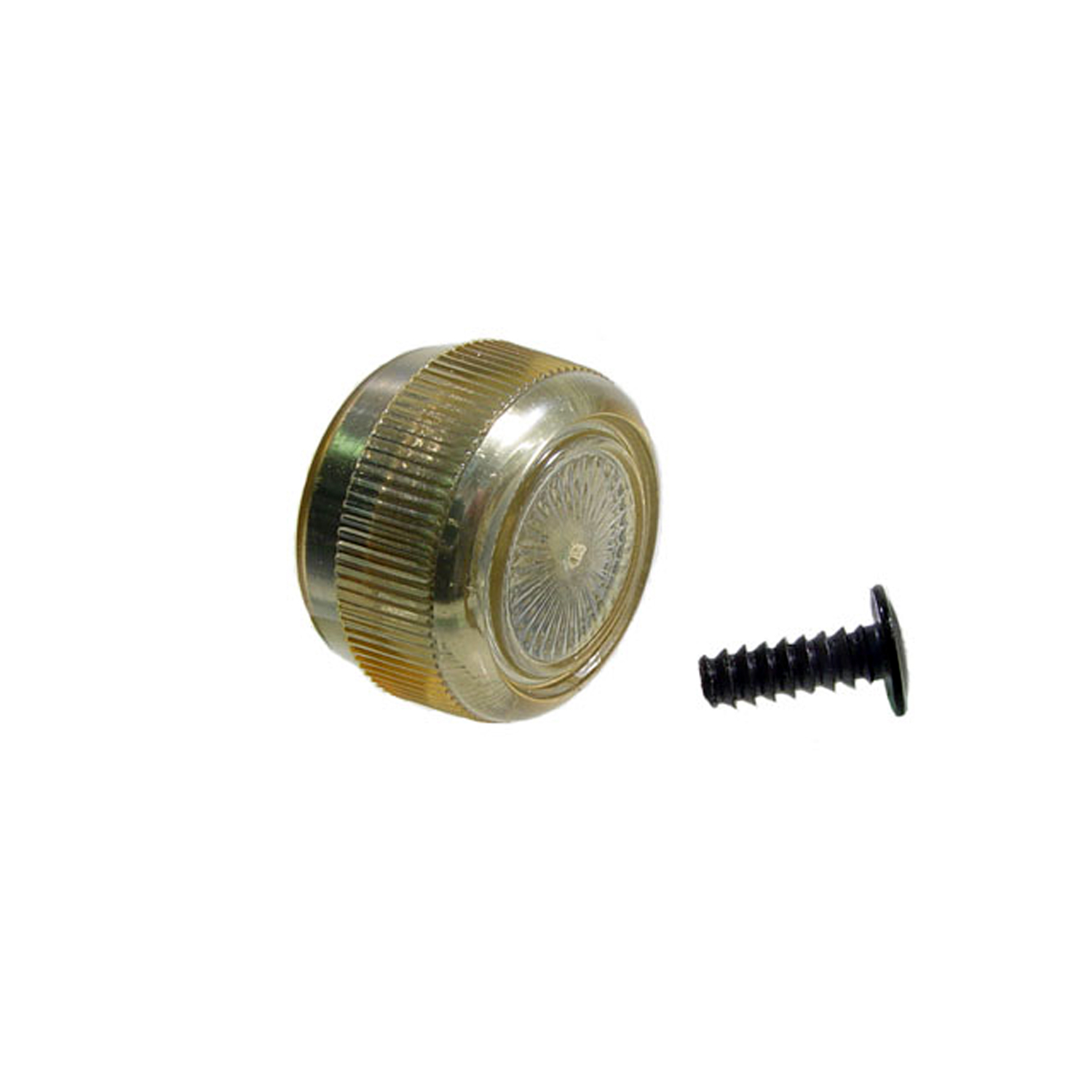 1974 Ford F-100 Window Crank Handle Knob and Attaching Parts. Clear. Each-RP 400-BWindow Crank Handle Knob and Attaching Parts. Clear. Each
 1974 Ford F-100 Windshield Seal, 67-79 Ford Full Size Truck, 78-79 Bronco, Without Trim Groove-VWS 3304-CThis windshield seal goes first on the glass and is installed using the rope-in method. This product is made from the original specs and with high quality ozone resistant EPDM rubber for a great fit and long life. This item is designed to be installed during glass replacement.
 1974 Ford F-100 Windshield seal, '73-'76 Ford F Series Truck-VWS 3304-EWindshield seal, '73-'76 Ford F Series Truck with groove to accept trim, each.
 1974 Ford F-100 Rear window seal, '73-'79 Ford F Series Truck without trim groove-VWS 3304-RRear window seal, '73-'79 Ford F Series Truck without trim groove, each. Replaces OEM part # D3TZ-1042084-A.
Why Choose Metro?
For over 100 years, Metro Moulded Parts has been the pinnacle of quality in classic car restoration parts. Our commitment to precision and authenticity in every component ensures a perfect fit and an OEM-level appearance.
- Expert Craftsmanship & Quality: Each part is a testament to our dedication to reliability and perfection, crafted from original designs and thoroughly tested.
- Advanced Technology: We use cutting-edge techniques to create flawless, long-lasting parts that surpass others in performance.
- SuperSoft Sponge – The Ultimate Door Seal: Not only are our door seals 30% softer than competitors', but they're also guaranteed to never leak. They effectively reduce wind and road noise, enhancing your classic car's comfort and driving experience.
- Proudly American: Our parts are a product of American craftsmanship, made in the USA with a spirit of excellence and heritage.
- Unrivaled Warranty: We back our products with a 30-year industry-leading warranty, a testament to our confidence in their quality.
Join us in preserving the legacy of classic cars with parts that are crafted for perfection, not just made.