
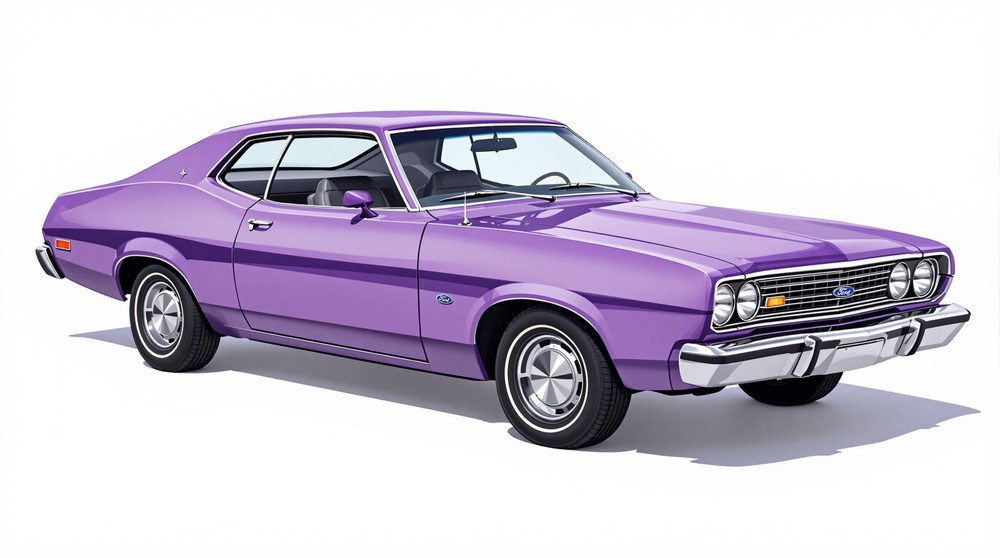
Image of 1974 Ford Pinto, Note: These illustrations use artistic license and may differ from actual historical models.
Performance Metrics
Fundamental Metrics
Emotional Appeal
MMP Rating
| Engine Specifications | |
|---|---|
| Engine Options: | 2.3L I4, 2.8L V6 |
| Displacement Range: | 140-171 cu in. |
| Horsepower Range: | 88-105 hp |
| Torque: | 118-145 lb-ft |
| Compression Ratio: | 8.2:1 (I4), 8.7:1 (V6) |
| Ignition System: | Electronic |
| Cooling System: | Liquid-cooled |
| Performance Specifications | |
| 0-60 Time: | 11-13 seconds |
| 1/4 Mile Time: | 18-20 seconds |
| Top Speed: | 100 mph |
| Transmission and Drive | |
| Drive Type: | RWD |
| Transmission Type: | 4-speed manual, 3-speed automatic |
| Fuel and Efficiency | |
| Fuel System Type: | Carburetor |
| MPG: | 20-25 mpg |
| Dimensions and Brakes | |
| Brakes: | Front disc, rear drum |
| Wheelbase: | 94.2 in. |
| Weight: | 2,015-2,270 lbs |
Note: Specifications for classic cars are given to the best of our ability, considering the limited and variant data available.
1974 Ford Pinto: America’s Small-Car Survivor
The 1974 Ford Pinto was compact, uncomplicated, and built for a moment when American drivers were beginning to think seriously about fuel economy. Ford introduced the Pinto for the 1971 model year as an affordable domestic answer to small cars from Europe and Japan, as well as rivals such as the Chevrolet Vega and AMC Gremlin. By 1974, the oil crisis had made the little Ford more relevant than ever.
One of the Pinto’s most memorable chapters came after its production years. In 1978, Ford recalled roughly 1.5 million Pintos and related Mercury Bobcats over concerns about fuel-system damage in certain rear-impact collisions. The recall and the legal cases that followed made the Pinto a lasting fixture in debates about automotive safety and corporate responsibility. That history deserves context: it does not mean every Pinto was unsafe in every crash, but it did shape the car’s reputation in a way few economy cars have experienced.
Compact Styling and Practical Choices
The 1974 Pinto wore the familiar proportions of an early-1970s subcompact: a short nose, tidy cabin, and body sides that kept the car looking light rather than imposing. Its simple front end and restrained trim were more functional than flashy. Federal bumper requirements influenced the model’s appearance, giving it more substantial bumpers than some earlier Pintos. The overall design was straightforward, with a shape that prioritized useful passenger and cargo space within a small footprint.
Ford offered three main body styles. The two-door sedan had a conventional trunk and a clean, notchback profile. The Pinto Runabout was the sporty-looking hatchback, with a lift-up rear opening that made it especially handy for luggage, groceries, or weekend gear. The wagon provided the most cargo room and a longer roofline. For many shoppers, the Runabout best captured the Pinto’s character: more flexible than a small sedan, but still easy to park and maneuver.
Inside, the Pinto kept things simple. The dashboard was functional and relatively easy to read, with straightforward controls and little of the decorative complexity found in larger cars. Depending on trim and equipment, buyers could find vinyl upholstery or cloth-and-vinyl combinations, along with different seat and trim treatments. Materials were typical of an affordable 1970s car: durable and practical, rather than plush. A well-kept interior today can feel charmingly period-correct, especially with its thin-rim steering wheel, analog gauges, and compact layout.
Paint colors changed with Ford’s yearly catalog, but the choices reflected the era’s mix of bright hues and earthy tones. Red, blue, yellow, white, green, and metallic shades all suited the Pinto’s modest shape. The most striking examples today are often the brightly colored cars, though restrained colors can make an original survivor look especially authentic.
1974 Pinto Engines and Equipment
The standard powerplant for the 1974 Pinto was Ford’s 2.3-liter overhead-cam four-cylinder, rated at roughly 85 to 90 horsepower depending on rating and specification. Buyers seeking more cylinders could choose an available 2.8-liter V6, which delivered stronger low-speed pull but added weight and fuel consumption. Exact equipment varied by body style, transmission, and market.
A manual transmission suited the Pinto’s light, economical character, while an automatic was available for drivers who preferred easier stop-and-go motoring. The car’s engineering was conventional rather than cutting-edge, but it offered useful features for its price class, including front disc brakes and rack-and-pinion steering. Those systems helped make the Pinto feel familiar and manageable to drivers moving down from a larger American car.
Why the Pinto Mattered
The Pinto was part of a major shift in the American market. Before the 1970s, Detroit’s biggest sellers were often large, powerful cars. The arrival of imported compacts and the 1973 oil embargo accelerated demand for smaller, more economical transportation. Ford’s answer was not a luxury mini-car or a technical showcase. It was a relatively affordable, locally built subcompact intended to bring buyers into Ford showrooms.
That approach helped make the Pinto a sales success. It also helped establish the small, front-engine, rear-wheel-drive economy car as a familiar choice in the United States. The Pinto shared its basic family resemblance and components with the Mercury Bobcat, giving Ford and Mercury dealers a compact offering across both brands. Its influence was less about a single breakthrough than about scale: it demonstrated that a domestic automaker could sell small cars in large numbers.
The Pinto’s legacy is complicated. It is remembered both as a practical response to changing tastes and as a warning about safety engineering and decision-making. The car did not invent the subcompact, nor did it introduce a revolutionary technology. Its significance lies in how clearly it represents an industry adapting under pressure, and in how its safety controversy became part of a broader national conversation.
Performance and Driving Feel
Performance figures depend on engine, transmission, condition, and the testing methods used at the time. A four-cylinder 1974 Pinto generally took somewhere around 14 to 16 seconds to reach 60 mph, with a top speed in the neighborhood of 85 to 95 mph. A V6-equipped car could feel noticeably stronger away from a stop, though it was still an economy car, not a muscle machine. Treat those figures as period-style estimates rather than guarantees for an individual car today.
On the road, the Pinto feels small and direct. The steering is light, and the compact dimensions make city streets and parking lots easy to manage. The four-cylinder engine produces a modest, mechanical buzz when worked hard, while the V6 adds a deeper note and more relaxed acceleration. Neither engine was designed to make the Pinto feel fast, but both suit the car’s everyday purpose.
The suspension is tuned for ordinary roads, not high-speed cornering. It can feel busy over broken pavement, and the short wheelbase makes larger bumps more noticeable than they would be in a full-size Ford. On winding roads, the Pinto is best driven smoothly: it responds willingly, but period tires, suspension design, and limited power reward a measured pace. Crosswinds can also be more apparent in a light car. In return, the driver gets a clear sense of the road and a simple, hands-on experience that modern cars often filter out.
Living With a Pinto Today
In period, the Pinto’s main job was everyday transportation. Owners used it for commuting, shopping, school runs, and family trips, with the Runabout and wagon offering extra flexibility. Today, surviving examples are more likely to serve as weekend classics, local show cars, restoration projects, or conversation-starting drivers. Modified Pintos also have a place in drag racing and other grassroots motorsports, where the light body can be an appealing starting point.
Mechanical work is generally approachable for an owner with basic tools and a shop manual. The Pinto uses conventional components, and its engine bay is not crowded by modern standards. Routine jobs such as ignition service, brake work, and carburetor adjustments are familiar territory for many classic-car mechanics. Parts availability is reasonable for common service items, though original trim, body panels, and model-specific interior pieces can take more searching.
As with any 50-year-old car, condition matters more than the badge. Inspect the floorpan, suspension mounting points, and lower body for rust, and check the fuel system carefully. Given the model’s history, buyers should verify that any applicable safety recall work was completed and that repairs were performed properly. A car that has been stored for years may need attention to its fuel lines, brakes, tires, cooling system, and electrical connections before it is ready for regular use.
Pinto Trivia and Common Criticisms
The name “Pinto” came from the pinto horse, a reference to its distinctive coloring. The model also became one of the best-known American subcompacts of the 1970s, with 1974 among its strongest sales years. Production for the 1974 model year is commonly estimated at about 544,000 cars, though totals can vary by source and by how model-year production is counted.
The Pinto’s safety controversy is its most famous historical association. The 1978 recall addressed fuel-system concerns on certain cars, while the well-publicized Grimshaw v. Ford case involved a 1972 Pinto and became a landmark product-liability story. The issue remains a frequent subject of criticism, but it is best understood as a specific engineering and corporate-history problem, not proof that every Pinto was destined to catch fire. Other common complaints are more ordinary: modest acceleration, basic interior materials, and a ride that can feel choppy on rough pavement.
There is no widely recognized speed or endurance record that defines the 1974 Pinto. Its achievement was more everyday than glamorous: it put Ford’s compact-car strategy in front of hundreds of thousands of buyers at a time when fuel costs and vehicle size were becoming central concerns.
1974 Ford Pinto Values and Collectibility
The Pinto remains an accessible classic compared with many American cars of the same era. As a broad 2026 market estimate, a running but tired example might sell for around $2,000 to $5,000. A sound, presentable driver could bring roughly $5,000 to $10,000, while a carefully restored or unusually original car may reach $10,000 to $18,000 or more. Exceptional examples, rare configurations, and well-documented cars can exceed those ranges, but condition and buyer interest have a large effect.
Four-cylinder sedans are generally the easiest versions to find. Clean Runabouts, wagons, and cars with the optional V6 can attract extra attention, particularly when they retain original equipment. Exact survival numbers are not well established, so it is difficult to assign a reliable rarity figure. The 1974 model began with very high production, but rust, hard use, and the car’s low original purchase price have reduced the number of well-preserved examples.
Values have risen from the Pinto’s long period as a cheap used car, helped by nostalgia and the shrinking supply of original survivors. It is not yet a blue-chip collector car, and most examples are unlikely to appreciate like a rare muscle car. The best buying strategy is to choose the cleanest, most complete car you can find rather than counting on a quick investment return.
A Small Ford With a Big Story
The 1974 Ford Pinto combined compact dimensions, practical body styles, simple mechanicals, and an important place in the changing American car market. Its Runabout hatchback and useful wagon show how much versatility Ford could fit into a small package, while its safety history ensures that the model remains part of a much larger discussion about automotive responsibility.
Today, a Pinto is more than an inexpensive old compact. It is a tangible reminder of the moment American drivers began asking Detroit for smaller, more efficient cars, and of how one modest Ford came to carry a remarkably outsized legacy.
1974 Ford Pinto Catalog of Parts
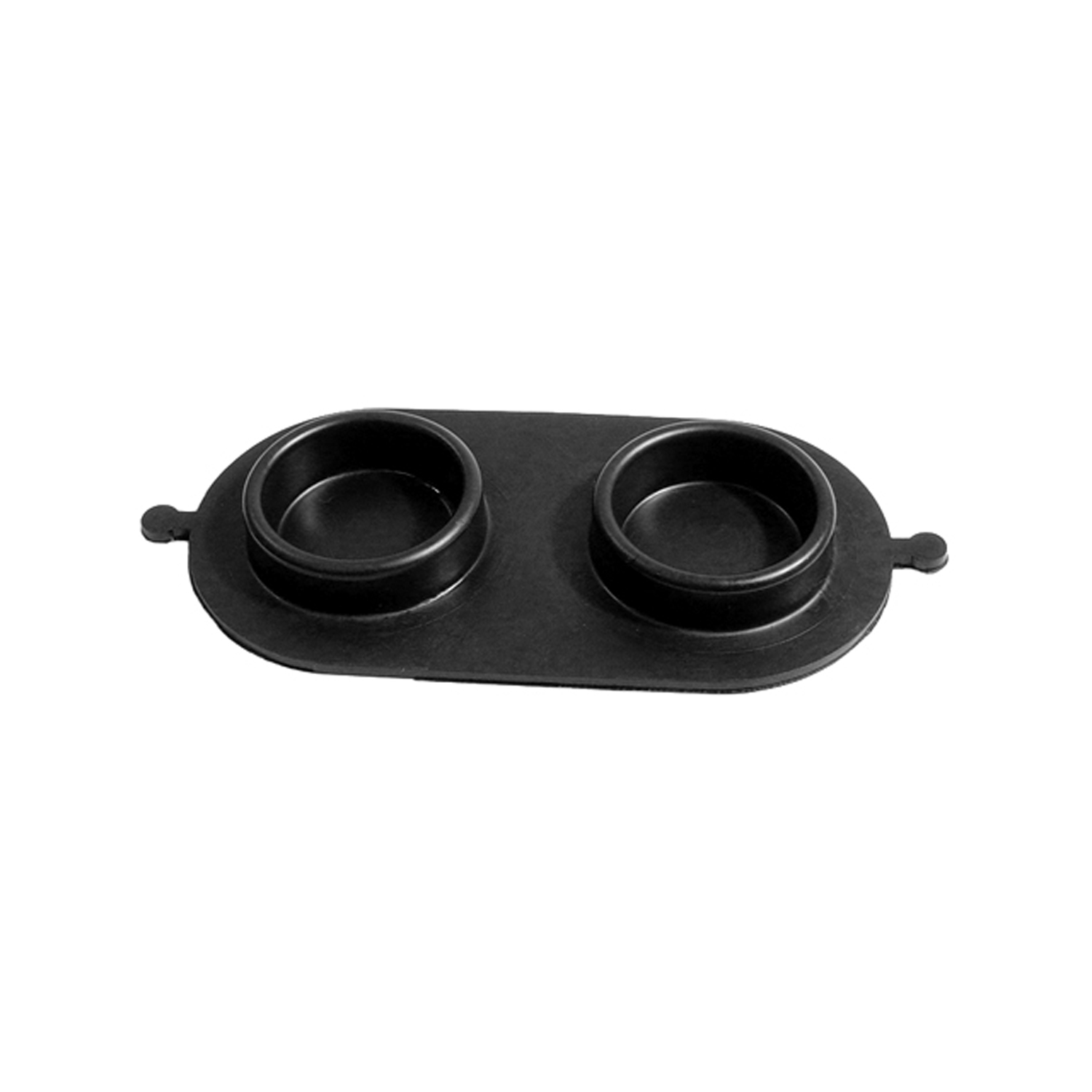 1974 Ford Pinto Brake Master Cylinder Cover Seal. Replaces OEM #C7AZ2167-A-RP 2-BBrake Master Cylinder Cover Seal. Replaces OEM #C7AZ2167-A. Each
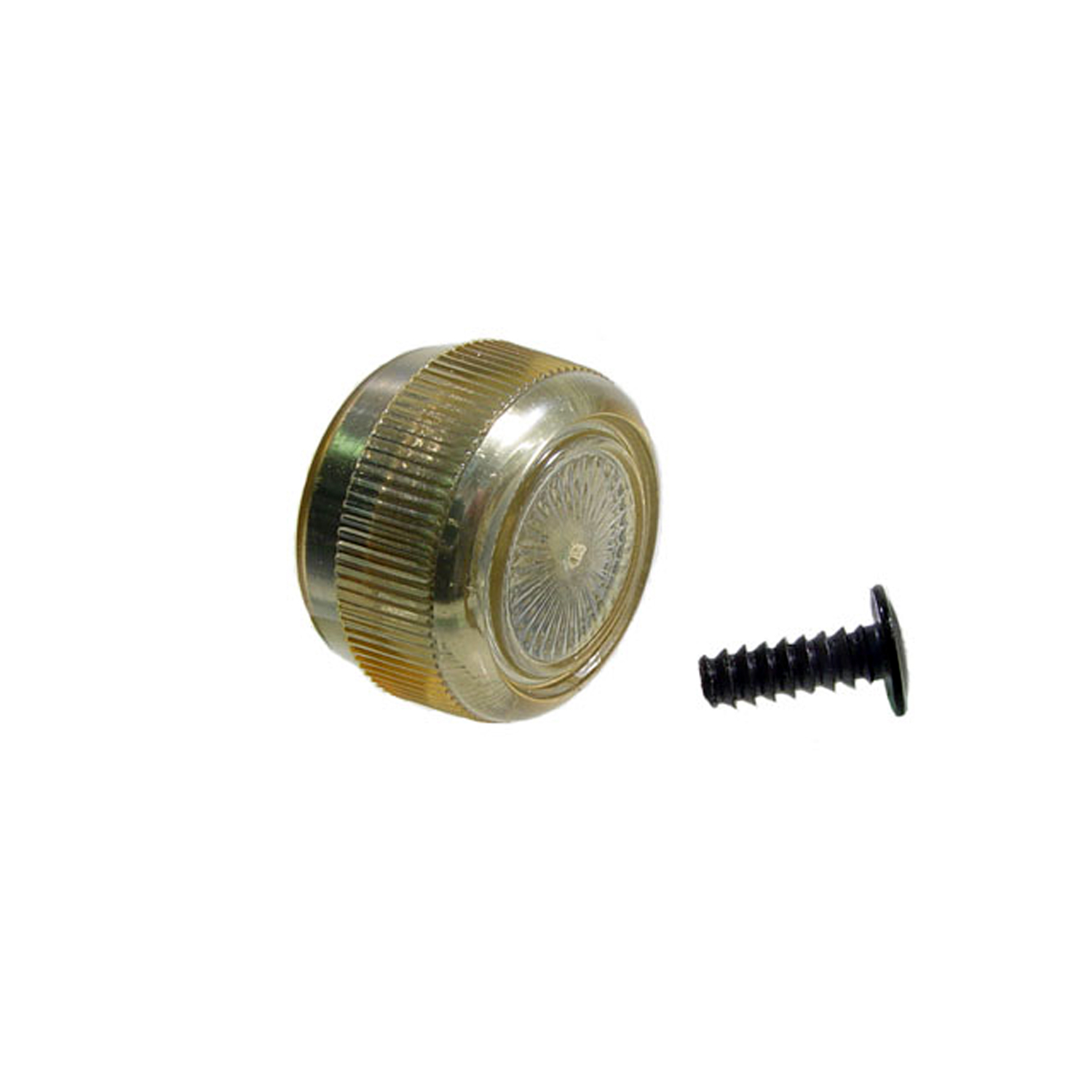 1974 Ford Pinto Window Crank Handle Knob and Attaching Parts. Clear. Each-RP 400-BWindow Crank Handle Knob and Attaching Parts. Clear. Each
Why Choose Metro?
For over 100 years, Metro Moulded Parts has been the pinnacle of quality in classic car restoration parts. Our commitment to precision and authenticity in every component ensures a perfect fit and an OEM-level appearance.
- Expert Craftsmanship & Quality: Each part is a testament to our dedication to reliability and perfection, crafted from original designs and thoroughly tested.
- Advanced Technology: We use cutting-edge techniques to create flawless, long-lasting parts that surpass others in performance.
- SuperSoft Sponge – The Ultimate Door Seal: Not only are our door seals 30% softer than competitors', but they're also guaranteed to never leak. They effectively reduce wind and road noise, enhancing your classic car's comfort and driving experience.
- Proudly American: Our parts are a product of American craftsmanship, made in the USA with a spirit of excellence and heritage.
- Unrivaled Warranty: We back our products with a 30-year industry-leading warranty, a testament to our confidence in their quality.
Join us in preserving the legacy of classic cars with parts that are crafted for perfection, not just made.