
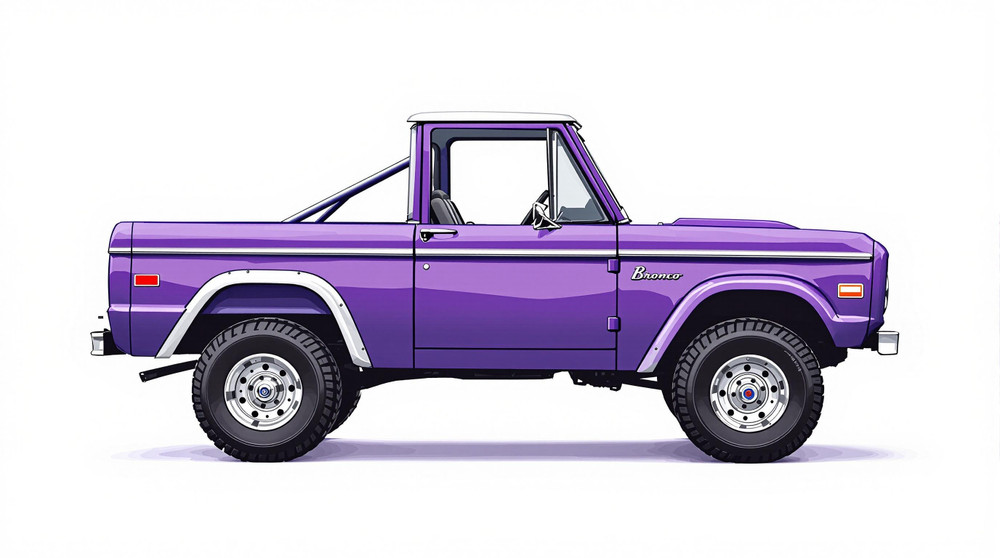
Image of 1975 Ford Bronco, Note: These illustrations use artistic license and may differ from actual historical models.
Performance Metrics
Fundamental Metrics
Emotional Appeal
MMP Rating
| Engine Specifications | |
|---|---|
| Engine Options: | 4.9L 302 CID V8 |
| Displacement Range: | 302 cubic inches |
| Horsepower Range: | 133-140 HP |
| Torque: | 220-240 lb-ft |
| Compression Ratio: | 8.4:1 |
| Ignition System: | Electronic Ignition |
| Cooling System: | Liquid-cooled |
| Performance Specifications | |
| 0-60 Time: | 11-12 seconds |
| 1/4 Mile Time: | 18-19 seconds |
| Top Speed: | 96-100 mph |
| Transmission and Drive | |
| Drive Type: | 4WD |
| Transmission Type: | 3-speed automatic or 4-speed manual |
| Fuel and Efficiency | |
| Fuel System Type: | Carburetor |
| MPG: | 10-12 mpg |
| Dimensions and Brakes | |
| Brakes: | Front disc and rear drum brakes |
| Wheelbase: | 92 inches |
| Weight: | 3,200-3,600 lbs |
Note: Specifications for classic cars are given to the best of our ability, considering the limited and variant data available.
1975 Ford Bronco: The Compact 4x4 That Started a Legacy
The 1975 Ford Bronco is a short-wheelbase 4x4 with the stance of a trail rig and the personality of a machine built for getting away from paved roads. It belongs to the first generation of Broncos, introduced by Ford for the 1966 model year as a purpose-built compact off-roader. At a time when many four-wheel-drive vehicles were adapted from trucks, the Bronco offered a relatively nimble alternative to larger utility vehicles such as the International Scout and Chevrolet Blazer.
By 1975, the Bronco had matured into a V8-powered, removable-top wagon. Its 92-inch wheelbase kept it maneuverable on trails, while its body-on-frame construction and part-time four-wheel drive gave it genuine work-and-play capability. One telling detail: the first-generation Bronco remained compact even as the market began moving toward larger SUVs. Ford would replace it with a much bigger model for 1978, making the 1975 one of the final examples of the original, small-format design.
Classic Bronco Styling and Cabin
The 1975 Bronco has a square, upright profile, a blunt nose, flat body sides, and short overhangs. Its proportions are a big part of its appeal: the wheels sit near the corners, the hood is broad and simple, and the removable hardtop gives the wagon a distinctive, open-air look. Details vary with trim and equipment, but the basic shape is refreshingly direct. This is a vehicle designed around utility, not sculpted aerodynamics.
Inside, the cabin is straightforward and relatively spartan by modern standards. Expect simple instruments, durable vinyl surfaces, practical door panels, and controls that are easy to understand. Higher trim and optional equipment could add a more finished feel, but even a well-equipped example remains a classic truck rather than a luxury SUV. The cabin is narrow, and rear-seat space is limited, especially compared with modern four-door sport-utility vehicles.
Factory color choices changed over the years and depended on trim and ordering options. Buyers could choose from a range of solid and metallic finishes, including familiar whites, reds, blues, and greens. Bright, period-correct colors tend to attract attention at shows, while white and darker shades give the Bronco a more understated, utilitarian look. Original paint and trim combinations can add interest for collectors, particularly when supported by documentation.
Body Styles and Equipment
By 1975, the first-generation Bronco’s body-style lineup had narrowed. The early roadster and half-cab pickup versions were no longer available, leaving the wagon as the main configuration. Its removable hardtop could be taken off for open-air driving, though removing and storing it is a two-person job for most owners.
Ford offered trim and equipment packages that could make a Bronco more comfortable or visually distinctive. The Bronco Sport package is a notable example, adding appearance and convenience features depending on the specific vehicle. Options such as an automatic transmission, power steering, and other comfort equipment could also be ordered. The wagon with its removable hardtop is the most recognizable and sought-after version today.
1975 Bronco Engineering and Historical Impact
The first-generation Bronco helped establish the compact 4x4 as a vehicle that could serve both as a practical tool and a recreational companion. Its short wheelbase, sturdy frame, and purpose-built proportions set it apart from converted pickups and larger off-roaders. The formula influenced the shape of the SUV market: capable four-wheel drive, usable road manners, and an adaptable body in a package smaller than a full-size truck.
For 1975, Ford’s 302-cubic-inch V8 was the Bronco’s sole engine choice. That made this model year distinct from some earlier Broncos, which had offered an inline-six. Power was delivered through a three-speed manual transmission as standard equipment, with a three-speed automatic available. A two-speed transfer case supplied four-wheel drive when conditions called for it. The Bronco’s solid axles and rugged running gear were well suited to slow, uneven trails, while its coil-spring front suspension helped give it a more compliant ride than some traditional leaf-sprung 4x4s.
It was not a modern crossover, nor was it intended to be. The Bronco’s lasting influence comes from the balance it struck: compact dimensions, real off-road hardware, and enough everyday usability to make it more than a specialized trail machine. That combination remains central to the appeal of classic and modern SUVs alike.
302 V8 Performance and Road Manners
The 1975 Bronco’s 302 V8 produced roughly 125 horsepower and about 243 lb-ft of torque in period net ratings. Exact figures can vary with emissions equipment, tune, and source. Those numbers are modest by today’s standards, but the engine’s low-speed torque suits the Bronco’s role. It can pull steadily over rough ground and handle ordinary driving without needing to be revved hard.
Performance figures also depend on axle gearing, transmission, tire size, and vehicle condition. A stock Bronco typically reaches 60 mph in roughly 15 to 18 seconds, with a top speed in the neighborhood of 80 to 90 mph. Those are estimates, not factory guarantees, and many surviving trucks have been modified over the decades. The Bronco is happiest cruising at moderate speeds rather than charging down the freeway.
On pavement, the short wheelbase makes the truck feel responsive, but it can also make the ride busy over bumps and uneven surfaces. Crosswinds and grooved highways demand more attention than they would in a modern SUV. On a winding road, steering is more deliberate than precise, and the high center of gravity rewards a measured driving style. Off-road, those same compact dimensions become an advantage: the Bronco can pick its way through tight trails and manage rough terrain with confidence.
From behind the wheel, the V8 provides a low, familiar rumble, while road and wind noise are part of the experience, particularly with the top removed. The driving position is upright, the controls are simple, and the vehicle communicates its mechanical nature clearly. This is a truck that encourages its driver to slow down, choose a line, and enjoy the surroundings.
Living With a 1975 Bronco
Owners use these Broncos as weekend trail rigs, beach vehicles, classic-car showpieces, and occasional daily drivers. A carefully restored example can handle regular road use, but its fuel economy, limited cabin space, and vintage safety equipment make it less convenient than a modern commuter. The removable top adds fun and versatility, but it also means paying attention to seals, fasteners, and water leaks.
Routine mechanical work is generally approachable for an experienced home mechanic. The 302 is a familiar Ford small-block, and replacement parts and specialist knowledge remain widely available. The simple layout is a major advantage, though age can make a seemingly basic repair more involved. Rust is a key concern: inspect the frame, floor pans, body mounts, rocker areas, and tailgate carefully. Also check for worn steering and suspension parts, drivetrain leaks, electrical repairs, and modifications that may not have been installed properly.
Reliability depends heavily on maintenance and restoration quality. A Bronco that has spent years in wet climates or has seen serious off-road use may need substantial structural work. A clean, well-documented truck is usually a better buy than a bargain project with hidden corrosion.
Bronco Trivia and Common Criticisms
Ford built approximately 13,315 Broncos for the 1975 model year, making it a less common production year than several surrounding years. That figure is an approximate model-year production estimate, not a count of surviving vehicles. The entire first-generation run, from 1966 through 1977, totaled roughly 225,000 trucks.
The Bronco’s reputation has also crossed into popular culture, but a famous story is often misattributed: the vehicle involved in the widely televised 1994 police pursuit was a 1993 Ford Bronco, not a 1975 model. The distinction matters to collectors because the early Bronco’s appeal rests on its own pioneering design and off-road history.
Common criticisms are easy to understand. The cabin is cramped, the ride can be choppy, highway wind noise is substantial, and fuel consumption is high compared with modern vehicles. Original drum brakes, where fitted, also call for more planning and following distance than contemporary braking systems. These are not hidden flaws so much as reminders that the Bronco was engineered in a different era.
1975 Ford Bronco Values and Collectibility
First-generation Broncos have become highly desirable collector vehicles, and values vary sharply with rust, originality, restoration quality, and drivetrain condition. As a broad 2026 market estimate, a rough project may sell for about $15,000 to $30,000. A usable driver-quality example often falls around $30,000 to $55,000, while a well-restored truck can bring roughly $55,000 to $100,000 or more. Exceptional restorations and especially appealing examples can exceed that range.
These are general estimates rather than a guaranteed appraisal. A modified Bronco may be valuable to an enthusiast but less attractive to a buyer seeking originality. Documentation, factory colors, correct equipment, and a solid frame can all strengthen a vehicle’s appeal. The market for early Broncos has risen considerably over the long term, and they remain sought after, though individual prices can fluctuate with condition and broader collector-car trends.
Finding a 1975 Bronco for sale is possible, but choosing a good one takes patience. There are far fewer rust-free, original-condition trucks than the production number might suggest. Buyers should budget for careful inspections and remember that a shiny restoration can still conceal structural repairs beneath fresh paint.
Why the 1975 Bronco Still Matters
The 1975 Ford Bronco combines a compact footprint, a torquey V8, genuine four-wheel-drive hardware, and a removable-top wagon body in a package that feels both useful and unmistakably classic. It is not fast, quiet, or spacious by modern standards, but it helped define the compact 4x4 long before SUVs became everyday family transportation.
For collectors, it offers an appealing late example of Ford’s original Bronco formula. For drivers, it delivers a direct, hands-on experience that modern vehicles rarely match. More than five decades later, the 1975 Bronco remains a reminder that a great off-roader does not need to be large or complicated to leave a lasting mark.
1975 Ford Bronco Catalog of Parts
 1975 Ford Bronco Body Cushion. 2-5/16" O.D., 15/16" I.D., 3/4" Thick. Each-BC 6Body Cushion. 2-5/16" O.D., 15/16" I.D., 3/4" Thick. Each
 1975 Ford Bronco Body Cushion. 2-9/16" O.D., 3/4" I.D., 13/16" Thick. Each-BC 6-ABody Cushion. 2-9/16" O.D., 3/4" I.D., 13/16" Thick. Each
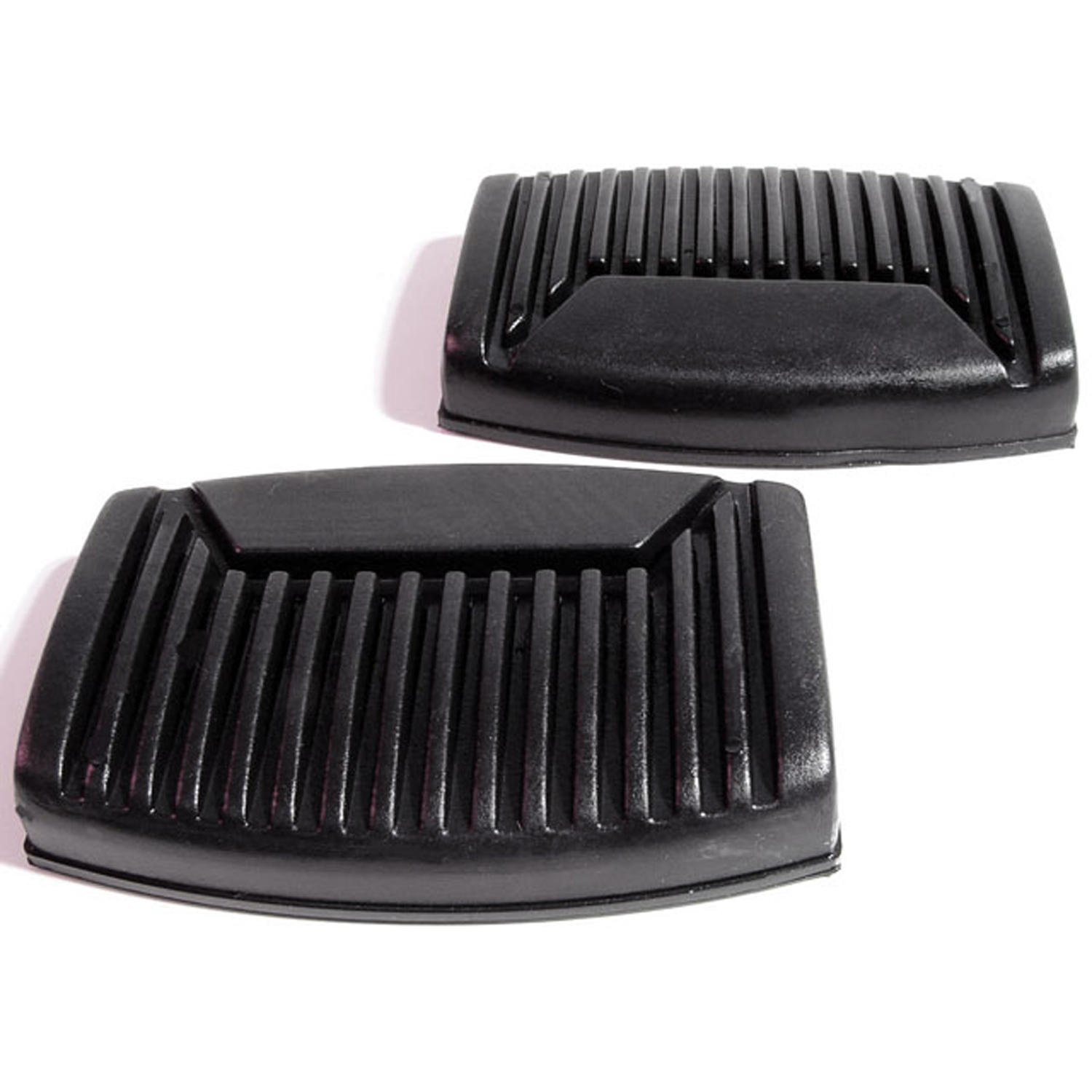 1975 Ford Bronco Clutch and Brake Pedal Pads. 3-1/4" wide X 2-1/4" long-CB 111Clutch and Brake Pedal Pads. 3-1/4" wide X 2-1/4" long. Pair
 1975 Ford Bronco Door Seals. Fits either side. 83-1/2" long. Pair-LM 11-BDoor Seals. Fits either side. 83-1/2" long. Pair
 1975 Ford Bronco Molded Roof Rail Seals. Pair R&L-RR 3310Molded Roof Rail Seals. Pair R&L
 1975 Ford Bronco Vulcanized Windshield Seal-VWS 3390Vulcanized Windshield Seal. For models without chrome garnish on windshield. Each
Why Choose Metro?
For over 100 years, Metro Moulded Parts has been the pinnacle of quality in classic car restoration parts. Our commitment to precision and authenticity in every component ensures a perfect fit and an OEM-level appearance.
- Expert Craftsmanship & Quality: Each part is a testament to our dedication to reliability and perfection, crafted from original designs and thoroughly tested.
- Advanced Technology: We use cutting-edge techniques to create flawless, long-lasting parts that surpass others in performance.
- SuperSoft Sponge – The Ultimate Door Seal: Not only are our door seals 30% softer than competitors', but they're also guaranteed to never leak. They effectively reduce wind and road noise, enhancing your classic car's comfort and driving experience.
- Proudly American: Our parts are a product of American craftsmanship, made in the USA with a spirit of excellence and heritage.
- Unrivaled Warranty: We back our products with a 30-year industry-leading warranty, a testament to our confidence in their quality.
Join us in preserving the legacy of classic cars with parts that are crafted for perfection, not just made.