

Image of 1975 Ford Custom 500, Note: These illustrations use artistic license and may differ from actual historical models.
Performance Metrics
Fundamental Metrics
Emotional Appeal
MMP Rating
| Engine Specifications | |
|---|---|
| Engine: | 302 CID 2V V8, 351 CID 2V V8, 400 CID 2V V8, 460 CID 4V V8 |
| Displacement: | 302 - 460 CID |
| Horsepower: | 140 - 220 HP |
| Torque: | 240 - 350 lb-ft |
| Compression Ratio: | 8.0:1 - 8.5:1 |
| Ignition System: | Conventional breaker-point ignition system |
| Cooling System: | Liquid-cooled |
| Performance Specifications | |
| 0-60 Time: | Estimated 10 - 12 seconds |
| 1/4 Mile Time: | Estimated 17 - 19 seconds |
| Top Speed: | 105 - 115 mph |
| Transmission and Drive | |
| Drive Type: | Rear-wheel drive |
| Transmission Type: | 3-speed automatic, 4-speed manual |
| Fuel and Efficiency | |
| Fuel System Type: | Carburetor |
| MPG: | Estimated 10 - 14 mpg |
| Dimensions and Brakes | |
| Brakes: | Front disc, rear drum |
| Wheelbase: | 114 inches |
| Weight: | 3,500 - 4,000 lbs |
Note: Specifications for classic cars are given to the best of our ability, considering the limited and variant data available.
1975 Ford Custom 500: The Full-Size Ford Built for Real Life
The 1975 Ford Custom 500 made a strong case for keeping things simple: give drivers a roomy, rear-wheel-drive American sedan, a sturdy chassis, and the essential comforts, without charging them for the extra trim of a luxury model. Built by the Ford Motor Company, it sat near the practical end of Ford’s full-size passenger-car range, beneath better-equipped models such as the LTD.
Its timing matters. The Custom 500 arrived as American drivers were adjusting to the fuel crisis, higher insurance costs, and increasingly strict emissions rules. Yet many buyers still wanted a substantial car with a broad bench seat, a smooth V8, and enough room for the family. One notable detail of the 1975 model year is that new U.S. cars, including the Custom 500, used catalytic converters to meet federal emissions standards and required unleaded fuel.
Clean Lines, Big-Car Presence
The Custom 500 wore the formal, squared-off look associated with mid-1970s American sedans. Its long hood, upright cabin, straight body sides, and broad trunk gave it a purposeful rather than sporty stance. A prominent grille and paired rectangular headlamps framed the front end, while the federally required energy-absorbing bumpers added bulk at both ends. At roughly 220 inches long, it was unmistakably a full-size car.
Ford kept the exterior detailing restrained compared with the more upscale models in its range. That simpler presentation was part of the Custom 500’s appeal: it looked substantial without relying on acres of bright trim. Buyers could choose from a wide range of period paint colors, generally including shades of white, blue, green, red, silver, tan, and brown. White and subdued earth tones suited its fleet-friendly character, while darker blues and greens gave the sedan a more dressed-up look.
The 1975 Custom 500 was offered as a two-door or four-door sedan. It was not the station wagon in the lineup; Ford sold wagons under separate names, including the Ranch Wagon and Country Squire. The four-door sedan was the natural choice for families and fleet operators, while the two-door offered a slightly cleaner profile.
A Practical Interior with Room to Spare
Inside, the Custom 500 favored durability and space over luxury-car ornament. Depending on the order, the cabin could have vinyl or cloth upholstery, with a broad front bench seat and a large rear bench. The dashboard was straightforward, with clear instruments and familiar controls. Materials were appropriate for an entry-level full-size Ford: serviceable and easy to clean, though not as richly trimmed as those in an LTD.
Options could make the cabin considerably more comfortable. Buyers could specify air conditioning, an AM/FM radio, cruise control, power steering, and power-assisted brakes, among other equipment. Exact availability varied with body style and configuration. The car also benefited from the safety and emissions changes of the era, including a collapsible steering column, federally required restraint systems, and a catalytic converter.
Where the Custom 500 Fit in Ford History
The Custom 500 was not a radical design experiment. Its importance was in how effectively it served a large audience with a familiar formula: body-on-frame construction, a roomy cabin, a front-engine, rear-wheel-drive layout, and V8 power. That combination made it useful to families, businesses, government departments, and other fleet buyers.
In 1975, that formula also set the car apart from the growing number of smaller, more fuel-conscious vehicles. The Custom 500 offered space and a relaxed highway ride that compact cars could not match, but it did so at a cost in fuel consumption and maneuverability. It shared much of its basic full-size Ford engineering with more expensive models, while using simpler trim to keep the purchase price and upkeep appealing to practical buyers.
V8 Power and a Relaxed Ride
Most 1975 Custom 500s were equipped with a 351-cubic-inch V8. Depending on the exact specification and market, larger 400- or 460-cubic-inch V8s were also available. Power was generally sent through a three-speed automatic transmission to the rear wheels. The emphasis was on smooth, easygoing torque rather than sharp acceleration or sporty handling.
Ford did not publish one performance figure that applies to every Custom 500 configuration, and a car’s condition, axle ratio, engine, and equipment make a real difference. As a broad period-car estimate, a healthy 351-equipped example might reach 60 mph in roughly 11 to 14 seconds, with a top speed in the neighborhood of 100 to 110 mph. Larger-engine cars could be quicker, but these figures should be treated as estimates, not factory test results for every version.
On the road, the Custom 500 feels like a traditional big American sedan. Its long wheelbase helps it glide over broken pavement, and power steering makes parking-lot maneuvers less demanding than the car’s size suggests. On winding roads, however, its weight and soft suspension encourage a measured pace. Crosswinds and narrow streets remind the driver that this is a broad, substantial automobile, not a nimble sports sedan.
The driving experience is part of its charm. The V8 produces a low, steady rumble, the automatic shifts without fuss, and the bench seat encourages relaxed cruising. It feels most at home on a straight highway, where its generous interior and cushioned ride come into their own.
Ownership, Repairs, and Everyday Use
In period, the Custom 500 could be a family car, commuter, company vehicle, or fleet sedan. Today, surviving examples are more likely to be used as weekend drivers, nostalgic cruisers, restoration projects, or understated show cars. Its size and fuel consumption make it less appealing as a modern daily driver, especially in crowded cities, but it can still handle regular use if it has been maintained properly.
Mechanical repairs are generally approachable for an owner with basic experience. Ford V8s and conventional automatic transmissions are familiar to many independent shops, and routine service items are not exotic. Rust, old wiring, worn suspension parts, cooling-system neglect, and deteriorated rubber components deserve careful attention. Finding some mechanical parts is easier than locating sound body panels, model-specific trim, or correct interior pieces, so check completeness before buying a restoration candidate.
Custom 500 Facts and Common Criticisms
The Custom 500’s unflashy image is closely tied to its fleet role. Similar full-size Fords were common in government and commercial service, and Custom 500s could be ordered for demanding work. However, a standard Custom 500 should not automatically be described as a police-package car: equipment and powertrain depended on the original order.
There is no widely recognized speed or endurance record associated with the 1975 Custom 500, and no single celebrity-owned example defines its story. Its more meaningful claim to fame is that cars from this class became part of the everyday American landscape, serving as family transportation and working vehicles rather than carefully preserved collectibles. They also appear in period photographs and screen backgrounds as instantly recognizable examples of 1970s full-size motoring.
Common criticisms are familiar: high fuel use, a large footprint, soft handling, and modest acceleration in standard-engine form. Modern drivers may also find the braking feel, visibility, and safety equipment dated. Those drawbacks are real, but they are balanced by a spacious cabin, simple mechanical layout, and an appealingly unpretentious character.
Collector Value and Availability
Surviving 1975 Custom 500s are less visible in the collector market than better-known Ford names such as the Mustang or LTD. They are not generally considered rare in the same way as a limited-production performance car, but clean, original examples can take time to find because many were used hard as family or fleet vehicles. Ford did not make a reliable, commonly cited production total for every Custom 500 body and engine combination. A reasonable non-factory estimate is several tens of thousands of sedans, perhaps around 30,000 to 60,000 for the model year, but that should be treated as an informed guess rather than an official figure.
As a broad current-market guide, a project car may sell for about $1,500 to $4,000, while a usable driver could fall around $4,000 to $9,000. A very clean, original, or carefully restored example might bring roughly $10,000 to $18,000, with exceptional condition or unusual specification potentially pushing higher. These are approximate U.S. ranges; location, rust, documentation, originality, and buyer demand can change the final price substantially.
The Custom 500 has generally remained an affordable classic rather than a high-flying investment. Attractive, rust-free cars have become harder to find, which can support values, but ordinary examples have not shown the sharp appreciation seen in more celebrated muscle cars. Expect the strongest interest to go to original cars with complete trim, documented history, and a well-preserved interior.
Why the 1975 Ford Custom 500 Still Matters
The 1975 Ford Custom 500 was a big, honest sedan from an era when American cars were adapting to new economic and emissions realities. It offered familiar V8 power, a roomy cabin, straightforward engineering, and the reassuring presence of a full-size Ford without the extra polish of the luxury models. It was not built to set records or steal every spotlight. Its significance lies in how well it represented everyday American motoring, and in the sturdy, comfortable character that still makes a good example enjoyable today.
1975 Ford Custom 500 Catalog of Parts
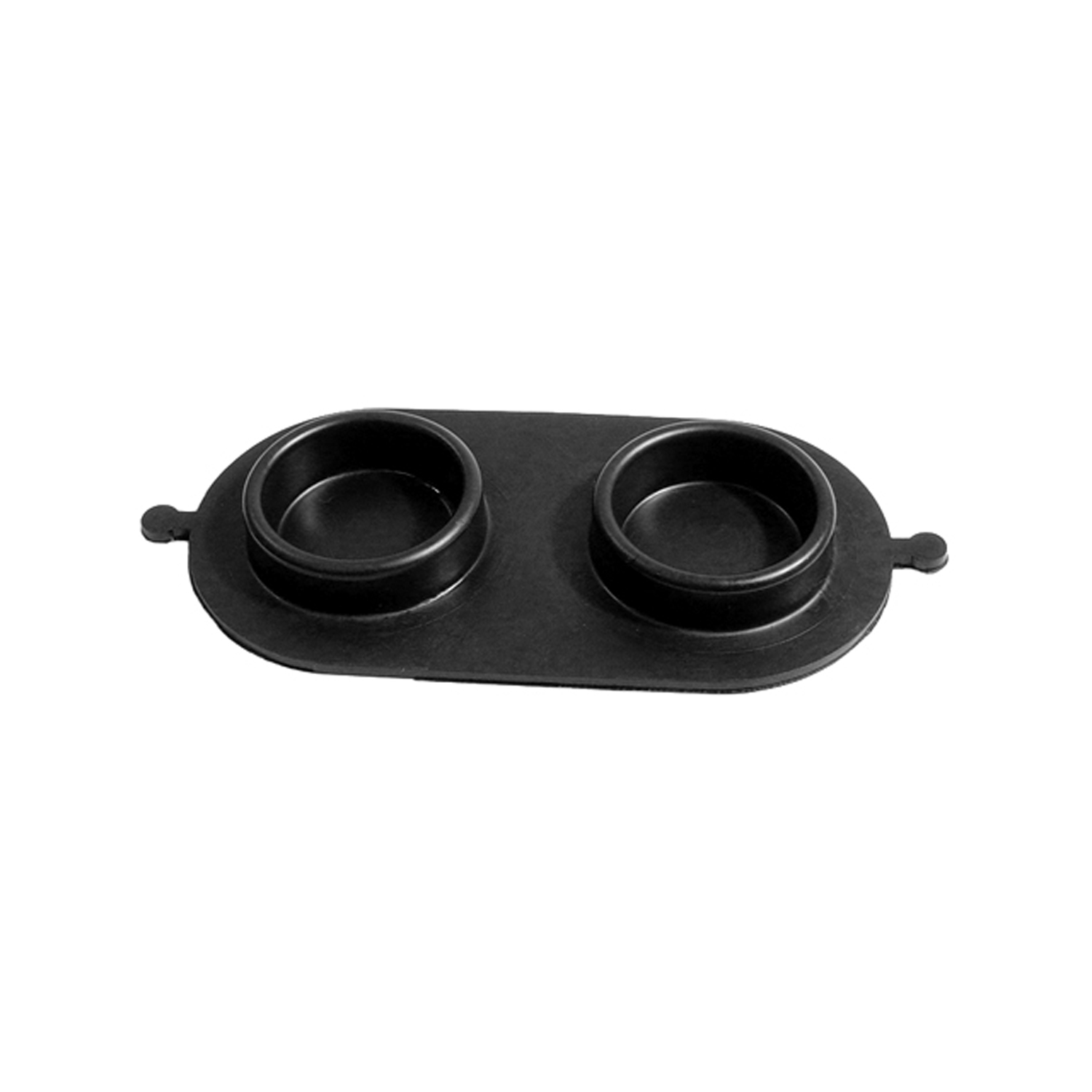 1975 Ford Custom 500 Brake Master Cylinder Cover Seal. Replaces OEM #C7AZ2167-A-RP 2-BBrake Master Cylinder Cover Seal. Replaces OEM #C7AZ2167-A. Each
Why Choose Metro?
For over 100 years, Metro Moulded Parts has been the pinnacle of quality in classic car restoration parts. Our commitment to precision and authenticity in every component ensures a perfect fit and an OEM-level appearance.
- Expert Craftsmanship & Quality: Each part is a testament to our dedication to reliability and perfection, crafted from original designs and thoroughly tested.
- Advanced Technology: We use cutting-edge techniques to create flawless, long-lasting parts that surpass others in performance.
- SuperSoft Sponge – The Ultimate Door Seal: Not only are our door seals 30% softer than competitors', but they're also guaranteed to never leak. They effectively reduce wind and road noise, enhancing your classic car's comfort and driving experience.
- Proudly American: Our parts are a product of American craftsmanship, made in the USA with a spirit of excellence and heritage.
- Unrivaled Warranty: We back our products with a 30-year industry-leading warranty, a testament to our confidence in their quality.
Join us in preserving the legacy of classic cars with parts that are crafted for perfection, not just made.