
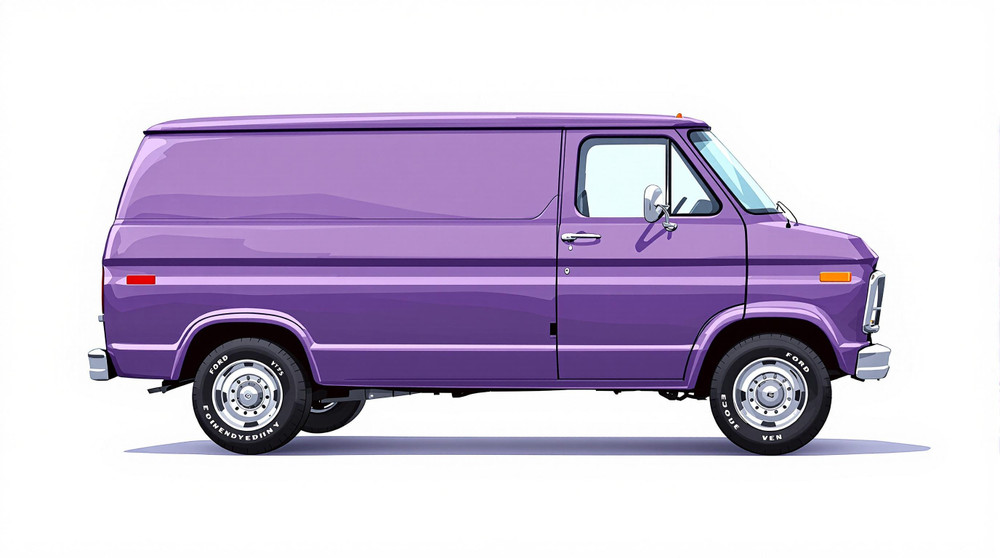
Image of 1975 Ford E-100 Econoline, Note: These illustrations use artistic license and may differ from actual historical models.
Performance Metrics
Fundamental Metrics
Emotional Appeal
MMP Rating
| Engine Specifications | |
|---|---|
| Engine Options: | 4.9L Inline-6, 5.8L V8, 7.5L V8 |
| Displacement Range: | 4.9L - 7.5L |
| Horsepower Range: | 101 - 208 hp |
| Torque: | 223 - 312 lb-ft |
| Compression Ratio: | 8.0:1 - 8.4:1 |
| Ignition System: | Distributor ignition |
| Cooling System: | Liquid cooled |
| Performance Specifications | |
| 0-60 Time: | Estimated 12 - 15 seconds |
| 1/4 Mile Time: | Estimated 18 - 20 seconds |
| Top Speed: | 85 - 95 mph |
| Transmission and Drive | |
| Drive Type: | Rear-wheel drive |
| Transmission Type: | 3-speed automatic or 4-speed manual |
| Fuel and Efficiency | |
| Fuel System Type: | Carburetor |
| MPG: | Estimated 10 - 14 mpg |
| Dimensions and Brakes | |
| Brakes: | Front disc and rear drum brakes |
| Wheelbase: | 124 inches |
| Weight: | 4,500 - 5,000 lbs |
Note: Specifications for classic cars are given to the best of our ability, considering the limited and variant data available.
1975 Ford E-100 Econoline: A Van Reborn
The 1975 Ford E-100 Econoline traded its old cab-forward look for a more conventional nose, marking a major turning point for Ford’s full-size van. Built by the Ford Motor Company, the E-100 was the light-duty member of the Econoline range, intended for tradespeople, small businesses, families, and anyone who needed a roomy vehicle with truck-like toughness.
The redesign launched the third-generation Econoline and brought the van closer to the driving layout and construction of a pickup. Its engine sat farther forward than in earlier Econolines, giving the front end a more familiar shape and making the vehicle feel less like a cab-over delivery truck. A notable result was greater room inside the cab and a more accessible engine compartment, though servicing still meant working around the familiar engine cover between the seats.
The E-100 is not as instantly recognizable as some later custom vans, but it helped establish the basic formula that kept the Ford E-Series in production for decades: a durable body-on-frame platform, a broad choice of engines and body configurations, and practical packaging that suited everything from cargo work to passenger transport.
Exterior Design and Interior Practicality
The 1975 E-100 has a squared-off, purposeful profile, with a tall roof, broad sides, and a short hood that gives the van a more conventional front end than its predecessors. A wide grille and round headlamps dominate the nose, while the large windshield and upright side glass provide the driver with a commanding view. The styling is simple rather than sleek, but that is part of its appeal: every surface looks built for work.
Ford offered the Econoline in cargo and passenger configurations, with details varying by trim and equipment. The cargo van’s unadorned sides were ready for business lettering or shelving, while passenger versions added side windows, extra seating, and more cabin trim. Depending on the body and package, buyers could also choose features such as upgraded upholstery, carpeting, additional interior trim, and convenience equipment.
Inside, the emphasis was on durability and function. Vinyl was common in work-oriented versions because it could take a beating and clean up easily. More comfort-focused models could be ordered with cloth or upgraded trim. The dashboard was straightforward, with clear, analog instruments and large, simple controls. It was not a luxury-car cabin, but it was easy to understand and made sense for a vehicle expected to spend long days on the road.
Available paint choices varied with the order and market, but period Ford colors included practical fleet shades as well as brighter and more personal options. White, red, blue, and earth-toned colors were familiar choices. White was especially popular for commercial vans because it suited fleet use, stayed relatively cool in the sun, and provided a clean background for company graphics. Custom-painted vans could be far more colorful, although extravagant murals and shag-carpet interiors are more closely associated with the custom-van boom of the late 1970s.
Engines, Equipment, and Body Choices
The E-100 was the light-duty Econoline, but buyers could still configure it in several ways. The range included cargo vans and passenger-oriented Club Wagon models, alongside heavier E-150, E-250, and E-350 versions. Wheelbase, payload, seating, and equipment depended on the model and body style. Some versions were aimed squarely at delivery and trade work, while passenger models could serve as family haulers, hotel shuttles, or small-bus alternatives.
Engine availability varied by model and specification. Six-cylinder power was a natural choice for buyers who valued economy and dependable low-speed work, while V8 options offered stronger acceleration and more relaxed highway driving. Common engines in the broader 1975 Econoline family included Ford’s 300-cubic-inch inline-six and V8s such as the 302. Exact availability should be checked against the vehicle’s original build information, since engines and transmissions could differ by weight rating, market, and order.
Manual and automatic transmissions were offered, again depending on configuration. Power steering, power brakes, air conditioning, and passenger comforts were available on some versions or as options. For its time, the E-100’s most useful innovation was less about electronics and more about its updated layout. The redesign made the van easier to package for different jobs and helped bring full-size vans toward the more familiar front-engine format that would define the class.
Why the 1975 Redesign Matters
The E-100’s importance lies in its role as part of a major architectural change. Earlier Econolines had a more cab-forward character, placing the driver close to the front of the vehicle. The 1975 generation adopted a longer, more conventional nose and a body-on-frame structure. That change helped Ford create a sturdier, more adaptable platform for commercial bodies, passenger interiors, and later recreational conversions.
Compared with cars of the period, the E-100 was blunt, heavy, and utilitarian. Compared with other full-size vans, its appeal was its balance of familiar Ford mechanicals, generous space, and multiple weight classes. It was not designed to introduce high-performance technology. Instead, it helped make the van a mainstream tool and transport vehicle, suitable for a contractor in the morning and a family road trip on the weekend.
The E-Series name endured through many generations, with the platform continuing to serve commercial fleets long after passenger versions became less common. The 1975 model is an important early example of the layout that made that longevity possible.
Performance and Driving Feel
Performance depends heavily on engine, gearing, transmission, load, and body configuration. Ford did not publish a single useful acceleration figure that applies to every E-100, so period-style performance estimates should be treated as approximations. A six-cylinder example might take roughly 17 to 22 seconds to reach 60 mph, while a V8-equipped van could be closer to 14 to 18 seconds when lightly loaded. A heavy passenger conversion or a van carrying cargo would be slower.
Top speed is similarly configuration-dependent. A sound, lightly loaded example might reach roughly 80 to 90 mph, but the E-100 is happiest cruising at sensible highway speeds rather than running flat out. Its upright body catches crosswinds, and a gust or passing semi can require a firm correction at the wheel. On winding roads, the high center of gravity and work-focused suspension encourage smooth, measured driving instead of quick cornering.
The ride is trucklike, especially when the van is empty. Sharp bumps can send a noticeable jolt through the body, while a load may settle the suspension and make the ride feel more composed. From the driver’s seat, the view over traffic is excellent, but the van’s size and limited rear visibility demand care when parking or changing lanes. Expect a mechanical soundtrack: engine noise comes through the doghouse, road noise fills the big cabin, and a V8 adds a satisfying low rumble under acceleration.
Living With an E-100 Today
Most surviving E-100s are used as hobby vehicles, vintage work vans, camper projects, mobile businesses, or show vehicles. A clean, original cargo van can still be useful, while passenger and custom versions attract buyers looking for a nostalgic people-mover or a base for a period-style restoration.
Mechanical repairs are generally approachable for an experienced home mechanic. The engines and transmissions are from an era before complex computer controls, and many routine service jobs require ordinary tools. Parts availability is mixed: common Ford mechanical components can often be sourced, but model-specific trim, body panels, and interior pieces may take more hunting. Before buying, inspect the frame, floor, rocker panels, door bottoms, windshield surrounds, and seams for rust. Also check the cooling system, steering and suspension wear, brake condition, charging system, and the state of any old wiring or aftermarket modifications.
Reliability depends more on condition and maintenance than on the badge. A neglected van can become a long list of jobs, while a well-kept example can be straightforward to own. Remember that a 1975 vehicle lacks modern safety features such as airbags and anti-lock brakes. Its brakes, handling, and crash protection reflect the standards of its time, so leave extra following distance and drive with the van’s size and age in mind.
Useful E-100 Trivia
The 1975 redesign was more than a styling update: it moved the Econoline toward the long-lived front-engine, body-on-frame format that became a defining feature of Ford’s full-size vans. The E-100 designation identified the light-duty end of the range, while heavier E-Series models were available for larger payloads and more demanding commercial work.
There is no single celebrated E-100 record or universally recognized 1975 special edition comparable to a famous muscle-car package. Nor is there a well-documented celebrity ownership story that defines the model. Its cultural footprint is broader and more everyday: vans like it carried tradespeople, sports teams, families, delivery goods, and later generations of camper and custom-van enthusiasts.
One common criticism is that the E-100 is noisy and thirsty by modern standards, particularly with a V8. Its boxy shape also makes it vulnerable to crosswinds, and the high step-in and broad turning circle can make city use less convenient than driving a modern minivan. Those compromises are balanced by its sturdy construction, generous interior, and simple, repairable mechanical character.
Collector Values and Market Outlook
Exact production figures for the 1975 E-100 are difficult to pin down because publicly available totals do not always separate the E-100 cleanly from other Econoline models, body styles, and equipment packages. As a broad estimate rather than a factory figure, production of E-100 variants may have reached tens of thousands, perhaps somewhere around 20,000 to 50,000 units. That range should be treated as an informed guess, not a documented count.
Values vary widely with rust, originality, mechanical condition, and body style. In the current collector market, a project or heavily worn van might sell for roughly $2,000 to $6,000. A running driver in usable condition may bring about $7,000 to $15,000, while a clean, well-restored, or especially appealing passenger model could reach $18,000 to $30,000 or more. Exceptional restorations and high-quality custom builds can exceed those ranges, but modifications do not automatically add value.
The E-100 has generally been a more affordable classic than iconic muscle cars or rare specialty vans. Interest in vintage vans and camper conversions has supported values, especially for rust-free examples, but prices remain condition-sensitive. A complete, original van with solid metal is often a better investment than a cheap project requiring extensive bodywork.
The Appeal of the 1975 Ford E-100
The 1975 Ford E-100 Econoline is a practical classic with an important place in the evolution of the full-size van. Its redesigned front end, adaptable body-on-frame platform, straightforward cabin, and familiar Ford mechanicals made it useful in countless roles. It is not fast or refined, and it asks its driver to respect its size, age, and work-vehicle manners.
What it offers instead is character and versatility: a roomy, hands-on machine from the moment when the American van was becoming a fixture of both business and everyday life. Restored as a work van, preserved as a period survivor, or converted for a weekend adventure, the E-100 remains a rolling reminder that practical design can have a long and memorable life.
1975 Ford E-100 Econoline Catalog of Parts
 1975 Ford E-100 Econoline Brake Pedal Pad. 4-3/4" wide X 2-1/4" long-CB 111-NBrake Pedal Pad. 4-3/4" wide X 2-1/4" long. Replaces OEM #'s BC3Z2457B, D3TZ2457A, D3TZ2457B. Each
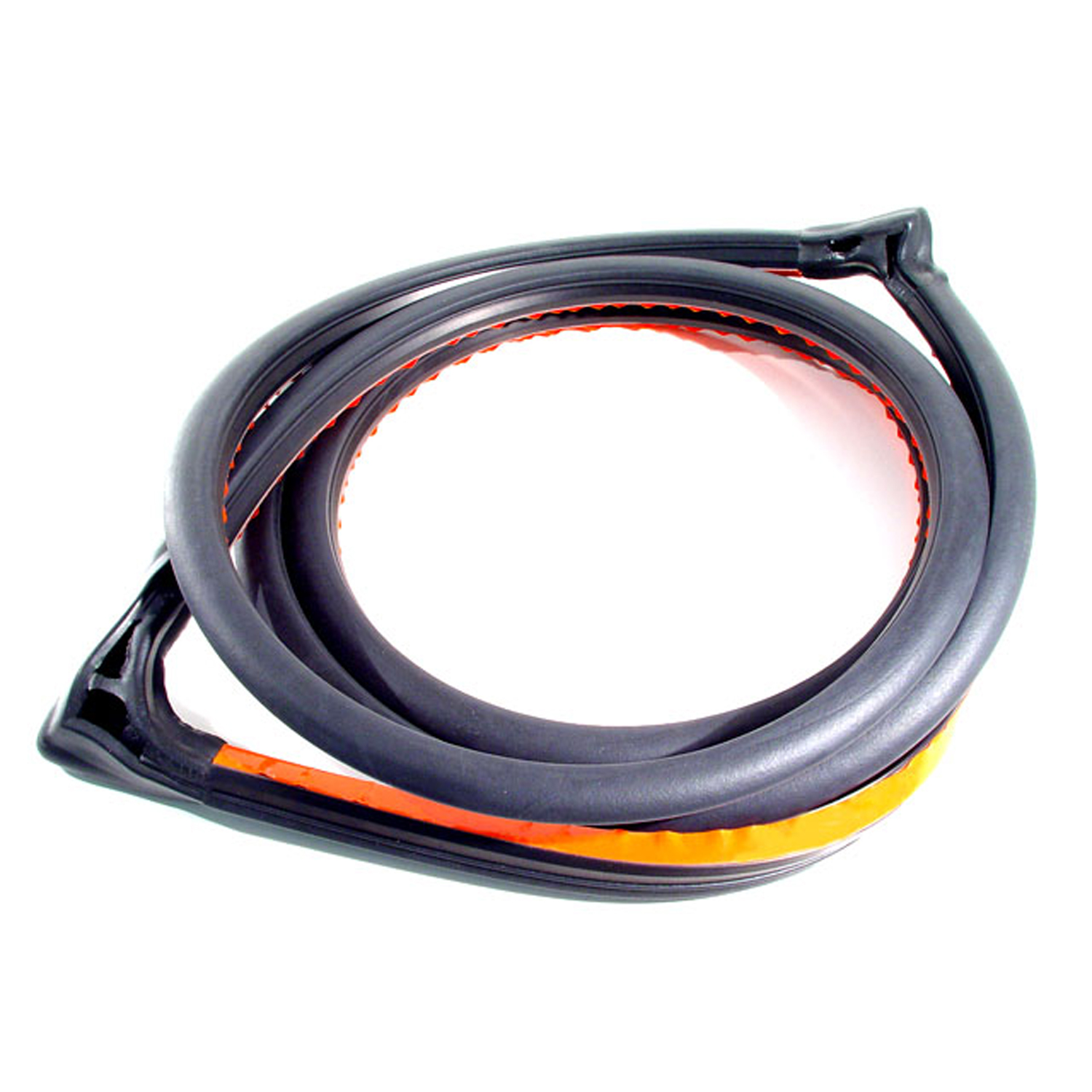 1975 Ford E-100 Econoline Front Side Cargo Door Seal-LM 110-VAFront Side Cargo Door Seal (fits front right side of cargo door). Replaces OEM #E9UZ 1525324 B. For rear (left side) matching seal, see LM 110-VB. Each
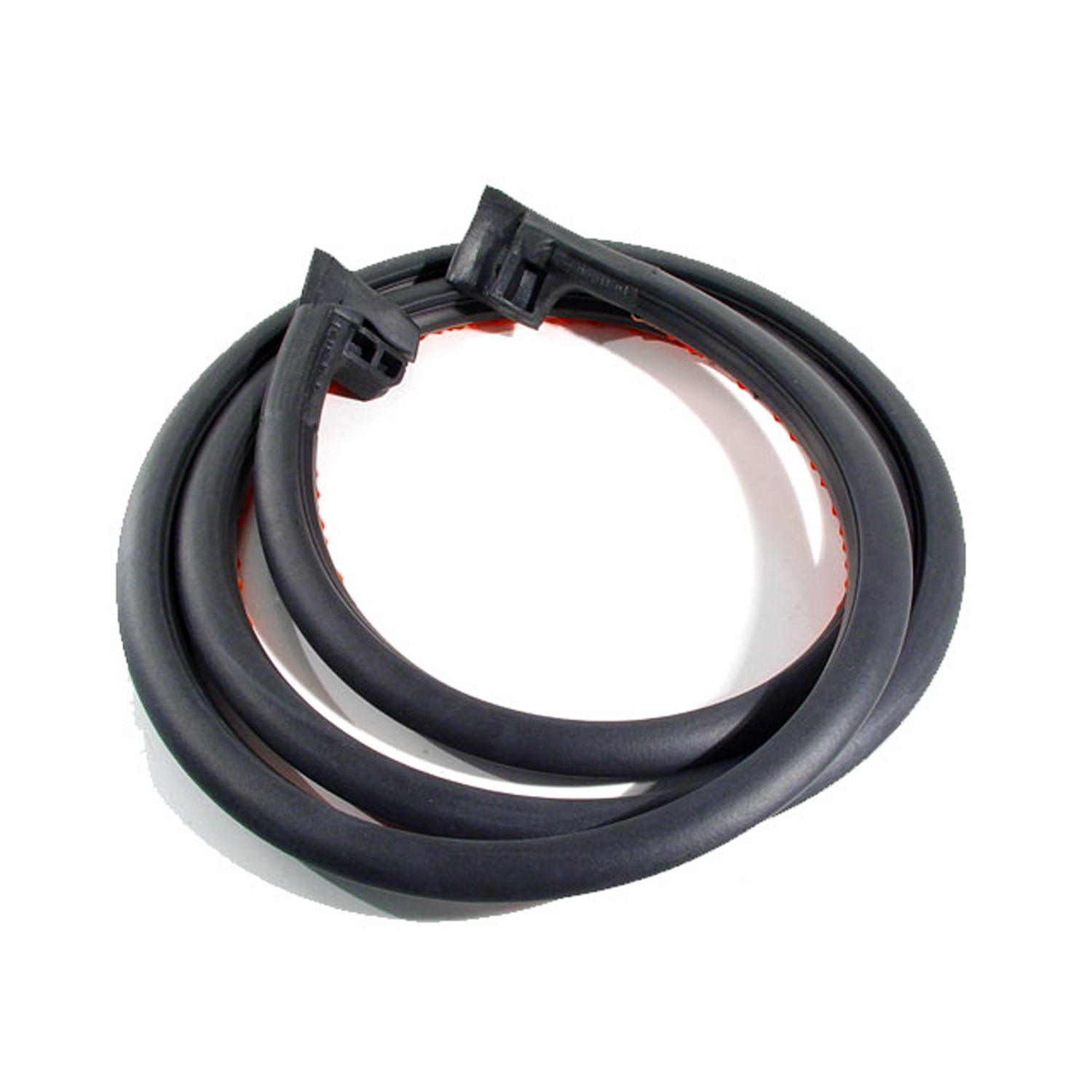 1975 Ford E-100 Econoline Rear Side Cargo Door Seal-LM 110-VBRear Side Cargo Door Seal (fits rear left side of cargo door). Replaces OEM #E9UZ 1525325 B. For front (right side) matching seal, see LM 110-VA. Each
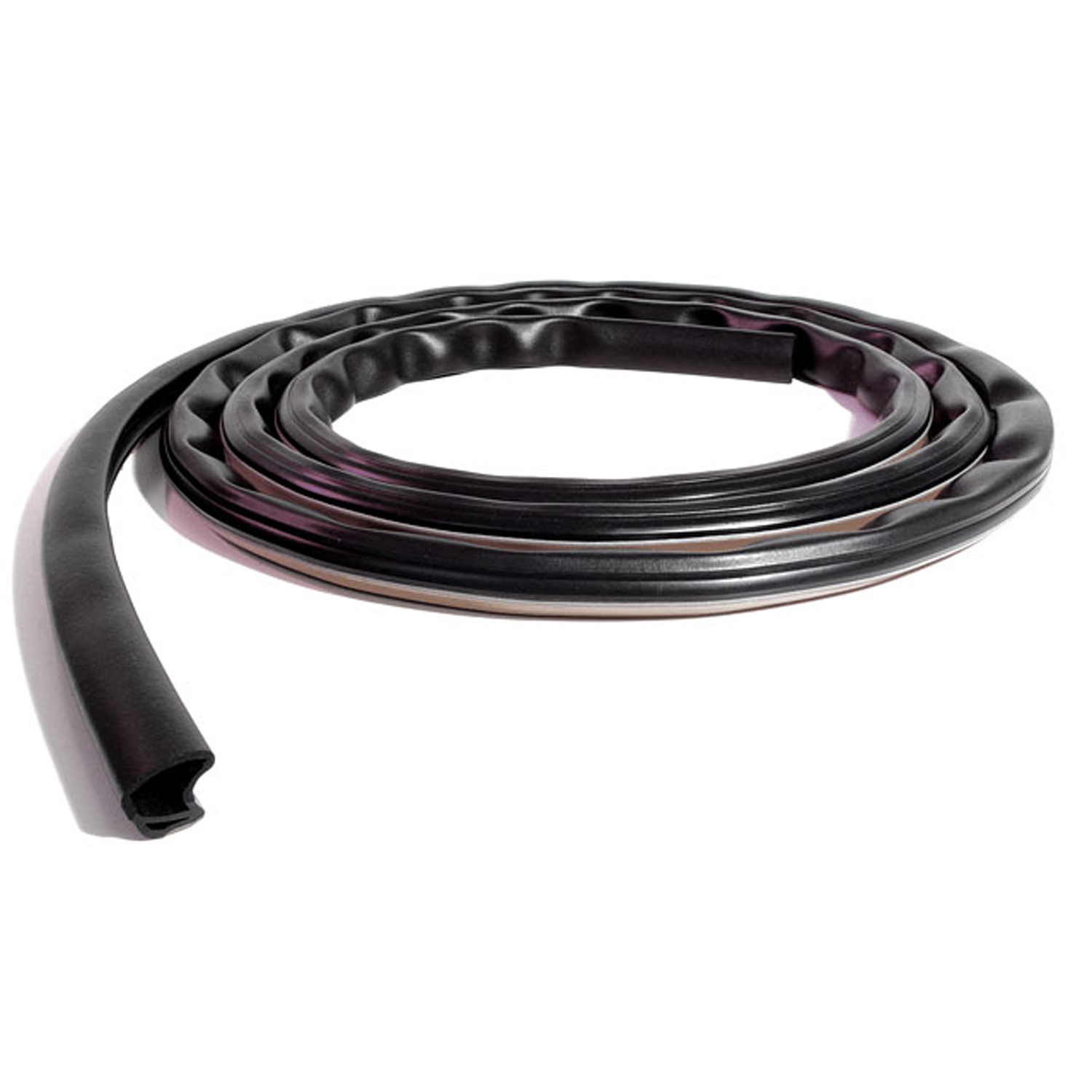 1975 Ford E-100 Econoline Left Front (drivers side) Door Seal. Each-LM 110-VLLeft Front (drivers side) Door Seal. Each
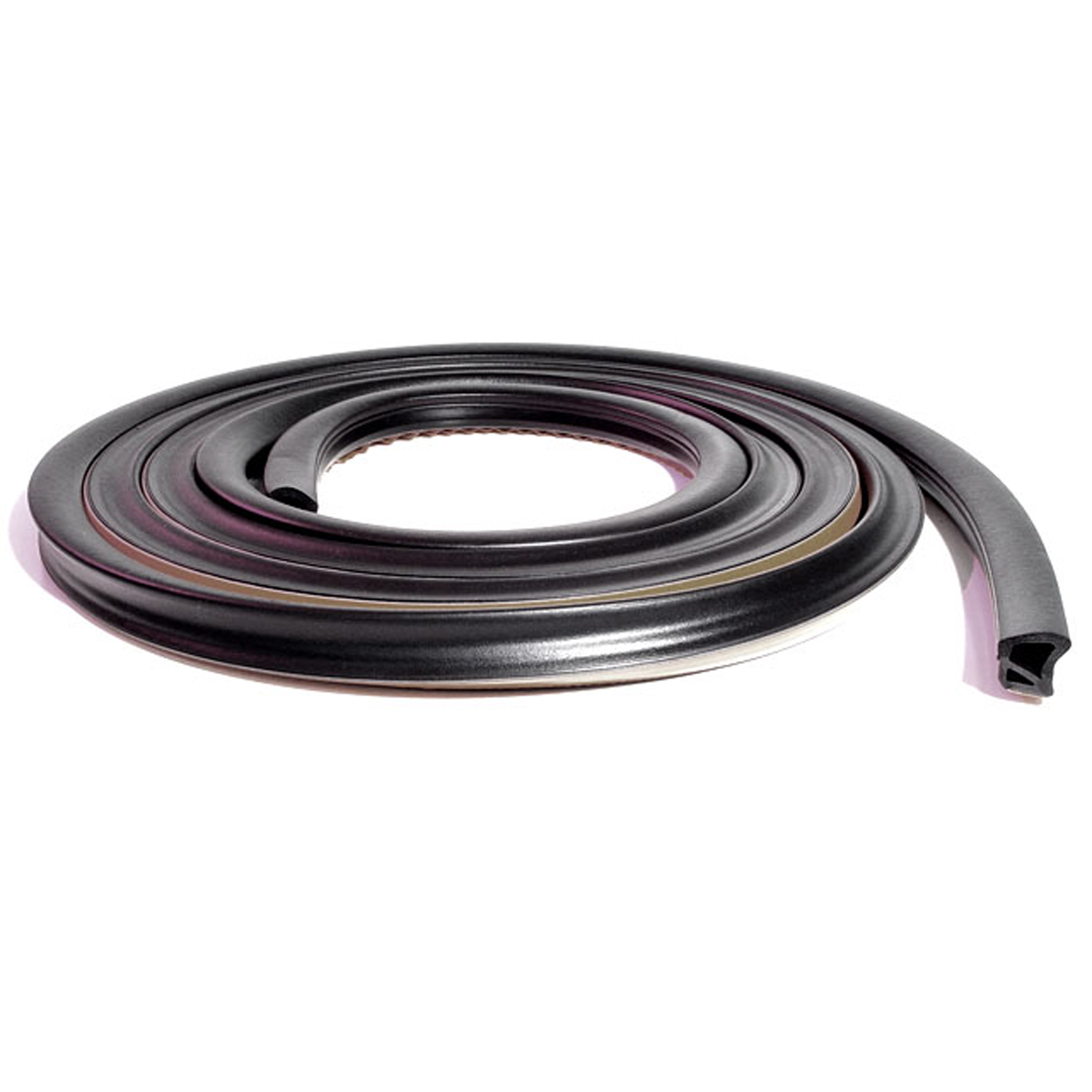 1975 Ford E-100 Econoline Right Front (passenger side) Door Seal. Each-LM 110-VRRight Front (passenger side) Door Seal. Each
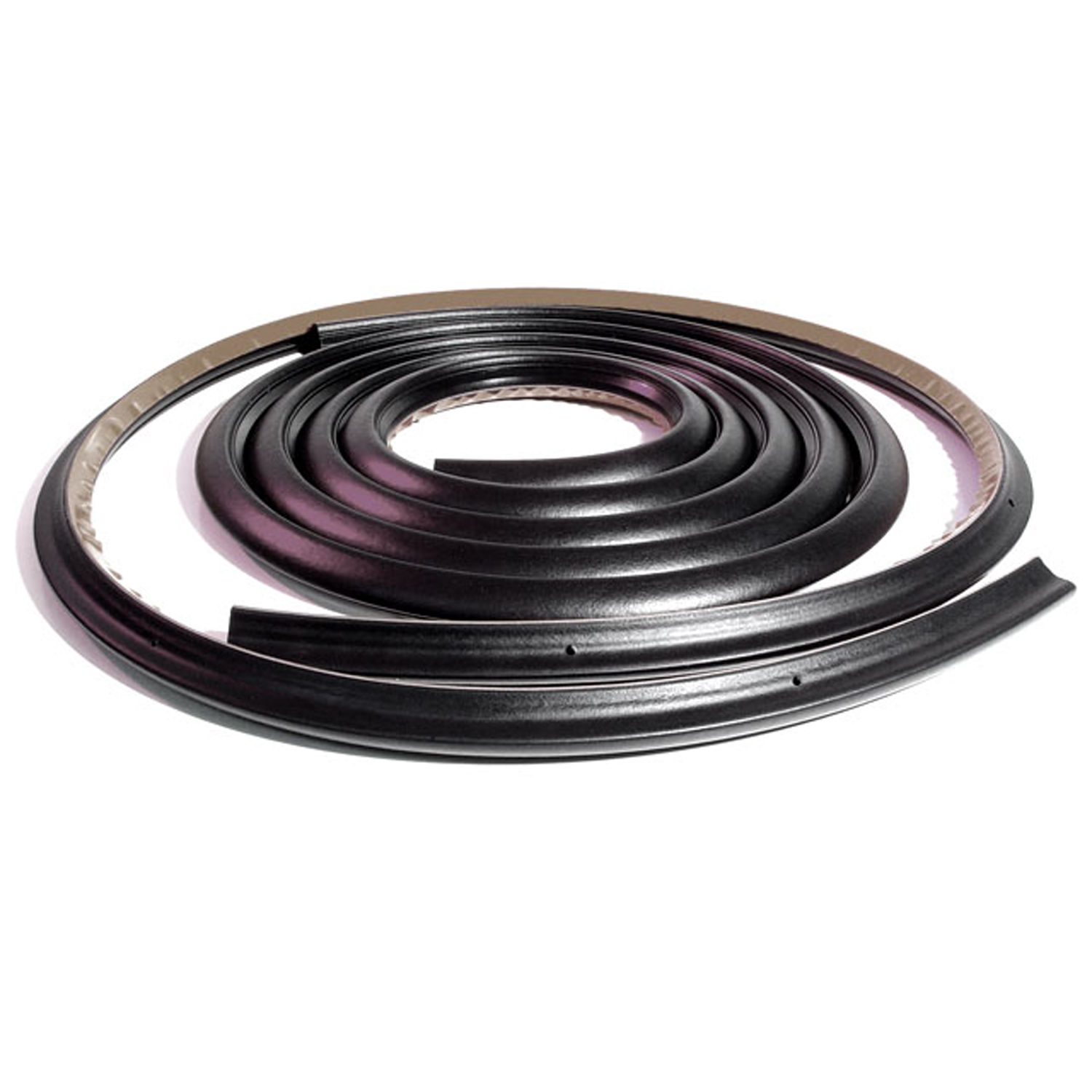 1975 Ford E-100 Econoline Side Slider Door Seal. Each-LM 110-VSSide Slider Door Seal. Each
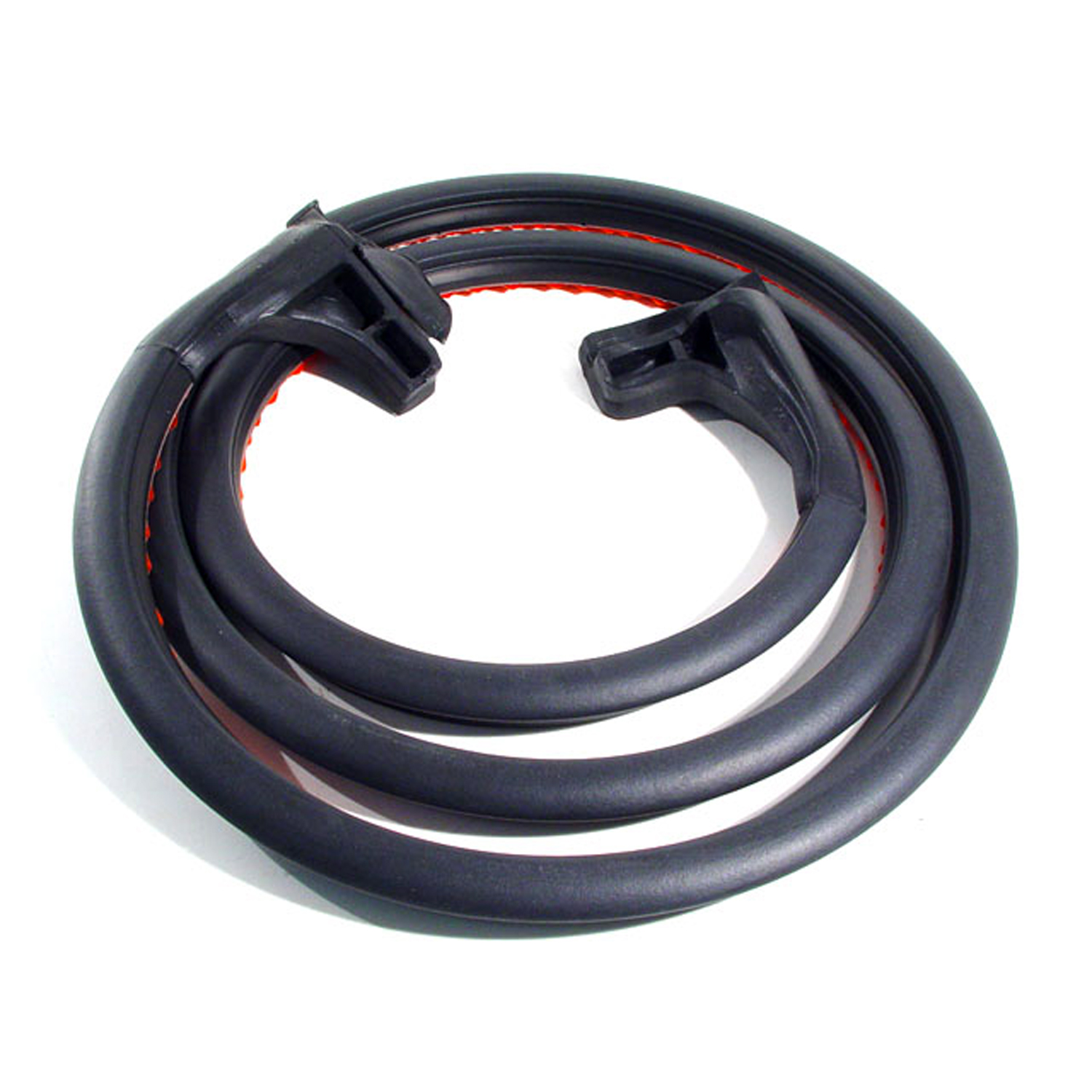 1975 Ford E-100 Econoline Left Rear Door Seal (Drivers Side)-LM 110-VTLeft Rear Door Seal (Drivers Side). Replaces OEM #E9UZ 1543723 A. Each
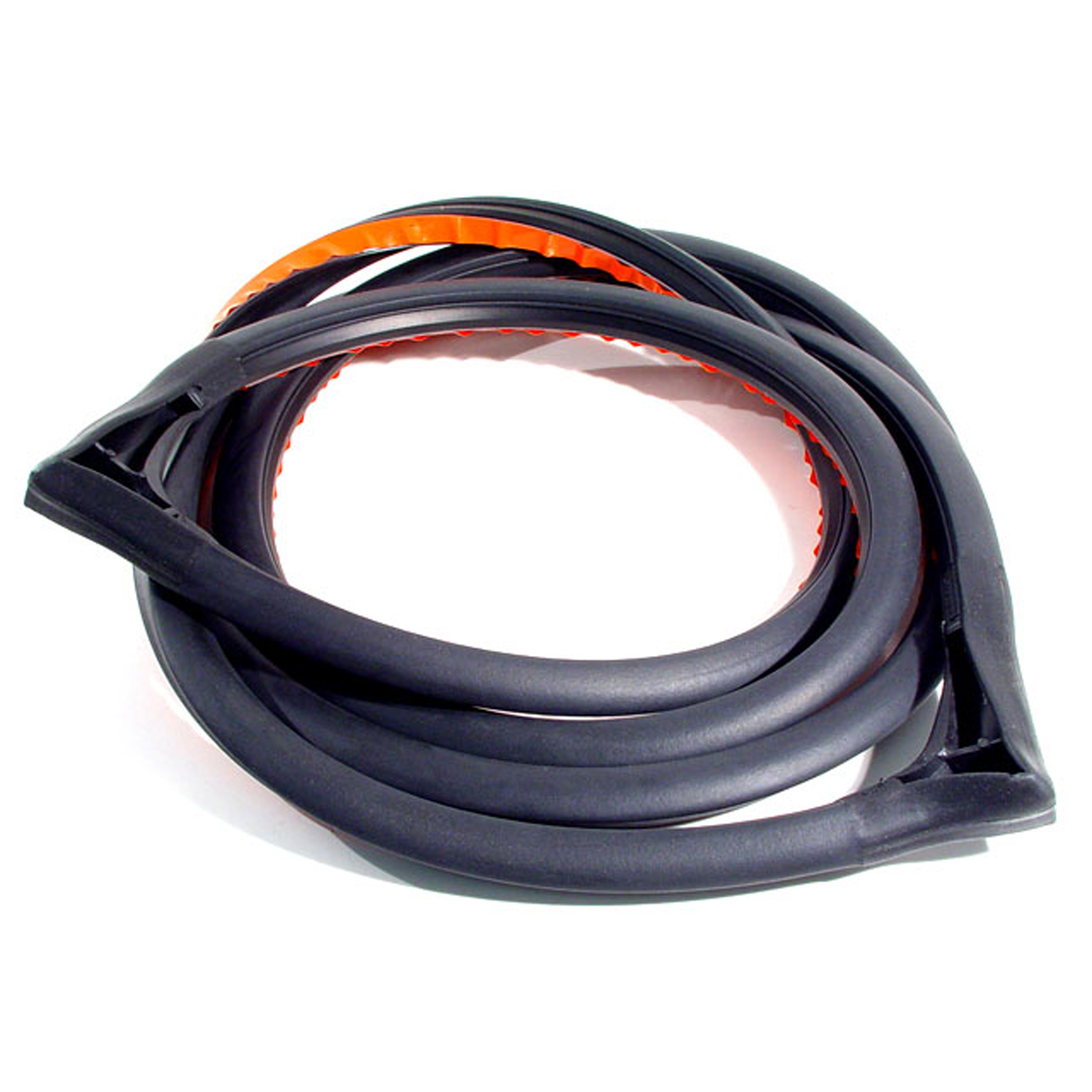 1975 Ford E-100 Econoline Right Rear Door Seal (Passenger Side)-LM 110-VURight Rear Door Seal (Passenger Side). Replaces OEM #F0UZ 1543722 A. Each
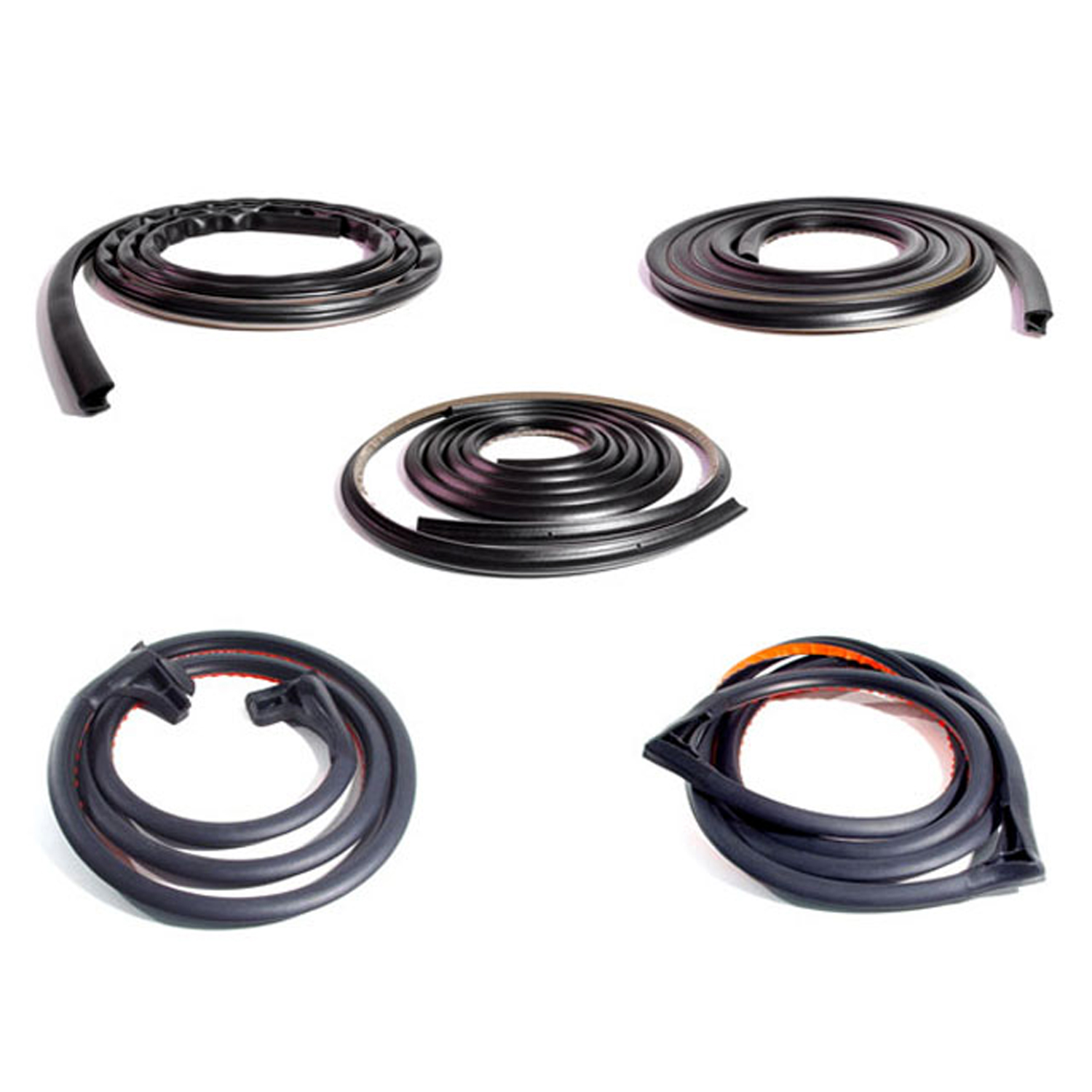 1975 Ford E-100 Econoline Basic Kit, for Models with Side Sliding Door-RKB 3000-100Basic Kit, for Models with Side Sliding Door. Front Left Door (LM 110-VL), Front Right Door (LM 110-VR), Back Left Door (LM 110-VT), Back Right Door (LM 110-VU), Side Sliding Door (LM 110-VS) Seals.
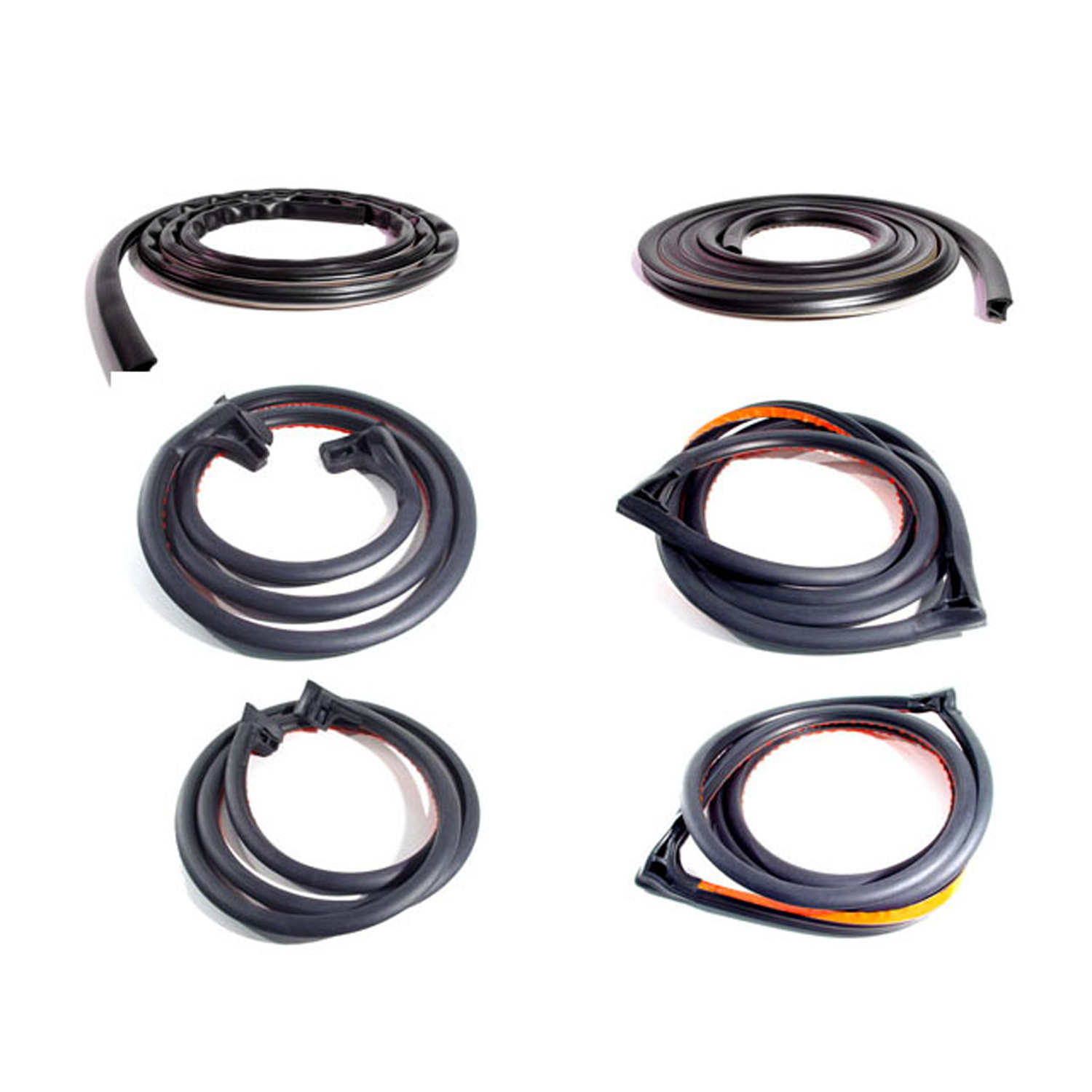 1975 Ford E-100 Econoline Basic Kit, for Models w/Side Cargo Door-RKB 3000-101Basic Kit, for Models w/Side Cargo Door. Front Left LM 110-VL), Front Right LM 110-VR), Back Left LM110-VT), Back Right LM 110-VU), Front Cargo Side (LM 110-VA), Rear Cargo Side (LM 110-VB) Door Seals.
Why Choose Metro?
For over 100 years, Metro Moulded Parts has been the pinnacle of quality in classic car restoration parts. Our commitment to precision and authenticity in every component ensures a perfect fit and an OEM-level appearance.
- Expert Craftsmanship & Quality: Each part is a testament to our dedication to reliability and perfection, crafted from original designs and thoroughly tested.
- Advanced Technology: We use cutting-edge techniques to create flawless, long-lasting parts that surpass others in performance.
- SuperSoft Sponge – The Ultimate Door Seal: Not only are our door seals 30% softer than competitors', but they're also guaranteed to never leak. They effectively reduce wind and road noise, enhancing your classic car's comfort and driving experience.
- Proudly American: Our parts are a product of American craftsmanship, made in the USA with a spirit of excellence and heritage.
- Unrivaled Warranty: We back our products with a 30-year industry-leading warranty, a testament to our confidence in their quality.
Join us in preserving the legacy of classic cars with parts that are crafted for perfection, not just made.