
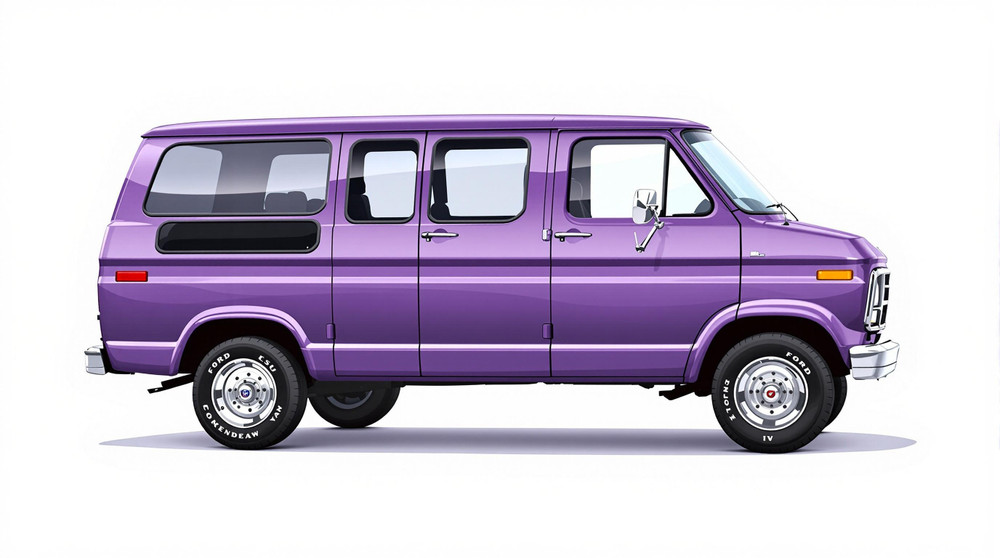
Image of 1975 Ford E-150 Econoline Club Wagon, Note: These illustrations use artistic license and may differ from actual historical models.
Performance Metrics
Fundamental Metrics
Emotional Appeal
MMP Rating
| Engine Specifications | |
|---|---|
| Engine Options: | 4.9L Inline-6, 5.8L V8, 7.5L V8 |
| Displacement Range: | 4.9L - 7.5L |
| Horsepower Range: | 101-210 HP |
| Torque: | 223-338 lb-ft |
| Compression Ratio: | 8.0:1 - 8.4:1 |
| Ignition System: | Distributor ignition system |
| Cooling System: | Liquid cooled |
| Performance Specifications | |
| 0-60 Time: | Estimated 12-15 seconds |
| 1/4 Mile Time: | Estimated 18-20 seconds |
| Top Speed: | 85-95 mph |
| Transmission and Drive | |
| Drive Type: | Rear-wheel drive |
| Transmission Type: | 3-speed automatic |
| Fuel and Efficiency | |
| Fuel System Type: | Carburetor |
| MPG: | Estimated 10-14 MPG |
| Dimensions and Brakes | |
| Brakes: | Front disc and rear drum brakes |
| Wheelbase: | 124 inches |
| Weight: | 4,500-5,000 lbs |
Note: Specifications for classic cars are given to the best of our ability, considering the limited and variant data available.
1975 Ford E-150 Econoline Club Wagon: The Full-Size Van Comes of Age
The 1975 Ford E-150 Econoline Club Wagon turned the full-size van from a basic work tool into a roomy, family-friendly machine with the presence of a pickup and the usefulness of a small bus. Built by Ford Motor Company, it arrived as part of a major redesign that gave the Econoline a more conventional truck-style chassis, a broader range of passenger comforts, and a stronger foundation for the camper and conversion-van boom that followed.
There is a useful distinction in its name: E-150 identifies the van’s half-ton weight class, Econoline is Ford’s van line, and Club Wagon denotes the passenger-oriented version. The 1975 model also marked a turning point for the nameplate. Earlier Econolines had a more cab-forward layout, while the redesigned van looked and behaved more like a conventional American truck.
One standout detail is that Ford’s 1975 redesign introduced a separate body and frame to the Econoline. That change gave the van a more substantial truck-like structure and helped make it a versatile base for passenger, camper, and custom-conversion builds.
Boxy Style, Big Cabin
The Club Wagon wears the square-shouldered look that defines so many classic vans. Its flat sides, tall roof, broad windshield, and upright nose make the most of the available cabin space. Compared with the earlier cab-forward Econoline, the 1975 model has a more extended front end and a less extreme, bus-like seating position. The result is still unmistakably a van, but with a more familiar pickup-truck character.
Inside, the Club Wagon’s appeal is room rather than ornament. Depending on trim and equipment, buyers could find vinyl or cloth upholstery, a front bench or individual seats, rear benches, carpeting, and passenger-focused trim upgrades. Seating arrangements varied, so the number of passengers depended on the wheelbase and interior layout. Higher-spec versions added a more finished look, while basic models kept things durable and easy to clean.
Ford offered the Econoline in several lengths and weight classes, with the E-150 sitting between lighter and heavier versions in the range. The Club Wagon was the passenger model, while cargo vans served tradespeople and businesses. One especially desirable period trim was the Club Wagon Chateau, which brought a more upscale finish to the people-hauling format.
Color choices varied with trim and production details. White was a familiar choice, especially for vans that also served commercial or fleet duties. Period colors such as red, blue, green, and earthy browns or tans suited the era’s family and recreational vans. Exact availability depended on the paint program and trim, and surviving vans may have been repainted during decades of use.
1975 Redesign and Its Place in Van History
The E-Series redesign arrived during a period of change for American vehicles. New emissions requirements and the effects of the 1970s fuel crisis were reshaping the market, while families and businesses still wanted vehicles that could carry people and cargo in one flexible package. Ford’s updated Econoline answered with a more substantial chassis and a cabin that could be configured for everyday transport, work, or recreation.
The Club Wagon helped establish the full-size van as more than a delivery vehicle. Its roomy interior made it a natural choice for large families, shuttle duties, camping, and custom conversions. The conversion-van trend would become especially visible later in the decade and into the 1980s, when buyers added plush seats, elaborate trim, and sometimes entertainment equipment.
What set the Econoline apart was the breadth of its role. A buyer could start with a straightforward passenger van, a work-oriented cargo model, or a platform for a specialist conversion. The 1975 generation also began a long-running design era: the basic third-generation body remained in production through 1991, with updates along the way. That longevity reflects how well the original package met the needs of both commercial and private owners.
Engines, Speed, and Road Manners
Engine and transmission availability depended on configuration, model year equipment, and weight class. The 1975 Econoline range offered six-cylinder and V8 choices, including familiar Ford engines such as the 300-cubic-inch inline-six and small-block V8s. Larger V8 options were available in parts of the range. A manual transmission or automatic could be specified, with equipment varying by engine and build.
There is no single reliable 0-to-60 mph or top-speed figure for every E-150 Club Wagon. Engine choice, axle ratio, transmission, passenger load, and tire condition all make a major difference. As a broad real-world estimate, a six-cylinder example may take roughly 18 to 22 seconds to reach 60 mph, while a V8 version might manage the run in about 14 to 19 seconds. These are estimates, not guaranteed factory test figures. A lightly loaded van with a strong V8 may feel substantially livelier than a heavily occupied one.
Top speed is similarly configuration-dependent. Many examples are most comfortable cruising at ordinary highway speeds rather than being pushed toward their limits. A rough estimate for a sound, appropriately geared van is around 75 to 90 mph, but age, tires, mechanical condition, load, and gearing matter greatly. These are tall, heavy vehicles, not performance machines.
On the road, the Club Wagon feels solid and deliberate. Its truck-based construction and long body help it carry passengers and gear, but the high roof and large side panels make crosswinds noticeable. On uneven pavement, the suspension can feel firm when the van is lightly loaded and more settled with passengers or cargo aboard. Tight, winding roads call for a measured pace: the steering is not sports-car sharp, and the van’s size and height reward smooth inputs.
The driving experience is part of the charm. A six-cylinder produces a steady, workmanlike rumble, while a V8 adds a deeper note under acceleration. The high seating position gives the driver a commanding view, and the large cabin makes the van feel more like a small room on wheels than a conventional station wagon. Braking distance, blind spots, and body movement deserve respect, especially in a crowded or heavily loaded van.
Living With a Classic Club Wagon
Today, a 1975 E-150 Club Wagon can be a weekend cruiser, a family-history showpiece, a camper project, or a practical base for a period-style conversion. Some owners keep them close to stock, while others build them for road trips and camping. Original passenger interiors are especially appealing to enthusiasts because many vans were altered, worked hard, or converted over the years.
Mechanical repairs are generally approachable for an owner familiar with older American vehicles. Ford engines and many chassis components are well understood, and parts support remains available through classic Ford suppliers, general parts stores, and specialist communities. The simple mechanical layout is a plus, but the van’s size can make some jobs awkward without a lift or extra workspace.
Rust is often a greater concern than basic engine repair. Inspect the floors, frame, body mounts, lower body panels, wheel openings, and windshield area. Check for neglected brakes, worn steering and suspension parts, cooling-system problems, and electrical repairs made during past conversions. A van with an attractive interior can still hide expensive structural trouble underneath.
Club Wagon Facts and Common Criticisms
The Club Wagon name signaled passenger duty, but that did not mean every example was a luxury van. Equipment ranged from simple and durable to substantially more dressed up, particularly in Chateau trim. The same basic platform could also be adapted for campers, shuttle service, and custom interiors, which helps explain why surviving examples can look very different from one another.
There is no widely recognized speed, endurance, or sales record specific to the 1975 E-150 Club Wagon. Nor is there a dependable, well-documented celebrity-ownership story that defines this model. Its claim to fame is more practical: it belongs to the generation that helped make the full-size passenger van a familiar sight on American roads.
Common criticisms are straightforward. The van is thirsty by modern standards, slow compared with contemporary cars, and vulnerable to crosswinds. Its size can make parking difficult, and the driving position, safety equipment, and ride quality reflect 1970s expectations. On the other hand, those compromises come with exceptional interior room, a distinctive period look, and a useful, sturdy character.
Collector Values and Availability
The 1975 E-150 Club Wagon does not have a precise production total that is easy to separate from Ford’s broader Econoline figures. Ford built Econolines in substantial numbers, but surviving records do not provide a dependable count for this exact year, wheelbase, weight class, and passenger configuration. As a rough estimate rather than an official figure, production of E-150 Club Wagons for 1975 may have been in the tens of thousands. The number still on the road in original or restorable condition is much smaller.
Values vary widely with rust, mechanical condition, originality, interior completeness, and the quality of any conversion. As a broad current-market guide, a project van might sell for about $4,000 to $8,000. A usable driver could fall around $9,000 to $18,000, while a clean, well-preserved or carefully restored example may reach roughly $20,000 to $35,000 or more. Exceptional originality, desirable trim, documented history, or a high-quality period conversion can push a sale higher. These are approximate ranges, not formal appraisals.
Interest in classic vans and vintage campers has supported stronger prices for good examples, particularly those with sound bodies and appealing interiors. Values are not rising evenly, however. A rusty project remains a project, and heavily modified vans can be harder to sell than well-documented examples. The best purchases tend to be the vans with solid structure, complete trim, and evidence of careful maintenance.
Why the 1975 Econoline Still Matters
The 1975 Ford E-150 Econoline Club Wagon combined a truck-based foundation with the space and flexibility families, businesses, and adventurers needed. Its squared-off styling, configurable cabin, range of powertrains, and long-lived design made it an important chapter in the rise of the American full-size van.
It may not be quick or economical by modern standards, but that is not why it remains memorable. The Club Wagon captures a distinctly practical kind of freedom: room for the whole crew, luggage, camping gear, or an ambitious custom interior. More than fifty years on, a good one is still a rolling reminder that utility can have plenty of personality.
1975 Ford E-150 Econoline Club Wagon Catalog of Parts
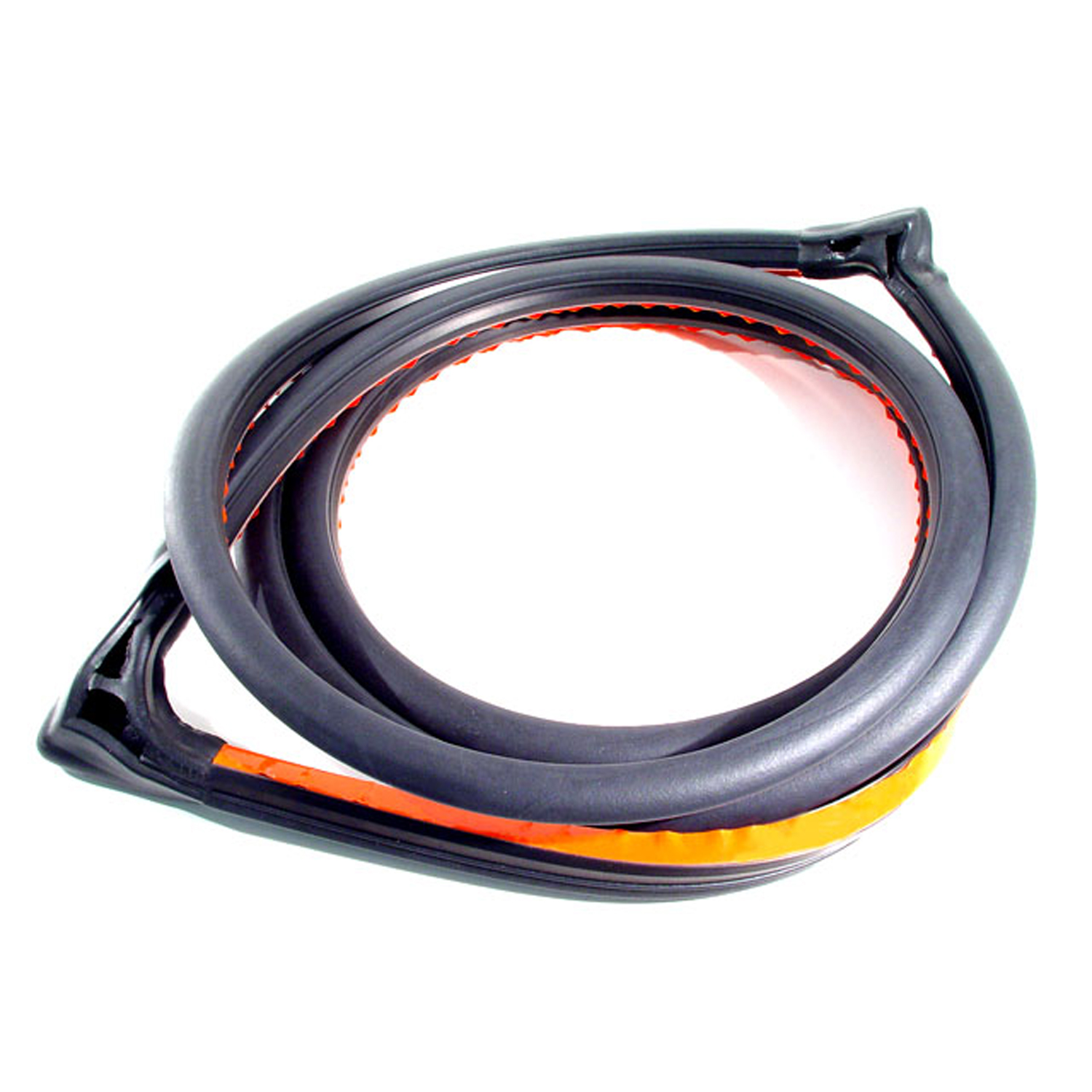 1975 Ford E-150 Econoline Club Wagon Front Side Cargo Door Seal-LM 110-VAFront Side Cargo Door Seal (fits front right side of cargo door). Replaces OEM #E9UZ 1525324 B. For rear (left side) matching seal, see LM 110-VB. Each
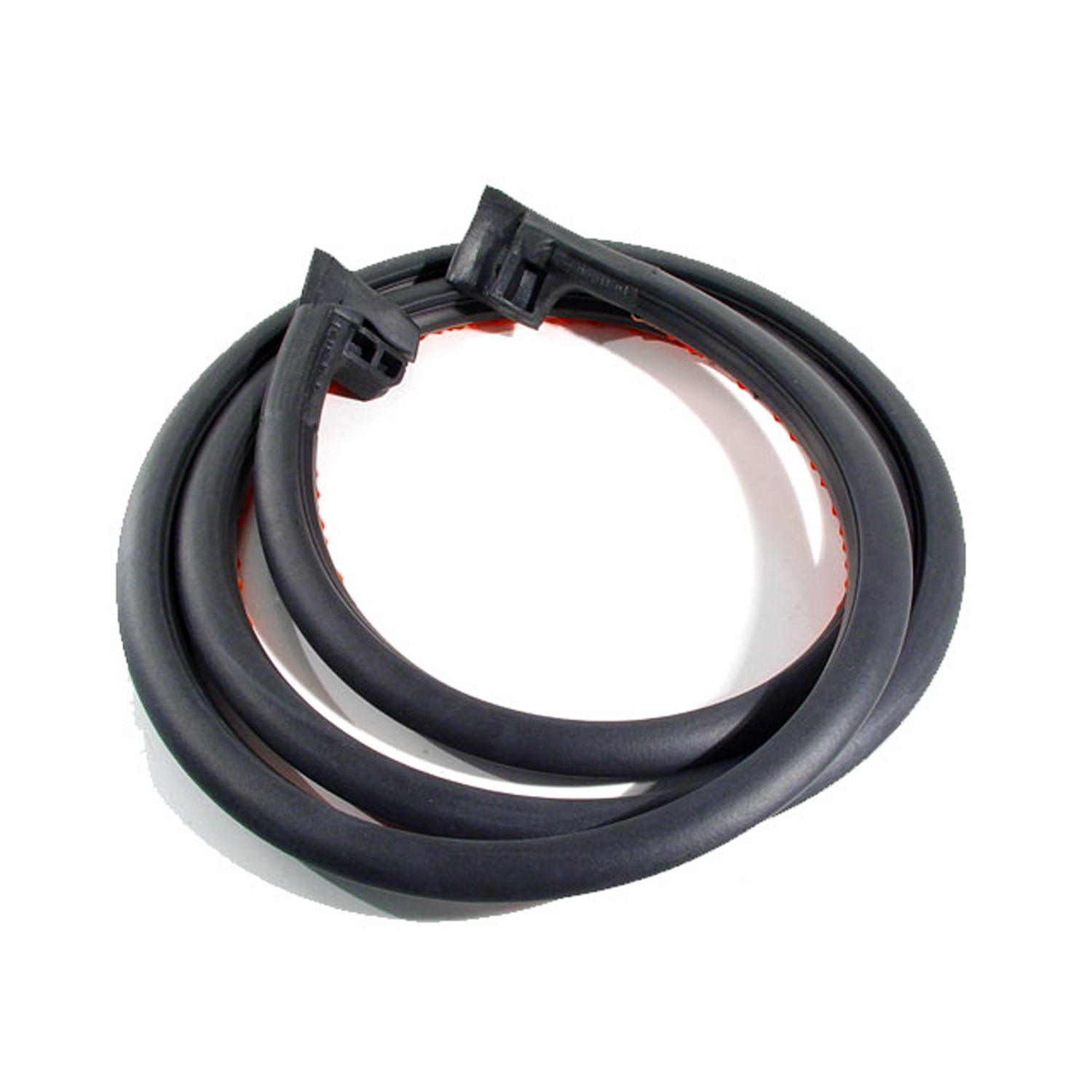 1975 Ford E-150 Econoline Club Wagon Rear Side Cargo Door Seal-LM 110-VBRear Side Cargo Door Seal (fits rear left side of cargo door). Replaces OEM #E9UZ 1525325 B. For front (right side) matching seal, see LM 110-VA. Each
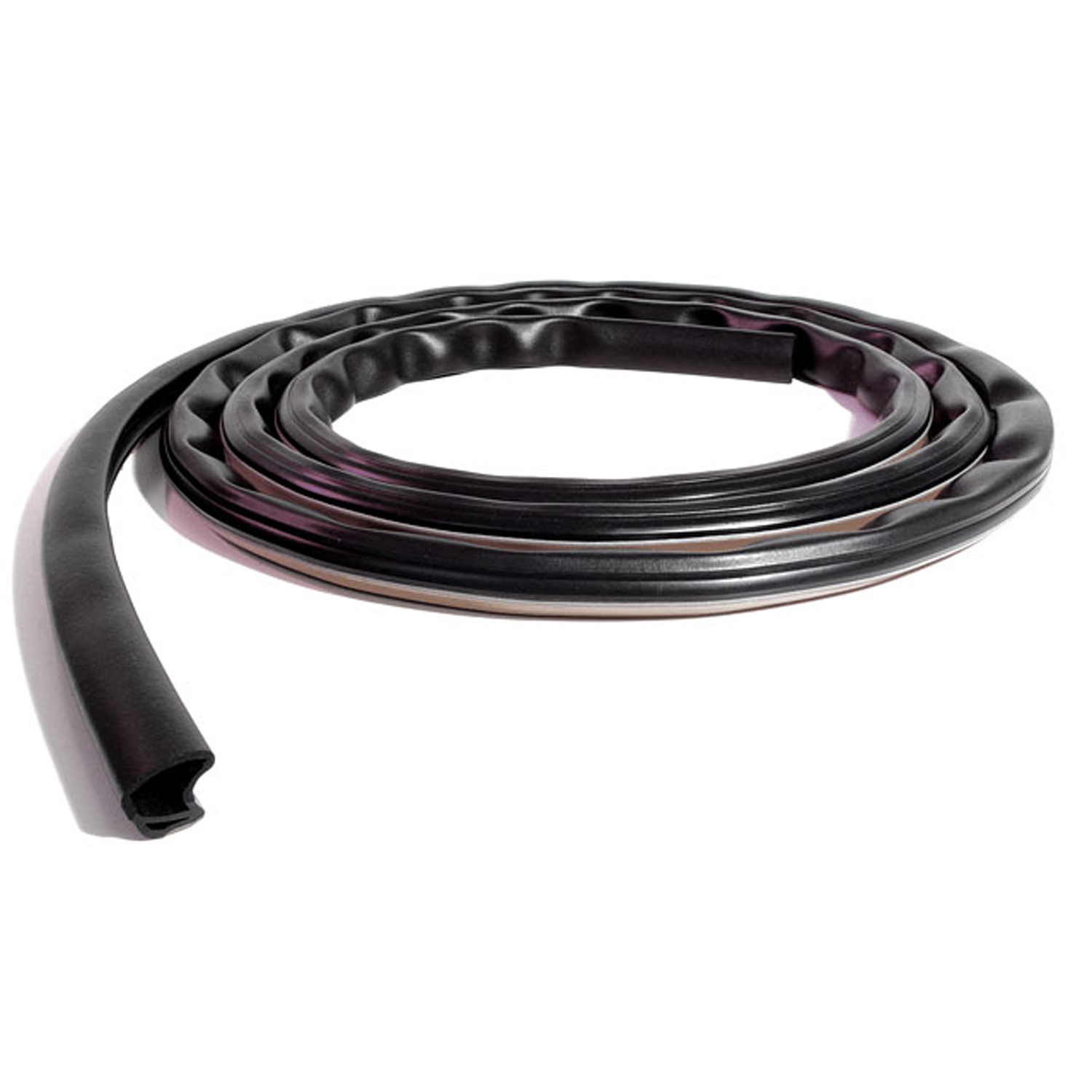 1975 Ford E-150 Econoline Club Wagon Left Front (drivers side) Door Seal. Each-LM 110-VLLeft Front (drivers side) Door Seal. Each
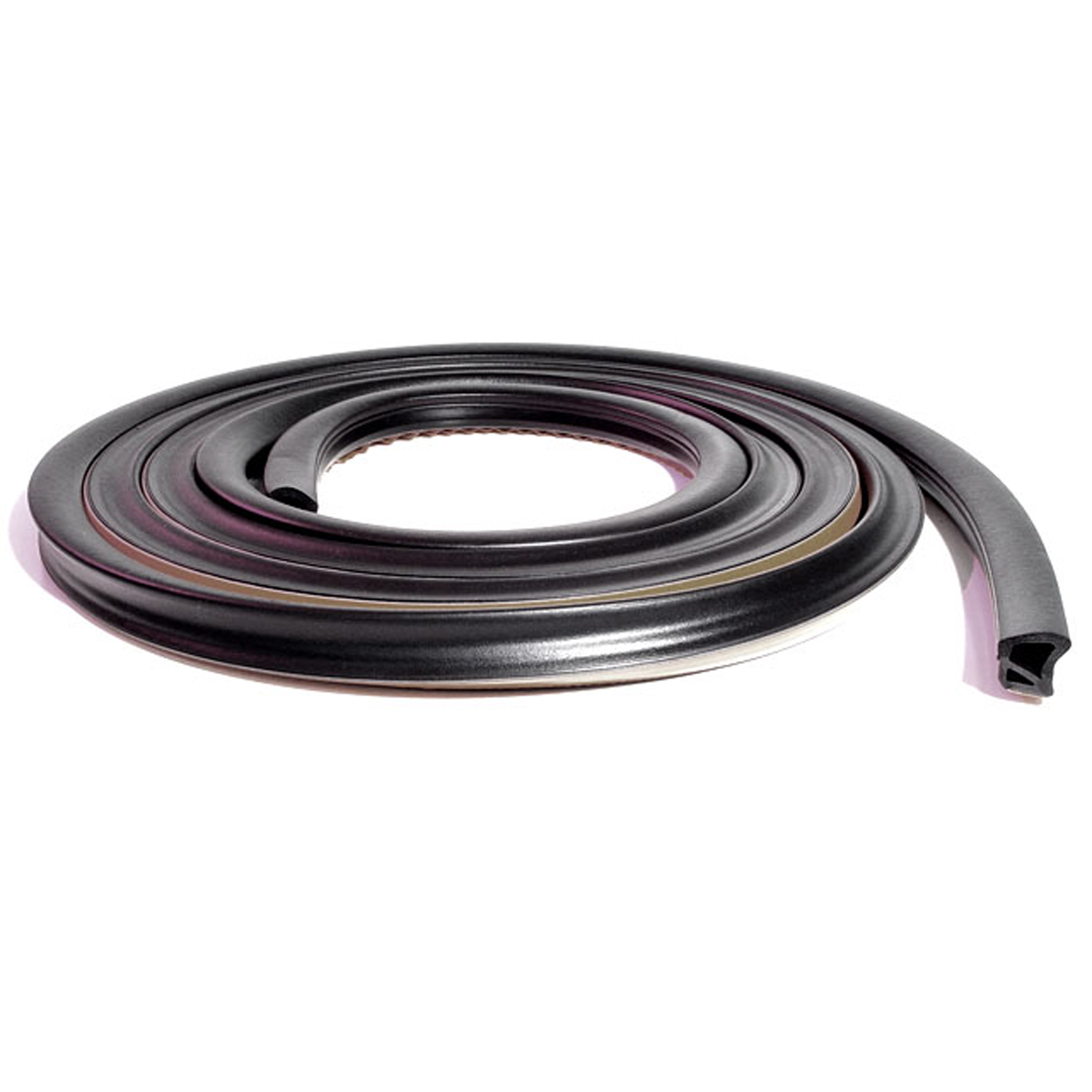 1975 Ford E-150 Econoline Club Wagon Right Front (passenger side) Door Seal. Each-LM 110-VRRight Front (passenger side) Door Seal. Each
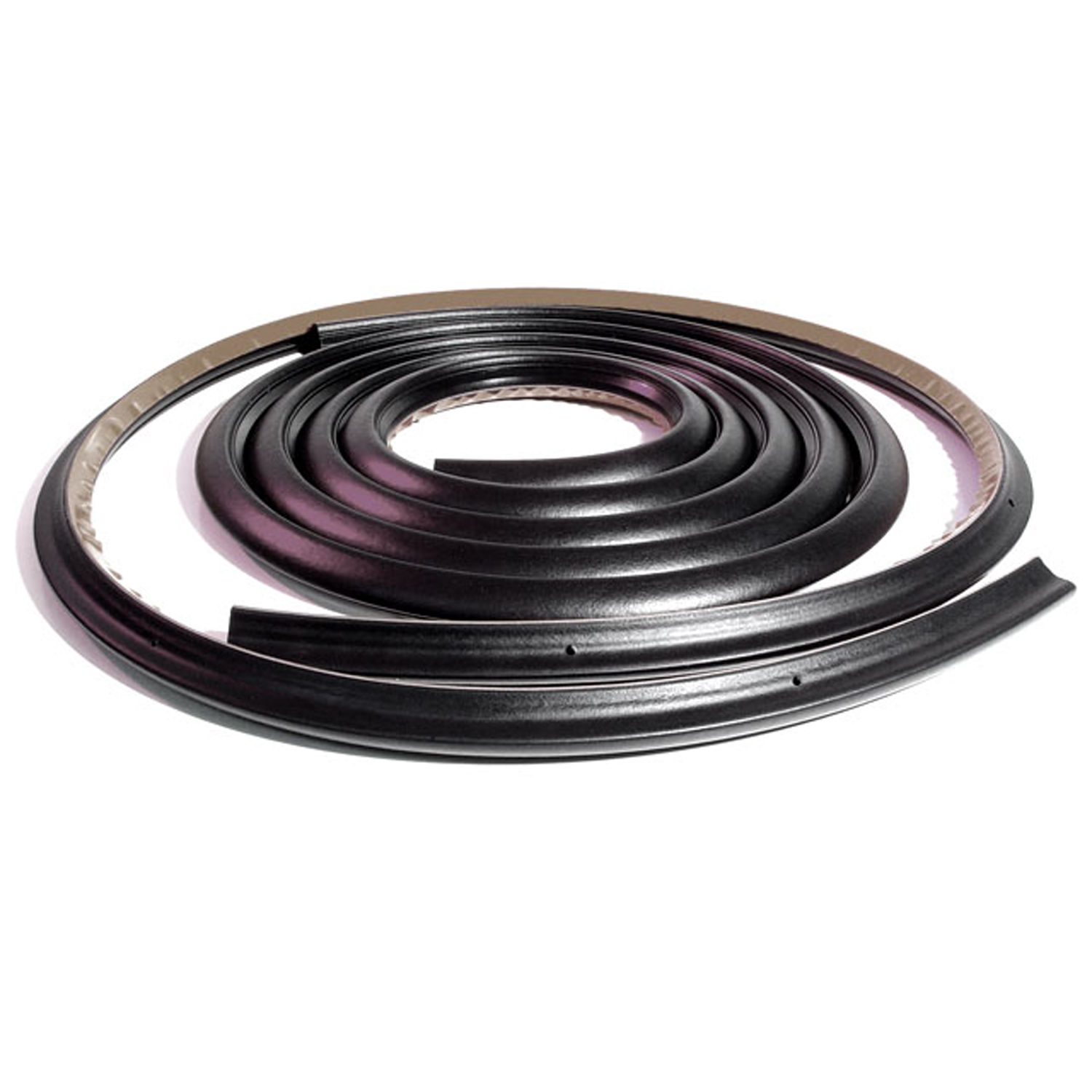 1975 Ford E-150 Econoline Club Wagon Side Slider Door Seal. Each-LM 110-VSSide Slider Door Seal. Each
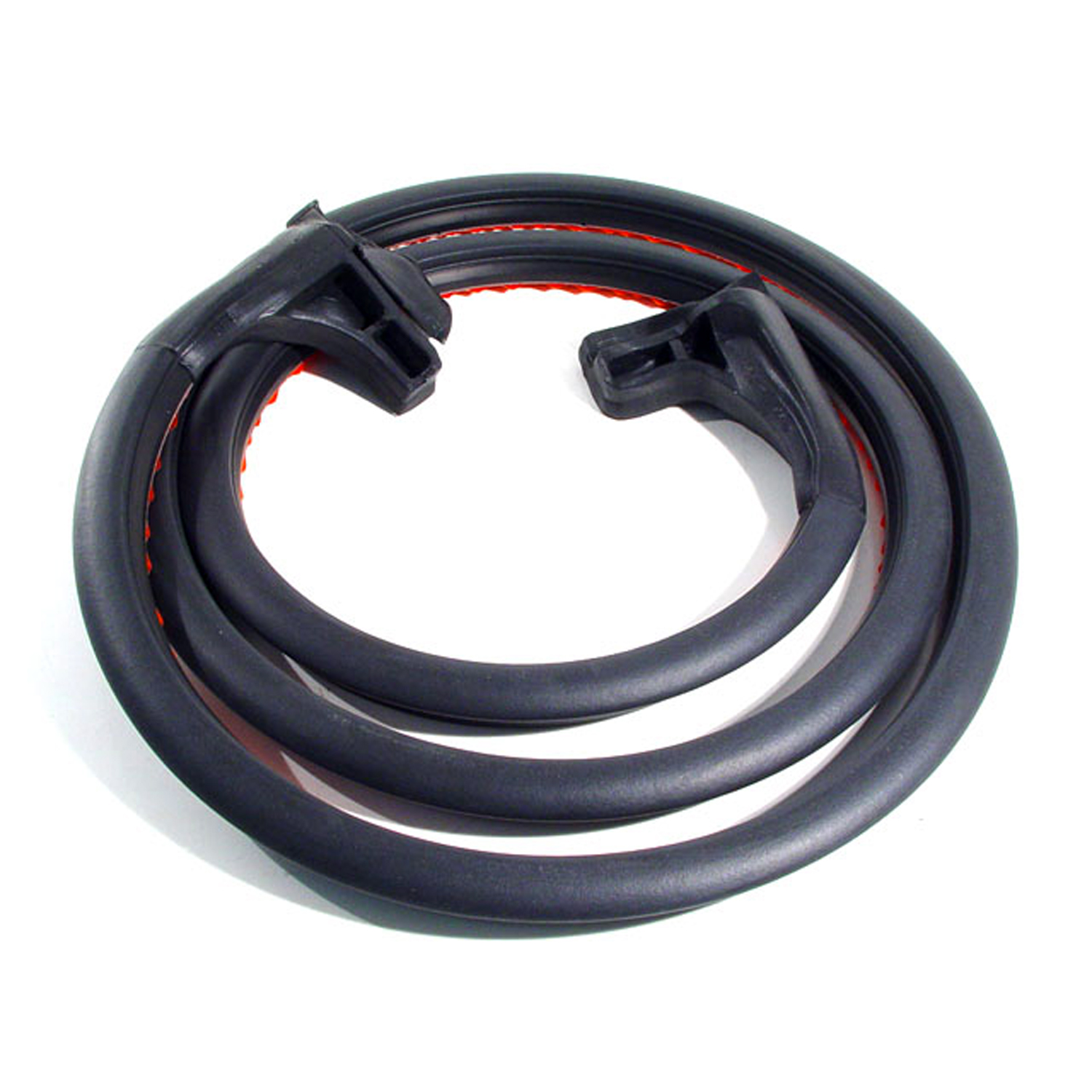 1975 Ford E-150 Econoline Club Wagon Left Rear Door Seal (Drivers Side)-LM 110-VTLeft Rear Door Seal (Drivers Side). Replaces OEM #E9UZ 1543723 A. Each
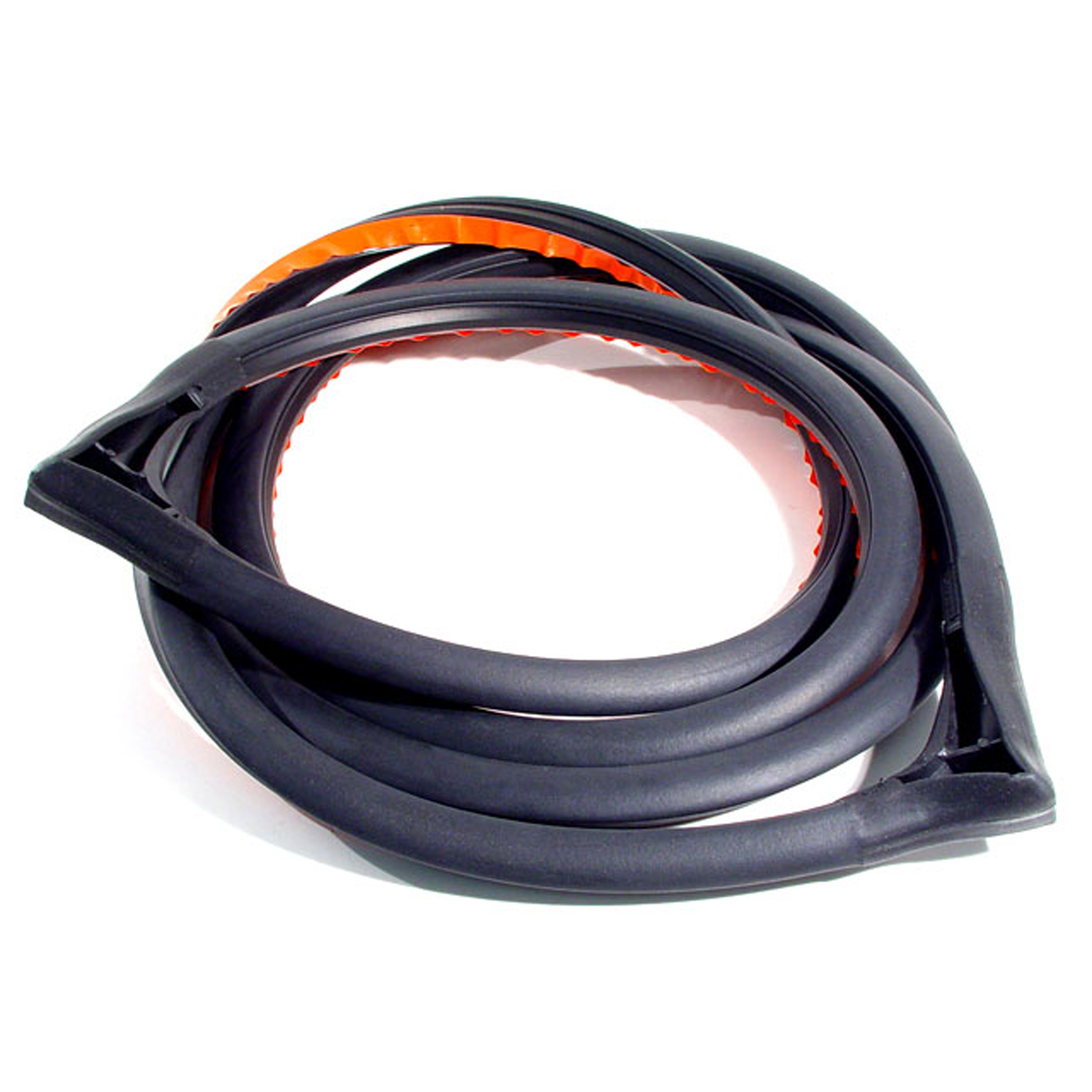 1975 Ford E-150 Econoline Club Wagon Right Rear Door Seal (Passenger Side)-LM 110-VURight Rear Door Seal (Passenger Side). Replaces OEM #F0UZ 1543722 A. Each
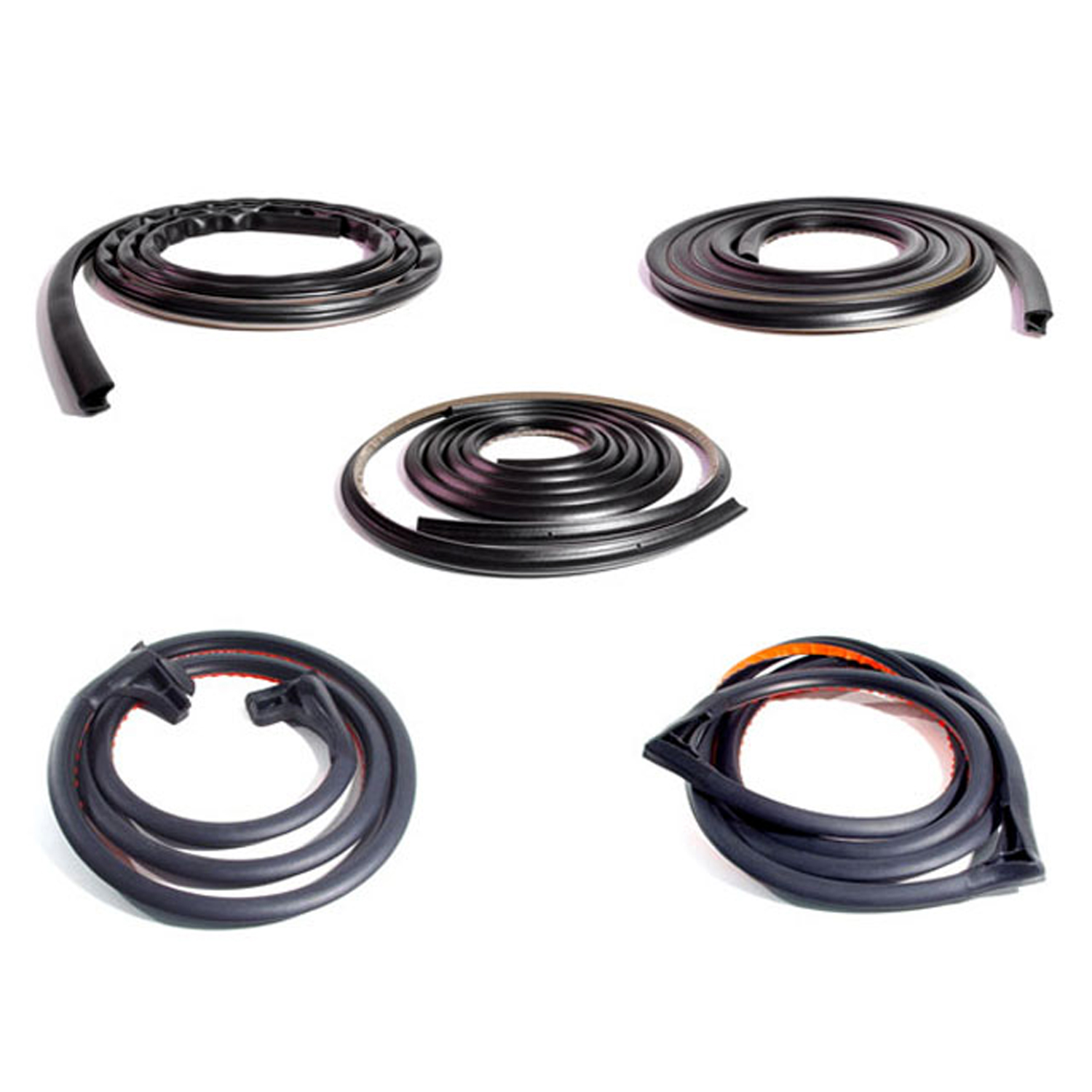 1975 Ford E-150 Econoline Club Wagon Basic Kit, for Models with Side Sliding Door-RKB 3000-100Basic Kit, for Models with Side Sliding Door. Front Left Door (LM 110-VL), Front Right Door (LM 110-VR), Back Left Door (LM 110-VT), Back Right Door (LM 110-VU), Side Sliding Door (LM 110-VS) Seals.
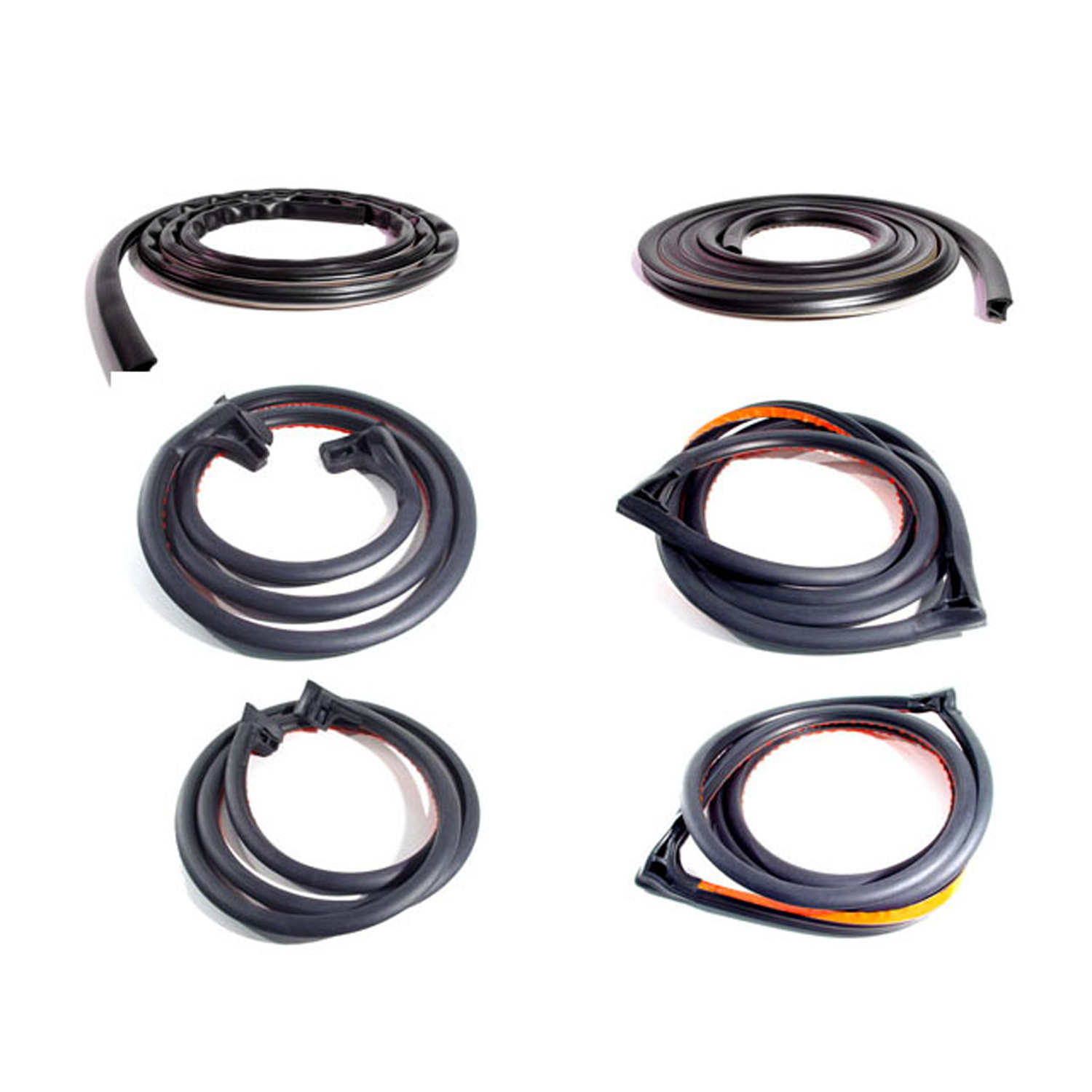 1975 Ford E-150 Econoline Club Wagon Basic Kit, for Models w/Side Cargo Door-RKB 3000-101Basic Kit, for Models w/Side Cargo Door. Front Left LM 110-VL), Front Right LM 110-VR), Back Left LM110-VT), Back Right LM 110-VU), Front Cargo Side (LM 110-VA), Rear Cargo Side (LM 110-VB) Door Seals.
Why Choose Metro?
For over 100 years, Metro Moulded Parts has been the pinnacle of quality in classic car restoration parts. Our commitment to precision and authenticity in every component ensures a perfect fit and an OEM-level appearance.
- Expert Craftsmanship & Quality: Each part is a testament to our dedication to reliability and perfection, crafted from original designs and thoroughly tested.
- Advanced Technology: We use cutting-edge techniques to create flawless, long-lasting parts that surpass others in performance.
- SuperSoft Sponge – The Ultimate Door Seal: Not only are our door seals 30% softer than competitors', but they're also guaranteed to never leak. They effectively reduce wind and road noise, enhancing your classic car's comfort and driving experience.
- Proudly American: Our parts are a product of American craftsmanship, made in the USA with a spirit of excellence and heritage.
- Unrivaled Warranty: We back our products with a 30-year industry-leading warranty, a testament to our confidence in their quality.
Join us in preserving the legacy of classic cars with parts that are crafted for perfection, not just made.