

Image of 1975 Ford Elite, Note: These illustrations use artistic license and may differ from actual historical models.
Performance Metrics
Fundamental Metrics
Emotional Appeal
MMP Rating
| Engine Specifications | |
|---|---|
| Engine Options: | 351 cu in (5.8 L) Windsor V8, 400 cu in (6.6 L) Cleveland V8, 460 cu in (7.5 L) 385 V8 |
| Displacement Range: | 351-460 cu in (5.8-7.5 L) |
| Horsepower Range: | 140-220 hp |
| Torque: | 260-380 lb-ft |
| Compression Ratio: | 8.0:1 - 8.5:1 |
| Ignition System: | Electronic Ignition |
| Cooling System: | Liquid cooled |
| Performance Specifications | |
| 0-60 Time: | Estimated 10-12 seconds |
| 1/4 Mile Time: | Estimated 16-18 seconds |
| Top Speed: | 115-120 mph |
| Transmission and Drive | |
| Drive Type: | Rear-wheel drive |
| Transmission Type: | 3-speed automatic |
| Fuel and Efficiency | |
| Fuel System Type: | Carburetor |
| MPG: | Estimated 10-12 mpg |
| Dimensions and Brakes | |
| Brakes: | Front disc, rear drum |
| Wheelbase: | 114.0 in |
| Weight: | 3,800-4,200 lbs |
Note: Specifications for classic cars are given to the best of our ability, considering the limited and variant data available.
With its concealed headlights, long hood, and formal roofline, the 1975 Ford Elite brought Thunderbird-style glamour to a more attainable price bracket. It was a roomy, V8-powered personal-luxury coupe built for drivers who wanted comfort and presence more than sports-car sharpness.
1975 Ford Elite: A Thunderbird for More Drivers
Ford introduced the Elite in 1974 as a new personal-luxury model for the 1975 model year. It was based on the company’s intermediate Torino platform, but its styling and equipment gave it a distinctly more upscale character. In Ford’s lineup, the Elite sat between ordinary family cars and the larger, more expensive Thunderbird.
The timing mattered. By the mid-1970s, personal-luxury coupes were gaining popularity, while fuel costs and new emissions rules were reshaping the American car market. Ford’s answer was a comfortable, well-equipped coupe with a classic V8 layout and a more manageable size than a full-size luxury car. A notable chapter in its short history came in 1977, when Ford discontinued the Elite and shifted the Thunderbird onto a related intermediate platform. In effect, the Elite helped prepare buyers for a smaller, more affordable Thunderbird.
Formal Styling, Hidden Headlights, and a Plush Cabin
The Elite wore its luxury intentions openly. Its long hood flowed into a broad, upright front end, where concealed headlights gave the car a clean, uninterrupted look when they were closed. A prominent grille, sculpted body sides, and a formal roofline completed the upscale profile. From the side, the coupe looked substantial without being as imposing as Ford’s largest models.
Inside, the Elite emphasized comfort. Depending on how it was ordered, the cabin could include plush cloth or vinyl upholstery, carpeting, woodgrain-style trim, and a front bench or optional bucket seats. Power windows and locks, air conditioning, cruise control, a tilt steering wheel, and an AM/FM stereo were among the available conveniences. Equipment varied by car, so buyers today should check the original window sticker or build documentation rather than assume every Elite had the same features.
Ford offered the Elite as a two-door hardtop coupe. There was no sedan, wagon, or convertible version, which kept the model’s identity focused on personal luxury. Buyers could choose from a range of factory paint colors, often paired with contrasting vinyl roof treatments. Earth tones and subdued metallic shades suited the decade’s tastes, while brighter colors and matching interiors gave some examples a more eye-catching look.
For 1975, the Elite’s most important technology was less about gadgets than adapting to new regulations. The car came from an era when emissions equipment was becoming more prominent, and catalytic converters made unleaded fuel necessary. That change affected maintenance and fueling habits across the American market, not just Ford’s coupe.
Where the Elite Fit in Automotive History
The Elite was part of a major shift in American car design. Rather than being a sports coupe, it offered a quieter, more comfortable alternative to a family sedan, with styling that suggested a more expensive car. Its formula echoed the successful personal-luxury approach used by rivals such as the Chevrolet Monte Carlo and Oldsmobile Cutlass Supreme.
What distinguished the Elite was its close connection to the Thunderbird’s image. It borrowed the larger car’s formal, upscale character while using Ford’s intermediate hardware. That combination let Ford compete in a popular market segment without asking buyers to pay for a full-size luxury model. The Elite was not a revolutionary engineering exercise, but it was a clear example of how American manufacturers adapted familiar platforms to meet changing tastes.
V8 Performance and a Relaxed Ride
A 351-cubic-inch V8 was the typical starting point for the 1975 Elite, with a 400-cubic-inch V8 available on some configurations. Exact output depended on engine specification and how Ford rated power for the model year. Period net ratings were modest by earlier muscle-car standards, generally around 149 horsepower for a 351 and roughly 166 horsepower for a 400. Automatic transmission was central to the Elite’s easygoing character.
Performance figures vary with engine, equipment, condition, and test method. A healthy 351-equipped car can be expected to reach 60 mph in roughly 10 to 12 seconds, with a top speed in the neighborhood of 105 to 115 mph. Those are estimates, not guarantees for every surviving car. The Elite was a heavy coupe built for smooth cruising, not quick launches or track work.
On the road, its long wheelbase and soft suspension help it glide over ordinary bumps and broken pavement. The trade-off is noticeable body lean on winding roads, along with steering that feels less precise than a modern car’s. At highway speed, the V8 produces a low, steady rumble, and the cabin feels most at home on open stretches of road. The driving experience is relaxed and substantial: the car asks for smooth inputs rather than aggressive cornering.
Living With a 1975 Elite
Today, the Elite is best suited to weekend drives, local shows, and casual touring. It can serve as a regular driver if it has been properly maintained, but fuel economy is typically poor by modern standards, and age-related repairs are part of ownership. Many examples have spent years in storage or received incomplete repairs, so condition matters more than the odometer reading alone.
Mechanical work is generally approachable for an owner familiar with older American cars. The V8 layout is conventional, and many service parts are shared with other Ford models of the period. The harder items to source may be Elite-specific trim, interior pieces, body panels, and components for the concealed-headlight system. Before buying, inspect the frame and underbody for rust, check the transmission and cooling system, and test every power accessory. A thorough inspection can prevent a low purchase price from turning into an expensive restoration.
Elite Trivia and Common Criticisms
The Elite’s most memorable feature is arguably its concealed headlamp treatment, which gave the front end a more expensive, Thunderbird-like appearance. Its brief production run also makes it a useful snapshot of Ford’s changing strategy: a Torino-based coupe that helped bridge the gap to the next generation of Thunderbird.
There is no widely recognized Elite-specific speed or endurance record, and the model is not known for a famous motorsport career. Nor is there a broadly documented celebrity association that defines its reputation. Its appeal is more everyday and distinctly 1970s: formal styling, a comfortable cabin, and a V8 under the hood.
Common criticisms include heavy fuel consumption, soft handling, and performance that can feel leisurely compared with earlier muscle cars. Some owners also find that trim and body-specific parts take more searching than mechanical components. Those drawbacks are balanced by the Elite’s comfort, period character, and relative affordability.
Collector Values and Market Outlook
The 1975 Elite is uncommon today, but it is not generally considered a rare production car. A reasonable estimate for 1975 production is about 123,000 cars, though production totals can vary slightly between reference sources. Many have since disappeared through rust, wear, or neglect, and well-preserved examples are much less common than the original production figure suggests.
As a broad U.S. market estimate, a project car may sell for around $2,000 to $5,000. A usable driver in decent condition might bring approximately $6,000 to $12,000, while a clean, well-kept example can reach roughly $13,000 to $22,000. Exceptional restorations or unusually well-documented cars may sell for more, depending on specification and buyer interest. These are general ranges, not appraisals, and local markets can differ.
Values have tended to remain modest compared with those of better-known muscle cars and luxury coupes. Interest in 1970s American cars has grown, which may support gradual appreciation for original, rust-free examples, but the Elite is still primarily an enthusiast’s choice rather than a high-demand investment car. Condition, originality, and documentation are likely to matter more than rarity alone.
Why the 1975 Ford Elite Still Stands Out
The 1975 Ford Elite combined the comfort and formal styling of a personal-luxury coupe with the familiar mechanical foundations of Ford’s intermediate line. Its concealed headlights, V8 power, and spacious cabin captured a distinctive moment in American motoring, when buyers wanted luxury and style but automakers were adapting to new economic and emissions realities.
It may not be the fastest or most famous Ford of its era, but the Elite has a character all its own. For enthusiasts who appreciate big-coupe comfort and the unmistakable design language of the 1970s, it remains a memorable way to cruise back into that changing chapter of automotive history.
1975 Ford Elite Catalog of Parts
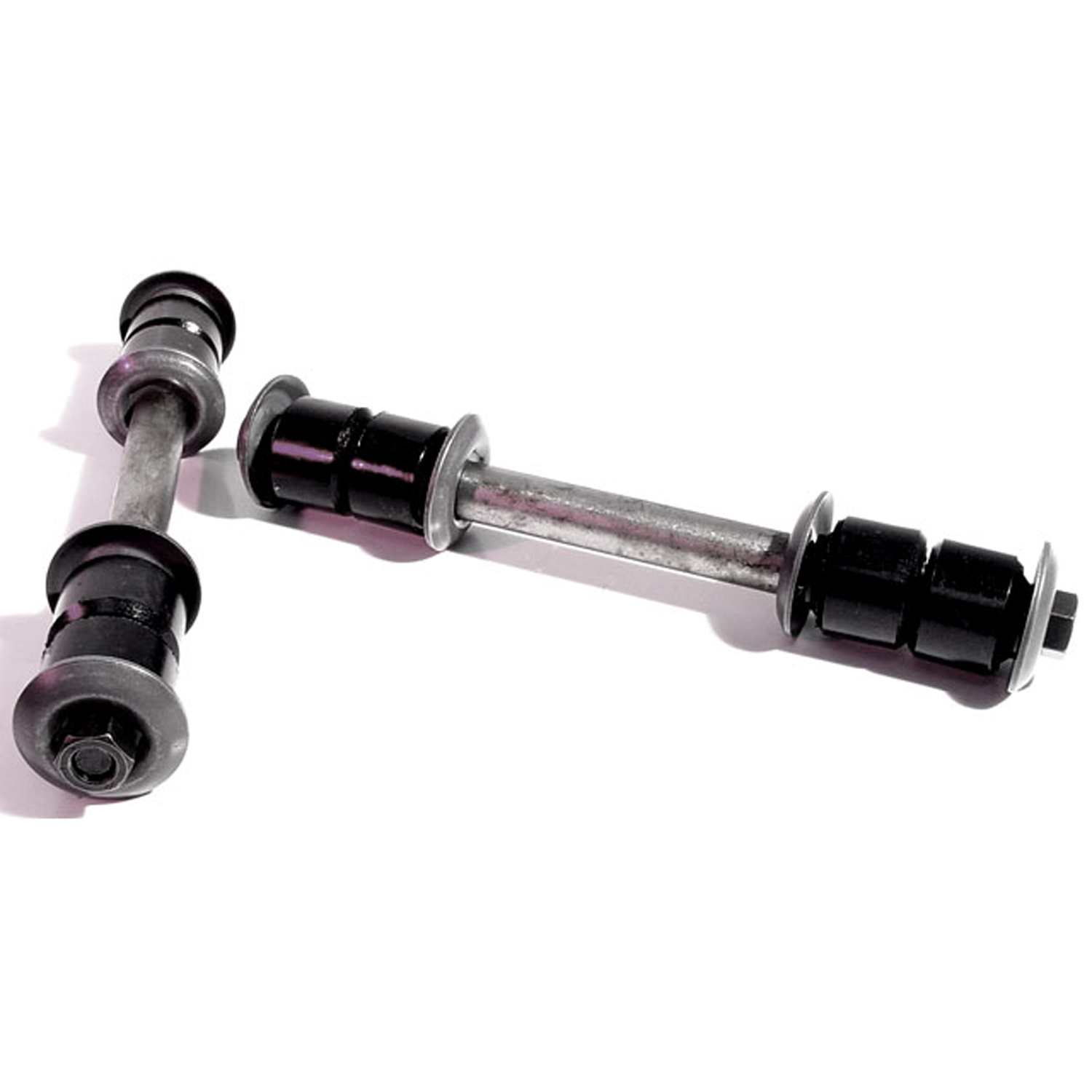 1975 Ford Elite Front Stabilizer End Repair Kit-BNK 21Front Stabilizer End Repair Kit. 22-piece set for two stabilizer bars. Contains all rubber bushings, washers, bolts and nuts, enough for one front end. Set
Why Choose Metro?
For over 100 years, Metro Moulded Parts has been the pinnacle of quality in classic car restoration parts. Our commitment to precision and authenticity in every component ensures a perfect fit and an OEM-level appearance.
- Expert Craftsmanship & Quality: Each part is a testament to our dedication to reliability and perfection, crafted from original designs and thoroughly tested.
- Advanced Technology: We use cutting-edge techniques to create flawless, long-lasting parts that surpass others in performance.
- SuperSoft Sponge – The Ultimate Door Seal: Not only are our door seals 30% softer than competitors', but they're also guaranteed to never leak. They effectively reduce wind and road noise, enhancing your classic car's comfort and driving experience.
- Proudly American: Our parts are a product of American craftsmanship, made in the USA with a spirit of excellence and heritage.
- Unrivaled Warranty: We back our products with a 30-year industry-leading warranty, a testament to our confidence in their quality.
Join us in preserving the legacy of classic cars with parts that are crafted for perfection, not just made.