
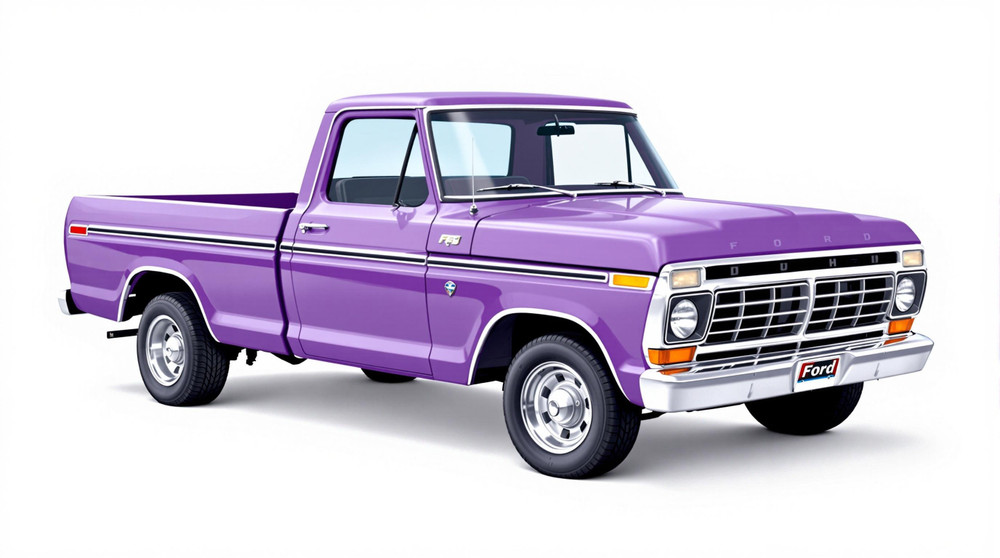
Image of 1975 Ford F-100, Note: These illustrations use artistic license and may differ from actual historical models.
Performance Metrics
Fundamental Metrics
Emotional Appeal
MMP Rating
| Engine Specifications | |
|---|---|
| Engine Options: | 240 CID I6, 300 CID I6, 302 CID V8, 360 CID V8, 390 CID V8 |
| Displacement Range: | 240-390 cubic inches |
| Horsepower Range: | 98-159 hp |
| Torque: | 223-315 lb-ft |
| Compression Ratio: | 8.0:1 - 8.4:1 |
| Ignition System: | Conventional breaker point ignition system |
| Cooling System: | Liquid cooled |
| Performance Specifications | |
| 0-60 Time: | Estimated 10-15 seconds |
| 1/4 Mile Time: | Estimated 17-20 seconds |
| Top Speed: | 85-95 mph |
| Transmission and Drive | |
| Drive Type: | Rear wheel drive |
| Transmission Type: | 3-speed manual, 4-speed manual, 3-speed automatic |
| Fuel and Efficiency | |
| Fuel System Type: | Carburetor |
| MPG: | 10-15 mpg |
| Dimensions and Brakes | |
| Brakes: | Front disc and rear drum brakes |
| Wheelbase: | 115.0 inches |
| Weight: | 3,800-4,500 lbs |
Note: Specifications for classic cars are given to the best of our ability, considering the limited and variant data available.
1975 Ford F-100: A Classic “Dentside” Pickup
The 1975 Ford F-100 was built for work, but it had the presence to look right parked outside a farmhouse, a job site, or a Saturday-night cruise-in. Part of Ford’s sixth-generation F-Series, it combined squared-off American styling with sturdy mechanical hardware at a time when truck buyers were beginning to expect more comfort from their pickups.
Ford introduced this generation for the 1973 model year, and enthusiasts later gave it the nickname “Dentside.” The name comes from the pronounced inward crease pressed into the body sides, a detail that catches the light and gives the truck its recognizable profile. The F-100 was the half-ton member of the lineup, positioned below the F-250 and F-350. One especially interesting piece of 1975 history: Ford added the F-150 to the range that year, placing a new choice between the F-100 and F-250. For a time, buyers could choose among all three.
The 1975 model arrived amid rising fuel prices and tightening emissions and safety requirements. Pickups were still expected to earn their keep, but convenience features such as automatic transmissions, air conditioning, and upgraded interiors were making them more appealing as personal vehicles too. The F-100 captures that transition: a straightforward work truck that could also be ordered as a comfortable daily driver.
Dentside Styling and Cab Choices
The F-100 wears its size confidently. Its broad hood, upright windshield, squared fenders, and substantial grille give it the traditional truck proportions buyers expected, while the sculpted body crease adds a bit of flair. Chrome trim and bumpers could sharpen the look, but even a simpler truck has a clean, purposeful stance. Details such as grille design and trim varied by equipment level and production configuration.
Buyers could choose a regular cab or, where offered, Ford’s roomier SuperCab. Bed choices included the smooth-sided Styleside and the narrower Flareside, with bed length and wheelbase depending on the configuration. Styleside models are especially common in the collector scene and are often considered the classic all-around F-100 look. Flareside trucks, with their separate rear fenders and narrower bed, have a more distinctive vintage appearance.
Trim levels ranged from practical work-truck equipment to more dressed-up Ranger and Ranger XLT versions. The upscale trims could add brighter exterior accents and a more finished cabin. Paint availability changed with equipment and ordering region, but period Fords could be found in colors including white, red, blue, green, yellow, and earthy shades such as brown or copper. White and red remain popular choices among restored trucks, while less common period colors can make a survivor stand out.
A Practical Cabin with Period Comfort
Inside, the F-100 is simple by modern standards, but it has the sort of honest, easy-to-understand layout many classic-truck owners appreciate. The dashboard is broad and upright, with clear instrumentation and straightforward controls. A bench seat was common, and upholstery materials varied with trim and options. Vinyl was a sensible choice for work use, while upgraded interiors could include more decorative trim and cloth or patterned upholstery.
Equipment depended heavily on how the original buyer ordered the truck. Options could include power steering, power brakes, air conditioning, an automatic transmission, and an AM radio. These features matter today: a well-equipped F-100 can feel like a surprisingly usable vintage cruiser, while a basic example delivers a more direct, old-school experience. The cabin’s flat surfaces and uncomplicated controls also make it relatively approachable for restoration work.
Engines, Suspension, and Useful Engineering
Engine availability varied by configuration and market, but the F-100 could be ordered with Ford inline-six and V8 power. The 300-cubic-inch inline-six is especially well regarded for its durable, low-revving character. V8 choices offered more traditional truck punch and a deeper exhaust note. Three-speed manual and automatic transmissions were among the available choices, with equipment depending on the specific truck.
Up front, Ford’s Twin I-Beam independent suspension was a defining piece of F-Series engineering. It used two long beams, each pivoting from the frame and carrying one front wheel. The arrangement gave the truck independent front-wheel movement while retaining a rugged, load-friendly design. It was not sports-car suspension, but it helped the F-100 feel more composed over uneven roads than a traditional solid front axle could.
That suspension system also shaped the truck’s personality. Over broken pavement, the F-100 can bob and jostle, and its steering will feel slower and less precise than a modern pickup’s. On a winding road, it rewards a relaxed pace rather than quick direction changes. Crosswinds and a light or empty bed can make the truck feel more unsettled, so sound tires, fresh suspension parts, and properly adjusted steering are important to safe, confident driving.
Performance and the Driving Experience
There is no single performance figure for every 1975 F-100. Engine choice, transmission, axle ratio, tire size, vehicle condition, and load all make a difference, and period factory figures are not consistently available for every configuration. As a broad real-world estimate, a six-cylinder truck may take roughly 13 to 17 seconds to reach 60 mph, while a healthy V8 example may manage about 10 to 14 seconds. These are estimates, not guaranteed factory specifications. Many trucks could reach around 85 to 100 mph, but gearing, condition, and tires strongly affect top speed. The F-100 was built to haul and cruise, not to chase high-speed records.
Behind the wheel, the engine’s character is part of the appeal. The six-cylinder delivers a steady, workmanlike rumble; a V8 adds a deeper growl under acceleration. The manual gearbox makes the driver more involved, while an automatic suits relaxed cruising and stop-and-go traffic. The steering is comparatively heavy and the brakes require more anticipation than those in a new vehicle. In return, the driver gets a clear view over the hood, a commanding seating position, and a tactile connection to the truck’s mechanical parts.
Why the 1975 F-100 Matters
The F-100 did not invent the pickup, but it helped define what a mainstream American truck could be: durable, configurable, and increasingly comfortable without losing its working identity. The sixth-generation F-Series’ broad range of cab, bed, trim, and powertrain choices gave buyers a way to tailor a truck to farm work, construction, towing, or personal use.
Ford’s continued use of Twin I-Beam suspension helped distinguish its trucks from competitors and became a recognizable feature of the brand’s engineering approach. The 1975 arrival of the F-150 also marked an important shift in the lineup. It gave buyers a new middle option and foreshadowed the model’s later prominence. The F-Series would go on to become America’s best-selling truck line in 1977, a milestone that helped establish a legacy continuing well beyond the F-100’s era.
Ownership, Maintenance, and Reliability
A 1975 F-100 can serve as a weekend cruiser, a show truck, a light-duty hauler, or even a regular-use vehicle for an owner willing to accept vintage-truck manners. It is not as quiet, economical, or secure as a modern pickup, and a restored example may be too valuable for demanding work. Still, its straightforward construction makes routine maintenance and many repairs manageable for an experienced home mechanic.
Parts support is generally strong because the F-Series was produced in large numbers and remains popular with restorers. Mechanical components are often easier to source than model-specific trim or unmodified body pieces. Before buying, inspect the frame, cab corners, floor pans, bed, and wheel arches for rust. Check the Twin I-Beam suspension, steering joints, brakes, cooling system, and transmission, and look carefully for signs of poor-quality repairs. A truck that has been maintained and repaired properly is far more appealing than a shiny example hiding structural corrosion.
The 300 inline-six has a reputation for durability, but no engine is immune to neglect. Regular oil changes, cooling-system care, and attention to leaks are essential. On any example, wiring condition and the quality of previous modifications deserve scrutiny. Originality can add value, but a careful, reversible upgrade to brakes, tires, or ignition may make a driver safer and more enjoyable to use.
F-100 Trivia and Common Criticisms
The 1975 model year is notable for the F-150’s debut alongside the F-100. That makes a 1975 truck a useful snapshot of a changing Ford lineup: the familiar F-100 was still available, even as Ford introduced the model that would eventually become the better-known name in its half-ton range.
The F-100 is not famous for a single record-setting speed run or a celebrity-owned special edition. Its significance is more everyday: Ford built these trucks in substantial numbers for ordinary work, and their continued presence at shows, farms, and weekend gatherings speaks to how many survived and how useful their basic design remains. Common complaints are equally practical. Fuel economy is modest by current standards, the ride can be firm, rust is a persistent enemy, and old brakes and steering need careful attention. It is a classic truck, not a modern one in vintage clothing.
Collector Values and Market Outlook
Values depend on body style, engine, trim, originality, rust, and the quality of restoration. As a general 2026 guide, a project or rough driver might sell for about $4,000 to $10,000. A solid, usable truck commonly falls around $10,000 to $22,000, while a clean, well-restored example may bring roughly $25,000 to $45,000 or more. Exceptional, highly original, rare-option, or show-quality trucks can exceed that range. These are broad estimates, not a formal appraisal, and local market conditions can move prices considerably.
Exact production totals for the 1975 F-100 are not consistently published in a way that separates it from the broader F-Series lineup. Since Ford sold the F-Series in large volumes, the F-100 was not rare in the overall market. A reasonable broad estimate is that production reached at least the high tens of thousands and potentially well into the hundreds of thousands, but a precise model-year F-100 count should not be treated as confirmed. Today, clean survivors are less common than project trucks because decades of work and weather took their toll.
Well-presented F-100s have generally attracted stronger interest as classic pickups have become popular with collectors and casual enthusiasts alike. Prices can rise for original trucks, desirable configurations, and quality restorations, but values are not guaranteed to climb every year. Condition and documentation matter more than optimistic asking prices. Rust, incomplete projects, and expensive cosmetic restorations can quickly outweigh a low purchase price.
The Last Word on the 1975 Ford F-100
The 1975 Ford F-100 brings together useful engineering, unmistakable Dentside styling, and the mechanical simplicity that makes a classic truck rewarding to own. It can be a capable weekend hauler, a handsome show vehicle, or a hands-on restoration project, provided its age and limitations are part of the bargain.
More than just a pickup from another era, the F-100 represents the moment when the American work truck began to broaden into a personal vehicle. Its enduring appeal comes from that balance: tough enough to have earned its reputation, and distinctive enough to keep turning heads long after the workday ends.
1975 Ford F-100 Catalog of Parts
 1975 Ford F-100 Brake Pedal Pad. 4-3/4" wide X 2-1/4" long-CB 111-NBrake Pedal Pad. 4-3/4" wide X 2-1/4" long. Replaces OEM #'s BC3Z2457B, D3TZ2457A, D3TZ2457B. Each
 1975 Ford F-100 Door seal. '73-'79 Ford F-Series trucks. '78-'79 Ford Bronco-LM 110-ADoor seal. '73-'79 Ford F-Series trucks. '78-'79 Ford Bronco. Fits on cab, either side. Each.
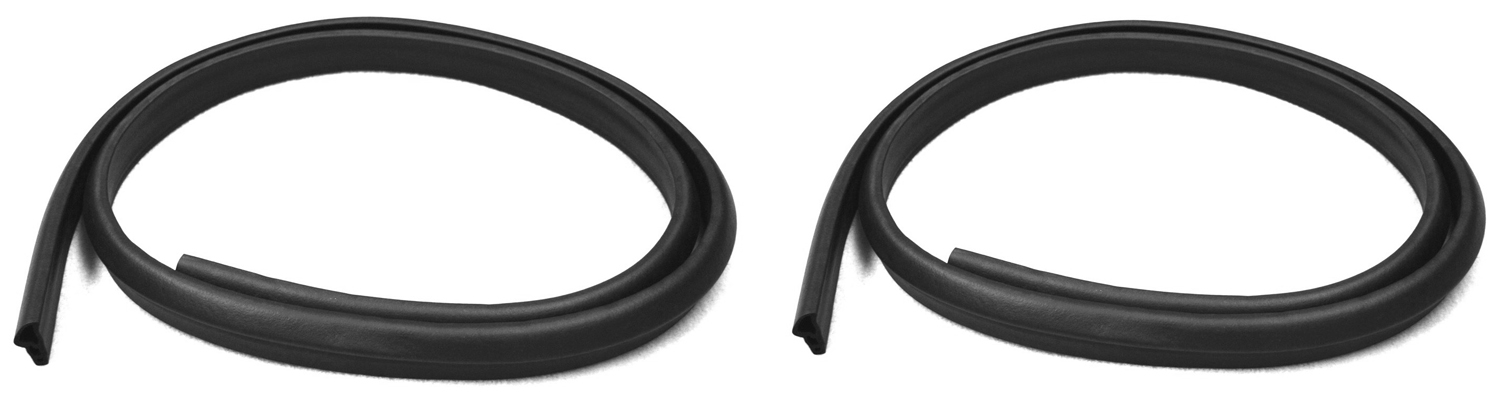 1975 Ford F-100 Upper Door Seal, 73-79 Ford Full Size Truck, 78-79 Ford Bronco, On Door, Pair-LM 110-AUThis auxiliary seal fits on the top portion of the door. It is primarily designed to reduce wind and road noise. It also provides added weatherseal protection and further cushions the door when it is shut closed. This part was stock on the 1978-1979 models but you can use them on any of the '73-'79 models specified.
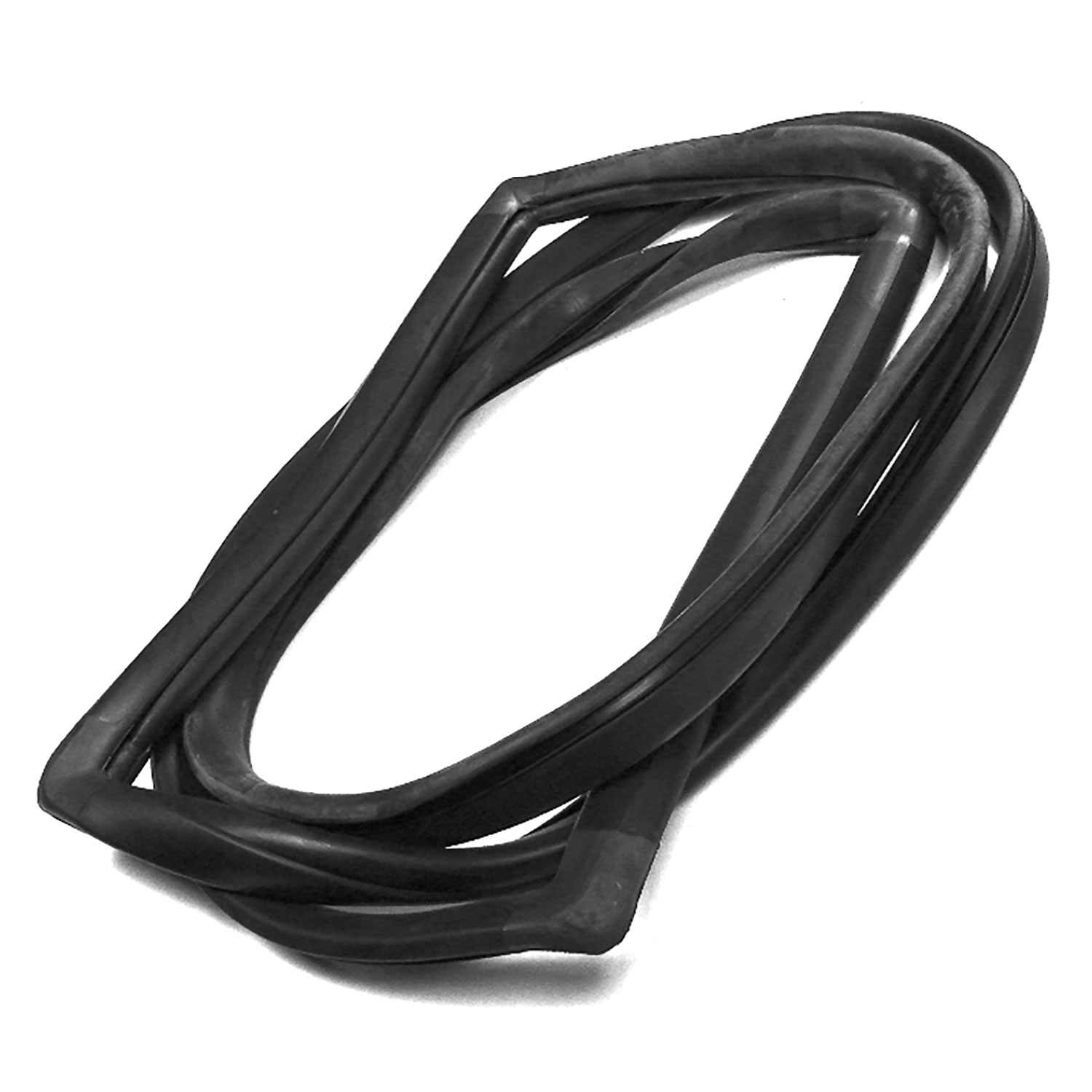 1975 Ford F-100 Windshield Seal, 67-79 Ford Full Size Truck, 78-79 Bronco, Without Trim Groove-VWS 3304-CThis windshield seal goes first on the glass and is installed using the rope-in method. This product is made from the original specs and with high quality ozone resistant EPDM rubber for a great fit and long life. This item is designed to be installed during glass replacement.
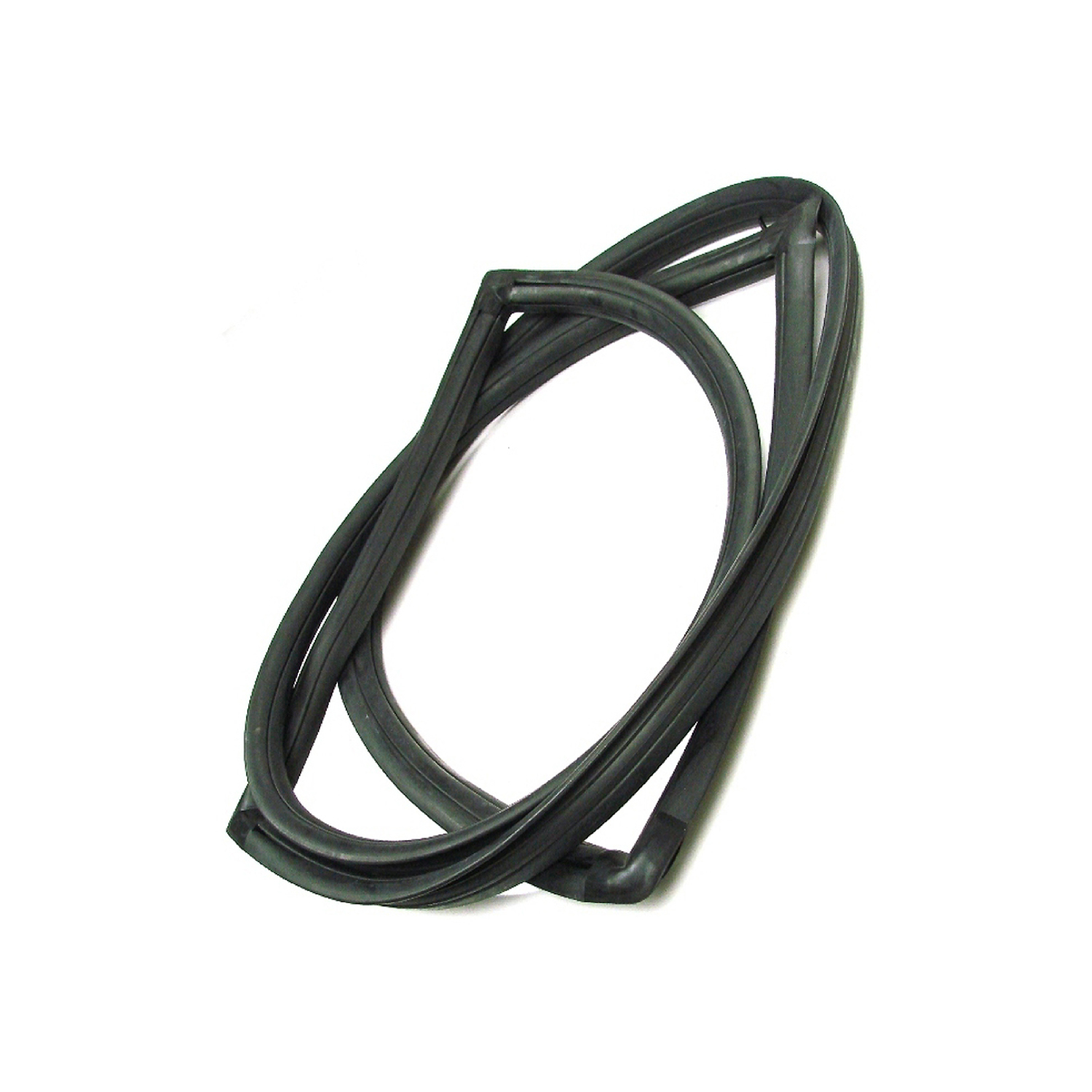 1975 Ford F-100 Windshield seal, '73-'76 Ford F Series Truck-VWS 3304-EWindshield seal, '73-'76 Ford F Series Truck with groove to accept trim, each.
 1975 Ford F-100 Rear window seal, '73-'79 Ford F Series Truck without trim groove-VWS 3304-RRear window seal, '73-'79 Ford F Series Truck without trim groove, each. Replaces OEM part # D3TZ-1042084-A.
Why Choose Metro?
For over 100 years, Metro Moulded Parts has been the pinnacle of quality in classic car restoration parts. Our commitment to precision and authenticity in every component ensures a perfect fit and an OEM-level appearance.
- Expert Craftsmanship & Quality: Each part is a testament to our dedication to reliability and perfection, crafted from original designs and thoroughly tested.
- Advanced Technology: We use cutting-edge techniques to create flawless, long-lasting parts that surpass others in performance.
- SuperSoft Sponge – The Ultimate Door Seal: Not only are our door seals 30% softer than competitors', but they're also guaranteed to never leak. They effectively reduce wind and road noise, enhancing your classic car's comfort and driving experience.
- Proudly American: Our parts are a product of American craftsmanship, made in the USA with a spirit of excellence and heritage.
- Unrivaled Warranty: We back our products with a 30-year industry-leading warranty, a testament to our confidence in their quality.
Join us in preserving the legacy of classic cars with parts that are crafted for perfection, not just made.