
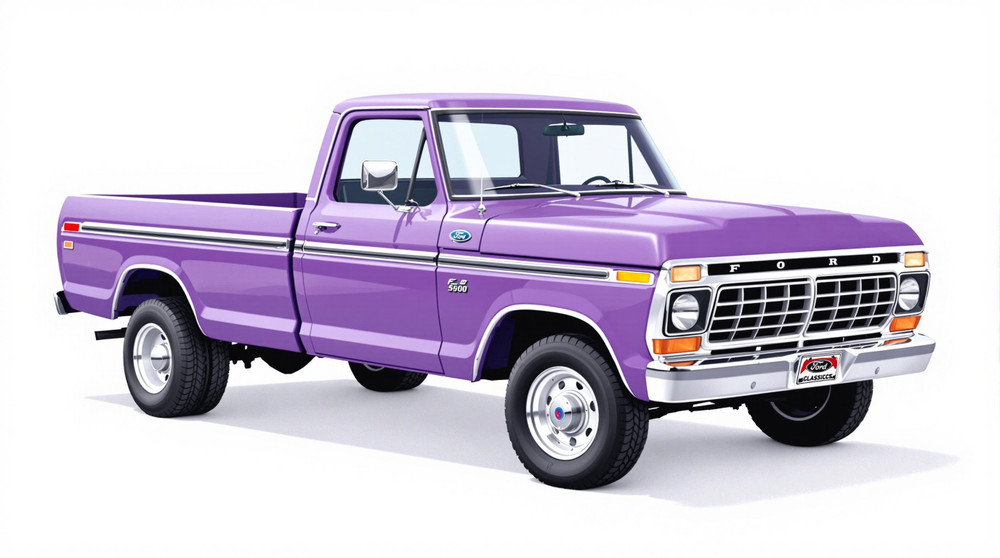
Image of 1975 Ford F-500, Note: These illustrations use artistic license and may differ from actual historical models.
Performance Metrics
Fundamental Metrics
Emotional Appeal
MMP Rating
| Engine Specifications | |
|---|---|
| Engine Options: | Ford 330 MD V8, Ford 361 V8, Ford 391 V8 |
| Displacement Range: | 330 - 391 cubic inches |
| Horsepower Range: | 170 - 200 hp |
| Torque: | 300 - 350 lb-ft |
| Compression Ratio: | 8.0:1 - 8.4:1 |
| Ignition System: | Distributor with points |
| Cooling System: | Liquid-cooled |
| Performance Specifications | |
| 0-60 Time: | Not typically measured for this type of vehicle |
| 1/4 Mile Time: | Not typically measured for this type of vehicle |
| Top Speed: | Not typically measured for this type of vehicle |
| Transmission and Drive | |
| Drive Type: | Rear-wheel drive |
| Transmission Type: | 4-speed manual, 5-speed manual |
| Fuel and Efficiency | |
| Fuel System Type: | Carburetor |
| MPG: | 8 - 12 MPG (estimated) |
| Dimensions and Brakes | |
| Brakes: | Hydraulic with vacuum power assist |
| Wheelbase: | 133 - 157 inches (varies with model) |
| Weight: | 6,000 - 7,000 lbs |
Note: Specifications for classic cars are given to the best of our ability, considering the limited and variant data available.
1975 Ford F-500: A Heavy-Duty Dentside Workhorse
The 1975 Ford F-500 was built for jobs that asked more of a truck than a pickup bed could handle. Part of Ford’s 1973–79 “Dentside” generation, it combined familiar F-Series cab styling with a heavier commercial chassis designed for hauling, construction, municipal work, and specialized body conversions. Ford Motor Company offered the F-500 as a medium-duty truck, positioned between its light-duty pickups and larger commercial models.
The F-500 arrived during a turbulent period for American motoring. The 1973 oil crisis had made fuel economy a public concern, yet businesses still needed dependable trucks capable of carrying substantial loads. The F-500 was not a fuel-saving breakthrough or a high-profile performance machine. Its significance was practical: it brought Ford’s recognizable pickup-family styling to a chassis that could be fitted for serious commercial work.
A useful detail for prospective owners is that “F-500” identifies the truck’s chassis and weight class, not one fixed body style. A truck carrying that badge might have left a dealer as a cab-and-chassis and later become a dump truck, stake-bed, wrecker, delivery vehicle, or utility rig. That variety is part of what makes surviving examples so different from one another.
Dentside Styling and Work-Ready Design
The F-500 shared its basic cab and front-end appearance with the rest of Ford’s 1973–79 F-Series. Its long hood, upright grille, squared-off fenders, and broad windshield gave it a purposeful, unmistakably seventies look. The generation’s “Dentside” nickname comes from the distinctive inward crease pressed into the body sides, a styling detail visible on many lighter F-Series versions. The heavy-duty F-500’s exact bodywork could differ depending on its cab, chassis, and fitted equipment.
Under the familiar exterior, the F-500 had heavier-duty frame, suspension, axle, wheel, and brake components than a typical light-duty pickup. Exact specifications varied with configuration and equipment, so two F-500s can have noticeably different chassis setups. The truck’s gross vehicle weight rating and legal carrying capacity also depended on its particular build, tires, axles, and final body. Owners should check the truck’s door or frame information and its documentation rather than rely on the model name alone.
The cab was straightforward and built for long working days rather than luxury. Expect a broad bench seat, durable vinyl upholstery, a simple instrument panel, and hard-wearing floor covering, often rubber in work-oriented configurations. Materials were chosen for practicality and ease of cleaning. Depending on how the truck was ordered, it might have had basic trim or comfort features such as upgraded upholstery, carpeting, or additional instrumentation. Many surviving trucks have since been modified, so original equipment can be difficult to confirm.
Ford’s factory paint palette changed by year and configuration, and commercial buyers often chose colors to match a company fleet or municipal department. White, red, blue, green, and yellow were common-looking work-truck choices, but availability varied. White was especially practical for fleet use and lettering, while brighter colors made service and utility trucks easier to identify. Aftermarket paint and decades of repainting are common, so a truck’s current color may not be its original one.
Chassis, Cab, and Body Choices
The most versatile F-500 configuration was a cab-and-chassis truck, which gave a business or body builder a bare frame behind the cab for a specialized installation. Popular conversions included flatbeds, stake beds, dump bodies, box vans, service bodies, tow equipment, and utility bodies. Some trucks also served as fire apparatus or other municipal vehicles, though the equipment was typically supplied by specialist builders rather than being a unique Ford F-500 edition.
There was no single iconic body style that defined every F-500. The cab-and-chassis format was the key to its appeal, because it let owners tailor the truck to the job. Today, a clean original-style stake bed or period-correct service body can be especially appealing to collectors, while a well-executed restoration of a fire or utility truck may attract a different audience.
Engines and Period Technology
Engine availability depended on the truck’s configuration and intended duty. Common choices in this family of Ford work trucks included the 300-cubic-inch inline-six and V8 options from Ford’s truck engine range. Heavier applications could be equipped with a 391-cubic-inch FT-series V8. The exact engine fitted to an individual 1975 F-500 should be verified by its identification information, because equipment varied by market and order.
Transmission choices likewise depended on the build. Manual gearboxes were a natural fit for a working truck, with the exact number of forward speeds varying by specification. Some configurations could be ordered with an automatic transmission. The F-500’s notable technology was less about electronics than robust, serviceable hardware: a conventional body-on-frame layout, straightforward mechanical systems, and components intended to withstand commercial use.
By modern standards, the cab is basic. There are no electronic driving aids, touchscreen displays, or contemporary safety systems. Its appeal lies in mechanical simplicity and the direct connection between driver and machine. That simplicity can make diagnosis more approachable, although sourcing correct heavy-duty parts and working on a large truck still calls for the right tools and expertise.
Performance and Driving Feel
Ford did not publish a single meaningful 0–60 mph figure or top speed for every F-500 configuration. Engine, gearing, transmission, tires, load, and the body mounted to the chassis all have a major effect. As a broad real-world estimate, an unloaded example might take roughly 20–30 seconds to reach 60 mph, while a loaded or lower-geared truck could take longer. A plausible cruising or maximum road speed is around 65–75 mph for some configurations, but gearing and condition can put an individual truck outside that range. These are estimates, not factory performance ratings.
The F-500 is happiest working at a measured pace. With a 300 six, the engine tends to feel steady and uncomplicated; a V8 brings a deeper exhaust note and more relaxed response under load. Either way, expect a prominent mechanical soundtrack, including engine and driveline noise that modern trucks largely insulate from the cabin. Steering and braking effort can feel substantial, especially in a truck without power assistance or with worn components.
On rough roads, the heavy chassis and commercial suspension can feel firm when the truck is empty. Add a suitable load and the ride often becomes more composed, though it remains a work truck rather than a comfort cruiser. On winding roads, the F-500’s size, wheelbase, body, and load demand deliberate steering and lower speeds. Crosswinds can be particularly noticeable with a tall box or utility body, and a high center of gravity makes smooth, cautious driving important.
Historical Role and Lasting Appeal
The F-500’s contribution to automotive history is not a dramatic styling revolution. Its importance is in how Ford extended the F-Series identity into the commercial market. A business could buy a truck that looked related to the pickups customers already knew, but with a heavier platform and the flexibility to accept a wide range of working bodies.
That division between familiar cab styling and job-specific chassis engineering remains central to commercial trucks today. Modern work vehicles still rely on cab-and-chassis configurations that can be adapted for delivery, construction, towing, emergency response, and municipal service. The 1975 F-500 is an early, highly visible example of that practical approach within Ford’s long-running truck family.
Compared with lighter pickups, the F-500 stood apart through its commercial-grade hardware and body-conversion potential. Compared with larger heavy trucks, it could be a more manageable choice for businesses that needed substantial capacity without moving to a much larger platform. Its lasting influence is therefore less about a single invention and more about the usefulness of a flexible, purpose-built truck range.
Living With a 1975 F-500
Most F-500s were built to earn their keep, and common uses included hauling materials, carrying tools, towing, delivering goods, and supporting public works. Today, owners use them as work trucks, restorations, parade vehicles, farm equipment, or eye-catching show trucks. They are not ideal daily drivers for most people: parking, fuel consumption, parts availability, and road speed all require more planning than a modern pickup.
Routine mechanical work can be approachable for an experienced home mechanic. The engine bay and basic systems are comparatively conventional, and many repairs do not require specialized electronics. However, the truck’s weight makes safe lifting and brake work especially important. Rust inspection should include the cab, floor, frame, mounts, and areas where a body or equipment was attached. Buyers should also carefully inspect steering, brakes, tires, wheel bearings, and the condition of the installed body.
Reliability depends heavily on maintenance and how the truck was used. A well-cared-for example can remain serviceable, but many were worked hard, modified, or left outside for years. Before purchase, verify the engine and transmission, check for frame damage or poor-quality repairs, and confirm that the truck’s title and weight classification fit its current configuration. A specialty body can be valuable to the right buyer, but it can also make replacement parts and restoration more complicated.
F-500 Facts and Common Criticisms
The F-500’s most interesting “rare edition” is often its working history. A former fire, highway, or utility truck may retain specialized equipment, fleet markings, or unusual bodywork that tells a story unavailable from a standard pickup. There is no widely recognized, mass-produced performance edition of the 1975 F-500, and no commonly cited speed or endurance record associated with the model.
There is also no reliable, widely published factory production total specifically for 1975 F-500 trucks. Ford’s overall truck-production figures do not tell us how many F-500s were built in each body and chassis configuration. As a cautious estimate rather than an official count, production was likely in the thousands to low tens of thousands for the model year, with a practical guess of roughly 5,000–15,000 trucks. The number still in recognizable condition is certainly smaller, particularly for trucks retaining original equipment.
Common criticisms are straightforward: the F-500 is thirsty, slow by modern standards, physically large, and not especially comfortable when empty. Its braking distances and handling also demand respect, particularly when carrying a load or operating with aging components. For collectors, those drawbacks are part of the truck’s honest character, but they matter if the plan is frequent highway use.
Collector Values and Market Outlook
Values vary widely because condition and body type matter as much as the badge. A rough project or incomplete chassis might sell for approximately $2,000–$7,000. A running, usable truck with a serviceable body may fall around $8,000–$20,000. A well-restored, attractive example can bring roughly $25,000–$45,000, while an exceptional restoration or a rare, desirable specialty-body truck may exceed that range. These are broad U.S. market estimates, not guaranteed sale prices.
Availability is limited compared with ordinary F-Series pickups, but the F-500 is not impossible to find. It is most often encountered as a former work truck, and condition can range from well-preserved to heavily altered. Collectors should look for solid structure, documented history, correct or thoughtfully restored equipment, and a body type that suits their intended use. A rare configuration does not automatically command a premium if it is difficult to maintain or has little buyer demand.
The classic Ford pickup market has helped draw attention to the Dentside generation, but medium-duty trucks remain a niche. Clean examples have generally become more desirable, especially when they retain character and useful equipment. Overall, the F-500 market is best described as stable to gradually appreciating for strong examples, rather than a fast-moving investment category. Condition, originality, and local demand can change the picture considerably.
Why the 1975 Ford F-500 Still Matters
The 1975 Ford F-500 is a practical piece of Ford history: a heavy-duty chassis, familiar Dentside styling, and the flexibility to become almost any kind of working truck. It offers straightforward mechanical character, a distinctive sound and feel, and a direct connection to the businesses and public services that relied on it.
It may not be quick, quiet, or easy to park, but the F-500 was never meant to be a commuter car. Its lasting appeal comes from the jobs it could do and the many forms it could take. For a collector who appreciates working vehicles, this Ford is more than a large old truck. It is a rolling reminder that utility, adaptability, and honest engineering can become classics too.
1975 Ford F-500 Catalog of Parts
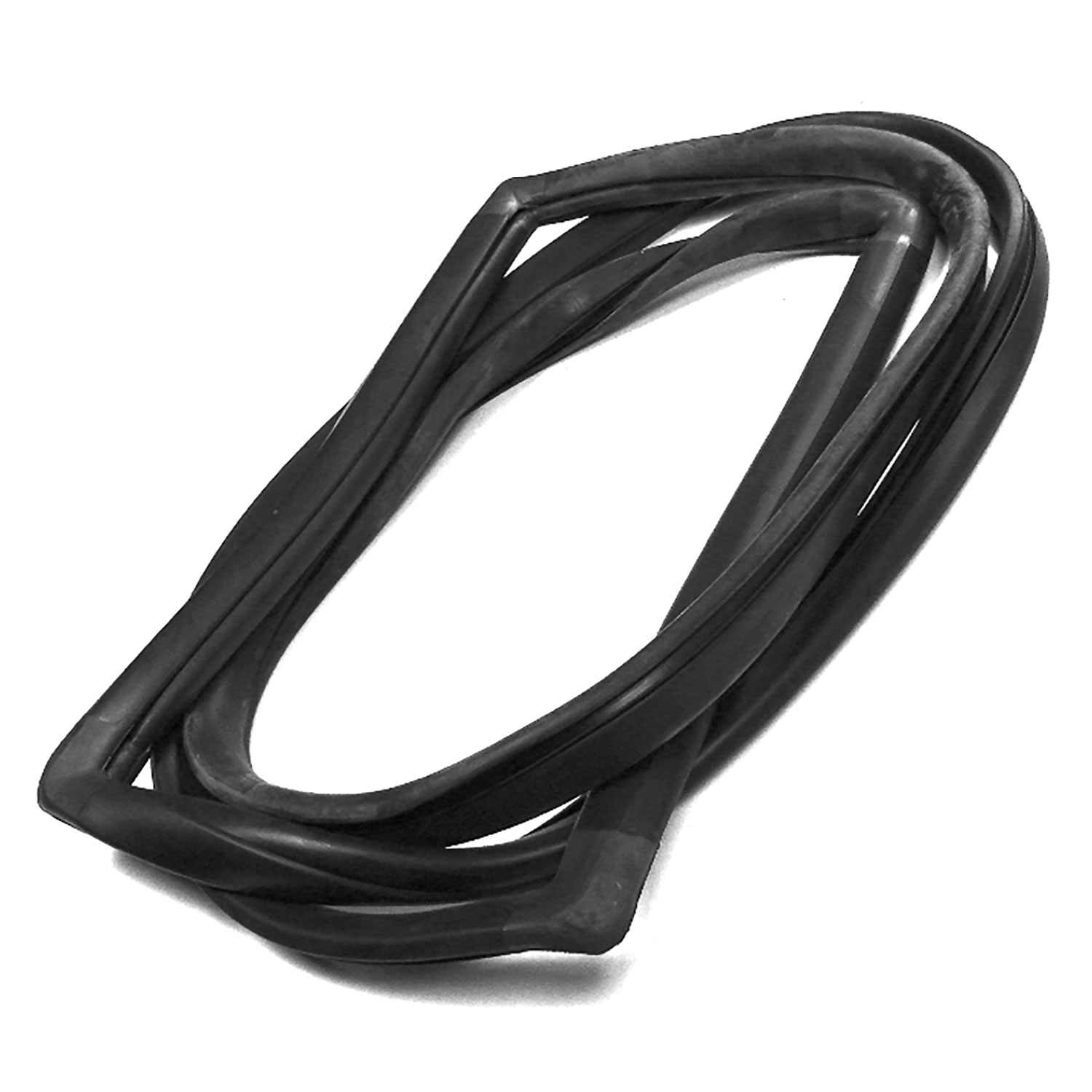 1975 Ford F-500 Windshield Seal, 67-79 Ford Full Size Truck, 78-79 Bronco, Without Trim Groove-VWS 3304-CThis windshield seal goes first on the glass and is installed using the rope-in method. This product is made from the original specs and with high quality ozone resistant EPDM rubber for a great fit and long life. This item is designed to be installed during glass replacement.
Why Choose Metro?
For over 100 years, Metro Moulded Parts has been the pinnacle of quality in classic car restoration parts. Our commitment to precision and authenticity in every component ensures a perfect fit and an OEM-level appearance.
- Expert Craftsmanship & Quality: Each part is a testament to our dedication to reliability and perfection, crafted from original designs and thoroughly tested.
- Advanced Technology: We use cutting-edge techniques to create flawless, long-lasting parts that surpass others in performance.
- SuperSoft Sponge – The Ultimate Door Seal: Not only are our door seals 30% softer than competitors', but they're also guaranteed to never leak. They effectively reduce wind and road noise, enhancing your classic car's comfort and driving experience.
- Proudly American: Our parts are a product of American craftsmanship, made in the USA with a spirit of excellence and heritage.
- Unrivaled Warranty: We back our products with a 30-year industry-leading warranty, a testament to our confidence in their quality.
Join us in preserving the legacy of classic cars with parts that are crafted for perfection, not just made.