
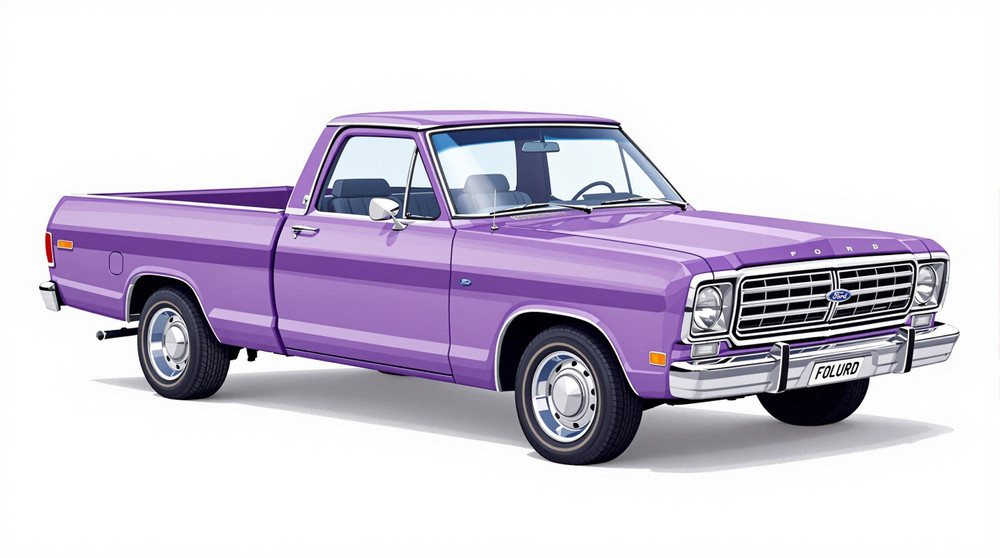
Image of 1976 Ford Courier, Note: These illustrations use artistic license and may differ from actual historical models.
Performance Metrics
Fundamental Metrics
Emotional Appeal
MMP Rating
| Engine Specifications | |
|---|---|
| Engine: | 2.3L 4-cylinder engine |
| Displacement: | 140 cu in, 2295 cc |
| Horsepower: | 74-80 hp |
| Torque: | 120 lb-ft |
| Compression Ratio: | 8.2:1 |
| Ignition System: | Electronic |
| Cooling System: | Liquid-cooled |
| Performance Specifications | |
| 0-60 Time: | Estimated 20 seconds |
| 1/4 Mile Time: | Estimated 22 seconds |
| Top Speed: | 85 mph |
| Transmission and Drive | |
| Drive Type: | Rear-wheel drive |
| Transmission Type: | 4-speed manual |
| Fuel and Efficiency | |
| Fuel System Type: | Carburetor |
| MPG: | 20-25 mpg |
| Dimensions and Brakes | |
| Brakes: | Front disc, rear drum |
| Wheelbase: | 109.9 in |
| Weight: | 3000 lbs |
Note: Specifications for classic cars are given to the best of our ability, considering the limited and variant data available.
1976 Ford Courier: The Compact Pickup That Bridged Two Automakers
The 1976 Ford Courier was a small truck with a big job: give Ford buyers an economical pickup just as compact imports were reshaping the American market. Built in Japan by Toyo Kogyo, the company now known as Mazda, the Courier was closely related to Mazda’s B-Series pickup. Ford supplied the name, badges, and market presence; Mazda supplied the basic truck engineering.
By 1976, buyers were showing growing interest in pickups that were easier to park and less thirsty than full-size American trucks. The Courier answered with a simple rear-wheel-drive layout, a modest four-cylinder engine, and a useful cargo bed. Its history also has an unusual footnote: to sidestep the steep U.S. tariff on imported light trucks, Couriers arrived without their cargo beds, which were fitted in the United States.
That clever arrangement helped make the Courier a practical part of Ford’s lineup, while its Mazda roots gave it a different character from the company’s larger domestic trucks. It was not a heavy-duty workhorse or a performance pickup. It was a compact, economical tool for people who needed a truck without needing a full-size one.
Compact Pickup Styling and Cabin Details
The Courier had the upright, straightforward proportions typical of 1970s compact pickups: a tall cab, short nose, nearly vertical windshield, and a separate cargo bed. Its front end wore Ford identification, including a grille and badging that helped distinguish it from the Mazda truck on which it was based. The overall shape was clean and functional rather than decorative, with simple body panels and a practical stance.
The regular-cab configuration was the familiar look of the 1976 Courier. It paired a single cab with a bed of roughly six-foot length, giving owners room for tools, building supplies, garden equipment, or weekend gear. Buyers looking for a crew cab or an extended-cab pickup would need to shop elsewhere. The Courier’s appeal was its straightforward, compact package.
Inside, the design was similarly uncomplicated. Expect a basic dashboard, large and legible gauges, simple controls, and a bench seat in a cabin designed around utility rather than luxury. Vinyl was common and suited the truck’s working purpose, while equipment and upholstery could vary with the original order. The materials were durable and easy to clean, though not especially plush by passenger-car standards.
Color availability varied by market and production run. Period Couriers could be found in practical shades such as white, red, blue, green, and earth tones, with paint and trim combinations changing over time. Bright colors tend to stand out at shows today, while white and other work-truck colors are often associated with the Courier’s original commercial role. Buyers should verify a particular truck’s factory color from its identification information rather than assume every color was offered on every 1976 example.
Simple Technology for Everyday Work
The Courier’s equipment was conventional for its time, but well suited to a small pickup. Its front-engine, rear-wheel-drive layout kept the mechanical package simple, and the truck used a ladder-style frame suited to carrying cargo. Front disc brakes and rear drum brakes provided a familiar braking arrangement, while the manual transmission gave drivers direct control over the modest engine.
Comfort and convenience features were limited compared with modern pickups. The Courier did not offer today’s electronic driver aids, infotainment systems, or elaborate cabin storage. Its appeal was mechanical simplicity: fewer systems to troubleshoot, a compact footprint, and controls that were easy to understand. Equipment varied by truck, so details such as an automatic transmission or optional convenience features should be checked against the individual vehicle.
Why the 1976 Courier Mattered
The Courier arrived during a turning point in the U.S. truck market. Smaller Japanese pickups from Mazda, Toyota, and Datsun were attracting customers who wanted useful cargo capacity with lower running costs and more manageable dimensions. Ford’s response was to bring the Courier into its lineup rather than leave that market entirely to import brands.
Its importance was not that it introduced a revolutionary new technology. Instead, it showed how automakers could use international partnerships to meet a changing demand. Ford gained a compact pickup without developing an entirely separate truck from the ground up, while Mazda gained access to Ford’s dealer network and customer base.
The Courier also helped establish a place for smaller pickups in Ford’s North American range before the Ranger became the company’s homegrown compact-truck nameplate. It offered an alternative to a full-size F-Series for buyers who needed a bed but did not need maximum towing or payload capacity. In that sense, the Courier belongs to the early chapter of the compact pickup market that later became a lasting segment.
1976 Ford Courier Performance and Road Feel
Power came from a Mazda-built 1.8-liter inline-four, displacing about 1,796 cc. Published horsepower figures vary by source and measurement standard, but the engine is generally described as producing roughly 72 to 74 horsepower. A four-speed manual transmission was typical, with rear-wheel drive sending power to the back wheels. Exact equipment can vary, so a surviving truck should be checked rather than judged by a general specification.
Performance was modest. A healthy, lightly loaded Courier might take roughly 19 to 22 seconds to reach 60 mph, and estimated top speed is around 80 to 85 mph. Those are period-style estimates, not guaranteed figures: engine condition, gearing, tires, altitude, and cargo all make a difference. The truck was built for economical transport and practical hauling, not quick acceleration.
On the road, the Courier feels narrow and relatively light beside a full-size pickup. Its four-cylinder engine works audibly when accelerating or climbing a grade, and the manual gearbox keeps the driver involved in making the most of its available power. The engine’s straightforward mechanical sound is part of the appeal for enthusiasts, though a tired example may bring unwanted rattles or exhaust noise along with it.
Over bumps, the truck’s ride reflects its working-truck construction. An empty bed can make the rear feel busy over rough pavement, while a moderate load can settle it down. On winding roads, the compact size is an advantage, but the Courier is not a sports truck: its steering, tires, and suspension are from an era before modern pickups prioritized sharp handling. In strong crosswinds or at highway speed, its light weight and upright shape can make it feel less planted than a heavier vehicle.
Living With a Courier Today
In period use, the Courier could serve as a small-business truck, a commuter with occasional hauling duties, or an inexpensive second vehicle. Today, surviving examples are more likely to be weekend drivers, hobby-farm helpers, project trucks, or entries at vintage pickup gatherings. A clean, original Courier can also make an appealing show vehicle precisely because it is less commonly seen than a contemporary full-size Ford.
The mechanical layout is relatively accessible for an owner comfortable with older vehicles. Routine service on a four-cylinder engine is usually less intimidating than working on a modern truck with complex electronics, and many basic repairs can be handled with ordinary tools and a workshop manual. However, age matters more than reputation: cooling systems, fuel delivery, ignition components, brake hydraulics, suspension bushings, and electrical connections all deserve inspection.
Rust is the major ownership concern. Check the cab floor, cab mounts, rocker panels, wheel openings, frame, and bed carefully. A truck that looks tidy from the outside may hide corrosion beneath fresh paint or under bed liners. Parts availability is mixed: some mechanical components may be shared with Mazda applications or supported by specialist suppliers, while trim, body panels, and model-specific pieces can take patience to locate.
Courier Facts, Myths, and Common Criticisms
The Courier’s most notable bit of trivia is its bed-installation workaround. U.S. tariffs on imported light trucks encouraged importers to bring in some vehicles as cab-and-chassis units and complete them domestically. The Courier’s cargo bed was fitted in the United States, helping Ford compete in the compact-truck segment without simply importing a finished light truck under the full tariff.
The 1976 Courier was not a special high-performance edition or a famous racing homologation model, and there is no widely recognized celebrity ownership story that defines its reputation. Its distinction is more down to earth: it was a Ford-badged pickup with Mazda engineering at a moment when compact imports were changing what American buyers expected from a truck.
Common criticisms are easy to understand. The engine is slow by modern standards, the cabin is basic, and the short, light truck can feel unsettled when empty on rough roads. It also lacks the towing and payload ability of a full-size pickup. Those limitations are part of the Courier’s purpose, though: it was meant to be a smaller, economical truck, not a substitute for every heavy-duty job.
1976 Ford Courier Values and Rarity
There is no widely available, definitive production tally for the 1976 model year, so any single-year total should be treated as an estimate rather than a factory-confirmed figure. A reasonable ballpark for U.S.-market 1976 Courier production is roughly 25,000 to 40,000 trucks. That estimate gives a sense of scale, but it should not be mistaken for an official count, and surviving examples are considerably fewer after decades of work, rust, and ordinary wear.
Current asking prices and sale results vary widely by location, condition, and originality. As a broad guide, a project or rough driver might fall around $2,500 to $5,000. A solid, usable example could bring approximately $5,000 to $10,000, while a particularly clean, restored, or highly original truck may reach $10,000 to $16,000 or more. Exceptional examples can exceed that range, but they are the exception rather than the everyday market.
Values have generally benefited from renewed interest in vintage compact pickups, especially well-preserved Japanese models. The Courier has not usually commanded the same premium as some better-known Toyota or Datsun trucks, which can make it an appealing entry point for collectors. Clean, rust-free examples are becoming harder to find, so the strongest trucks are more likely to hold or gain value. Rough projects remain sensitive to repair costs, particularly when body parts and trim are missing.
Why the 1976 Ford Courier Still Stands Out
The 1976 Ford Courier combined Mazda engineering, Ford branding, and a practical compact-truck layout at a time when the American market was learning to appreciate smaller pickups. It was simple, economical, and refreshingly direct, with enough cargo space for everyday jobs and dimensions that made it easier to live with than a full-size truck.
It was never the fastest or most luxurious pickup of its era. Its lasting significance comes from being part of the shift toward compact trucks and from showing how cross-border partnerships could reshape a domestic lineup. For collectors, the Courier offers a distinctive slice of Ford and Mazda history: a hardworking little pickup whose modest size helped make a big change in the truck market.
1976 Ford Courier Catalog of Parts
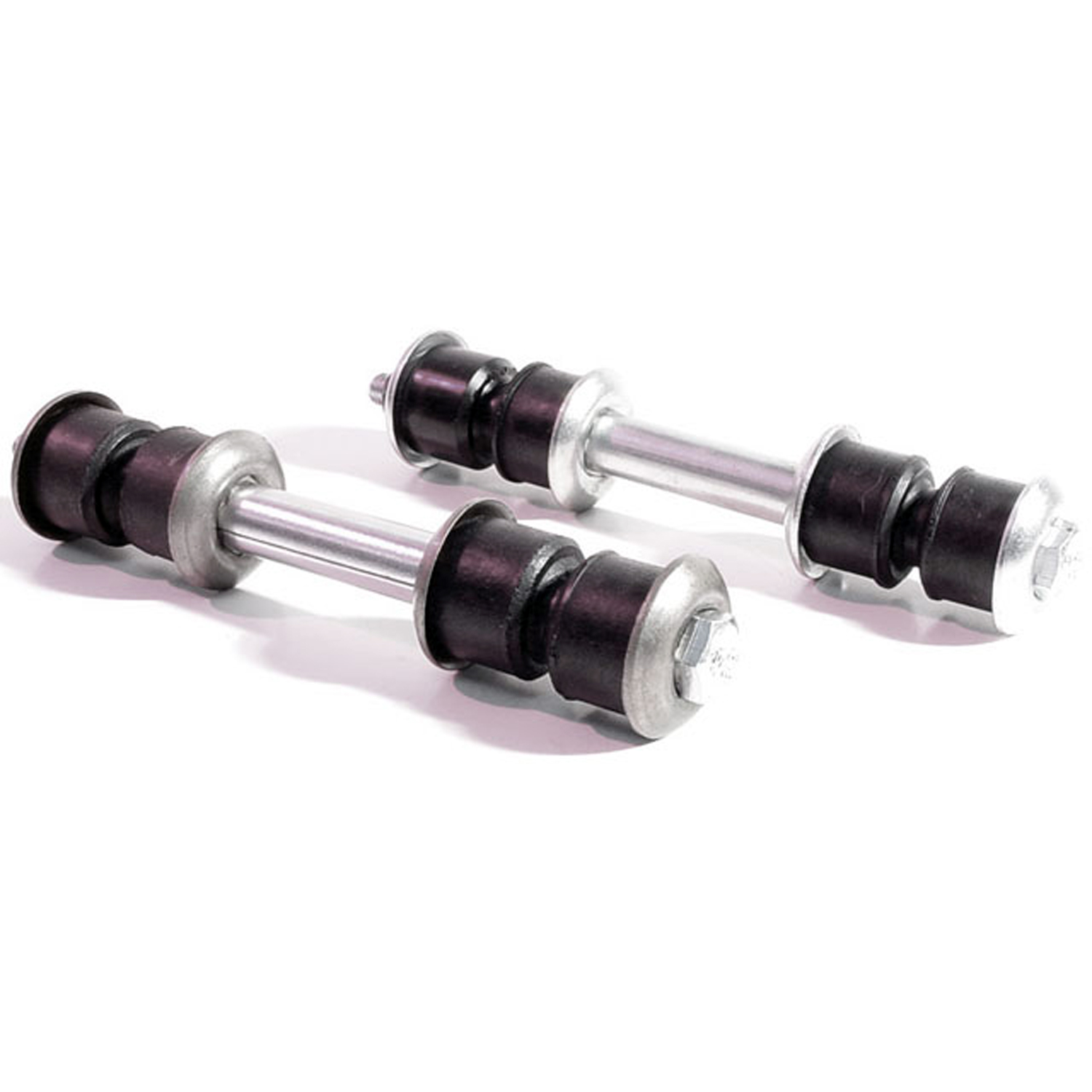 1976 Ford Courier Front Stabilizer End Repair Kit-BNK 24Front Stabilizer End Repair Kit. 22-piece set for two stabilizer bars. Contains all rubber bushings, washers, bolts and nuts, enough for one front end. Set
Why Choose Metro?
For over 100 years, Metro Moulded Parts has been the pinnacle of quality in classic car restoration parts. Our commitment to precision and authenticity in every component ensures a perfect fit and an OEM-level appearance.
- Expert Craftsmanship & Quality: Each part is a testament to our dedication to reliability and perfection, crafted from original designs and thoroughly tested.
- Advanced Technology: We use cutting-edge techniques to create flawless, long-lasting parts that surpass others in performance.
- SuperSoft Sponge – The Ultimate Door Seal: Not only are our door seals 30% softer than competitors', but they're also guaranteed to never leak. They effectively reduce wind and road noise, enhancing your classic car's comfort and driving experience.
- Proudly American: Our parts are a product of American craftsmanship, made in the USA with a spirit of excellence and heritage.
- Unrivaled Warranty: We back our products with a 30-year industry-leading warranty, a testament to our confidence in their quality.
Join us in preserving the legacy of classic cars with parts that are crafted for perfection, not just made.