

Image of 1977 Ford Courier, Note: These illustrations use artistic license and may differ from actual historical models.
Performance Metrics
Fundamental Metrics
Emotional Appeal
MMP Rating
| Engine Specifications | |
|---|---|
| Engine: | 2.3L 4-cylinder |
| Displacement: | 140 cu in, 2295 cc |
| Horsepower: | 74-79 hp |
| Torque: | 124 lb-ft |
| Compression Ratio: | 8.2:1 |
| Ignition System: | Electronic |
| Cooling System: | Liquid-cooled |
| Performance Specifications | |
| 0-60 Time: | 14-16 seconds |
| 1/4 Mile Time: | 19-21 seconds |
| Top Speed: | 85-90 mph |
| Transmission and Drive | |
| Drive Type: | Rear-wheel drive |
| Transmission Type: | 4-speed manual |
| Fuel and Efficiency | |
| Fuel System Type: | Carburetor |
| MPG: | 20-25 mpg |
| Dimensions and Brakes | |
| Brakes: | Front disc, rear drum |
| Wheelbase: | 109.9 in |
| Weight: | 3000 lbs |
Note: Specifications for classic cars are given to the best of our ability, considering the limited and variant data available.
1977 Ford Courier: The Compact Truck That Bridged Two Worlds
The 1977 Ford Courier brought Japanese compact-truck engineering into Ford showrooms, giving American buyers a practical alternative to full-size pickups at a time when fuel economy and manageable dimensions were becoming increasingly important. Though it wore Ford badges, the Courier was based on the Mazda B-Series pickup and built in Japan before being sold in the United States through Ford dealers.
That unusual partnership is part of what makes the Courier interesting. Ford needed a small pickup to compete with imported trucks, but building one from scratch would take time and investment. Mazda already had a proven compact-truck platform, so Ford adapted it for its own market. The Courier became a notable bridge between Japanese manufacturing and the American pickup market, and a precursor to the Ford Ranger that would arrive for the 1983 model year.
There is also a bit of trade-policy history behind the truck. The United States’ 25 percent tariff on imported light trucks, commonly nicknamed the “chicken tax,” encouraged manufacturers to bring in trucks in a form that avoided the full truck tariff, then complete them domestically. The Courier’s arrival reflects the creative workarounds automakers used to compete in the growing compact-pickup segment.
Compact Pickup Styling and Cabin
The 1977 Courier had the straightforward proportions buyers expected of a small work truck: a short, upright cab, a long bonnet, simple glass, and an open cargo bed. Its front end was neat and square, with a modest grille, rectangular headlamps, and restrained chrome or brightwork depending on trim. The overall look was less imposing than a full-size Ford pickup, but its clean lines and compact footprint gave it an honest, purposeful character.
Inside, the Courier prioritized function over decoration. The cab was narrow by modern standards, with a simple dashboard, clear instruments, and durable surfaces designed to take everyday use. Vinyl upholstery was common, while cloth or upgraded trim could be found depending on equipment. The materials were practical rather than luxurious, but the controls were generally easy to reach and understand. A compact cab also meant less room for passengers and storage than many modern pickups offer.
Equipment reflected the era. The Courier did not rely on electronic driver aids or complex infotainment systems. Its appeal came from straightforward mechanicals, a conventional rear-wheel-drive layout, and controls that an owner could learn quickly. Buyers could choose equipment and trim to suit work or personal use, but the truck remained deliberately simple.
Color availability varied by market and equipment, with period-typical solid shades such as white, red, blue, green, and yellow among the kinds of colors seen on compact pickups of the time. Fleet buyers often favored basic, easy-to-maintain finishes, while brighter colors helped a personal-use Courier stand out. Exact paint choices depended on the original order and market.
The 1977 model was offered as a regular-cab pickup with an open bed. It was not a modern crew-cab or extended-cab truck, and its appeal centered on a compact cab paired with useful cargo space. Bed and trim details could vary, but the classic Courier is the simple, single-cab pickup: light, narrow, and easy to maneuver.
Why the Courier Mattered
The Courier helped make the compact pickup a credible choice for American buyers. Before small trucks became a major category, many people associated pickups with large engines, heavy frames, and substantial fuel bills. The Courier offered a different proposition: a truck that could handle home-improvement supplies, light commercial jobs, and weekend chores without the size and running costs of a full-size model.
It also showed how an automaker could respond to a changing market by working across national boundaries. Ford’s badge and dealer network gave the truck a familiar sales and service presence, while Mazda supplied the underlying compact-truck experience. That arrangement stood out among domestic offerings and helped prepare buyers for the broader range of small pickups that followed.
The Courier did not invent the compact pickup, nor did it establish every feature later associated with the class. Its significance lies in helping popularize the format through a major American brand. When Ford introduced the Ranger in 1983, it moved into the segment with a truck developed specifically for the company. The Courier had helped establish why such a truck was worth building.
Engine, Speed, and Road Manners
The typical 1977 U.S.-market Courier used a Mazda-sourced 1.8-liter four-cylinder engine, rated at roughly 72 horsepower. A manual transmission, commonly a four-speed, sent power to the rear wheels. Specifications could vary with market and equipment, so buyers researching a particular truck should check its identification and original documentation rather than assume every example is identical.
Performance was modest, especially by modern standards. Period figures and present-day estimates vary with gearing, condition, tires, and load, but a roughly 16-to-20-second 0-to-60-mph time is a reasonable guide for a standard truck. Top speed is best thought of as approximately 80 to 90 mph under favorable conditions, though the Courier was not designed to cruise at those speeds for long stretches. Its strengths were economy, utility, and low-speed usability, not acceleration.
On smooth roads, the Courier feels light and direct. The small four-cylinder works steadily rather than forcefully, and the manual gearbox makes the driver an active part of the experience. Expect a mechanical engine note, modest passing power, and a need to plan overtakes, especially with cargo aboard. The uncomplicated drivetrain has a distinctly old-school feel: the driver shifts, listens, and works with the truck rather than relying on electronic systems to smooth everything over.
Like many light pickups with an unloaded rear axle, the Courier can feel firm over sharp bumps. An empty bed may also become unsettled on rough pavement, while a sensible load can make the rear suspension feel more composed. Its compact dimensions are helpful on narrow streets and in parking lots, but crosswinds and uneven roads can still move a lightweight truck around. On winding roads, it is best driven at a measured pace. It is a practical pickup, not a sports truck.
Living With a 1977 Courier
Today, a Courier can serve as a weekend driver, a small farm or property truck, a light-duty work vehicle, or a vintage show-and-shine project. Its manageable size makes it appealing to owners who want an older pickup without the footprint and fuel appetite of a large 1970s truck. Clean examples can also make engaging period pieces at Japanese-truck and Ford gatherings.
Routine maintenance is usually approachable for a mechanically confident owner. The truck’s conventional layout avoids the electronic complexity of modern vehicles, and many basic service jobs are straightforward. However, some parts are specific to the Mazda-based Courier and may not be as easy to find locally as parts for a common domestic Ford pickup. Buyers should pay particular attention to rust in the cab, bed, frame, and suspension mounting areas, as well as the condition of the engine, gearbox, brakes, and electrical system.
Reliability depends heavily on maintenance and storage history. A well-kept four-cylinder can be a durable, economical engine, but age brings familiar issues: worn seals, tired cooling components, carburetor trouble, old wiring, and hard-to-source trim. Before buying, inspect for structural corrosion and verify that the truck can be registered and insured in your area. A cheap project can become expensive if its bodywork or missing parts require extensive restoration.
Courier Trivia and Common Complaints
The Courier’s most notable piece of trivia is that its Ford identity concealed a Mazda foundation. It was a practical badge-engineering partnership, but not simply a Ford-designed truck with a different engine. That cross-Pacific arrangement helped Ford compete in a segment where Japanese manufacturers already had a strong foothold.
The Courier is also part of the lineage that led to the Ranger, although it was not the same truck under another name. The later Ranger represented Ford’s move toward a home-developed compact pickup. No widely established speed or endurance record defines the 1977 Courier; its distinction is its role in the market rather than a headline-grabbing performance achievement.
Common criticisms are easy to understand. The truck is slow, the cab is cramped, and its payload and towing abilities are limited compared with full-size pickups. The ride can be choppy when the bed is empty, and rust can make restoration challenging. For buyers who need modern safety, comfort, or heavy-duty capability, a Courier is not a substitute for a newer truck. Its appeal is its simplicity, character, and period-correct usefulness.
Collector Values and Availability
There is no reliably published production total for the 1977 model year that neatly captures every market and configuration. A reasonable broad estimate is that U.S. sales were in the tens of thousands, perhaps around 30,000 to 50,000 for the year, but that should be treated as an informed estimate rather than a verified factory figure. Many Couriers were used hard, exposed to weather, or scrapped, so surviving clean examples are much less common than the original sales numbers might suggest.
As a general U.S. market guide, a non-running or heavily rusted project might sell for roughly $1,500 to $4,000. A usable driver in fair-to-good condition may fall around $5,000 to $12,000, while a clean, well-presented example could bring approximately $12,000 to $20,000. A high-quality restoration or unusually original truck may exceed that range, particularly if it has strong documentation and desirable equipment. These are broad estimates, not fixed prices: region, rust, mechanical condition, originality, and buyer interest make a substantial difference.
The Courier has gained attention as buyers rediscover compact Japanese pickups and overlooked 1970s trucks, but it remains a niche collectible. Values have generally strengthened for sound, original examples, while project trucks remain constrained by restoration costs and parts availability. The best purchase is usually the most complete, rust-free truck a buyer can find, rather than the cheapest one on the market.
A Small Truck With a Big Place in Ford History
The 1977 Ford Courier combined Mazda engineering, Ford’s American dealer network, and the growing demand for a smaller, more economical pickup. It was not fast or luxurious, but it was practical, easy to understand, and well suited to the light-duty jobs many owners actually faced.
Today, the Courier stands as an important early chapter in the compact-pickup story and a reminder that automotive history is often shaped by collaboration as much as by individual brands. For enthusiasts who value honest design and hands-on simplicity, this little Ford-badged truck still has plenty to say.
1977 Ford Courier Catalog of Parts
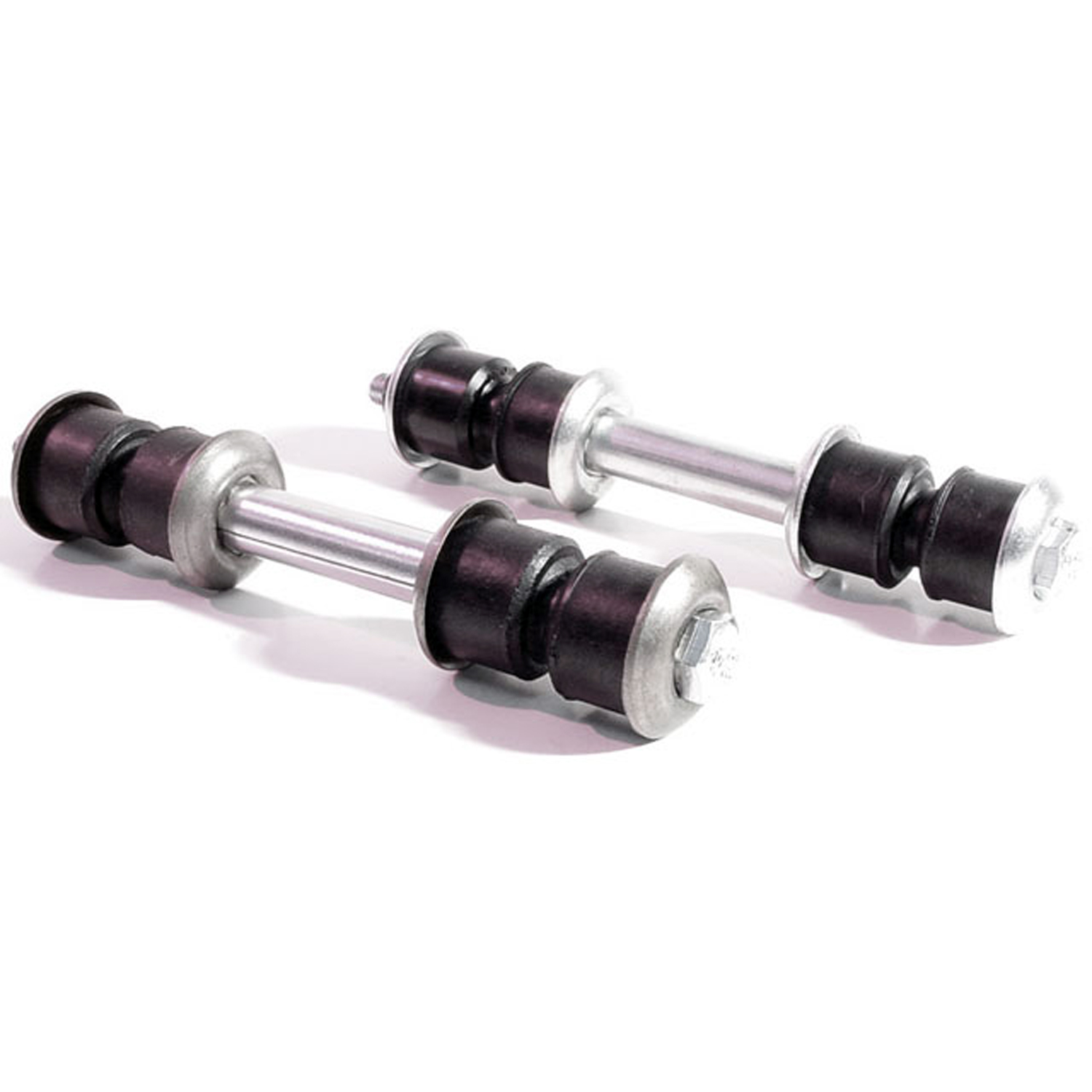 1977 Ford Courier Front Stabilizer End Repair Kit-BNK 24Front Stabilizer End Repair Kit. 22-piece set for two stabilizer bars. Contains all rubber bushings, washers, bolts and nuts, enough for one front end. Set
Why Choose Metro?
For over 100 years, Metro Moulded Parts has been the pinnacle of quality in classic car restoration parts. Our commitment to precision and authenticity in every component ensures a perfect fit and an OEM-level appearance.
- Expert Craftsmanship & Quality: Each part is a testament to our dedication to reliability and perfection, crafted from original designs and thoroughly tested.
- Advanced Technology: We use cutting-edge techniques to create flawless, long-lasting parts that surpass others in performance.
- SuperSoft Sponge – The Ultimate Door Seal: Not only are our door seals 30% softer than competitors', but they're also guaranteed to never leak. They effectively reduce wind and road noise, enhancing your classic car's comfort and driving experience.
- Proudly American: Our parts are a product of American craftsmanship, made in the USA with a spirit of excellence and heritage.
- Unrivaled Warranty: We back our products with a 30-year industry-leading warranty, a testament to our confidence in their quality.
Join us in preserving the legacy of classic cars with parts that are crafted for perfection, not just made.