

Image of 1977 Ford Ltd Ii, Note: These illustrations use artistic license and may differ from actual historical models.
Performance Metrics
Fundamental Metrics
Emotional Appeal
MMP Rating
| Engine Specifications | |
|---|---|
| Engine: | 302 cu in (4.9 L) Windsor V8, 351 cu in (5.8 L) Windsor V8, 400 cu in (6.6 L) Cleveland V8 |
| Displacement: | 302-400 cu in |
| Horsepower: | 134-173 hp |
| Torque: | 247-315 lb-ft |
| Compression Ratio: | 8.4:1 - 8.5:1 |
| Ignition System: | Electronic Ignition |
| Cooling System: | Liquid cooled |
| Performance Specifications | |
| 0-60 Time: | 10-12 seconds |
| 1/4 Mile Time: | 17-19 seconds |
| Top Speed: | 105-110 mph |
| Transmission and Drive | |
| Drive Type: | Rear-wheel drive |
| Transmission Type: | 3-speed automatic |
| Fuel and Efficiency | |
| Fuel System Type: | Carburetor |
| MPG: | 10-12 mpg |
| Dimensions and Brakes | |
| Brakes: | Front disc, rear drum |
| Wheelbase: | 114 inches |
| Weight: | 3,600-3,800 lbs |
Note: Specifications for classic cars are given to the best of our ability, considering the limited and variant data available.
1977 Ford LTD II: Detroit’s Big-Middle Cruiser
The 1977 Ford LTD II arrived with the broad shoulders of a classic American cruiser and a name that hinted at a changing Ford lineup. Built by Ford Motor Company, it replaced the Torino as the brand’s intermediate-size car, slotting between the compact Granada and the full-size LTD. Its recipe was familiar and appealing: rear-wheel drive, a roomy cabin, available V8 power, and a relaxed ride.
The LTD II debuted during a period of major change. Fuel economy and emissions rules were reshaping American cars, while buyers still wanted the comfort and presence of a traditional domestic sedan. Ford’s answer was not a radical redesign but a familiar, substantial car with updated styling. One intriguing footnote is that “LTD II” was a new name for the Torino’s successor, not a second generation of the full-size LTD.
Formal Styling and Spacious Comfort
The LTD II wore the era’s formal American look: a long hood, squared-off body sides, upright grille, and a broad, flat trunk. Rectangular headlamps and substantial bumpers gave the front end a confident, almost architectural face. At the rear, wide taillamps and clean horizontal lines emphasized the car’s width. Its proportions made it look substantial even beside other intermediate cars of the period.
Inside, the cabin was designed for comfort rather than sport. Wide bench seats were common, with bucket seats and a console available on some configurations. Vinyl upholstery was a practical choice, while cloth and patterned trim brought a softer, more upscale feel. Depending on trim and options, the dashboard could include woodgrain accents, a padded instrument panel, and convenience features such as air conditioning, power windows, power locks, cruise control, and an AM/FM radio. These were generally optional extras, so equipment varies considerably from car to car today.
Ford offered the LTD II as a two-door hardtop-style coupe, a four-door sedan, and a four-door station wagon. The wagon was also available in Squire trim, with woodgrain-style exterior appliqué that gave it the popular “woodie” look. The Brougham trim emphasized a more dressed-up interior and exterior. The coupe has the most dramatic profile, while the Squire wagon is often the most visually distinctive choice.
Period paint choices ranged from restrained whites, silvers, and dark blues to more expressive greens, reds, and browns. Exact shades varied by year and trim. Earth tones and deep metallic colors suited the LTD II’s formal styling, while white cars with contrasting vinyl roofs were another familiar look.
Engineering from the Torino Era
Underneath, the LTD II carried forward the intermediate Ford architecture associated with the Torino. It used a unitized body structure, front-engine, rear-wheel-drive layout, independent front suspension, and a live rear axle with leaf springs. The result was conventional and serviceable rather than technologically groundbreaking. For buyers accustomed to American cars, its layout was easy to understand and well suited to long-distance cruising.
Available engines typically included a 250-cubic-inch inline-six and a range of V8s, including 302-, 351-, and 400-cubic-inch options, depending on model and market. A three-speed automatic was common, with transmission and equipment details varying by engine and configuration. Power steering and power brakes were popular options and make a noticeable difference in everyday use.
The LTD II did not introduce a major new technology or transform automotive design. Its importance is more as a snapshot of the American intermediate car at a turning point: still large and comfortable by modern standards, but positioned in a market beginning to move toward smaller, lighter vehicles. Ford’s later downsizing of its full-size cars made the LTD II’s traditional proportions feel increasingly like the end of an era.
V8 Pace, Cushioned Ride
Performance depends heavily on which engine is under the hood. A six-cylinder car was built for steady transportation, not quick acceleration. A 302 V8 offered more relaxed passing power, while the larger 351- and 400-cubic-inch V8s delivered the easy low-speed torque that suited a heavy American cruiser.
Period test figures vary with engine, gearing, vehicle condition, and equipment. As a general guide, a V8 LTD II may take roughly 10 to 13 seconds to reach 60 mph, while a six-cylinder example can be slower. Approximate top speed for a healthy V8 car is around 100 to 110 mph, though tire ratings, gearing, and the car’s condition matter greatly. These are estimates, not guaranteed factory figures for every configuration.
On the road, the LTD II feels broad and settled. Its suspension is tuned for comfort, so it absorbs ordinary pavement joints and rough patches without transmitting every bump into the cabin. The tradeoff is body lean and a less precise feel on winding roads than a modern sedan. Crosswinds and narrow lanes make the car’s width apparent, and the long hood asks for a little extra attention when parking.
A V8 adds a low, unhurried rumble rather than a sports-car bark. The steering is light with power assistance, the automatic transmission tends to favor smooth shifts, and the high seating position gives the driver a clear view over the hood. The overall experience is relaxed, spacious, and distinctly vintage.
Living with an LTD II
Today, the LTD II is best suited to weekend cruising, local shows, and owners who enjoy a comfortable classic with room for passengers. It can be used as a regular driver, but fuel consumption, older safety equipment, and the availability of model-specific trim pieces make it less convenient than a newer car. A clean sedan or coupe can still make an enjoyable long-distance cruiser.
Routine mechanical work is generally approachable for a home mechanic. The engines and rear-wheel-drive components are conventional, and many service parts are shared with other Ford models of the era. Basic maintenance includes keeping the cooling system in good condition, servicing the transmission and differential, checking ignition and fuel components, and inspecting suspension bushings and brakes.
Rust and deferred repairs deserve close attention. Check the lower body, wheel openings, floor pans, trunk, and areas around the windshield and rear glass. Also inspect the frame rails and suspension mounting points. Mechanical parts are often easier to source than model-specific exterior trim, wagon tailgate pieces, or clean Squire woodgrain appliqué.
Notable Details and Common Criticisms
The LTD II’s connection to the Torino gives it a place in Ford’s long-running intermediate-car story. Cars of this general size and layout also remained relevant in American stock-car racing during the period, though a road-going LTD II should not be confused with a competition car. Its most recognizable factory variation may be the Squire wagon, which brought the period’s faux-wood styling to a practical family body.
There is no widely recognized production record or single celebrity ownership story that defines the 1977 LTD II. Its appeal is instead rooted in its everyday role: a comfortable family car that represents the last years of the traditional American intermediate. Common criticisms include substantial fuel use from the larger engines, modest handling precision, and styling that can seem overly square to people who prefer sportier classics.
Collector Values and Rarity
The LTD II remains an affordable entry point into 1970s Ford ownership. As a broad 2026 U.S. market estimate, a project car or rough driver may sell for about $2,000 to $5,000. A sound, presentable example commonly falls in the $5,000 to $12,000 range. Exceptional, highly original cars, particularly desirable wagons or well-optioned V8 models, may reach roughly $15,000 to $25,000. Condition, rust, originality, documentation, and local demand can move prices substantially.
Exact production totals are not consistently reported across every body style and trim. A reasonable broad estimate is that roughly 400,000 to 500,000 LTD IIs were built across the 1977 to 1979 model years, with the 1977 model year accounting for a substantial share. That makes the car far from a mass-produced rarity, although finding an unmodified, rust-free example can be difficult. Wagons and Squire models are less frequently encountered than ordinary sedans.
Values have generally remained modest compared with more famous Ford muscle cars. Clean survivors have attracted more interest as 1970s styling gains appreciation, but the market is still selective. The best prospects are original cars in strong condition, especially unusual body styles, rather than heavily modified examples with uncertain histories.
Why the 1977 LTD II Still Matters
The 1977 Ford LTD II was a spacious, traditional American car built just as the industry was preparing to move beyond that formula. Its squared-off styling, comfortable ride, straightforward mechanical layout, and available V8s make it an engaging reminder of Ford’s Torino-era intermediates. It may not be a headline-grabbing muscle car, but for drivers who appreciate big-car comfort and period character, the LTD II has a quiet kind of distinction: it captures the closing chapter of the classic American cruiser.
1977 Ford Ltd Ii Catalog of Parts
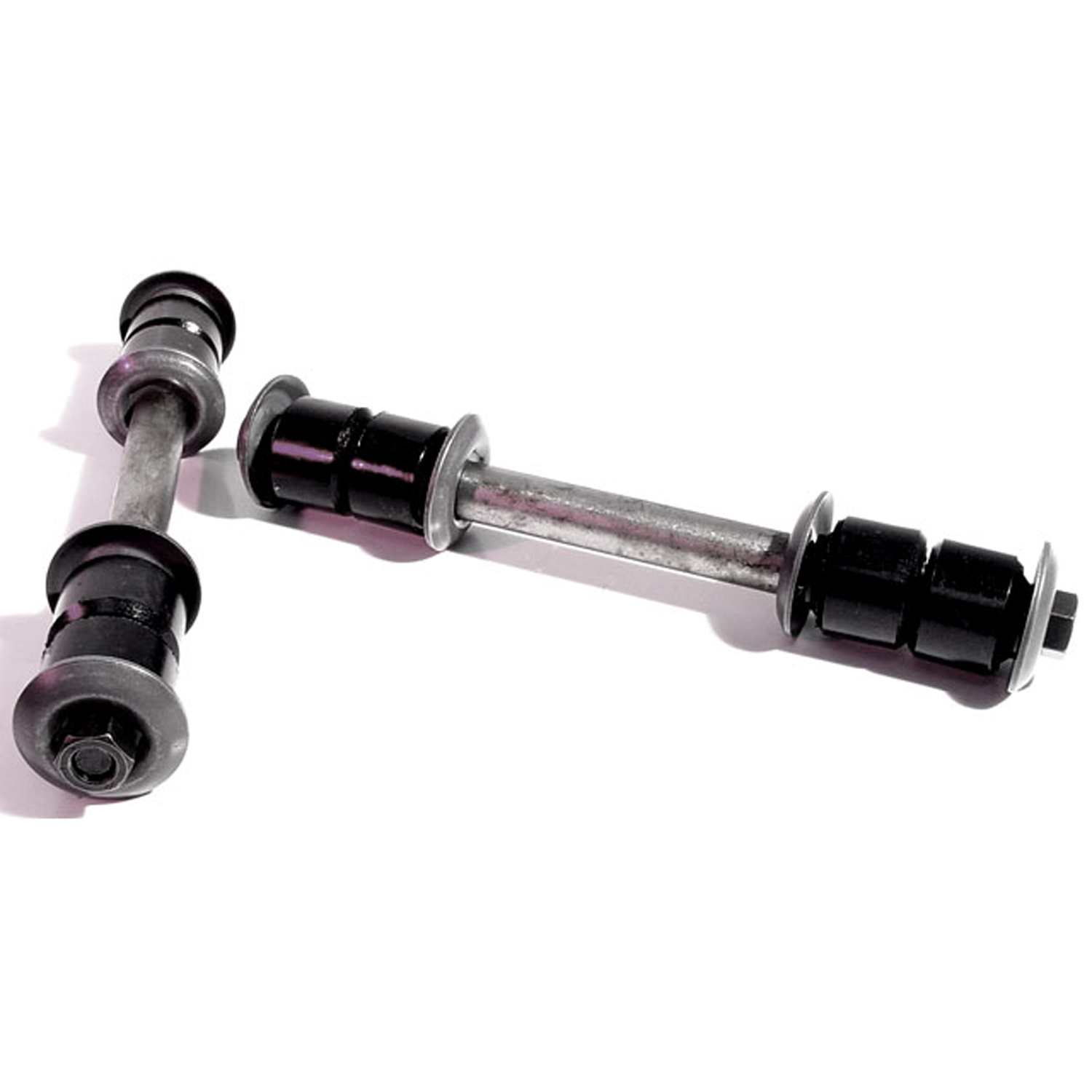 1977 Ford LTD II Front Stabilizer End Repair Kit-BNK 21Front Stabilizer End Repair Kit. 22-piece set for two stabilizer bars. Contains all rubber bushings, washers, bolts and nuts, enough for one front end. Set
Why Choose Metro?
For over 100 years, Metro Moulded Parts has been the pinnacle of quality in classic car restoration parts. Our commitment to precision and authenticity in every component ensures a perfect fit and an OEM-level appearance.
- Expert Craftsmanship & Quality: Each part is a testament to our dedication to reliability and perfection, crafted from original designs and thoroughly tested.
- Advanced Technology: We use cutting-edge techniques to create flawless, long-lasting parts that surpass others in performance.
- SuperSoft Sponge – The Ultimate Door Seal: Not only are our door seals 30% softer than competitors', but they're also guaranteed to never leak. They effectively reduce wind and road noise, enhancing your classic car's comfort and driving experience.
- Proudly American: Our parts are a product of American craftsmanship, made in the USA with a spirit of excellence and heritage.
- Unrivaled Warranty: We back our products with a 30-year industry-leading warranty, a testament to our confidence in their quality.
Join us in preserving the legacy of classic cars with parts that are crafted for perfection, not just made.