

Image of 1978 Ford F-350, Note: These illustrations use artistic license and may differ from actual historical models.
Performance Metrics
Fundamental Metrics
Emotional Appeal
MMP Rating
| Engine Specifications | |
|---|---|
| Engine Options: | 4.9L 300 Cu. In. I6, 5.8L 351 Cu. In. V8, 6.6L 400 Cu. In. V8, 7.5L 460 Cu. In. V8 |
| Displacement Range: | 300-460 Cu. In. |
| Horsepower Range: | 114-225 HP |
| Torque: | 223-388 lb-ft |
| Compression Ratio: | 8.0:1 - 8.4:1 |
| Ignition System: | Conventional Distributor |
| Cooling System: | Liquid Cooled |
| Performance Specifications | |
| 0-60 Time: | Estimated 10-15 seconds |
| 1/4 Mile Time: | Estimated 18-22 seconds |
| Top Speed: | 85-95 mph |
| Transmission and Drive | |
| Drive Type: | Rear Wheel Drive |
| Transmission Type: | 3-Speed Automatic, 4-Speed Manual |
| Fuel and Efficiency | |
| Fuel System Type: | Carburetor |
| MPG: | Estimated 10-15 MPG |
| Dimensions and Brakes | |
| Brakes: | Front Disc / Rear Drum |
| Wheelbase: | 133-155 inches |
| Weight: | 4,500-5,500 lbs |
Note: Specifications for classic cars are given to the best of our ability, considering the limited and variant data available.
1978 Ford F-350: A One-Ton Workhorse With Lasting Appeal
The 1978 Ford F-350 was built for jobs that could overwhelm an ordinary pickup. As Ford’s one-ton F-Series, it offered a stout frame, a wide range of work-focused configurations, and the kind of mechanical simplicity that made it a familiar sight on farms, construction sites, and commercial fleets. It also arrived during a turning point for pickup trucks, when practical work rigs were increasingly becoming personal vehicles as well.
Ford introduced the F-Series after World War II, and by 1978 the model line had reached its sixth generation, produced from 1973 through 1979. The F-350 sat at the heavy-duty end of the consumer pickup range, above the F-100, F-150, and F-250. It was available as a pickup or as a chassis cab for specialized bodies, giving buyers a platform for hauling, towing, and commercial conversions.
One detail that makes the 1978 model especially recognizable is its front end. Ford switched the F-Series from round headlights to square headlights for 1978, a styling change that continued through 1979. The body still carried the pronounced horizontal crease that gave this generation its familiar nickname: the “Dentside.”
Dentside Style and Practical Cab Design
The F-350 had the squared-off, confident stance typical of late-1970s American trucks. Its long hood, upright grille, broad fenders, and straight body sides gave it a purposeful look, while the deep character line along the flanks added a little visual movement to an otherwise sturdy shape. Depending on the configuration, it could look like a basic farm truck, a polished personal pickup, or a serious commercial vehicle.
Ford offered the F-350 in several forms, including pickup and chassis-cab versions. Pickup buyers could choose a Styleside bed with smoother, integrated-looking sides or a Flareside bed with separate rear fenders. Cab and equipment choices varied by configuration, and F-350s could be ordered with single or dual rear wheels. Four-wheel drive was available, while two-wheel-drive models were common for hauling and fleet work. The dual-rear-wheel pickup is perhaps the most instantly recognizable F-350 configuration, but chassis-cab versions were just as important to the truck’s working life.
The cabin was functional rather than luxurious. Depending on trim and equipment, buyers could find vinyl or cloth upholstery, durable door panels, a broad dashboard, and straightforward controls. Higher trims added more comfort and decorative touches, but the materials were selected with everyday use in mind. A 1978 F-350’s interior feels distinctly mechanical by modern standards: large controls, clear gauges, and plenty of room to work the steering wheel.
Factory paint choices varied with trim and order specifications. Buyers could choose straightforward work-truck colors such as white, red, blue, and earth tones, as well as more decorative finishes and two-tone combinations on suitably equipped trucks. White remains a common sight among survivors because it suited fleet use and was easy to repaint, while red, blue, and two-tone examples tend to stand out at shows. Original paint codes and trim details are worth checking when assessing a truck, since restoration colors do not always match the factory palette.
Simple Technology, Serious Capability
In 1978, “technology” in a heavy-duty pickup meant dependable engineering more than electronic convenience. The F-350 used conventional body-on-frame construction, mechanical controls, and widely understood Ford components. Two-wheel-drive models used Ford’s Twin I-Beam front suspension design, which was intended to provide a durable ride under working conditions. Four-wheel-drive versions used a different front-end and drivetrain arrangement suited to traction on rough ground.
Engine availability depended on configuration and market, but F-350 buyers could choose from work-oriented powerplants that included Ford’s 300-cubic-inch inline-six and several V8 options, such as the 351M, 400, and 460. The 460 was the big-block choice for buyers who wanted strong low-speed pulling power. Manual transmissions and the C6 automatic were among the transmission options, with exact combinations varying by engine and order.
That variety was part of the truck’s appeal. An owner could order a relatively straightforward six-cylinder work rig or a larger-engined truck equipped for heavy hauling. Rather than relying on a complicated collection of electronic systems, the F-350 delivered capability through engine displacement, gearing, axle selection, and a robust chassis.
Why the 1978 F-350 Matters
The F-350 was not a design revolution on its own. Its importance came from how it represented the changing role of the American pickup. Ford’s F-Series had long served commercial and agricultural users, but by the late 1970s buyers were increasingly choosing trucks for personal transportation, recreation, and status as well as work. More trim choices and comfort features helped bridge those worlds without taking away the F-350’s heavy-duty purpose.
The sixth-generation F-Series also helped establish styling cues that remain familiar today: a broad, upright front, strong horizontal lines, and a body that looks substantial without elaborate ornament. Ford’s F-Series became America’s best-selling truck line in 1977, a milestone that reflected the growing popularity of pickups. That achievement belongs to the F-Series as a whole, not specifically to the F-350, but the one-ton model helped give the range its reputation for covering everything from everyday hauling to demanding commercial work.
What separated the F-350 from lighter pickups was its working specification. Depending on the build, it could offer a heavier-duty chassis, stronger running gear, higher-capacity rear axle arrangements, and dual rear wheels. Those features made it more suitable for sustained payload and towing demands, though its exact ratings depended on the truck’s equipment and configuration. A badge alone does not tell the whole story: axle ratios, tires, springs, and factory weight ratings matter.
Performance, Ride, and Road Manners
There is no single performance figure for a 1978 F-350. Engine, transmission, axle ratio, tire size, cab and bed style, and load all made a difference. As a general guide, a lightly loaded truck with a large V8 might reach 60 mph in roughly 12 to 16 seconds. A six-cylinder model, a heavily geared work truck, or a truck carrying a load could take considerably longer, sometimes well beyond 20 seconds. These are practical estimates, not a universal factory specification.
Top speed was not a meaningful design target for the F-350. Depending on gearing and condition, an unloaded example might manage approximately 80 to 95 mph, but the truck feels most at home at ordinary road speeds. Its engine and gearing were intended to move weight, not chase fast acceleration or high-speed records.
On smooth pavement, the F-350 feels solid and substantial. On broken roads, the heavy-duty suspension can feel firm, particularly when the truck is empty. Add a proper load and the ride often settles down. The long wheelbase and large body require attention on narrow or winding roads, and gusty crosswinds can be noticeable, especially with a tall load, camper, or trailer. Steering is slower and less precise than a modern pickup’s, so the driver makes more deliberate inputs.
The driving experience is one of the truck’s pleasures. A six-cylinder produces a steady, workmanlike note, while the larger V8s deliver a deeper growl and a strong low-speed pull. The hood stretches out ahead, the steering wheel is large, and the controls remind the driver that this is a machine built to be operated rather than insulated from the road. In a well-maintained example, that directness feels engaging. In a worn one, it can mean heavy steering, loose play, and a long list of deferred repairs.
Living With a Classic F-350
Today, the 1978 F-350 is most often used as a classic weekend truck, farm or ranch vehicle, restoration project, show truck, or tow rig. Some owners still use them regularly, but their size, fuel consumption, braking performance, and lack of modern safety features make them less convenient as everyday transportation than a current pickup.
Mechanical service is generally approachable for an owner with basic tools and repair experience. The truck’s conventional layout and mechanical systems are familiar to many independent shops, and parts support for the sixth-generation F-Series remains strong. Wear items such as brakes, steering components, suspension bushings, fuel-system parts, and electrical connections are usually manageable projects. The 460 can be thirsty, and a heavy-duty truck that has spent years working may need significant attention to its transmission, axle, brakes, or cooling system.
Rust deserves especially careful inspection. Check the cab corners, floor pans, rocker panels, bed, wheel arches, frame, and areas around body mounts. Look closely at dual-wheel trucks and chassis-cab conversions, where hard service or past modifications may hide structural problems. Confirm that the rear axle, brakes, tires, and suspension suit the truck’s intended use. A low purchase price can quickly disappear into bodywork or safety-related repairs.
F-350 Facts, Myths, and Common Complaints
The 1978 square-headlight front end was a short-lived look, appearing only on the final two model years of this generation. That makes it an easy visual clue for identifying a 1978 or 1979 F-Series, though replacement front clips and custom changes mean it is not definitive proof of a truck’s original year.
There is no widely recognized F-350-specific land-speed or sales record associated with the 1978 model. Its legacy is more practical: thousands of trucks served businesses, public utilities, farms, and tradespeople. They were working vehicles, so many were modified, heavily used, or scrapped after their commercial life ended. That history explains why an original, unaltered example can be harder to find than its plain appearance might suggest.
Common criticisms are familiar to anyone who has driven a vintage heavy-duty pickup. The F-350 can be noisy, thirsty, and ponderous in town. Its empty ride may be stiff, and its steering and braking feel dated compared with modern trucks. Buyers should also be alert to inaccurate engine or trim claims, because decades of repairs and swaps have changed many surviving examples. A careful inspection and verification of the door data plate and drivetrain are more useful than relying on badges or seller descriptions.
Collector Value and Availability
There is no official, readily available production total for every 1978 F-350 body, cab, engine, and drivetrain combination. A reasonable broad estimate is that Ford built somewhere in the tens of thousands of F-350s for the model year, perhaps around 20,000 to 50,000 across configurations. Treat that as an informed estimate, not a factory-confirmed figure. The truck’s commercial use and high attrition mean surviving examples are much less common than the original production count suggests.
As a general U.S. market guide, a rough project truck may sell for about $3,000 to $8,000. A usable driver with sound structure often falls around $10,000 to $25,000, while a clean, well-restored example can bring approximately $30,000 to $60,000 or more. Exceptional trucks, desirable four-wheel-drive examples, well-preserved crew cabs, and correctly restored dual-rear-wheel models can command higher prices. Condition, documentation, originality, and local demand have a major effect on value.
Values for old pickups have generally benefited from growing interest in vintage trucks, but the F-350 market is selective. The best examples are holding attention and may appreciate, particularly when they combine a desirable configuration with strong originality. Ordinary work-worn trucks are more likely to remain affordable or fluctuate with the broader classic-car market. Rust-free structure and a credible restoration usually matter more than a shiny paint job.
A Heavy-Duty Ford With Staying Power
The 1978 Ford F-350 brought together the defining strengths of a late-1970s one-ton pickup: sturdy construction, multiple engine and body choices, straightforward mechanicals, and a distinctive Dentside design. It was not quick or refined by modern standards, but it was built to earn its keep and could be tailored to a remarkable range of jobs.
For today’s enthusiast, the F-350 offers more than nostalgia. It is a tangible piece of the era when pickups were becoming personal vehicles without losing their working roots. Find a sound one, preserve its character, and this square-headlight Ford remains every bit as commanding in a driveway as it once was on the jobsite.
1978 Ford F-350 Catalog of Parts
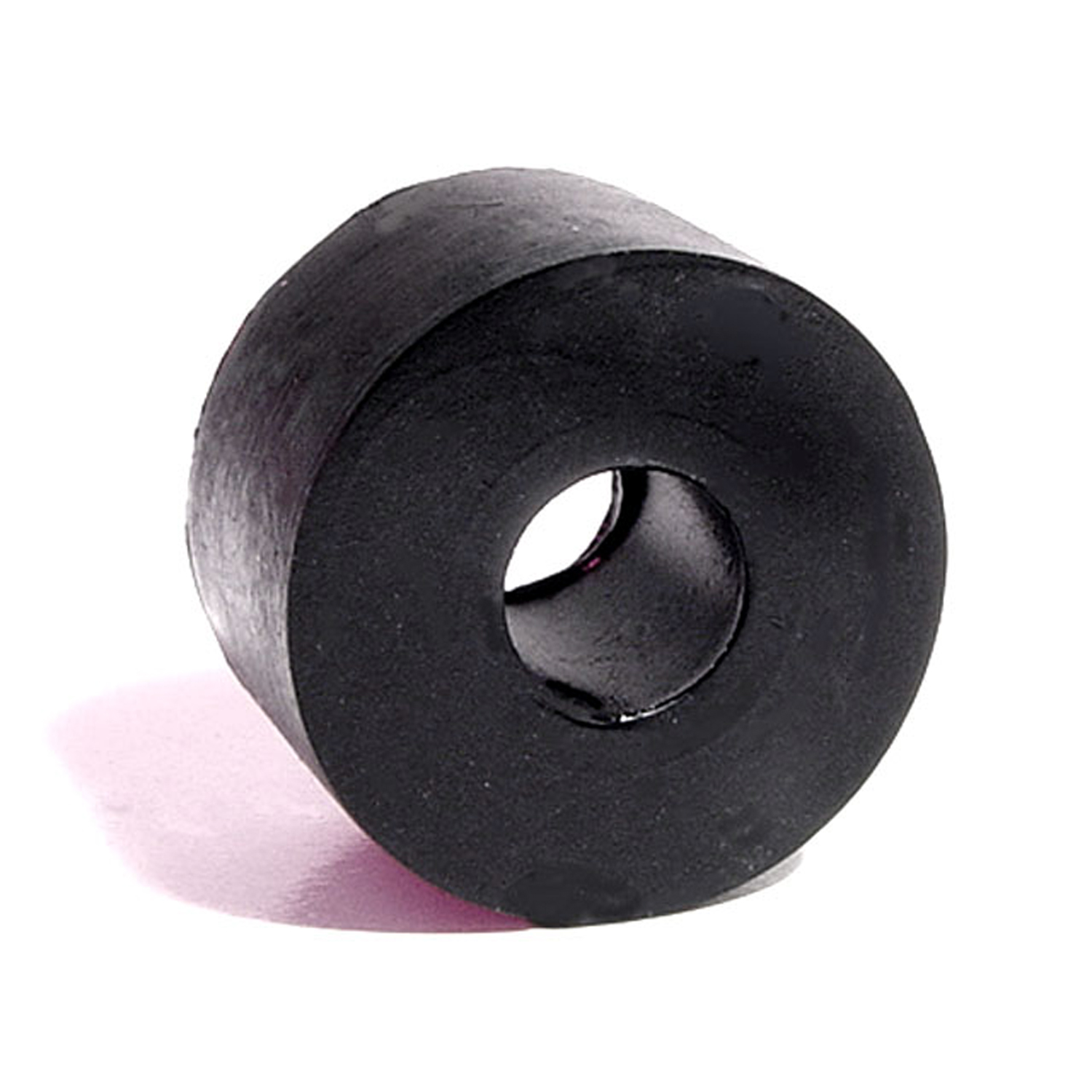 1978 Ford F-350 Shock Absorber Grommet. 1" bottom O.D-BN 6Shock Absorber Grommet. 1" bottom O.D. X 1/2" high, with 3/8" I.D. Each
 1978 Ford F-350 Brake Pedal Pad. 4-3/4" wide X 2-1/4" long-CB 111-NBrake Pedal Pad. 4-3/4" wide X 2-1/4" long. Replaces OEM #'s BC3Z2457B, D3TZ2457A, D3TZ2457B. Each
 1978 Ford F-350 Door seal. '73-'79 Ford F-Series trucks. '78-'79 Ford Bronco-LM 110-ADoor seal. '73-'79 Ford F-Series trucks. '78-'79 Ford Bronco. Fits on cab, either side. Each.
 1978 Ford F-350 Upper Door Seal, 73-79 Ford Full Size Truck, 78-79 Ford Bronco, On Door, Pair-LM 110-AUThis auxiliary seal fits on the top portion of the door. It is primarily designed to reduce wind and road noise. It also provides added weatherseal protection and further cushions the door when it is shut closed. This part was stock on the 1978-1979 models but you can use them on any of the '73-'79 models specified.
 1978 Ford F-350 Windshield lockstrip seal, '77-'79 Ford F Series Truck / '78-'79 Ford Bronco-LS 1-AWindshield lockstrip seal, '77-'79 Ford F Series Truck / '78-'79 Ford Bronco, each.
 1978 Ford F-350 Windshield Seal, 67-79 Ford Full Size Truck, 78-79 Bronco, Without Trim Groove-VWS 3304-CThis windshield seal goes first on the glass and is installed using the rope-in method. This product is made from the original specs and with high quality ozone resistant EPDM rubber for a great fit and long life. This item is designed to be installed during glass replacement.
 1978 Ford F-350 Windshield seal, '77-'79 Ford F Series Truck / '78-'79 Ford Bronco-VWS 3304-FWindshield seal, '77-'79 Ford F Series Truck / '78-'79 Ford Bronco, with groove to accept trim, each.
 1978 Ford F-350 Rear window seal, '73-'79 Ford F Series Truck without trim groove-VWS 3304-RRear window seal, '73-'79 Ford F Series Truck without trim groove, each. Replaces OEM part # D3TZ-1042084-A.
Why Choose Metro?
For over 100 years, Metro Moulded Parts has been the pinnacle of quality in classic car restoration parts. Our commitment to precision and authenticity in every component ensures a perfect fit and an OEM-level appearance.
- Expert Craftsmanship & Quality: Each part is a testament to our dedication to reliability and perfection, crafted from original designs and thoroughly tested.
- Advanced Technology: We use cutting-edge techniques to create flawless, long-lasting parts that surpass others in performance.
- SuperSoft Sponge – The Ultimate Door Seal: Not only are our door seals 30% softer than competitors', but they're also guaranteed to never leak. They effectively reduce wind and road noise, enhancing your classic car's comfort and driving experience.
- Proudly American: Our parts are a product of American craftsmanship, made in the USA with a spirit of excellence and heritage.
- Unrivaled Warranty: We back our products with a 30-year industry-leading warranty, a testament to our confidence in their quality.
Join us in preserving the legacy of classic cars with parts that are crafted for perfection, not just made.