
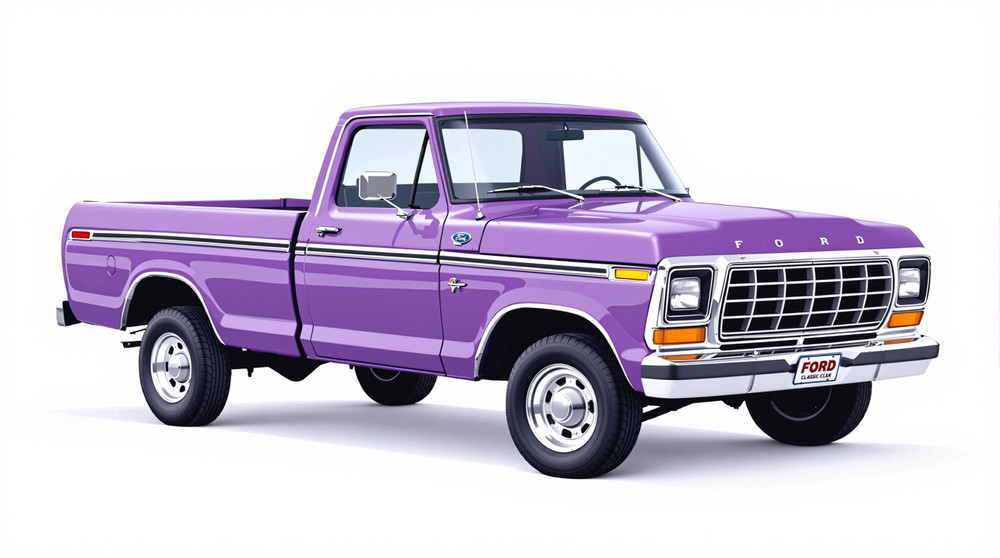
Image of 1979 Ford F-150, Note: These illustrations use artistic license and may differ from actual historical models.
Performance Metrics
Fundamental Metrics
Emotional Appeal
MMP Rating
| Engine Specifications | |
|---|---|
| Engine Options: | 4.9L 300 I6, 5.0L 302 V8, 5.8L 351 V8, 6.6L 400 V8 |
| Displacement Range: | 300-400 cubic inches |
| Horsepower Range: | 101-169 hp |
| Torque: | 223-315 lb-ft |
| Compression Ratio: | 8.0:1 - 8.4:1 |
| Ignition System: | Electronic |
| Cooling System: | Liquid-cooled |
| Performance Specifications | |
| 0-60 Time: | 14-18 seconds |
| 1/4 Mile Time: | 18-22 seconds |
| Top Speed: | 85-95 mph |
| Transmission and Drive | |
| Drive Type: | Rear-wheel drive (RWD) or Four-wheel drive (4WD) |
| Transmission Type: | 3-speed automatic, 4-speed manual |
| Fuel and Efficiency | |
| Fuel System Type: | Carburetor |
| MPG: | 10-14 mpg |
| Dimensions and Brakes | |
| Brakes: | Front disc and rear drum brakes |
| Wheelbase: | 133 inches |
| Weight: | 4,000-5,000 lbs |
Note: Specifications for classic cars are given to the best of our ability, considering the limited and variant data available.
1979 Ford F-150: The Last of a Classic Generation
The 1979 Ford F-150 is a big, square-shouldered pickup from the era when a truck could be a work tool on Monday and the family’s all-purpose transportation by Saturday. Built by Ford Motor Company in the United States, it belongs to the sixth generation of Ford’s F-Series, which ran from 1973 through 1979. The 1979 model year was the generation’s finale, giving this F-150 a special place among classic Ford trucks.
The F-150 name was still relatively new. Ford added it in 1975 between the lighter-duty F-100 and the heavier F-250, and it quickly became a key part of the F-Series lineup. A notable milestone came in 1979, when sales of the entire F-Series range approached one million trucks. That figure includes multiple F-Series models, not just the F-150, but it captures the scale of Ford’s success at the end of the decade.
Today, the 1979 F-150 appeals to a wide range of enthusiasts. It is old enough to feel unmistakably vintage, yet its conventional engineering, roomy cab, and broad parts availability make it less intimidating to own than many older classics.
Bold Styling and Useful Choices
The 1979 F-150 wears the clean, upright shape that defines a late-1970s American pickup. Its long hood, flat body sides, wide grille, and simple rectangular headlights give it a confident, no-nonsense profile. Bright chrome trim could dress up the front end, while body-side moldings and badges varied with trim level. Compared with modern trucks, its surfaces look refreshingly uncomplicated, and its proportions make it instantly recognizable.
Buyers could choose a Regular Cab or a roomier SuperCab, along with different bed lengths and two-wheel-drive or four-wheel-drive configurations. Ford offered both Styleside beds, with relatively smooth outer sides, and Flareside beds, whose separate rear fenders created a narrower, more traditional pickup-bed look. The Styleside was the practical, familiar choice; the Flareside is especially eye-catching to collectors today.
Trim names included Custom, Ranger, and Ranger XLT. The Ranger name here refers to an F-Series trim level, not the later compact Ford Ranger pickup. A Custom could be a straightforward work truck, while a Ranger XLT could add more exterior brightwork and a more finished cabin. Exact equipment depended on the truck’s original order and market.
Factory paint choices varied, but period colors included shades of white, red, blue, green, brown, and tan, with two-tone combinations available on some configurations. White and red trucks remain familiar sights, while well-preserved two-tone examples have a particularly strong late-1970s look. Original paint codes and trim details are worth checking when judging a restoration.
A Work-Truck Cabin, With Comfort Options
The interior is straightforward and durable rather than luxurious. Hard-wearing vinyl was common, and buyers could select different seat and trim materials depending on the model and options. The dashboard puts the main controls within easy reach, with clear, simple instruments and a broad steering wheel. Ranger and Ranger XLT versions could feel considerably more dressed up than a basic Custom, especially when ordered with upgraded upholstery and interior trim.
Available comfort and convenience equipment could include air conditioning, power steering, power brakes, an upgraded radio, cruise control, and a sliding rear window. These were options, not universal features, so two trucks with the same trim badge may have very different equipment. For a classic-truck shopper, a complete and working factory-option package can add both enjoyment and value.
By late-1970s standards, the F-150’s technology was conventional but useful. Depending on configuration, features included power-assisted front disc brakes, electronic ignition, and four-wheel-drive hardware with a transfer case and locking hubs. The emphasis was on straightforward systems that could be understood and serviced without specialized diagnostic equipment.
Why the 1979 F-150 Matters
The F-150 helped define the modern full-size pickup as more than a bare-bones commercial vehicle. Its position in Ford’s lineup gave buyers a useful middle ground: a truck with more capability than a light-duty pickup, without moving all the way into a heavier-duty model. That blend of work ability and everyday usability became central to the F-Series formula.
The 1979 model also marks the end of the sixth-generation design. Ford introduced a substantially revised F-Series for 1980, so the ’79 represents the final year of this particular body and chassis generation. Its styling and mechanical layout are now closely associated with the last generation of 1970s Ford pickups, while the F-Series’ continuing sales success shows how firmly the truck had secured its place in the American market.
It was not a radical technology showcase, and that is part of its lasting appeal. The truck relied on familiar body-on-frame construction, a solid rear axle, and a broad range of engine and drivetrain choices. It delivered a practical package that could be adapted for commuting, hauling, towing, ranch work, or recreation. Many current pickups follow the same basic idea, even if their comfort, safety, and electronics have advanced enormously.
Engines, Speed, and Road Manners
Engine availability depended on drivetrain, trim, and market. Common choices included Ford’s 300-cubic-inch inline-six, the 302-cubic-inch V8, and larger V8 options such as the 351M and 400. A 460-cubic-inch V8 was also available in certain configurations. The 300 six is prized for its straightforward character and low-speed usefulness, while the V8s deliver the familiar rumble and stronger passing or towing performance. A truck’s original engine should always be verified by its identification information rather than assumed from its badges.
Transmission choices included manual gearboxes and Ford’s C6 automatic on applicable configurations. Two-wheel-drive trucks used Ford’s Twin I-Beam independent front suspension, a design intended to combine a truck’s load-carrying ability with a more compliant front end. Four-wheel-drive versions had their own front suspension and drivetrain components. Rear leaf springs were part of the truck’s work-focused setup.
There is no single meaningful 0-to-60-mph or top-speed figure for every 1979 F-150. Engine, axle ratio, transmission, cab, bed, tires, and vehicle condition all change the result, and old truck performance tests were not standardized across every combination. As a broad modern estimate, a healthy V8 truck might reach 60 mph in roughly 11 to 16 seconds, while a six-cylinder example may take longer. Depending on gearing and condition, maximum speed might fall around 85 to 100 mph, but these trucks are far more at home at moderate cruising speeds than at sustained high speed.
On the road, the F-150 feels substantial and mechanical. The steering is slower and less precise than a modern pickup’s, and a short-wheelbase truck can feel busy over broken pavement. The suspension is built to handle loads, so an unloaded truck may bounce or hop over sharp bumps. On winding roads, its size, older tires, and period brakes encourage a relaxed pace. In crosswinds, a tall-bodied pickup can also need more steering correction than a passenger car.
The driving experience is a big part of the truck’s charm. The engine is audible, the steering wheel communicates road texture, and the driver sits high behind a broad hood. A V8 adds a deep, familiar exhaust note; the inline-six feels more workmanlike. A well-maintained example can be enjoyable to drive, but it does not offer modern levels of quietness, braking, or crash protection.
Living With a 1979 Ford Pickup
Owners use 1979 F-150s as weekend cruisers, farm and ranch trucks, restoration projects, show vehicles, and occasional daily drivers. A clean, original truck is well suited to local trips and light hauling. For regular towing or heavy work, its condition matters more than its reputation: brakes, cooling, tires, suspension, and the drivetrain all need to be inspected carefully before the truck is put to hard use.
Routine service is generally approachable for an owner with basic mechanical skills. The engine bay is relatively open, the systems are mostly mechanical, and many replacement and reproduction parts are available. The main challenge is often not complexity but age. Wiring repairs, worn steering components, tired brake hardware, leaking seals, and decades of improvised fixes can turn a simple job into a larger project.
Rust deserves particular attention. Inspect the cab corners, floor pans, lower doors, wheel arches, bed, frame, and areas around the windshield. Also check for collision repairs and poorly executed modifications. On four-wheel-drive examples, examine the transfer case, front axle, hubs, and suspension. A truck that looks shiny in photographs may still hide extensive corrosion underneath.
F-150 Trivia and Common Criticisms
The 1979 F-150 is the final model year of the sixth-generation F-Series, but it is not a separate high-performance edition in its own right. Its most interesting distinctions are often the details: a less-common engine and drivetrain combination, an original two-tone finish, a well-equipped Ranger XLT, or a desirable Flareside bed. There is no widely recognized 1979 F-150 land-speed or endurance record that defines the model.
Ford’s near-million sales figure for 1979 applies to the broader F-Series lineup. It is a useful reminder of the truck family’s popularity, but it should not be mistaken for the production total of the F-150 alone. Ford did not publish an easily accessible, definitive public breakdown for every 1979 F-150 trim and configuration, so any model-specific production estimate should be treated as an estimate rather than a factory count.
Common criticisms are familiar to owners of many full-size trucks from the period: fuel consumption can be high, the ride can be choppy when unloaded, and steering and braking feel dated beside a modern vehicle. Safety equipment is also limited by today’s standards. Those drawbacks are real, but they are part of the trade-off for a comparatively simple, sturdy classic pickup.
1979 F-150 Values and Collector Demand
Values vary sharply with rust, originality, engine, drivetrain, trim, and restoration quality. As a broad U.S. market estimate, a project or rough driver might sell for about $3,000 to $8,000. A usable, reasonably solid truck commonly falls around $8,000 to $18,000, while a clean, well-presented example may bring roughly $18,000 to $35,000. High-quality restorations, especially desirable 4x4s or unusually well-equipped trucks, can reach $35,000 to $60,000 or more. Exceptional examples can exceed those ranges, while heavily modified or rusty trucks may sell for less.
The ordinary two-wheel-drive F-150 is not especially rare in the classic-truck market, although truly rust-free, original examples are becoming harder to find. Four-wheel-drive trucks, Flareside beds, and certain engine and trim combinations tend to attract stronger interest. For production scale, a reasonable but unverified estimate might place 1979 F-150 output somewhere in the low hundreds of thousands, perhaps around 250,000 to 350,000 trucks. That is a best-guess range, not an official figure; the much larger F-Series sales total includes other models and configurations.
Values for classic pickups have generally risen over the long term, supported by nostalgia, restoration interest, and demand for usable vintage trucks. The market is selective, however. A documented, solid truck with original details is more likely to appreciate than a poorly repaired project, and values can vary by region. Condition and rust repair costs often matter more than a long options list.
The Lasting Appeal of the 1979 F-150
The 1979 Ford F-150 combines late-1970s styling, simple mechanical engineering, and the everyday versatility that made the F-Series a sales powerhouse. It was the final year of a well-known generation, offered a wide range of body styles and powertrains, and helped cement the full-size pickup as a vehicle for both work and personal use.
It is not fast, quiet, or especially refined by modern standards. Its appeal is more direct: a big hood, an honest cabin, a choice of hardworking engines, and a driving experience that feels connected to the truck’s mechanical roots. For collectors and drivers alike, the ’79 F-150 is a fitting final chapter in a distinctly 1970s Ford story.
1979 Ford F-150 Catalog of Parts
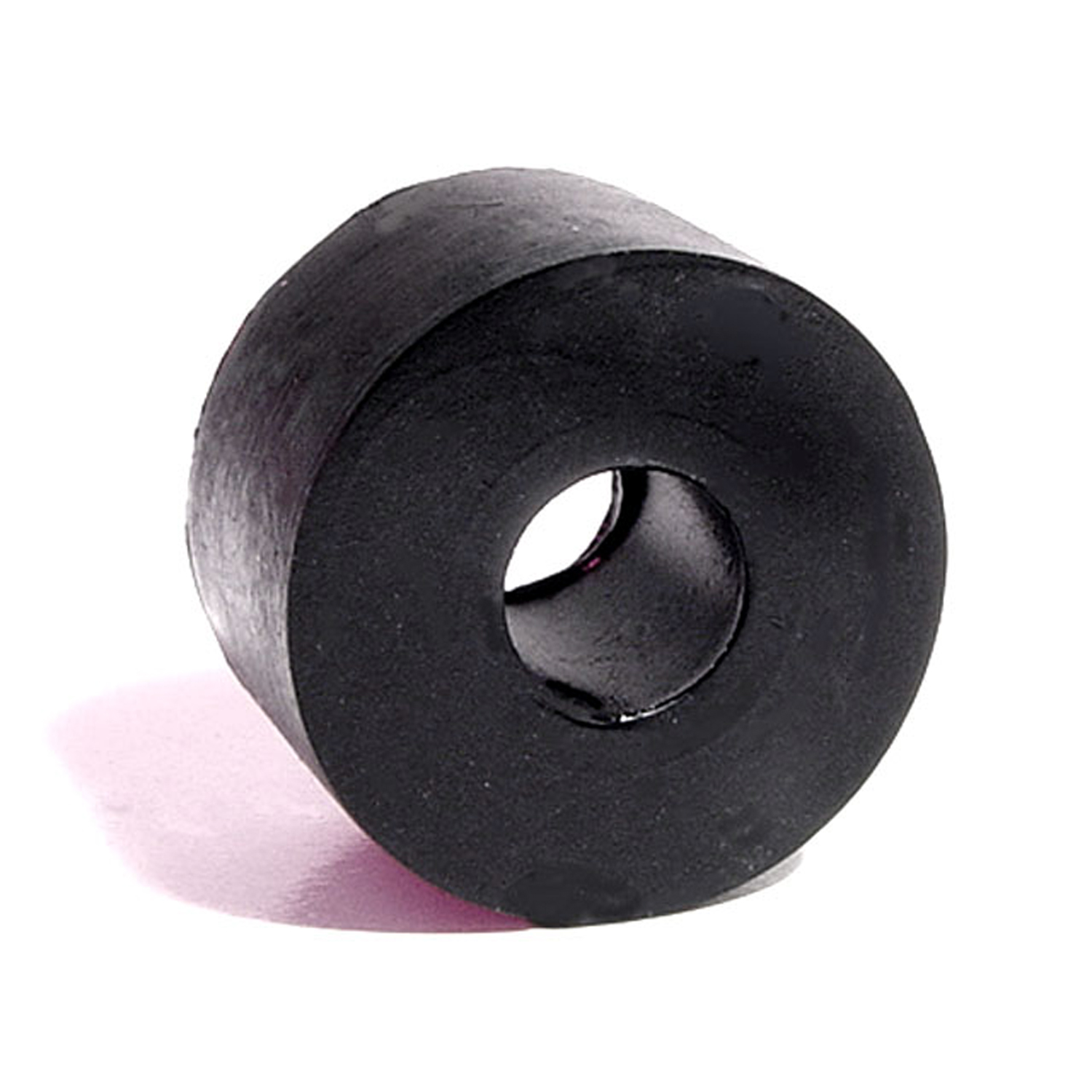 1979 Ford F-150 Shock Absorber Grommet. 1" bottom O.D-BN 6Shock Absorber Grommet. 1" bottom O.D. X 1/2" high, with 3/8" I.D. Each
 1979 Ford F-150 Brake Pedal Pad. 4-3/4" wide X 2-1/4" long-CB 111-NBrake Pedal Pad. 4-3/4" wide X 2-1/4" long. Replaces OEM #'s BC3Z2457B, D3TZ2457A, D3TZ2457B. Each
 1979 Ford F-150 Door seal. '73-'79 Ford F-Series trucks. '78-'79 Ford Bronco-LM 110-ADoor seal. '73-'79 Ford F-Series trucks. '78-'79 Ford Bronco. Fits on cab, either side. Each.
 1979 Ford F-150 Windshield lockstrip seal, '77-'79 Ford F Series Truck / '78-'79 Ford Bronco-LS 1-AWindshield lockstrip seal, '77-'79 Ford F Series Truck / '78-'79 Ford Bronco, each.
 1979 Ford F-150 Windshield seal, '77-'79 Ford F Series Truck / '78-'79 Ford Bronco-VWS 3304-FWindshield seal, '77-'79 Ford F Series Truck / '78-'79 Ford Bronco, with groove to accept trim, each.
 1979 Ford F-150 Rear window seal, '73-'79 Ford F Series Truck without trim groove-VWS 3304-RRear window seal, '73-'79 Ford F Series Truck without trim groove, each. Replaces OEM part # D3TZ-1042084-A.
Why Choose Metro?
For over 100 years, Metro Moulded Parts has been the pinnacle of quality in classic car restoration parts. Our commitment to precision and authenticity in every component ensures a perfect fit and an OEM-level appearance.
- Expert Craftsmanship & Quality: Each part is a testament to our dedication to reliability and perfection, crafted from original designs and thoroughly tested.
- Advanced Technology: We use cutting-edge techniques to create flawless, long-lasting parts that surpass others in performance.
- SuperSoft Sponge – The Ultimate Door Seal: Not only are our door seals 30% softer than competitors', but they're also guaranteed to never leak. They effectively reduce wind and road noise, enhancing your classic car's comfort and driving experience.
- Proudly American: Our parts are a product of American craftsmanship, made in the USA with a spirit of excellence and heritage.
- Unrivaled Warranty: We back our products with a 30-year industry-leading warranty, a testament to our confidence in their quality.
Join us in preserving the legacy of classic cars with parts that are crafted for perfection, not just made.