
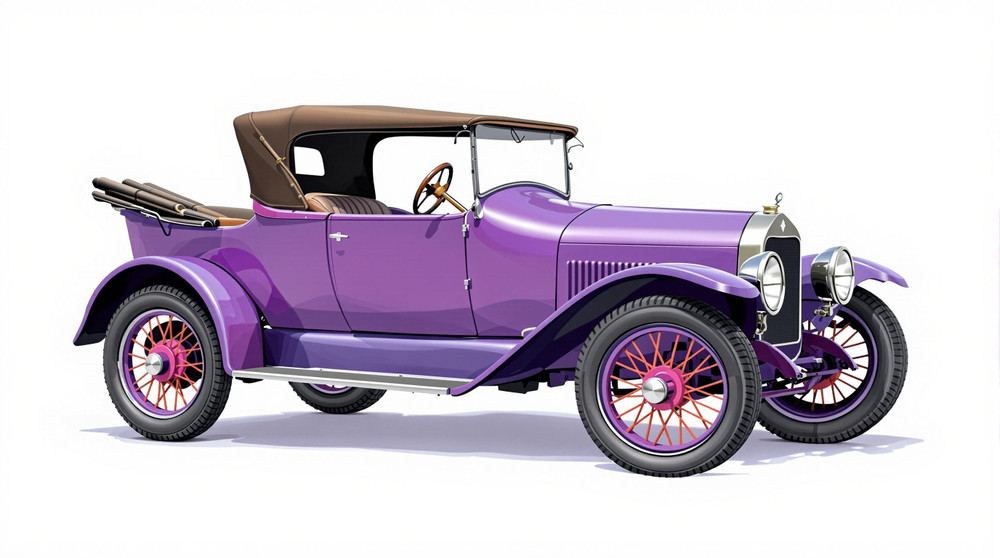
Image of 1923 Franklin Model 10, Note: These illustrations use artistic license and may differ from actual historical models.
Performance Metrics
Fundamental Metrics
Emotional Appeal
MMP Rating
| Engine Specifications | |
|---|---|
| Engine: | Air-cooled 199 cu in (3.3 L) I6 |
| Displacement: | 199 cu in (3.3 L) |
| Horsepower: | Estimated 20-25 HP |
| Torque: | Not available |
| Compression Ratio: | Not available |
| Ignition System: | Battery and coil |
| Cooling System: | Air-cooled |
| Performance Specifications | |
| 0-60 Time: | Not available |
| 1/4 Mile Time: | Not available |
| Top Speed: | 45 mph |
| Transmission and Drive | |
| Drive Type: | Rear-wheel drive |
| Transmission Type: | 3-speed manual |
| Fuel and Efficiency | |
| Fuel System Type: | Carburetor |
| MPG: | Not available |
| Dimensions and Brakes | |
| Brakes: | Mechanical drum brakes |
| Wheelbase: | 114 in (2,896 mm) |
| Weight: | Estimated 2,400 lbs |
Note: Specifications for classic cars are given to the best of our ability, considering the limited and variant data available.
1923 Franklin Model 10: The Air-Cooled Alternative
The 1923 Franklin Model 10 kept its cool without a radiator, making it one of the most distinctive American automobiles of the 1920s. Built by the H. H. Franklin Manufacturing Company in Syracuse, New York, it paired a six-cylinder engine with Franklin’s unusual air-cooling system, setting it apart from the water-cooled cars that dominated the era.
Franklin had been building automobiles since 1902, under the influence of engineer John Wilkinson and company founder Herbert H. Franklin. By 1923, the company had established a strong identity around lightweight construction and air-cooled engines. The Model 10 belongs to that mature period, when Franklin offered substantial, carefully finished cars to buyers who wanted comfort and engineering distinction rather than the lowest possible price.
Its most intriguing feature was also its most practical selling point: there was no radiator to leak, no coolant to freeze, and no conventional water-cooling system to maintain. That did not make the car maintenance-free, but it gave Franklin a memorable answer to one of motoring’s persistent headaches.
Franklin Model 10 Design and Details
The Model 10 wore the upright, formal proportions typical of a high-quality car in the early 1920s. A tall radiator-shaped front treatment still gave it a familiar automobile profile, even though the engine did not need a radiator. Long hood lines, separate fenders, running boards, wire wheels, and large round headlamps gave the car a purposeful, well-balanced look. Depending on body style, the result could feel open and sporting or stately and chauffeur-ready.
Franklin’s use of aluminum was an important part of its design philosophy. The company used lightweight materials in its construction, including aluminum in engine components and bodywork, helping reduce weight compared with some similarly sized cars. Body details and trim varied by coachwork and specification, so surviving examples should be judged individually rather than assumed to match one universal factory finish.
Inside, the Model 10 was designed for comfort on the rough, dusty roads of its day. Depending on body style and trim, buyers could find leather or durable cloth upholstery, a wood-trimmed dashboard, large mechanical gauges, and practical open storage. The overall impression was more substantial than luxurious by modern standards, but good examples show the careful materials and finish expected of a premium American car.
Period paint choices depended on the body and order. Dark, restrained colors such as black, deep blue, maroon, and green suit the Model 10’s formal lines and are commonly associated with cars of this class. Exact combinations varied, and an original color should be confirmed from factory records or surviving evidence when possible.
Franklin offered the Model 10 in multiple body configurations across its range, including open touring and roadster forms as well as enclosed sedans, coupes, and larger passenger cars. Availability could vary by production year and coachwork. The open touring car is among the most recognizable Franklin shapes, while a well-preserved sedan emphasizes the model’s role as a comfortable, all-weather family or executive car.
Air-Cooled Engineering and Historical Significance
The Model 10’s defining technology was its air-cooled, inline six-cylinder engine. Instead of circulating coolant through a radiator, the system relied on airflow across the engine’s cooling surfaces, assisted by a fan. That approach eliminated the radiator, water pump, hoses, and coolant used by conventional cars. It also reduced the risk of freezing or boiling, both meaningful concerns for drivers in the 1920s.
Franklin’s approach was more than a technical curiosity. It shaped the company’s entire identity and showed that a luxury car did not have to follow the same engineering formula as its competitors. The use of aluminum and attention to lower weight complemented the air-cooled layout. Together, those choices helped Franklin make a refined touring car that was mechanically different without being a crude experiment.
The trade-off was complexity in a different form. Air cooling required carefully managed airflow and a properly maintained fan system, and the engine’s cooling performance depended on those parts working as intended. Franklin’s solution never displaced water cooling across the wider industry, but it remains an important example of how early automakers explored alternatives before automotive engineering became standardized.
1923 Franklin Model 10 Performance
The Model 10 used a six-cylinder engine of roughly 275 cubic inches. Published specifications can differ by source and configuration, but output is commonly reported at about 50 horsepower. That was enough for confident touring in its day, especially given Franklin’s emphasis on keeping weight under control.
A reasonable period-performance estimate is a top speed in the neighborhood of 55 to 65 mph, depending on body style, gearing, condition, and road surface. A trustworthy factory 0-to-60 mph figure is difficult to establish, and acceleration testing was not reported consistently in the 1920s. Based on the car’s power and weight, reaching 60 mph would likely take roughly 25 to 35 seconds under favorable conditions. Treat that as a modern estimate, not a verified factory specification.
Behind the wheel, the Franklin feels like a substantial touring car rather than a nimble modern vehicle. Its steering is heavier at low speeds, its brakes require more anticipation than a contemporary car’s, and the driver must plan for traffic instead of relying on quick acceleration. On a smooth open road, however, the six-cylinder engine’s steady delivery makes for relaxed progress.
On broken roads, the long wheelbase and period suspension help soften the ride, though tall tires and old-fashioned springing still transmit plenty of road movement. The car can be rewarding on winding roads when driven at a measured pace, but its size, steering effort, and vintage braking call for restraint. The engine’s sound is generally a mellow mechanical hum rather than the sharp exhaust note of a modern performance car. The experience is tactile: the driver works the controls, listens to the engine, and stays closely involved in the journey.
Living with a Franklin Model 10
Today, a Model 10 is best suited to touring events, antique-car gatherings, museum displays, and occasional pleasure drives. It is not a practical daily driver in modern traffic. Its cruising speed, braking distance, lighting, and lack of modern safety equipment all require a considerate route and a cautious driver.
Maintenance is manageable for an owner comfortable with prewar machinery, but it is not identical to servicing a conventional water-cooled car. The air-cooling fan and airflow system deserve close attention, and the engine should be kept in sound mechanical condition. Lubrication, ignition, carburetion, bearings, brakes, tires, and electrical components all need the regular care expected of a century-old automobile.
Routine work can be within reach of a capable home mechanic, but parts availability and specialist knowledge are more limited than for mass-produced Fords or Chevrolets. Owners benefit from joining a Franklin club or contacting marque specialists, especially when dealing with engine work, original fittings, or restoration details. A well-maintained car can be dependable for planned tours, but age and parts supply make preventive maintenance essential.
Franklin Model 10 Facts and Myths
The Model 10’s most memorable fact is simple: it had no radiator. That feature made Franklin instantly recognizable to technically minded buyers and remains a conversation starter at any car show. Its aluminum components also reflect Franklin’s broader effort to reduce weight at a time when many cars were built with heavy materials.
There is no widely recognized Model 10 speed or endurance record that defines the model, and precise model-specific production totals are not readily established. Franklin’s annual production in this period was measured in thousands, but surviving sources do not always separate totals cleanly by model and body style. A reasonable estimate is that several thousand Model 10 cars were built, perhaps around 4,000 to 7,000, though this should be treated as an informed estimate rather than a documented factory tally.
Common criticisms are closely tied to the car’s age and unusual engineering. The air-cooled system is sometimes assumed to be automatically simpler, but it still needs correct maintenance. The Model 10 is also slower, less convenient, and less safe in modern traffic than a contemporary vehicle. For collectors, those limitations are part of the experience, but they make careful driving and realistic expectations important.
1923 Franklin Model 10 Collector Value
Franklin Model 10 values vary substantially with body style, originality, restoration quality, and mechanical condition. As a broad current-market estimate, a project or incomplete example might fall around $10,000 to $25,000. A usable driver or older restoration may bring roughly $25,000 to $50,000, while a highly finished, correct, or especially desirable example could reach $50,000 to $80,000 or more. These are general estimates, not a formal appraisal, and exceptional cars can fall outside the range.
The Model 10 is uncommon compared with mass-market cars of the same period, but it is not necessarily a one-off rarity. Several thousand may have been produced, and a small number of survivors continue to appear through marque networks, specialist dealers, and auctions. Finding one is less straightforward than finding a Model T, and condition and documentation matter greatly.
Franklins tend to attract informed collectors who value engineering and coachwork as much as brand recognition. Prices have generally been selective rather than showing a uniform upward climb. Well-restored cars with strong provenance can hold interest, while cars needing extensive work may be difficult to sell because restoration costs can exceed the market value. Over time, the best examples may appreciate, but condition, rarity of body style, and the strength of the wider prewar market have a major influence.
Why the 1923 Franklin Still Matters
The 1923 Franklin Model 10 combined a smooth six-cylinder engine, lightweight construction, and a genuinely unconventional air-cooling system in a comfortable American touring car. Its engineering set it apart from contemporaries, while its range of open and enclosed bodies made it useful to more than one kind of buyer.
More than a century later, the Model 10 remains a reminder that early automotive progress was full of competing ideas. It may not have changed the industry’s eventual preference for water cooling, but it proved that a refined car could take a different route. That distinctive blend of comfort, craftsmanship, and mechanical individuality is exactly what makes a Franklin worth seeking out today.
1923 Franklin Model 10 Catalog of Parts
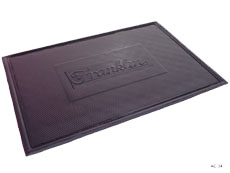 1923 Franklin Model 10 Accessory Floor Mat - 12"X17"-AC 34Accessory Floor Mat - made of high quality black rubber with molded original emblem. Also designed to be sewn into new carpets. 12"X17", Each
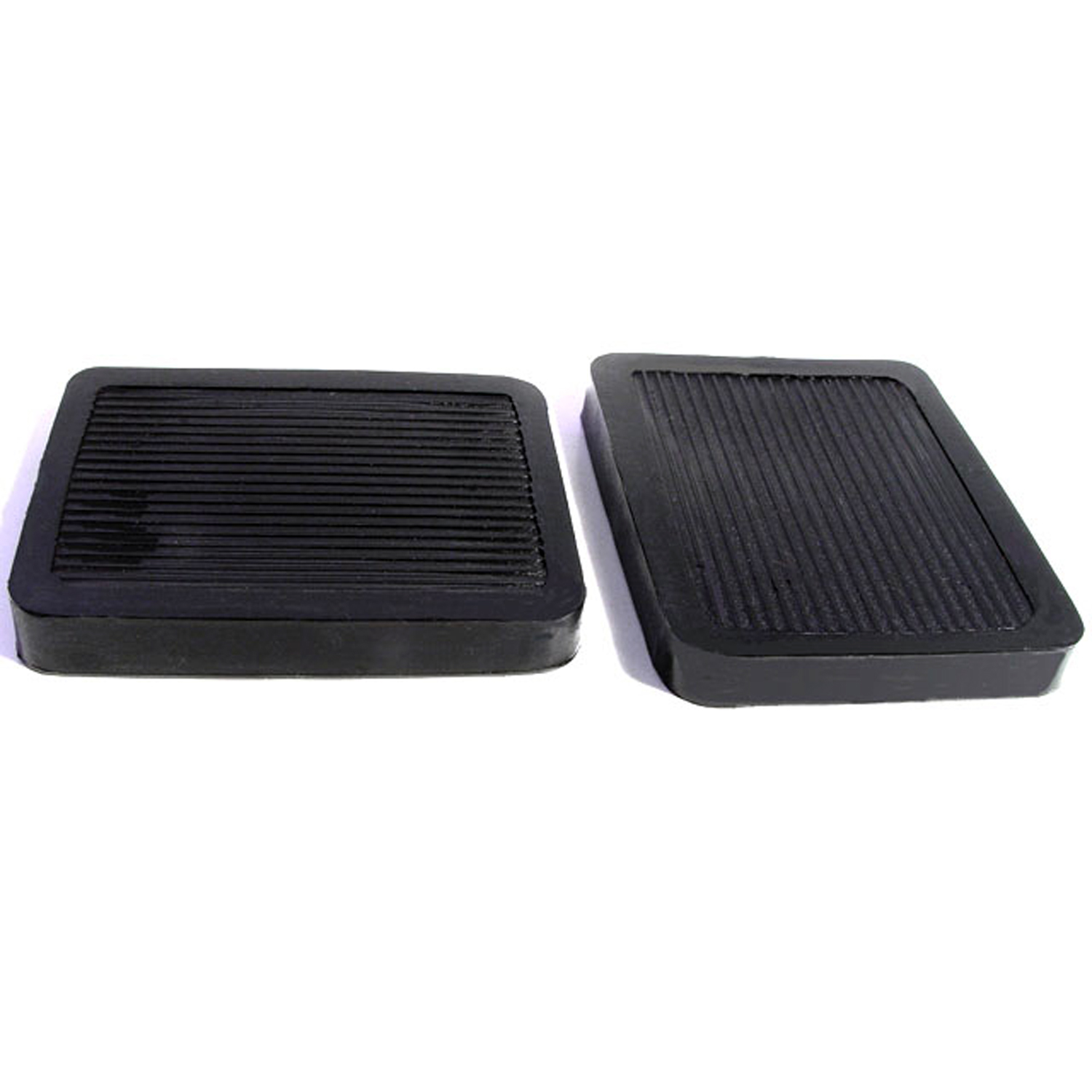 1923 Franklin Model 10 Clutch and Brake Pedal Pads. Perfect reproduction-CB 24Clutch and Brake Pedal Pads. Perfect reproduction. 3" wide X 3-3/4" long. Pair
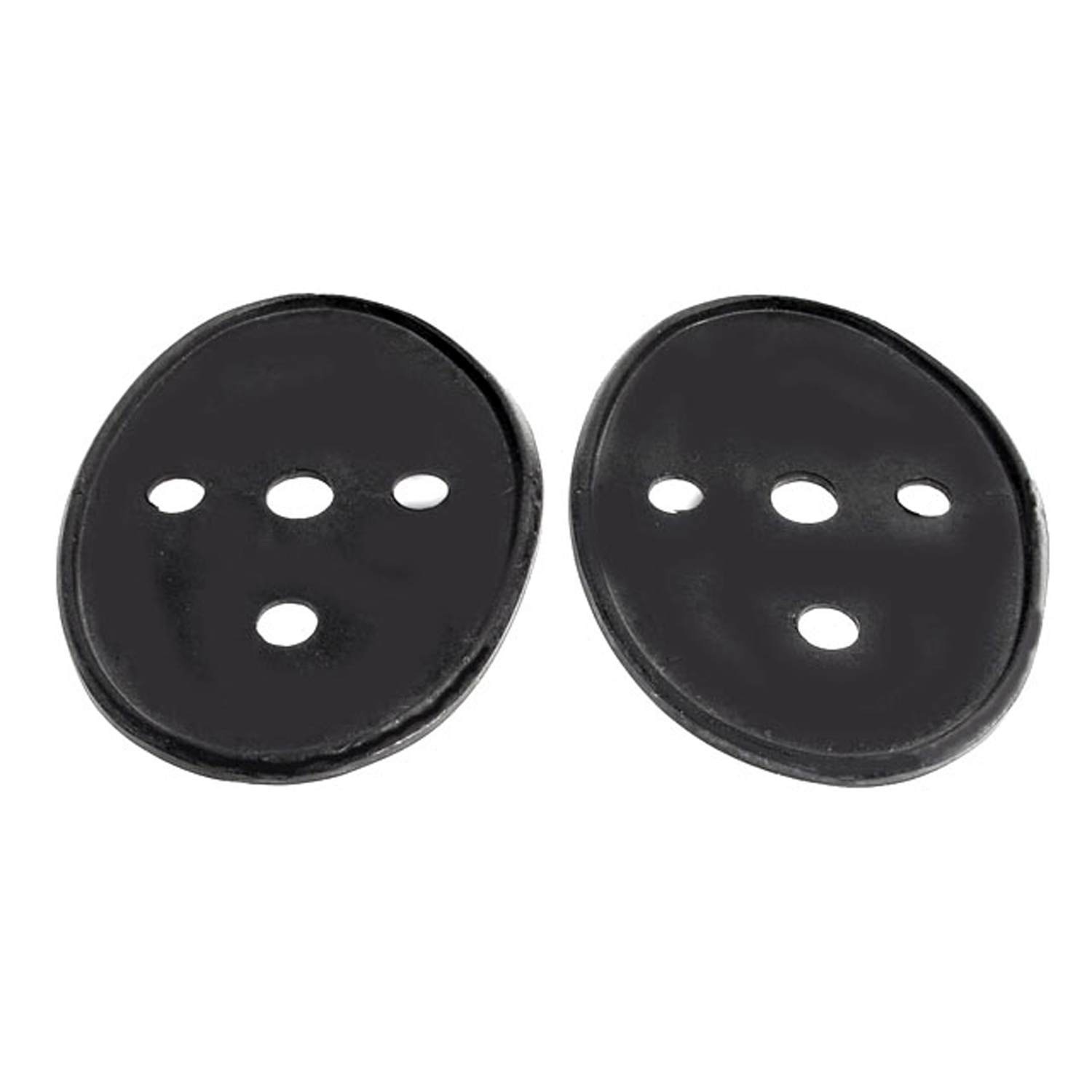 1923 Franklin Model 10 Tail-light Pads. 3-1/4" wide X 4-5/8" long. Pair.-MP 671Tail-light Pads. 3-1/4" wide X 4-5/8" long. Pair.
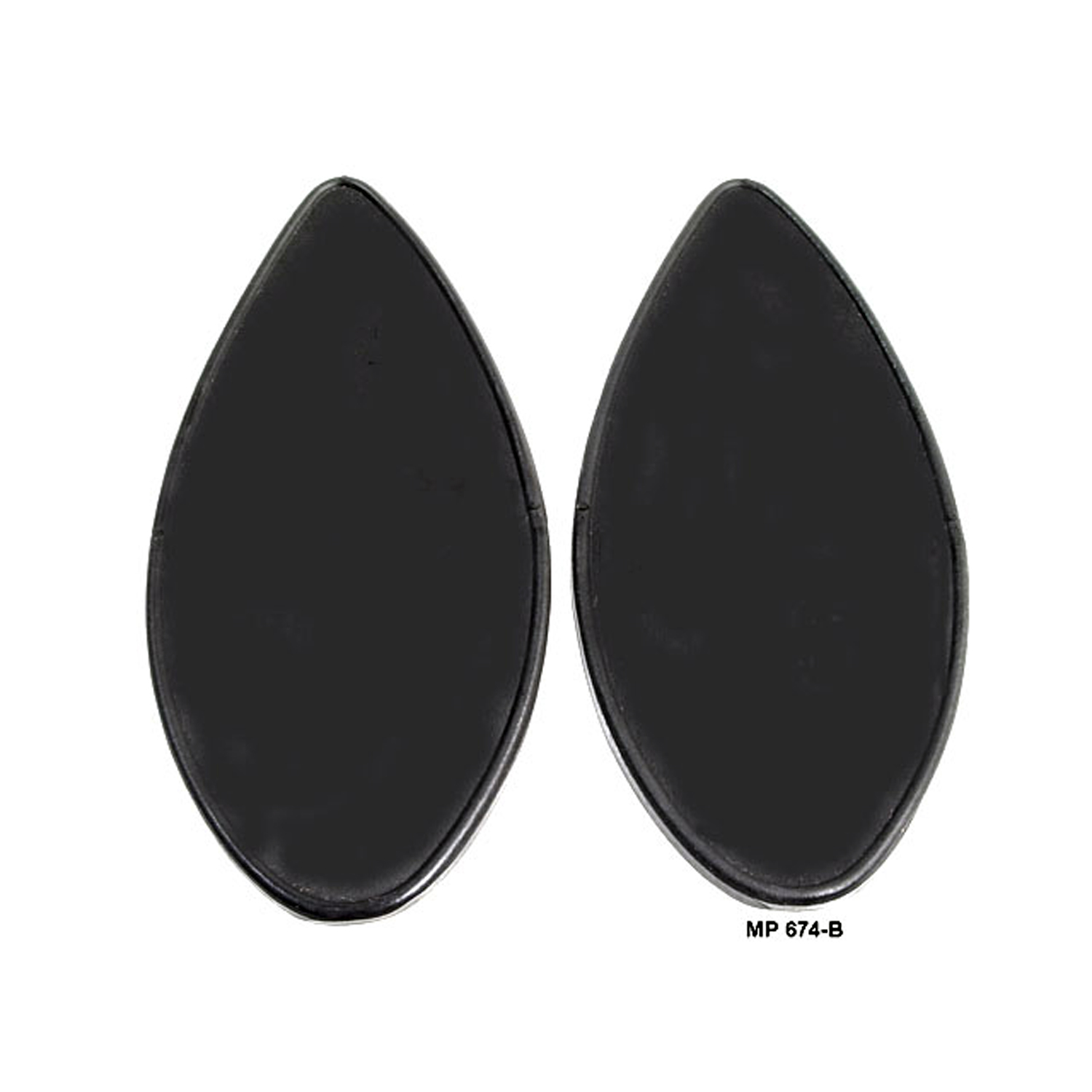 1923 Franklin Model 10 Tail-light Pads. 3" wide X 6-3/4" long. Pair-MP 674-BTail-light Pads. 3" wide X 6-3/4" long. Pair
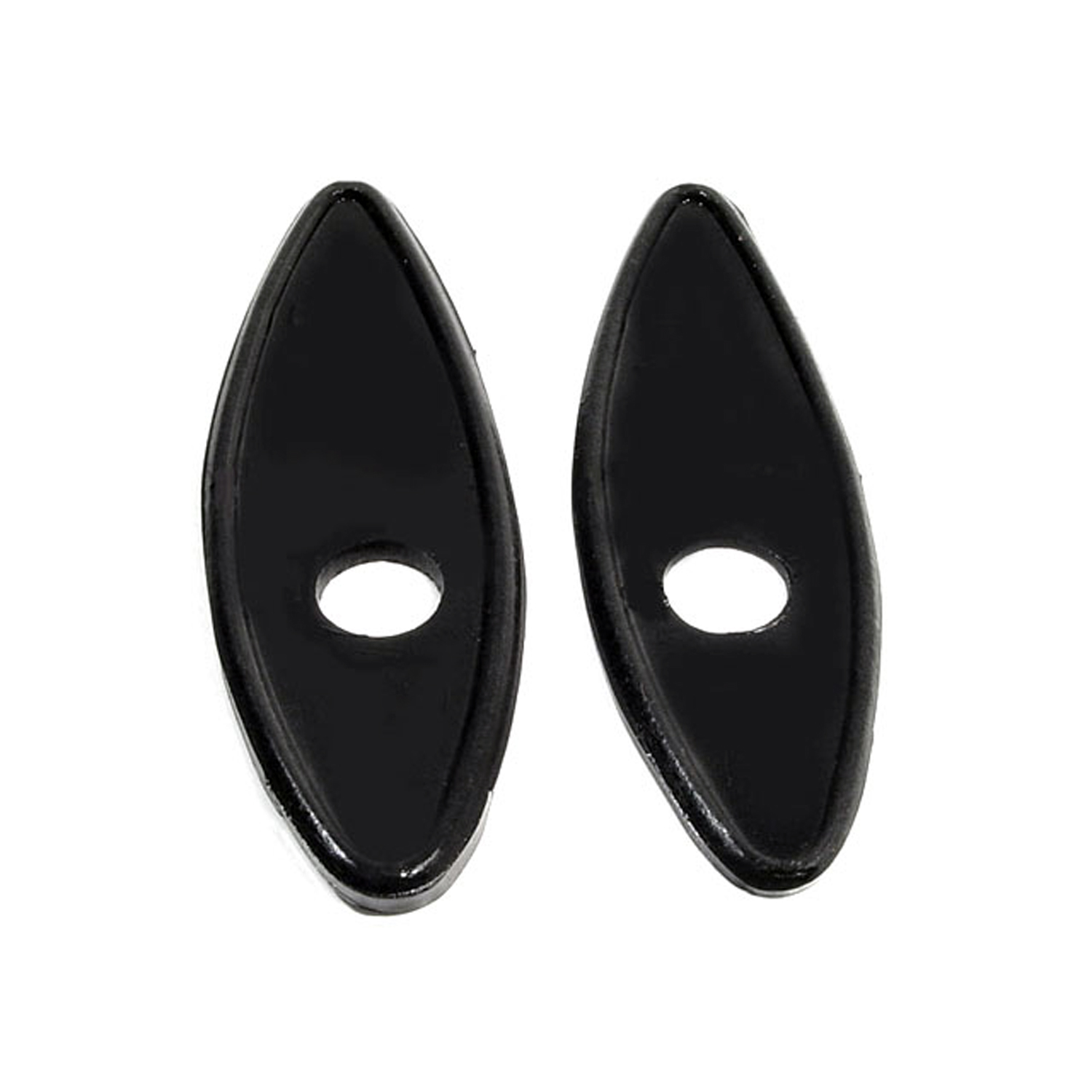 1923 Franklin Model 10 Park Light Pads. 1-3/8" wide X 4-1/8" long. Pair-MP 674-CPark Light Pads. 1-3/8" wide X 4-1/8" long. Pair
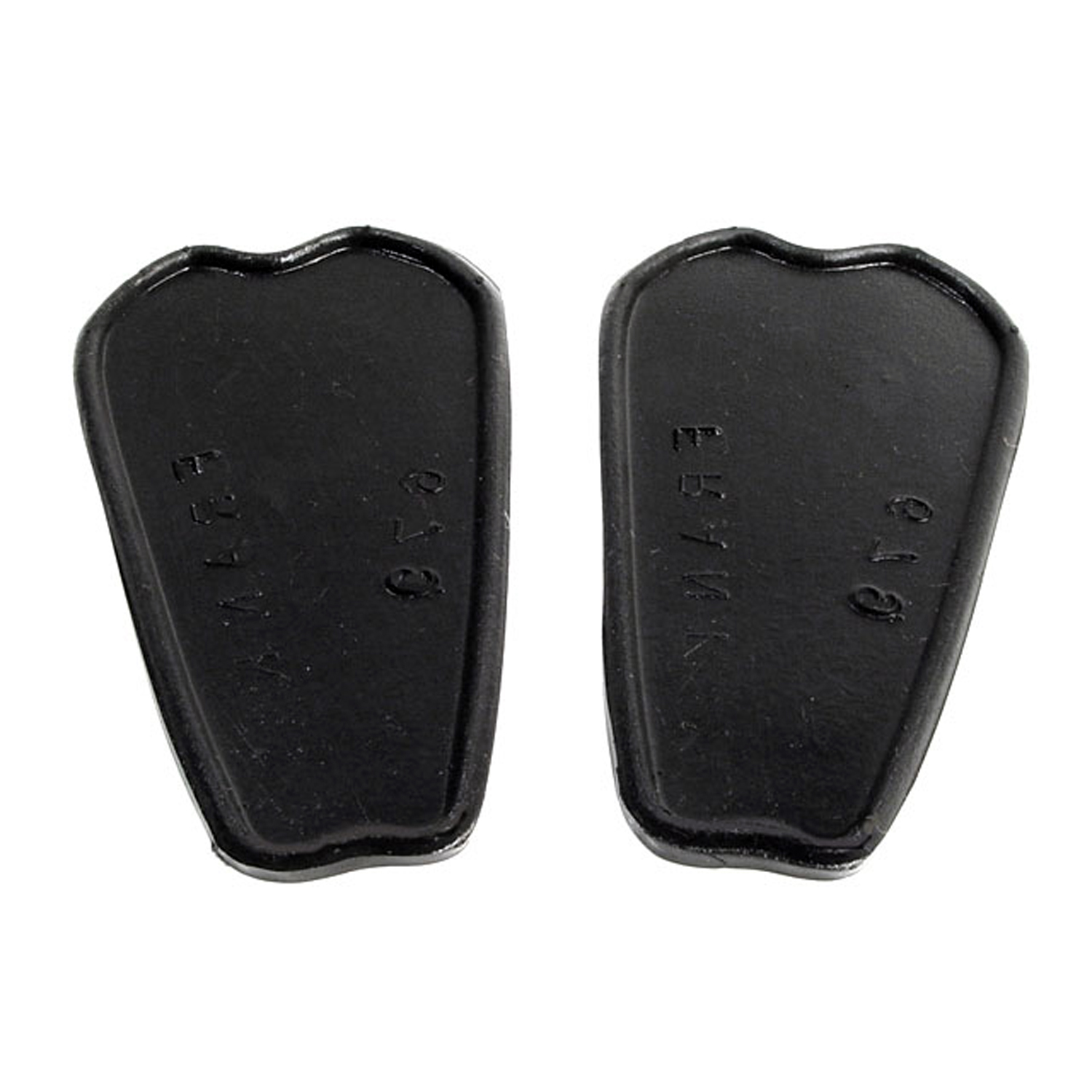 1923 Franklin Model 10 Park Light Pads. 2-1/4" wide X 4-1/8" long. Pair-MP 679Park Light Pads. 2-1/4" wide X 4-1/8" long. Pair
Why Choose Metro?
For over 100 years, Metro Moulded Parts has been the pinnacle of quality in classic car restoration parts. Our commitment to precision and authenticity in every component ensures a perfect fit and an OEM-level appearance.
- Expert Craftsmanship & Quality: Each part is a testament to our dedication to reliability and perfection, crafted from original designs and thoroughly tested.
- Advanced Technology: We use cutting-edge techniques to create flawless, long-lasting parts that surpass others in performance.
- SuperSoft Sponge – The Ultimate Door Seal: Not only are our door seals 30% softer than competitors', but they're also guaranteed to never leak. They effectively reduce wind and road noise, enhancing your classic car's comfort and driving experience.
- Proudly American: Our parts are a product of American craftsmanship, made in the USA with a spirit of excellence and heritage.
- Unrivaled Warranty: We back our products with a 30-year industry-leading warranty, a testament to our confidence in their quality.
Join us in preserving the legacy of classic cars with parts that are crafted for perfection, not just made.