
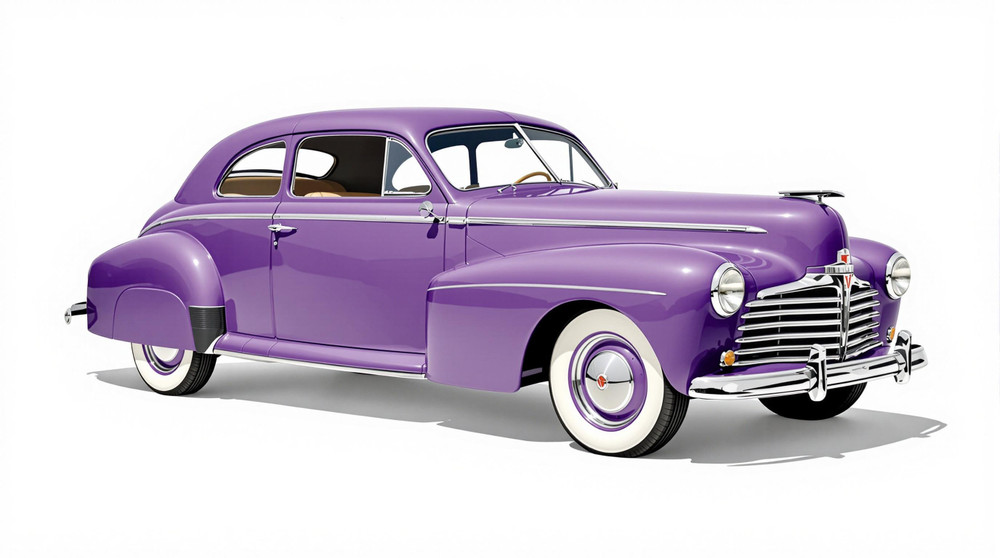
Image of 1946 Frazer Manhattan, Note: These illustrations use artistic license and may differ from actual historical models.
Performance Metrics
Fundamental Metrics
Emotional Appeal
MMP Rating
| Engine Specifications | |
|---|---|
| Engine: | Inline 6 |
| Displacement: | 226 cubic inches |
| Horsepower: | Estimated 112 hp |
| Torque: | Not available |
| Compression Ratio: | 6.6:1 |
| Ignition System: | Distributor and coil |
| Cooling System: | Liquid-cooled |
| Performance Specifications | |
| 0-60 Time: | Not available |
| 1/4 Mile Time: | Not available |
| Top Speed: | Estimated 80 mph |
| Transmission and Drive | |
| Drive Type: | Rear-wheel drive |
| Transmission Type: | 3-speed manual |
| Fuel and Efficiency | |
| Fuel System Type: | Carburetor |
| MPG: | Not available |
| Dimensions and Brakes | |
| Brakes: | Drum brakes |
| Wheelbase: | 123.5 inches |
| Weight: | Estimated 3,200 lbs |
Note: Specifications for classic cars are given to the best of our ability, considering the limited and variant data available.
1946 Frazer Manhattan: A Postwar Luxury Challenger
The Frazer Manhattan arrived with a mission: prove that a brand-new American automaker could take on Detroit’s established names. The date can be confusing for collectors. Kaiser-Frazer unveiled its first cars in 1946, but they were generally sold and cataloged as 1947 models. So a “1946 Frazer Manhattan” usually refers to an early car built in 1946, rather than a conventional 1946 model-year car.
Frazer was created by Kaiser-Frazer Corporation, the company formed in 1945 by industrialist Henry J. Kaiser and automotive executive Joseph W. Frazer. The Manhattan was the more upscale Frazer, with richer trim and equipment than the standard model. Its launch was also a bold postwar move: while the major automakers were largely returning to updated prewar designs, Kaiser-Frazer was offering a fresh-looking car from a new manufacturer.
There is an appealing piece of industrial history behind it, too. Kaiser-Frazer built cars at Willow Run in Michigan, the enormous former bomber plant best known for producing B-24 Liberator aircraft during World War II. The factory’s shift from aircraft to automobiles made the Frazer part of the country’s wider transition back to consumer production.
Streamlined Styling and Manhattan Trim
The Frazer Manhattan looked modern without relying on oversized fins or heavy chrome. Its long, low body, broad hood, rounded contours, and carefully integrated fenders gave it a streamlined profile. At the front, a wide horizontal grille and substantial bumper created a confident face. The overall effect was smooth and substantial, with a lower, more contemporary look than many cars carrying older prewar styling cues.
Inside, the Manhattan aimed for an upscale atmosphere through generous seating, patterned upholstery, coordinated door panels, and bright metal trim. Materials and details varied by production run and specification, but the cabin was designed to feel more polished than a basic family sedan. The broad bench seats and roomy interior suited the period’s idea of comfortable American motoring: plenty of space for passengers, luggage, and long-distance travel.
Paint choices changed with model year and factory availability. Period Frazer colors included restrained dark shades and brighter options, with variations in blues, greens, maroons, grays, and light tones. The richer colors tend to suit the Manhattan’s dressier character, though original paint codes and trim combinations should be checked against the particular car’s build information.
The four-door sedan is the body style most associated with the early Manhattan. Kaiser-Frazer also offered other body styles across the Frazer range and later years, including convertible versions, but availability depended on the model year and trim. A convertible Manhattan is a more unusual sight than the sedan. For a car described specifically as a 1946-built Manhattan, verify its body, identification numbers, and paperwork carefully, since early cars may be listed by build date, sale year, or model year.
New-Car Thinking After the War
The Manhattan’s importance lies less in one headline-grabbing invention than in the way it represented a fresh start. Kaiser-Frazer was an independent company trying to compete with manufacturers that had decades of production experience and huge dealer networks. Its new postwar designs showed buyers that American cars did not have to be warmed-over prewar models.
The Frazer’s roomy body, restrained streamlined styling, and attention to passenger comfort helped make it a credible alternative to cars from larger manufacturers. It did not overturn the industry, but it demonstrated the opportunity and difficulty facing postwar independents: distinctive design could win attention, while long-term success still depended on production scale, service support, and a steady supply of new models.
Six-Cylinder Power and Road Manners
Early Frazer Manhattans used a Continental-built 226-cubic-inch L-head inline-six, rated at about 100 horsepower in period specifications. Power went to the rear wheels through a three-speed manual transmission; availability of features such as overdrive depended on the year and configuration. The mechanical package was conventional and serviceable for its era, rather than an attempt to make the Manhattan a performance car.
Period acceleration figures are not consistently documented, and surviving cars can differ considerably in condition and gearing. As a modern estimate, expect roughly 18 to 22 seconds from 0 to 60 mph, with a top speed in the neighborhood of 80 to 90 mph. Those figures are best treated as estimates, not guaranteed factory test results. The Frazer’s strengths were comfortable cruising and passenger space, not quick acceleration.
On the road, the six-cylinder engine delivers a steady, understated rumble. The car feels large and relaxed, with a soft ride that takes the edge off ordinary bumps. Its period suspension and tall sidewalls help it glide over rough pavement, while winding roads call for a measured pace. Steering, braking, and body control are all products of the 1940s, so a modern driver should leave generous following distance and avoid expecting contemporary precision. The experience is less about attacking corners and more about settling into the broad bench seat and enjoying an unhurried drive.
Living With a Frazer Manhattan
Today, most Manhattans are best suited to touring, local drives, and vintage-car gatherings. They can be driven regularly by an owner committed to upkeep, but they are not ideal substitutes for a modern daily driver. Their age brings familiar considerations: drum brakes, period electrical equipment, older rubber components, and the need to monitor cooling and lubrication carefully.
The Continental six is relatively straightforward in concept, and many routine mechanical jobs are within reach of a capable home mechanic. The bigger challenge is often finding the correct parts, especially for trim, glass, body fittings, and Manhattan-specific interior details. Specialist suppliers, marque clubs, and owner networks are valuable resources. A pre-purchase inspection should focus on rust, previous repairs, brake condition, engine health, and whether hard-to-find original pieces are missing.
Frazer Facts and Common Criticisms
The Manhattan name was meant to signal the top of the Frazer range, not a separate manufacturer. And the Willow Run connection gives the car an unusual place in American industrial history: it came from a factory built for wartime aircraft production and adapted for postwar family transportation.
There is no widely recognized speed, sales, or endurance record associated with the Manhattan. Its story is instead tied to the ambitious launch of Kaiser-Frazer and the challenge of competing against Detroit’s giants. Common criticisms include modest power for a sizable car, the difficulty of sourcing certain restoration parts, and the limited long-term support that followed the decline of the Frazer line. These are important ownership realities, but they also help explain why a well-kept example attracts attention at a show.
Rarity and Collector Values
Exact production totals for every Manhattan configuration, especially cars built in 1946 and sold as 1947 models, can be difficult to pin down. A useful broad estimate is that Kaiser-Frazer built roughly 150,000 Frazer cars across the line’s production life, with the Manhattan representing a smaller but significant share. The number of surviving cars is much lower, and early build-date examples with clear documentation are particularly interesting to collectors.
As a broad U.S. market estimate, a project or rough driver might sell for about $5,000 to $12,000. A sound, presentable sedan could fall around $12,000 to $25,000, while a high-quality restoration may reach roughly $25,000 to $40,000 or more, depending on originality, condition, documentation, and body style. Unusual open cars can command a premium, but their values depend heavily on authenticity and market interest. These are guide ranges rather than formal appraisals.
Frazer values tend to be condition-sensitive. A well-restored Manhattan can be more desirable than a neglected example, but its market is smaller than that for famous mass-market classics. Over time, the car’s historical appeal and scarcity may support values, though restoration costs can exceed the price difference between a project and a finished car. Buyers should purchase for the experience and the history, not on the assumption of a guaranteed investment return.
Why the 1946-Built Manhattan Matters
The Frazer Manhattan combined fresh postwar styling, a spacious and carefully finished cabin, and straightforward six-cylinder engineering. It was not a muscle car or a technological revolution, but it was a confident attempt by a new American automaker to offer something distinctive at a pivotal moment in the industry.
Whether you encounter one described as a 1946 build or a 1947 model, the Manhattan tells a story bigger than its production numbers: a bomber factory returning to civilian life, two automotive leaders taking a chance, and a sleek new sedan inviting buyers to imagine a different kind of American car.
1946 Frazer Manhattan Catalog of Parts
 1946 Frazer Manhattan Shock Absorber Grommet. 1" bottom O.D-BN 11Shock Absorber Grommet. 1" bottom O.D., 3/4" high, with 5/8" I.D. Each
 1946 Frazer Manhattan Flexible glass-run channel-WC 11-72Flexible glass-run channel. Mohair lined, cloth covered with stainless steel bead. Used on side windows. 72 in. long. Each. NOTE: $20 special shipping charge applies for domestic orders. Call or email for overseas shipping costs. Part can be sectioned in two equal lengths to reduce overseas shipping costs.
Why Choose Metro?
For over 100 years, Metro Moulded Parts has been the pinnacle of quality in classic car restoration parts. Our commitment to precision and authenticity in every component ensures a perfect fit and an OEM-level appearance.
- Expert Craftsmanship & Quality: Each part is a testament to our dedication to reliability and perfection, crafted from original designs and thoroughly tested.
- Advanced Technology: We use cutting-edge techniques to create flawless, long-lasting parts that surpass others in performance.
- SuperSoft Sponge – The Ultimate Door Seal: Not only are our door seals 30% softer than competitors', but they're also guaranteed to never leak. They effectively reduce wind and road noise, enhancing your classic car's comfort and driving experience.
- Proudly American: Our parts are a product of American craftsmanship, made in the USA with a spirit of excellence and heritage.
- Unrivaled Warranty: We back our products with a 30-year industry-leading warranty, a testament to our confidence in their quality.
Join us in preserving the legacy of classic cars with parts that are crafted for perfection, not just made.