
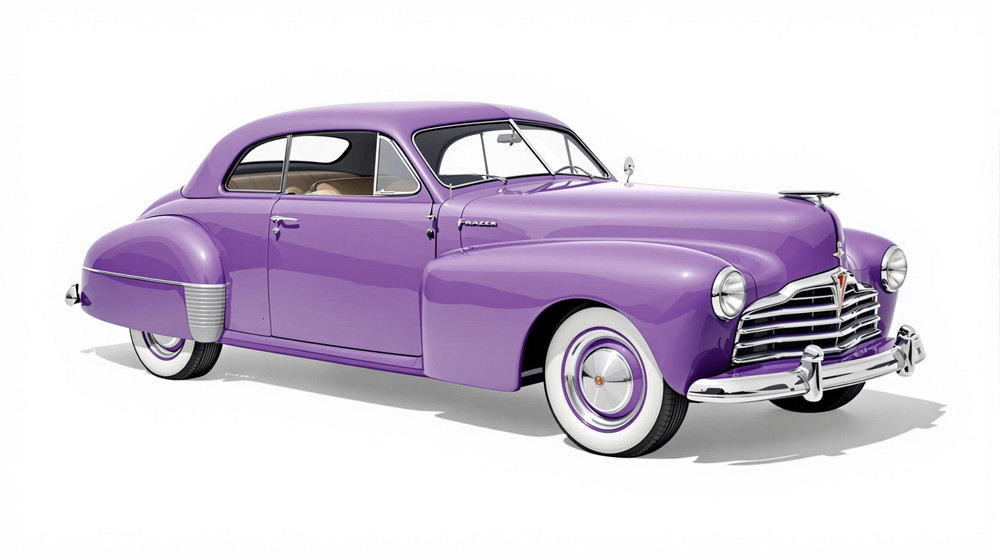
Image of 1947 Frazer Frazer, Note: These illustrations use artistic license and may differ from actual historical models.
Performance Metrics
Fundamental Metrics
Emotional Appeal
MMP Rating
| Engine Specifications | |
|---|---|
| Engine: | Inline 6 |
| Displacement: | 226 cu in (3.7 L) |
| Horsepower: | Estimated 112 hp |
| Torque: | Not available |
| Compression Ratio: | Not available |
| Ignition System: | Distributor and coil |
| Cooling System: | Liquid-cooled |
| Performance Specifications | |
| 0-60 Time: | Not available |
| 1/4 Mile Time: | Not available |
| Top Speed: | Estimated 80 mph |
| Transmission and Drive | |
| Drive Type: | Rear-wheel drive |
| Transmission Type: | 3-speed manual |
| Fuel and Efficiency | |
| Fuel System Type: | Carburetor |
| MPG: | Not available |
| Dimensions and Brakes | |
| Brakes: | Drum brakes |
| Wheelbase: | 123.5 in (3,137 mm) |
| Weight: | Estimated 3,200 lbs |
Note: Specifications for classic cars are given to the best of our ability, considering the limited and variant data available.
1947 Frazer: The New American Luxury Sedan
The 1947 Frazer arrived with a fresh postwar look and a bold promise: American buyers could have a modern, roomy sedan without buying from one of Detroit’s established giants. Built by Kaiser-Frazer Corporation at its vast Willow Run, Michigan, plant, the Frazer was the more upscale companion to the company’s Kaiser line. Its arrival was especially notable because many competing cars were still updated versions of prewar designs.
The company brought together two influential figures. Henry J. Kaiser was an industrialist known for large-scale manufacturing, while Joseph W. Frazer was an experienced automobile executive who had led Graham-Paige and held senior roles at other carmakers. Their partnership aimed to challenge the Big Three with newly designed cars. One fascinating detail: Willow Run had been built to produce B-24 bombers during World War II, and after the war its enormous factory floor was adapted for automobile production.
Streamlined Styling and Manhattan Trim
The 1947 Frazer looked smooth and substantial, with its front fenders flowing into the body rather than standing apart as separate wings. A broad grille, rounded hood, integrated headlights, and gently tapering rear gave the four-door sedan a unified, almost envelope-like shape. The styling felt cleaner and more contemporary than the upright, separately-fendered forms still common on many rival cars.
Inside, the Frazer offered generous room for passengers and a wide front bench seat. The cabin used patterned cloth upholstery, coordinated door panels, and a broad dashboard with clear, easy-to-read instruments. The Manhattan trim level added a more luxurious finish, with richer upholstery and extra brightwork. These were substantial, comfortable cars, designed for family travel and formal use rather than sporting driving.
For 1947, Frazer buyers primarily chose a four-door sedan, offered in standard and Manhattan versions. The later Frazer range would include additional body styles, but the 1947 sedan is the model most closely associated with the brand’s launch. Factory paint colors varied by trim and production batch; period choices included dark blue, green, gray, maroon, and black. Rich, dark colors suited the car’s formal character, while lighter shades helped emphasize its long, flowing body.
Under the hood was a 226-cubic-inch Continental flathead inline-six, rated at about 100 horsepower. It drove the rear wheels through a three-speed manual transmission with column-mounted shifting. The Frazer’s independent front suspension, hydraulic brakes, and available overdrive were useful features for a large postwar sedan. Overdrive could reduce engine speed on open roads, making longer journeys quieter and less tiring.
A Postwar Design Statement
The Frazer mattered because it showed that a new independent automaker could bring a genuinely modern-looking car to market during the immediate postwar period. Its integrated fenders, low visual profile, and broad body helped move American styling away from the separate-fender look of the 1930s and early 1940s. Kaiser-Frazer’s cars were not the only new postwar designs, but they stood out for their fresh appearance at a time when many buyers were eager for something different.
The Frazer also occupied an interesting place in the market. It was more luxurious than the companion Kaiser, yet priced to reach buyers who might otherwise consider a Buick, Oldsmobile, or higher-trim Ford or Chevrolet. The company’s success was impressive in its early years, but it faced the immense manufacturing capacity, dealer networks, and advertising budgets of established automakers. The Frazer’s lasting influence is less about a single technical breakthrough and more about the ambition of its styling and the challenge it posed to Detroit’s traditional order.
Road Manners and Performance
Period performance figures vary, and surviving cars may differ in tune and condition. As a useful estimate, a healthy 100-horsepower Frazer could reach roughly 85 to 90 mph, with a 0-to-60-mph time in the neighborhood of 18 to 22 seconds. Those figures made it a comfortable cruiser, not a quick car by modern standards. Its six-cylinder engine favored steady, relaxed progress over rapid acceleration.
On the road, the Frazer feels large and composed. The front suspension helps soften broken pavement, while the long wheelbase contributes to a settled ride on highways. On winding roads, drivers notice the car’s size and weight: it responds gradually, and a measured pace suits it better than aggressive cornering. Strong crosswinds and rough surfaces require the sort of attention expected of a full-size car from the 1940s, especially if the suspension or steering is worn.
The flathead six has a mellow, mechanical sound, with a gentle rise in engine note as the car gathers speed. The column shifter and broad bench seat make the driving experience feel distinctly of its era. A Frazer rewards smooth inputs, early braking, and anticipation. With overdrive fitted and working properly, it is more relaxed at highway speeds, though it remains a vintage car that benefits from regular checks of the cooling, braking, and electrical systems.
Living With a 1947 Frazer
Today, most 1947 Frazers are used as show cars, touring cars, or occasional weekend drivers rather than everyday transportation. A well-sorted example can take part in vintage-car events and comfortable local trips, but traffic speeds, limited safety equipment, and the age of the mechanical parts make modern daily use less practical.
The basic six-cylinder layout is straightforward, and many routine jobs are within reach of an experienced home mechanic. The challenge is often finding the correct parts, trim pieces, and model-specific details. Mechanical components may be shared with other cars or sourced through specialist suppliers, but distinctive Frazer body and interior parts can take patience to locate. Before buying, check carefully for rust, previous repairs, brake condition, cooling-system health, and evidence that the car has been maintained rather than simply stored.
Frazer Facts and Common Criticisms
The 1947 Frazer was built in Willow Run, a factory with a dramatic wartime past. Its launch also came during a period of intense pent-up demand: American buyers were eager for new cars after years of wartime restrictions. That demand helped new automakers attract attention, but it could not guarantee long-term success against the Big Three.
The Frazer’s chief criticism is its modest performance. A large sedan with about 100 horsepower is not quick, and its three-speed transmission can feel busy on faster roads without overdrive. Owners also face the realities of a discontinued marque: parts support is narrower than it is for a Chevrolet or Ford, and some restoration work depends on specialist knowledge or careful fabrication. The car was not a major racing model, and its appeal lies in comfort, design, and history rather than competition credentials.
Collector Values and Rarity
Exact production figures for individual 1947 Frazer versions can be difficult to pin down. A reasonable working estimate is roughly 25,000 to 35,000 Frazer cars for the model year, with numbers depending on how model-year and calendar-year production are counted. That makes the car far less common today than mainstream Fords or Chevrolets of the same period, though it is not in the ultra-rare category. Good examples appear occasionally, but buyers may need to search specialist clubs, online listings, and regional classic-car networks.
As a broad 2026 estimate in the U.S. market, a project car might sell for about $3,000 to $8,000, while a usable driver could fall around $8,000 to $18,000. A well-restored sedan may bring approximately $20,000 to $35,000, with an exceptional car potentially exceeding that range depending on provenance, condition, and buyer interest. Values are sensitive to the quality of the restoration and the availability of documentation.
Frazer values have generally been steadier than those of the most fashionable collector cars. The market is specialized, so a top-quality example may take time to sell even when it is beautifully presented. Well-preserved, correctly restored cars are likely to remain the most desirable, while neglected projects can be costly because rare trim and body parts may be harder to replace than routine mechanical components.
Why the 1947 Frazer Still Stands Out
The 1947 Frazer combines a distinctive postwar shape, a comfortable six-cylinder driving experience, and an unusual industrial backstory. It was a serious attempt to give established automakers a run for their money, built in a former bomber plant by a company led by two very different but complementary automotive figures.
It may not be fast, and it is not the easiest classic to restore, but the Frazer offers something increasingly appealing: a fresh design from a pivotal moment in American motoring history. For collectors who value character as much as badge prestige, the 1947 Frazer is a handsome reminder that the postwar car boom made room for bold new ideas.
1947 Frazer Frazer Catalog of Parts
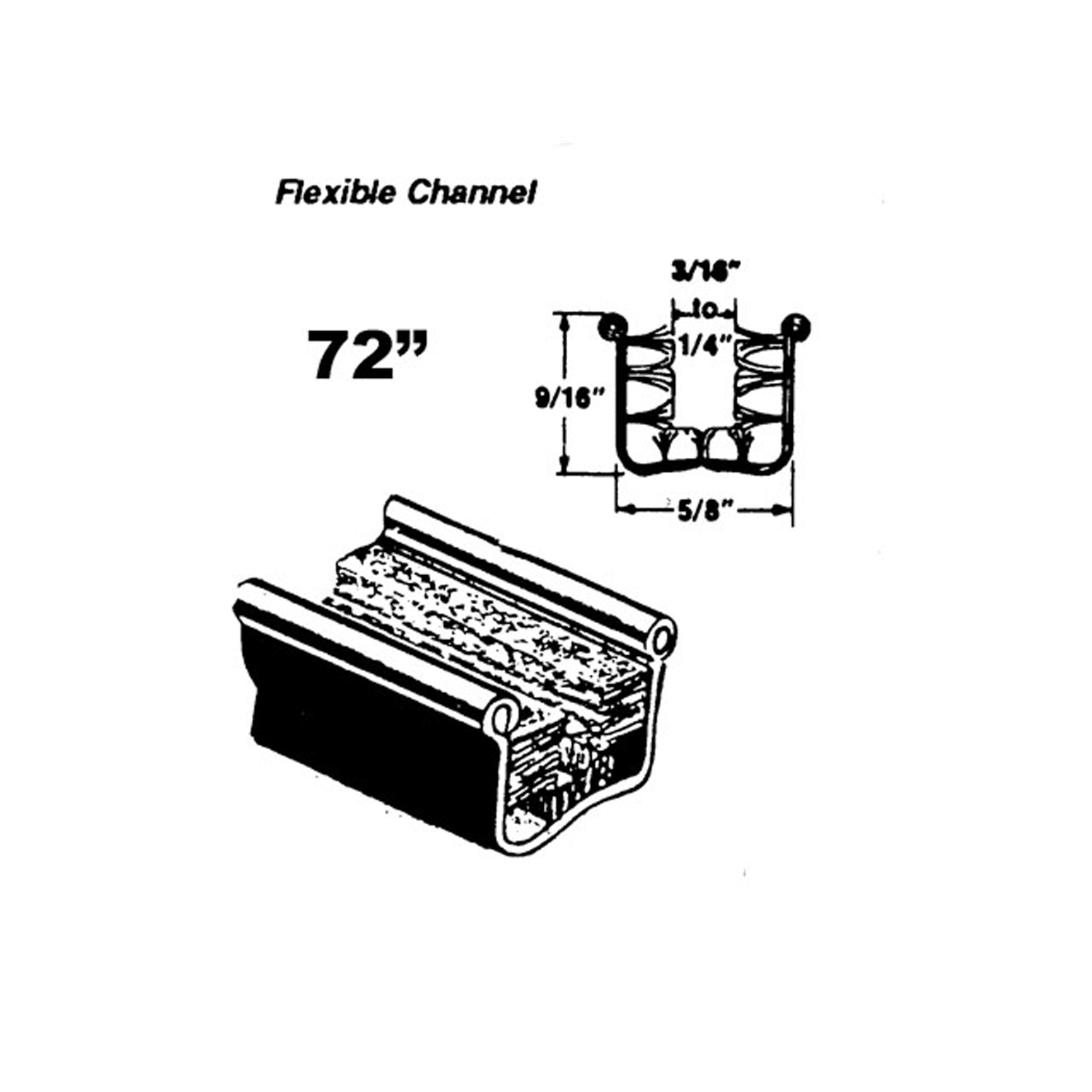 1947 Frazer Frazer Flexible glass-run channel-WC 11-72Flexible glass-run channel. Mohair lined, cloth covered with stainless steel bead. Used on side windows. 72 in. long. Each. NOTE: $20 special shipping charge applies for domestic orders. Call or email for overseas shipping costs. Part can be sectioned in two equal lengths to reduce overseas shipping costs.
Why Choose Metro?
For over 100 years, Metro Moulded Parts has been the pinnacle of quality in classic car restoration parts. Our commitment to precision and authenticity in every component ensures a perfect fit and an OEM-level appearance.
- Expert Craftsmanship & Quality: Each part is a testament to our dedication to reliability and perfection, crafted from original designs and thoroughly tested.
- Advanced Technology: We use cutting-edge techniques to create flawless, long-lasting parts that surpass others in performance.
- SuperSoft Sponge – The Ultimate Door Seal: Not only are our door seals 30% softer than competitors', but they're also guaranteed to never leak. They effectively reduce wind and road noise, enhancing your classic car's comfort and driving experience.
- Proudly American: Our parts are a product of American craftsmanship, made in the USA with a spirit of excellence and heritage.
- Unrivaled Warranty: We back our products with a 30-year industry-leading warranty, a testament to our confidence in their quality.
Join us in preserving the legacy of classic cars with parts that are crafted for perfection, not just made.