

Image of 1947 Frazer Standard F47, Note: These illustrations use artistic license and may differ from actual historical models.
Performance Metrics
Fundamental Metrics
Emotional Appeal
MMP Rating
| Engine Specifications | |
|---|---|
| Engine: | Inline 6 |
| Displacement: | 226 cu in (3.7 L) |
| Horsepower: | Estimated 112 hp |
| Torque: | Not available |
| Compression Ratio: | Not available |
| Ignition System: | Points and condenser |
| Cooling System: | Liquid-cooled |
| Performance Specifications | |
| 0-60 Time: | Not available |
| 1/4 Mile Time: | Not available |
| Top Speed: | Estimated 80 mph |
| Transmission and Drive | |
| Drive Type: | Rear-wheel drive |
| Transmission Type: | 3-speed manual |
| Fuel and Efficiency | |
| Fuel System Type: | Carburetor |
| MPG: | Not available |
| Dimensions and Brakes | |
| Brakes: | Drum brakes |
| Wheelbase: | 123.5 in (3,137 mm) |
| Weight: | Estimated 3,200 lbs |
Note: Specifications for classic cars are given to the best of our ability, considering the limited and variant data available.
1947 Frazer Standard F47: A Postwar American Original
The 1947 Frazer Standard F47 was built for a country ready to move beyond wartime austerity, and it brought a fresh, streamlined look to American roads. It came from Kaiser-Frazer Corporation, the automaking partnership formed by industrialist Henry J. Kaiser and veteran car executive Joseph W. Frazer. The Frazer carried Joseph Frazer’s name and occupied the more upscale side of the new company’s lineup, alongside the less expensive Kaiser.
Although called a 1947 model, the car belonged to the first wave of Kaiser-Frazer vehicles developed just after World War II. Production took place at the enormous Willow Run plant in Michigan, a former Ford bomber factory converted to build cars. One intriguing detail: the factory had been designed for aircraft production on a remarkable scale, so the new automaker began its life in a place associated with wartime industrial might.
The F47 Standard was the straightforward entry point to the Frazer range. It offered the same basic postwar shape and six-cylinder power as its better-equipped siblings, but with fewer luxury touches. That combination makes it an interesting snapshot of a new American company trying to establish itself against the Big Three.
Streamlined Styling and Cabin Details
The Frazer’s styling looked modern without relying on excessive chrome or dramatic fins. Its long hood flowed into rounded front fenders, while the rear fenders blended smoothly into the body instead of appearing as separate, upright forms. A broad horizontal grille, full-width bumpers, a gently curved roofline, and a low, wide stance gave the sedan a clean, planted appearance. Compared with many prewar cars, the F47 looked less like a collection of separate fenders and running boards and more like one continuous shape.
The Standard was generally finished with a practical cloth interior rather than the richer trim found in higher Frazer models. Expect broad, bench-style seating, generous interior space, and a simple, easy-to-read dashboard. Materials and details can vary between cars because of production changes and later restoration work, but an original Standard was intended to be comfortable and respectable rather than lavish. Period conveniences such as a radio and heater could be ordered, depending on equipment and market.
Factory paint choices varied, and surviving cars may have been repainted over the decades. Period colors included subdued shades such as black, gray, blue, green, and maroon, with availability depending on production and trim. Dark blue and maroon are especially attractive choices on the Frazer’s rounded bodywork, while black emphasizes its formal, conservative character.
For 1947, the defining F47 body style was the four-door sedan. The model range included more richly equipped Frazer versions, but the Standard sedan was the practical, accessible choice. Later Frazer offerings included other body styles, but a convertible or coupe should not be assumed to be a regular 1947 Standard configuration.
Engineering for a New Era
Under the hood, the F47 used a 226.2-cubic-inch (3.7-liter) Continental inline-six with L-head, or flathead, valve arrangement. Output was about 100 horsepower, sent through a three-speed manual transmission, typically operated by a column-mounted shift lever. The car also had hydraulic drum brakes and independent front suspension with coil springs, paired with a leaf-spring rear suspension.
Those features were not exotic, but they gave the Frazer a contemporary specification for a full-size family sedan. Independent front suspension helped the car ride and steer more comfortably than many older designs with a solid front axle. Its six-cylinder engine was designed for smooth, steady road work rather than high-revving performance, and the three-speed transmission suited the driving habits and road speeds of the era.
The Frazer’s significance lies partly in its timing. Kaiser-Frazer was one of the few new American carmakers to enter the market after the war, when established manufacturers were returning to civilian production. Its cars showed that a new company could offer a modern-looking, full-size automobile without simply copying a prewar design. The F47 did not overturn the industry, but it helped demonstrate how postwar buyers were responding to cleaner styling, improved ride comfort, and a more integrated body shape.
F47 Performance and Road Manners
Factory performance figures for an individual F47 can be difficult to pin down, and results depend on gearing, condition, tires, and load. As a reasonable period-car estimate, a healthy Standard could reach roughly 85 to 90 mph, with a 0-to-60-mph time in the neighborhood of 18 to 20 seconds. Treat those figures as estimates, not guaranteed specifications. The Frazer was built to cruise comfortably, not to win stoplight contests.
On the road, the six produces a steady, low-pitched mechanical hum, while the three-speed manual asks the driver to plan overtakes and hills rather than rush them. The bench seat, long wheelbase, and soft suspension give the car a relaxed character. It generally takes bumps in an unhurried, cushioned way, though worn shocks, old tires, or tired suspension bushings can make a surviving example feel loose.
On winding roads, the F47 behaves like the substantial late-1940s sedan it is: predictable, but not sporty. Its body leans through corners, and its drum brakes need more distance and attention than modern disc brakes. A careful driver will find it pleasant on secondary roads and highways, especially at moderate speeds. The steering, clutch, and unassisted controls also make the driver feel more directly involved than in a contemporary car.
Living With a Frazer Standard
Today, most F47s are used as show cars, historic touring vehicles, or occasional weekend drivers. They are not ideal choices for modern daily commuting, where highway speeds, traffic, and expectations for braking and crash protection have changed considerably. A well-sorted example can still make enjoyable local trips and attract attention at classic-car events.
Routine mechanical work is fairly straightforward for an experienced home mechanic. The engine, manual gearbox, drum brakes, and suspension use familiar mid-century technology, and many service tasks do not require specialized electronics or diagnostic equipment. The harder part can be finding model-specific trim, body pieces, glass, and interior components. Before buying, inspect the structure carefully for corrosion and check that the engine, transmission, brakes, and charging system work as they should.
Reliability depends heavily on maintenance and preservation. A car that has sat for years may need a complete fuel-system cleanout, brake overhaul, fresh hoses, electrical attention, and careful tire replacement before it is safe to drive. The original electrical system is six-volt, so clean connections and correct components matter. A pre-purchase inspection by someone familiar with older American cars is money well spent.
Frazer F47 Facts and Common Complaints
The F47’s most notable historical connection is its place in Kaiser-Frazer’s postwar launch, with production tied to the repurposed Willow Run aircraft factory. The name “Frazer” also reflects the company’s unusual partnership: Henry J. Kaiser brought industrial scale and ambition, while Joseph W. Frazer brought decades of automotive experience and industry relationships.
There is no widely accepted, model-specific production total for the 1947 Frazer Standard F47 that can be stated with confidence. Company production figures are often reported for broader Kaiser-Frazer or Frazer groups, rather than separated neatly by trim and body style. A sensible estimate is that F47 Standard sedans were produced in the thousands, but any precise number should be treated cautiously unless supported by factory records.
Common criticisms are familiar for a large 1940s sedan: modest acceleration, fuel consumption that feels high by modern standards, drum-brake stopping distances, and limited availability of certain body and trim parts. The car’s conservative image also means it attracts less attention than some more flamboyant classics. In return, owners get a distinctive, well-proportioned postwar car with a story that stands apart from the usual Ford, Chevrolet, and Chrysler choices.
Collector Value and Rarity
The 1947 Frazer Standard is uncommon today, though it is not necessarily rare in the strict sense of a one-off or extremely limited-production car. Its availability depends heavily on condition and location: rough projects may appear occasionally, while complete, well-preserved sedans can take time to find. A precise F47-only survival count is not generally available.
As a broad 2026 guide, a project car might bring roughly $3,000 to $8,000. A running driver in usable condition could fall around $8,000 to $18,000, while a very good, well-restored example may reach approximately $20,000 to $35,000. Exceptional originality, documented history, or a top-quality restoration can push a car higher, but the market is selective. These are estimates rather than formal appraisals, and local demand can make a substantial difference.
Values have tended to be steadier than those of heavily promoted muscle cars or prewar luxury classics. A sound, original car is generally more appealing than a poorly executed restoration, but the F47’s narrower collector audience limits how quickly prices may rise. Its long-term appeal is likely to come from rarity, design, and historical interest rather than a sudden surge in mainstream demand.
Why the 1947 Frazer Standard Still Matters
The 1947 Frazer Standard F47 combined clean postwar styling, a comfortable six-cylinder drivetrain, and practical engineering in a sedan built by one of America’s most ambitious new automakers. It was not a performance car or a luxury flagship, but it represented a fresh start at a time when the American auto industry was finding its way into the postwar world.
For collectors, the F47 offers an appealing alternative to more familiar classics and a direct connection to the Kaiser-Frazer story. Its understated shape and Willow Run origins give it character that no spec sheet can capture. Nearly eight decades on, the Frazer Standard remains a reminder that some of the most interesting cars in history came from companies bold enough to challenge the established order.
1947 Frazer Standard F47 Catalog of Parts
 1947 Frazer STANDARD F47 Body Cushion Pad. Used between frame and body-BC 34Body Cushion Pad. Used between frame and body. Up to 22 used per car. 1-11/16" O.D., 9/16" I.D. Each
 1947 Frazer STANDARD F47 Shock Absorber Grommet. 1" bottom O.D-BN 11Shock Absorber Grommet. 1" bottom O.D., 3/4" high, with 5/8" I.D. Each
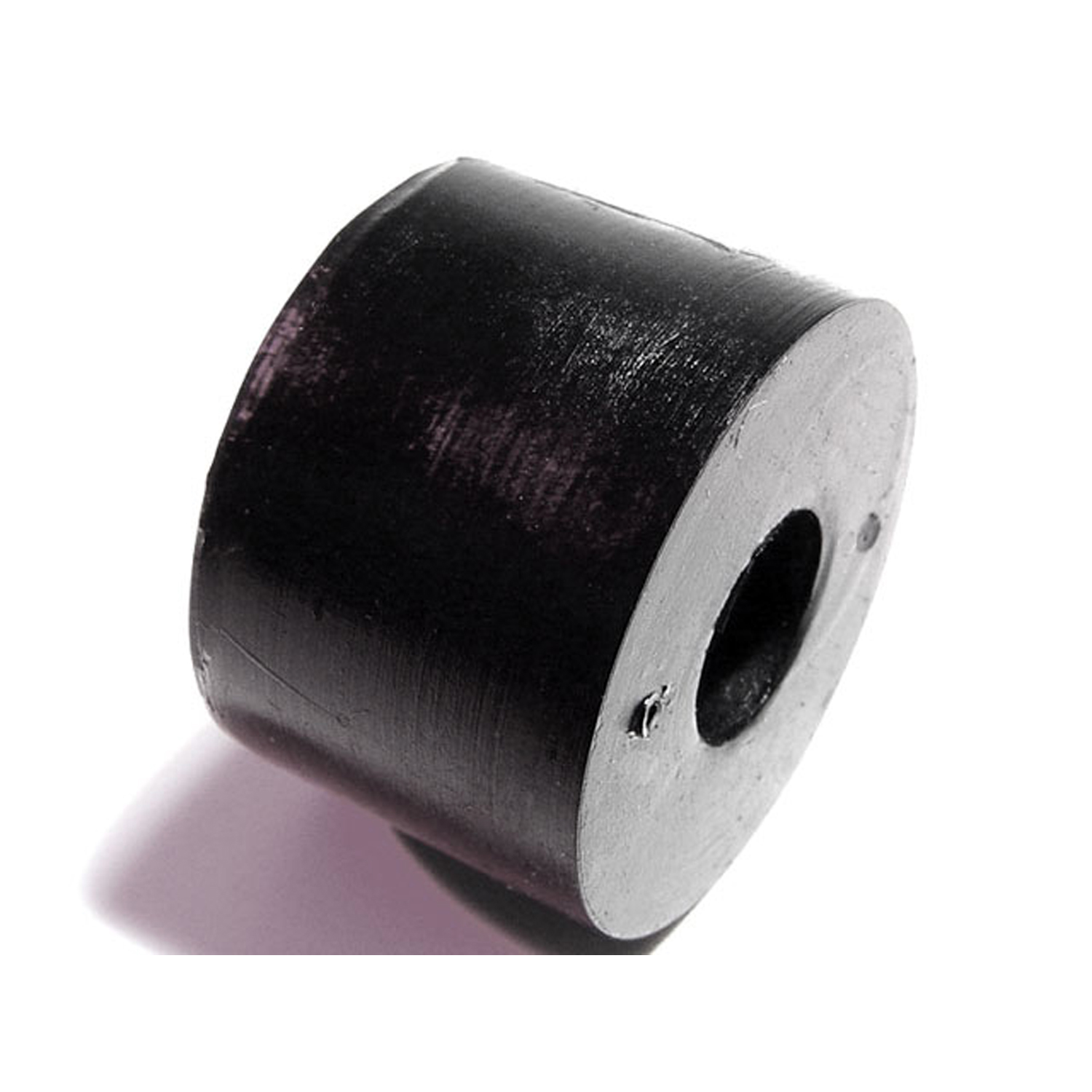 1947 Frazer STANDARD F47 Shock Absorber Grommet. 1" bottom O.D., 5/8" high-BN 13Shock Absorber Grommet. 1" bottom O.D., 5/8" high., with 3/8" I.D. Each
 1947 Frazer STANDARD F47 Driveshaft Carrier Support Grommet. 1-5/8" wide X 1/2" high-BN 31Driveshaft Carrier Support Grommet. 1-5/8" wide X 1/2" high. Each
 1947 Frazer STANDARD F47 Tail-light Pads. 13-1/8" long X 4-1/8" wide. Pair R&L-MP 801-ATail-light Pads. 13-1/8" long X 4-1/8" wide. Pair R&L
 1947 Frazer STANDARD F47 Trunk Emblem Pad. 13-3/16" long X 3-3/4" wide. Each-MP 801-BTrunk Emblem Pad. 13-3/16" long X 3-3/4" wide. Each
 1947 Frazer STANDARD F47 Trunk Handle Mounting Pad. 16-1/2" long X 2-3/8" wide-MP 801-FTrunk Handle Mounting Pad. 16-1/2" long X 2-3/8" wide. Each
 1947 Frazer STANDARD F47 Rubber Heel Mat. Meant to be sewn into carpeting. Black-RM 40Rubber Heel Mat. Meant to be sewn into carpeting. Black. 6-7/8" X 13-3/4". Each
 1947 Frazer STANDARD F47 Rubber Heel Mat. Meant to be sewn into carpeting. Gray-RM 40-BRubber Heel Mat. Meant to be sewn into carpeting. Gray. 6-7/8" X 13-3/4". Each
 1947 Frazer STANDARD F47 Rubber Heel Mat. Meant to be sewn into carpeting. Brown-RM 40-CRubber Heel Mat. Meant to be sewn into carpeting. Brown. 6-7/8" X 13-3/4". Each
 1947 Frazer STANDARD F47 Flexible glass-run channel-WC 11-72Flexible glass-run channel. Mohair lined, cloth covered with stainless steel bead. Used on side windows. 72 in. long. Each. NOTE: $20 special shipping charge applies for domestic orders. Call or email for overseas shipping costs. Part can be sectioned in two equal lengths to reduce overseas shipping costs.
Why Choose Metro?
For over 100 years, Metro Moulded Parts has been the pinnacle of quality in classic car restoration parts. Our commitment to precision and authenticity in every component ensures a perfect fit and an OEM-level appearance.
- Expert Craftsmanship & Quality: Each part is a testament to our dedication to reliability and perfection, crafted from original designs and thoroughly tested.
- Advanced Technology: We use cutting-edge techniques to create flawless, long-lasting parts that surpass others in performance.
- SuperSoft Sponge – The Ultimate Door Seal: Not only are our door seals 30% softer than competitors', but they're also guaranteed to never leak. They effectively reduce wind and road noise, enhancing your classic car's comfort and driving experience.
- Proudly American: Our parts are a product of American craftsmanship, made in the USA with a spirit of excellence and heritage.
- Unrivaled Warranty: We back our products with a 30-year industry-leading warranty, a testament to our confidence in their quality.
Join us in preserving the legacy of classic cars with parts that are crafted for perfection, not just made.